
 By admin
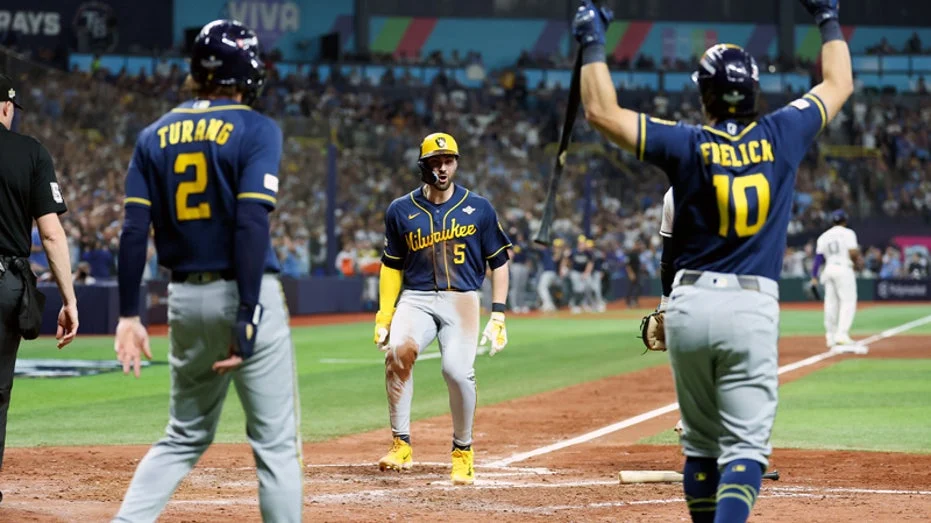
The Milwaukee Brewers, after a pair of nail-biting victories to open the 2026 World Series, unleashed a relentless offensive onslaught against the Tampa Bay Rays in Game 3, securing a resounding 10-1 triumph. This dominant performance has propelled the Brewers to a commanding 3-0 series lead and placed them on the precipice of their first-ever World Series championship. The game was defined by a historic eight-run fifth inning that shattered Rays pitching and showcased the Brewers’ potent lineup at its absolute finest.
FOX Sports Research provided invaluable insights into the statistical anomalies and record-breaking achievements that characterized this pivotal Game 3. At the forefront of the Rays’ struggles was reliever Cam Booser, who entered the game in the top of the fifth inning to relieve starter Freddy Peralta. Booser, who had been lights-out throughout the postseason, having surrendered zero runs over six innings, saw his impressive streak evaporate in a disastrous outing. He failed to record a single out, surrendering four consecutive hits before being unceremoniously pulled from the game. This abrupt end to Booser’s scoreless streak signaled the beginning of the Rays’ unraveling.
Adding to the Rays’ woes was a crucial managerial challenge by Brewers skipper Pat Murphy in the fifth inning. Murphy questioned an inning-ending force-out, and his successful challenge proved to be a turning point. This overturned call ignited a spectacular offensive rally for Milwaukee. What followed was an unprecedented display of offensive firepower: six consecutive hits that culminated in an eight-run explosion. This remarkable stretch of hitting marked the first time in postseason history that a team has recorded seven consecutive hits in a single game.
The eight-run outburst in the fifth inning also etched itself into the record books for its sheer volume of runs scored without the aid of a home run. This feat tied the 1921 New York Giants (Game 3) and the 2001 Arizona Diamondbacks (Game 6) for the most runs scored in a World Series game without a single long ball. This highlights the Brewers’ ability to string together hits, manufacture runs, and apply sustained pressure on opposing pitching.
On the pitching front, Brewers starting pitcher Robert Gasser delivered a masterful performance, contributing significantly to the team’s dominance. Gasser surrendered a mere two baserunners over six scoreless innings – one hit and one walk. This exceptional outing put him in rare company. He became only the second pitcher in World Series history to face the minimum number of batters through six or more innings. The only other pitcher to achieve this remarkable feat was Don Larsen, whose perfect game in Game 5 of the 1956 World Series for the New York Yankees remains one of baseball’s most iconic performances. Gasser’s ability to navigate through the Rays’ lineup with such efficiency set the stage for the Brewers’ offensive fireworks.

Ironically, despite the offensive explosion, the Brewers’ scoring was concentrated in just two innings: two runs in the third and the aforementioned eight in the fifth. This demonstrates the decisive nature of their scoring rallies and their ability to capitalize on opportune moments.
The Rays’ offensive struggles were starkly evident throughout Game 3. They were held to a mere three hits for the entire game, with designated hitter Yandy Díaz accounting for two of those hits. This offensive drought underscores the effectiveness of the Brewers’ pitching and the Rays’ inability to generate any sustained threat.
The Brewers’ offensive depth was on full display, with multiple players contributing significantly to the hit column. Three Milwaukee players recorded three or more hits: Jackson Chourio led the charge with four hits, followed by William Contreras and Brice Turang, each with three.
Jackson Chourio, in particular, had a game to remember. His four hits came within the first five innings, making him the fourth player in World Series history to achieve this feat. Furthermore, at just 22 years and 229 days old, Chourio became the youngest player to record four hits in a World Series game since Joe Garagiola accomplished the same in Game 4 of the 1946 World Series against the Boston Red Sox. Chourio’s exceptional performance highlights his burgeoning stardom and his impact on the biggest stage in baseball. His ability to consistently find holes in the Rays’ defense was a major factor in the Brewers’ offensive success.
Adding to the Rays’ offensive woes, the Brewers’ pitching staff collectively held them to just four baserunners throughout the game – three hits and one walk. This stifling pitching performance further amplified the Rays’ offensive futility.
Brewers starting pitcher Freddy Peralta, despite his early exit in the previous game, had a mixed outing in Game 3. He had surrendered a combined two runs across his first three starts and four appearances this postseason, spanning 16 2/3 innings. However, in Game 3, he entered the fifth inning having been credited with two earned runs. By the time he was removed, he was responsible for five earned runs, indicating a dip in his usual dominance against the Rays’ lineup. This slight vulnerability in Peralta’s outing was quickly overshadowed by the Brewers’ subsequent offensive barrage.
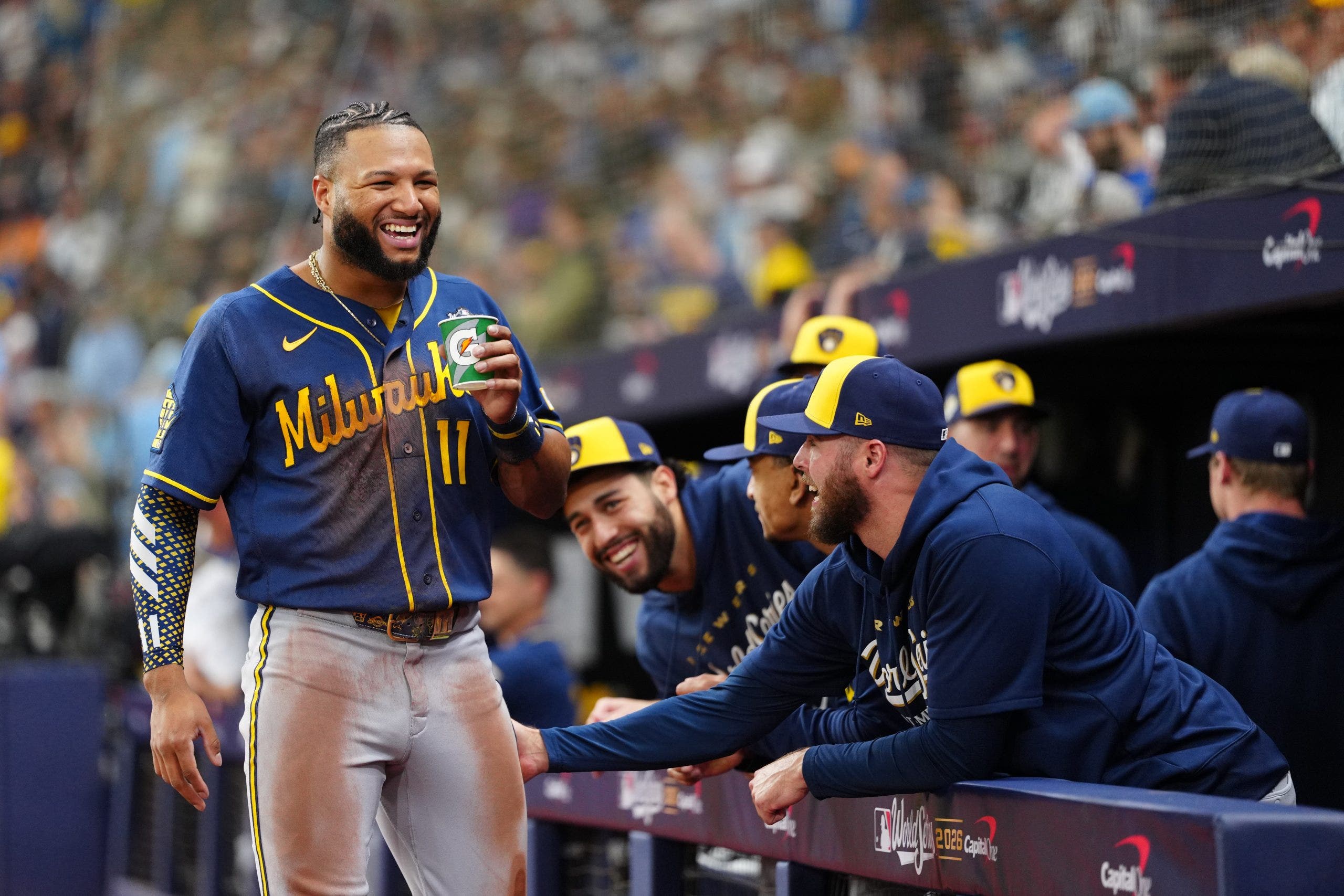
The Brewers’ ability to score with two outs was another remarkable aspect of their Game 3 victory. They became the first team in MLB history to score eight runs with two outs in a World Series game. This statistic speaks volumes about their resilience and their knack for extending innings and capitalizing on crucial situations. The Los Angeles Dodgers are the only other team to have achieved a similar feat in a playoff game, scoring 10 runs with two outs in the first inning of Game 3 of the 2020 National League Championship Series against the Atlanta Braves. This record highlights the Brewers’ clutch hitting and their ability to perform under pressure.
The offensive depth continued to shine through as eight of Milwaukee’s nine starting position players recorded at least one hit. This pervasive offensive threat made it incredibly difficult for the Rays to find any respite. Furthermore, eight different players in the Brewers’ lineup drove in at least one run, showcasing the balanced attack that has propelled them throughout the postseason.
In total, the Milwaukee Brewers amassed a staggering 16 hits in Game 3. This offensive output not only overwhelmed the Rays’ pitching staff but also showcased the Brewers’ consistent ability to generate offense.
The Brewers’ pitching staff also achieved a significant milestone, recording 26 outs before conceding their first run of the game. This extended stretch of scoreless pitching further demoralized the Rays and set a strong foundation for the Brewers’ offensive success.
With a 3-0 series lead, the Milwaukee Brewers are now just one victory away from achieving their ultimate goal. The historic Game 3 victory not only showcased their offensive prowess but also their resilience, clutch hitting, and stellar pitching. As they head into Game 4, the Brewers will look to complete the sweep and etch their names in baseball history as World Series champions. The Rays, facing an almost insurmountable deficit, will need a miraculous turnaround to avoid a sweep and extend the series. The momentum is undeniably with the Brewers, and the city of Milwaukee is on the cusp of celebrating a long-awaited championship. The performance in Game 3 was not just a win; it was a statement of intent, a declaration that this Brewers team is ready to conquer the baseball world.
