
 By admin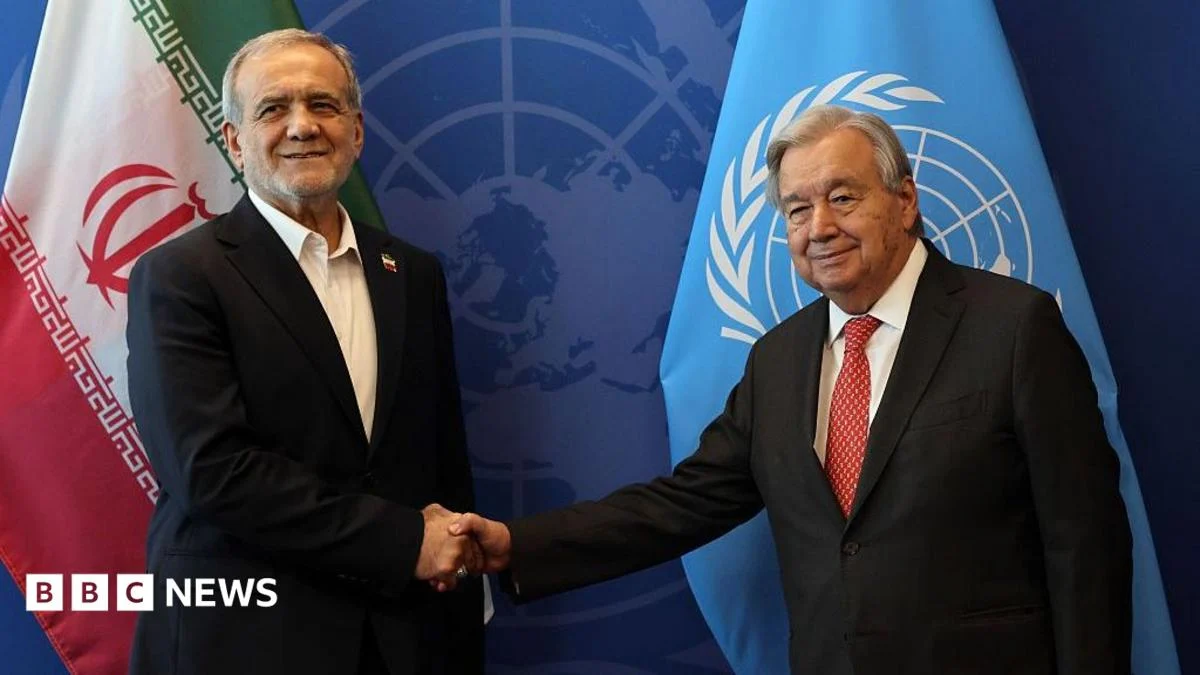
In a significant diplomatic development, the United States government has issued visas to Iranian officials, granting them permission to attend the upcoming UN General Assembly in New York. This decision comes as the protracted conflict between the US and Iran, which has now entered its seventh month, continues to exert considerable pressure on global stability and international relations. The core delegation, as understood by the BBC, will include Iranian President Masoud Pezeshkian and Foreign Minister Abbas Araghchi, key figures in the Iranian government.
A spokesperson for the US State Department confirmed the visa approvals on Thursday, underscoring that the Iranian delegation will be subjected to stringent travel restrictions and will be prohibited from purchasing certain American products. This move by the US, a long-standing rival of Iran, signifies a complex balancing act between its host country obligations under the UN charter and its strategic interests amidst a deepening regional conflict. The war, which commenced in February, has had a profound and destabilizing impact, driving up global energy prices and expanding its reach into neighboring countries, thereby raising concerns about a wider conflagration.
The State Department spokesperson articulated the rationale behind the decision, stating, "Consistent with our host country obligations, the core delegation from the Iranian regime will be able to attend UN General Assembly High Level Week." However, the spokesperson immediately qualified this by adding, "The delegation will be under travel restrictions and will face prohibitions on the purchase of luxury and other goods per our policy. The delegation is smaller than last year." This indicates a deliberate effort by the US to limit the scope of Iranian engagement and influence during their presence in New York, reflecting ongoing tensions and distrust.
The restrictions are not entirely new. Last year, Iranian diplomats attending the UNGA faced similar limitations, including being banned from shopping at wholesale stores like Costco. They were also required to obtain explicit permission from the US authorities before purchasing luxury goods, such as jewelry, alcohol, and automobiles. These measures highlight the US’s strategy of imposing economic and social constraints on Iranian officials, even when granting them entry for diplomatic purposes. The reduction in the delegation size compared to the previous year further suggests a calibrated approach by the US to manage the optics and practicalities of Iranian participation.
The 81st session of the UN General Assembly (UNGA) is currently in progress, with the High-Level Week, the centerpiece of the annual event, scheduled to commence on Tuesday. This period typically attracts world leaders and high-ranking officials from member states, offering a crucial platform for global dialogue, diplomacy, and the articulation of national interests. The General Debate, where leaders deliver their keynote addresses, is a significant part of this week.
Key speeches are anticipated from prominent global leaders during the General Debate. Tuesday’s proceedings will feature addresses from US President Donald Trump, UK Prime Minister Andy Burnham, and France President Emmanuel Macron. The presence and speeches of these leaders will undoubtedly set the tone for many of the discussions and negotiations that will unfold throughout the week. The inclusion of President Trump’s speech is particularly noteworthy, given the heightened tensions with Iran and the ongoing conflict.
Wednesday’s schedule is expected to include addresses from the leaders of Ukraine, Syria, and Iran. The inclusion of the Iranian President, Masoud Pezeshkian, on this day signifies the importance placed on Iran’s perspective and its role in the current geopolitical landscape. His address will be closely scrutinized for insights into Iran’s position on the ongoing war, its regional ambitions, and its outlook on international diplomacy. The speeches from the leaders of Ukraine and Syria will also be crucial in understanding the multifaceted nature of the global challenges being addressed at the UNGA.
The decision to grant visas to the Iranian delegation comes at a time of immense public and political pressure on the White House to find a resolution to the ongoing conflict with Iran. The war, which officially began on February 28th, was initiated by joint US and Israeli attacks on Iran. This act of aggression marked a significant escalation in the already strained relations between the US and Iran, and it has had far-reaching consequences for regional and global security. The initial strikes were reportedly in response to a series of escalating provocations and attacks attributed to Iran and its proxies.
Since the commencement of hostilities, Iran has not been passive. The country has engaged in a sustained campaign of retaliatory attacks, targeting US bases and allied states in the Gulf region, as well as Israel. These attacks have included missile strikes, drone assaults, and cyber warfare, demonstrating Iran’s capacity and willingness to project power and inflict damage on its adversaries. The ongoing cycle of attack and counter-attack has created a dangerous dynamic, with the potential for further escalation and wider conflict. The economic impact of these hostilities has been substantial, particularly on global energy markets, leading to price volatility and concerns about supply chain disruptions.
Adding another layer of complexity to the UNGA proceedings, the BBC recently learned that the US denied a visa to Palestinian President Mahmoud Abbas and his accompanying delegation. This decision marks the second consecutive year that the White House has refused visas to the Palestinian delegation, citing its non-recognition of the legitimacy of their delegation. This denial of entry to the Palestinian leadership highlights the US’s ongoing policy stance towards the Palestinian issue and its complex relationship with Palestinian authorities. While the US insists on its host country obligations for UNGA attendance, its selective application of these obligations, as seen in the denial of visas to the Palestinian delegation, underscores the politically charged nature of these decisions.
The conflict between the US and Iran is not an isolated event but rather a culmination of decades of complex geopolitical maneuvering, ideological differences, and proxy conflicts. The current war can be traced back to a series of escalating events, including Iran’s nuclear program, its support for regional militant groups, and the US’s withdrawal from the Joint Comprehensive Plan of Action (JCPOA), commonly known as the Iran nuclear deal. The assassination of Iranian General Qasem Soleimani in early 2020 by a US drone strike in Baghdad was another significant turning point, further intensifying animosity and leading to retaliatory actions by Iran.
The current war, which began in February, has seen significant military engagements. While the exact scale and nature of these engagements are often subject to competing narratives and limited independent verification, reports suggest that both sides have sustained casualties and inflicted damage on military infrastructure. The geographical spread of the conflict has been a major concern, with skirmishes and attacks occurring in various parts of the Middle East, including Iraq, Syria, Lebanon, and Yemen. The involvement of proxy groups, such as Hezbollah in Lebanon and various militias in Iraq and Syria, has further blurred the lines of conflict and increased the risk of regional escalation.
The economic ramifications of the war have been profound. Global oil prices have surged, driven by concerns over supply disruptions in the Persian Gulf, a vital shipping route for crude oil. This has had a ripple effect on economies worldwide, contributing to inflation and impacting consumer spending. The United Nations has repeatedly called for de-escalation and a peaceful resolution to the conflict, highlighting the humanitarian cost and the potential for a wider humanitarian crisis. The ongoing war has also exacerbated existing humanitarian crises in countries like Yemen and Syria, where populations are already struggling with food insecurity, displacement, and lack of access to essential services.
The decision to grant visas to the Iranian delegation, despite the ongoing hostilities, can be interpreted in several ways. Firstly, it demonstrates the US’s commitment to upholding its international obligations as the host country for the UN headquarters. The UN Charter mandates that member states facilitate the participation of their delegations in UN activities. Secondly, it might be seen as a strategic move to engage directly with Iranian leadership, potentially opening avenues for de-escalation or communication amidst the conflict. The UN General Assembly provides a unique platform for such direct interactions, even between adversaries.
However, the accompanying restrictions on travel and purchasing power underscore the deep mistrust and the limited nature of this engagement. The US is clearly signaling that while it will abide by its host country obligations, it will not relax its stance on Iran or its efforts to curb its influence and capabilities. The smaller delegation size compared to previous years also suggests a desire to limit the potential for any unwelcome interactions or incidents.
The speeches at the UNGA are expected to be highly charged, with leaders likely to address the ongoing war, regional security, and the global challenges of climate change, economic instability, and pandemics. President Pezeshkian’s address will be particularly scrutinized for any shifts in Iran’s diplomatic approach or its willingness to engage in constructive dialogue. The US and its allies will likely use the platform to condemn Iran’s actions and reiterate their demands for de-escalation and adherence to international norms.
The denial of visas to the Palestinian delegation, while seemingly unrelated to the US-Iran conflict, adds another layer of complexity to the diplomatic landscape at the UN. It highlights the ongoing challenges in achieving a lasting peace in the Israeli-Palestinian conflict and the US’s perceived bias in the region. This decision could further alienate Palestinian leadership and potentially lead to increased international criticism of US policy.
In conclusion, the US government’s decision to grant visas to Iranian officials for the UN General Assembly is a nuanced diplomatic move that reflects the complex interplay of host country obligations, ongoing geopolitical conflict, and strategic interests. While the presence of the Iranian delegation offers a potential, albeit limited, opportunity for dialogue, the stringent restrictions underscore the deep animosity and the unlikelihood of any significant breakthroughs in US-Iran relations in the immediate future. The UNGA, as always, will serve as a critical stage for the global community to address pressing issues, and the speeches from world leaders, particularly those from the US, Iran, Ukraine, and Syria, will be closely watched for insights into the future trajectory of global affairs and the prospects for peace and stability. The continued denial of visas to the Palestinian delegation further complicates the regional narrative and highlights the persistent challenges in achieving comprehensive peace and security in the Middle East. The war, now in its seventh month, continues to be a stark reminder of the fragility of international peace and the enduring consequences of unresolved conflicts.
