
 By Rifan Muazin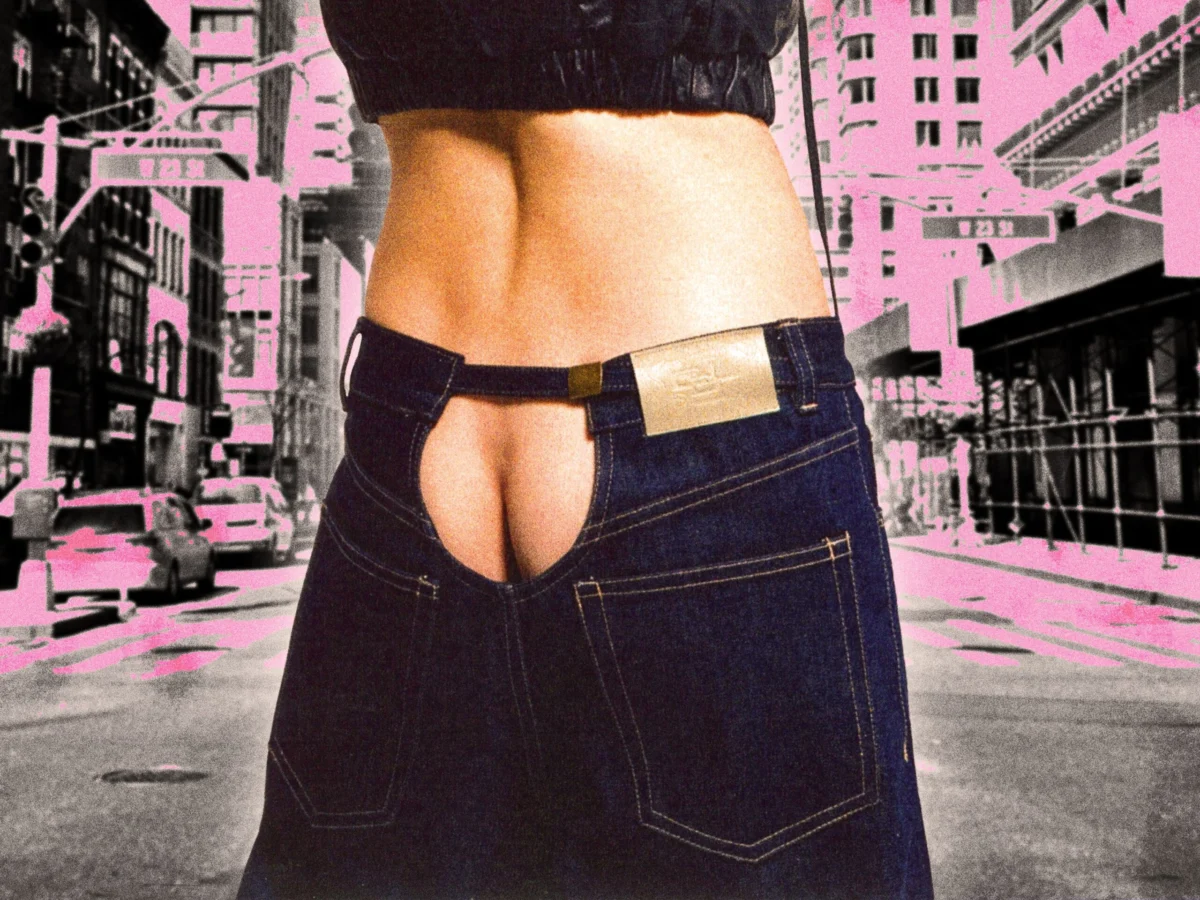
The landscape of contemporary fashion has always been a battlefield between the modest and the provocative, but the Spring 2027 season of New York Fashion Week (NYFW) has officially pushed the boundaries into territory that many previously considered a wardrobe malfunction. Leading the charge is Emily Dawn Long, a designer who has built a reputation on being unapologetically "saucy." Long, a nominee for the prestigious CFDA Award for Emerging Designer of the Year, has long been a favorite of the downtown Manhattan in-crowd. Her signature screen-printed tees, emblazoned with provocative phrases like “Take Off Your Clothes” or illustrations of ladybugs in the midst of coitus labeled “Bug Me,” have become cult staples in the city’s most exclusive dive bars and galleries. However, for her latest collection, cheekily titled “The Crack of Dawn,” Long decided to elevate her brand of subversion from graphic prints to architectural exposure, bringing unprecedented levels of anatomical daring to the runway.
On display throughout her show was a wide and deliberate array of derriere cleavage. Through a series of low-slung dresses, sagging low-rise bottoms, and sacrum-cut jeans, Long made it clear that the focus of the season was shifting significantly southward. “Butt cracks were the basis for the collection itself,” Long explained in a post-show interview. The genesis of the line was a single yellow "crack dress," a garment designed specifically to frame the upper gluteal cleft. From there, Long pushed the envelope further, experimenting with Japanese men’s denim that featured a rear opening designed to mimic the adjustable back of a baseball cap. This wasn’t just a gimmick; it was a study in framing the human form in ways that feel both nostalgic for the early 2000s and radically new in their execution.
While Emily Dawn Long may have been the most vocal proponent of the "butt crack" resurgence, she was far from alone. Her collection forecasted a trend that permeated the rest of the week, showing up in both menswear and womenswear across several high-profile shows. At Marcus Allen’s debut ready-to-wear collection for his vintage-inspired brand, The Society Archive, the look took on a more utilitarian, albeit daring, aesthetic. Known for his keen eye for archival pieces and "vintage-slinging" roots, Allen integrated the trend into khaki low-rise drawstring bottoms and slouchy board shorts. Here, the exposure felt accidental and effortless, evoking a sense of "skater boy" nonchalance that resonated with the audience’s desire for authentic, unstudied style.
Similarly, at Eckhaus Latta, a brand synonymous with pushing the boundaries of gender and silhouette, onlookers were treated to glimpses of the upper glute through hip-grazing dijon-colored jeans. The Eckhaus Latta interpretation felt more grounded in the art-school aesthetic the brand is known for—using the exposure as a way to challenge traditional notions of "flattering" fits. The recurring presence of this silhouette suggests that we are witnessing more than just a fleeting stunt; we are entering what Long aptly describes as "the dawn of the crack."

The sociological and environmental factors contributing to this trend are manifold. One cannot ignore the record-setting heat of the summer of 2026, which likely influenced designers to seek out new ways to provide ventilation and celebrate the body’s natural cooling mechanisms. Furthermore, the relentless resurgence of Y2K style—a period defined by the ultra-low-rise "Bumster" jeans popularized by Alexander McQueen and the hip-clinging styles worn by pop icons like Britney Spears and Christina Aguilera—has finally reached its logical, or perhaps illogical, conclusion. In the early 2000s, the "whale tail" (the sight of a thong peeking above a waistband) was the height of provocation. In 2027, designers have removed the middleman, opting for the direct exposure of the skin itself.
The history of this "stuntiness" is deeply rooted in the fashion canon. To understand the current moment, one must look back to Tom Ford’s legendary tenure at Gucci. During his Spring/Summer 1997 show, Ford sent male models down the runway in G-strings that left nothing to the imagination, showcasing the cheek and the crack with a level of eroticism that redefined 90s luxury. More recently, in 2025, the brand Diesel, under the creative direction of Glenn Martens, prominently featured upper gluteal exposure during its Milan Fashion Week show. At the time, the display was rare enough to leave "prudish observers" confused, unsure if they were witnessing a revolutionary design choice or a simple fitting error.
However, time and reflection have worked wonders for what was once considered NSFW (Not Safe For Work) displays of skin. In 2026, Vogue famously declared it the "Year of the Butt Crack," but even that proclamation underestimated the trend’s staying power and its cross-gender appeal. As designers command our line of sight lower and lower below the waistline, the sensuality of the sacrum—the triangular bone at the base of the spine—is being brought into sharp focus.
Designer Kate Walz, whose Spring/Summer 2027 show titled “Vestige” also featured low-worn skirts that revealed the upper glute, offers a more philosophical perspective on the trend. “I’m interested in the tension between concealing the body and giving permission to observe it,” Walz notes. Her collection balanced reserved, almost Victorian-inspired pieces with deliberate cutouts. “Sometimes the clothes are quite reserved, but then they deliberately expose or frame a part of the body I find particularly sensual—the hollow of an armpit, the small of a back, a collarbone, the slightest glimpse of the upper butt.” For Walz and her contemporaries, the "butt crack" isn’t about vulgarity; it’s about the "small of the back" and the delicate transition points of the human anatomy.
Despite its success on the runway, the practical application of the trend remains a subject of debate. It is certainly not for the faint of heart, nor is it suitable for the majority of professional office environments. Even in the most progressive creative agencies, the "dawn of the crack" might be a bridge too far for a Monday morning meeting. However, fashion is rarely about what is practical; it is about what is possible. For an evening stroll through the winding streets of the West Village, a late-night set at an underground club, or a day at a fashion-forward beach, the look offers a way to participate in a cultural moment that prioritizes bodily autonomy and aesthetic daring.

For those brave enough to adopt the trend, there are practical considerations to keep in mind. The runway models possess a level of poise and "gluteal confidence" that requires preparation. Experts suggest that if you are committed to the look, the area must be kept clean and well-groomed. Moreover, the trend has sparked a renewed interest in targeted fitness. As the focus shifts to the lower back and upper glutes, specialized exercises like hip thrusts, deadlifts, and glute bridges have become the "new bicep curls" for the fashion-conscious.
The "Dawn of the Crack" also raises interesting questions about the future of gender-neutral fashion. While low-rise trends have traditionally been marketed toward women, the inclusion of male models in the shows of Emily Dawn Long and The Society Archive suggests a leveling of the playing field. Men are being given the same "permission to observe" and be observed, breaking down long-standing taboos regarding the male physique and sensuality.
As NYFW Spring 2027 comes to a close, the industry is left to grapple with the implications of this downward-migrating waistband. Is it a sign of a more liberated society, comfortable with the realities of the human form? Or is it a desperate attempt to grab headlines in an increasingly crowded digital landscape? Perhaps it is both. What is certain is that Emily Dawn Long and her peers have succeeded in making the world look twice. By framing the most "ordinary" part of the body as a high-fashion focal point, they have reminded us that fashion’s primary job is to challenge our perceptions of beauty and the boundaries of the acceptable. Whether or not the "butt crack" becomes a mainstay of the suburban mall, its impact on the high-fashion zeitgeist is undeniable. We are living in a new era of exposure, where the "small of the back" has finally found its voice.
