
 By admin
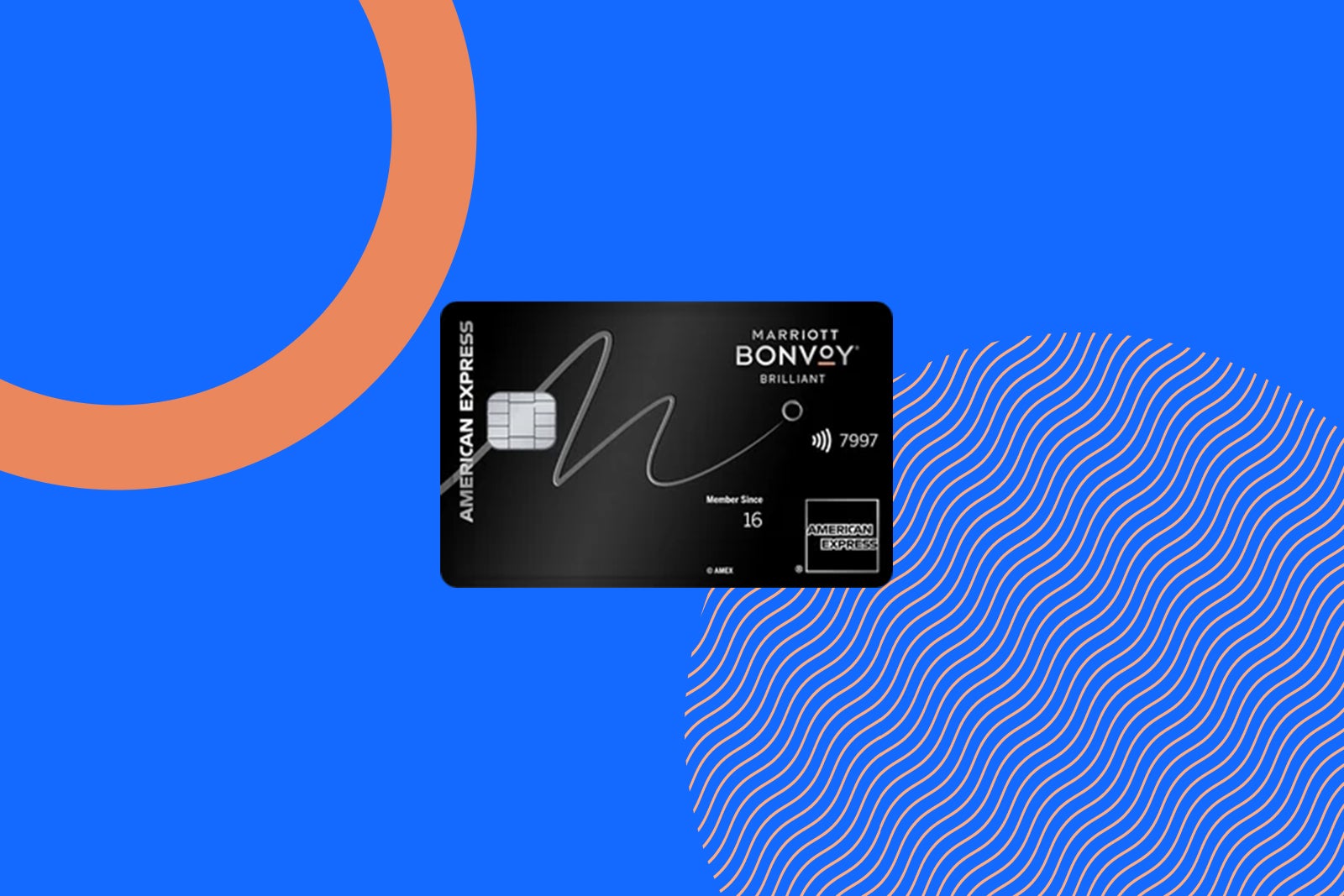
When a credit card’s annual fee runs into the hundreds of dollars, many people raise an eyebrow and question whether its benefits justify that fee. This skepticism is a natural reaction to the current landscape of the premium credit card market, where "fee creep" has become a standard industry practice. Among the most prominent examples of this trend is the Marriott Bonvoy Brilliant® American Express® Card. As the flagship offering in the Marriott Bonvoy credit card portfolio, it commands a substantial $650 annual fee—a price point that places it in the same tier as the Centurion-style luxury products. However, for the frequent traveler and the Marriott loyalist, the card’s suite of premium benefits, elite status, and annual credits are designed to not only offset the cost but to provide a net positive return on investment.
The value proposition of a high-end hotel card is fundamentally different from that of a general travel rewards card like the American Express® Gold Card or the Chase Sapphire Preferred®. While general cards focus on flexible spending across various categories, cobranded hotel cards are built to enhance the "on-property" experience. The Marriott Bonvoy Brilliant is less of a tool for maximizing every dollar spent at the grocery store and more of a membership pass to a more luxurious travel experience. To determine if the card earns its place in your wallet, one must look past the sticker shock and analyze the mathematical reality of its perks.
The Welcome Offer: A High-Value Entry Point
For prospective cardmembers, the initial value is anchored by the welcome offer. Currently, new Marriott Bonvoy Brilliant Amex cardmembers can earn 150,000 bonus points and a $250 statement credit after spending $6,000 on purchases within the first six months of account opening. This limited-time offer, which expires on September 30, represents one of the most aggressive acquisition plays by American Express in recent years.

When evaluating this bonus, context is key. Industry valuations, including those from The Points Guy as of September 2026, typically peg Marriott Bonvoy points at approximately 0.75 cents each. By this metric, the 150,000 points alone are worth $1,125. When combined with the $250 statement credit, the total introductory value surges to $1,375. This effectively covers the card’s annual fee for more than two years. These points can be leveraged for high-end redemptions at properties that often command nightly rates exceeding $1,000, such as The Ritz-Carlton, Turks & Caicos, or the St. Regis Aspen Resort during peak ski season.
However, potential applicants must navigate the complex eligibility matrix between American Express and Chase. Because both issuers offer Marriott products, there are strict "anti-stacking" rules. If you have recently held or received a bonus for the Marriott Bonvoy Bountiful, the Marriott Bonvoy Boundless, or the Marriott Bonvoy Business card, you may be ineligible for the Brilliant’s welcome offer. American Express utilizes a "pop-up" tool during the application process to notify users if they do not qualify for the bonus, a feature that prevents a hard credit pull if the applicant decides not to proceed.
The $300 Dining Credit: Offsetting the Fee Monthly
One of the most direct ways the card offsets its $650 fee is through the $300 annual dining credit. Unlike the previous iteration of this card, which offered a $300 credit specifically for Marriott property purchases, the current version provides up to $25 per month in statement credits for dining at restaurants worldwide.
From a logical perspective, this is a "use it or lose it" benefit. For a traveler who eats out or orders delivery at least once a month, this credit is as good as cash. If fully maximized, it reduces the effective annual fee to $350. While some critics argue that the monthly cadence is a "breakage" strategy—designed by the bank in the hope that consumers will forget to use it—the broad definition of "dining" makes it relatively easy to trigger. It includes everything from fine dining to fast food and even some delivery services.
Automatic Platinum Elite Status: The "Sweet Spot" of Loyalty
Perhaps the most significant "soft" benefit of the Marriott Bonvoy Brilliant is the automatic Marriott Platinum Elite status. In the world of hotel loyalty programs, Platinum is widely considered the "sweet spot" where tangible luxury perks begin. Under normal circumstances, achieving Platinum status requires staying 50 nights a year at Marriott properties.
The benefits of Platinum status are extensive and can drastically alter the cost of a trip. Key perks include:
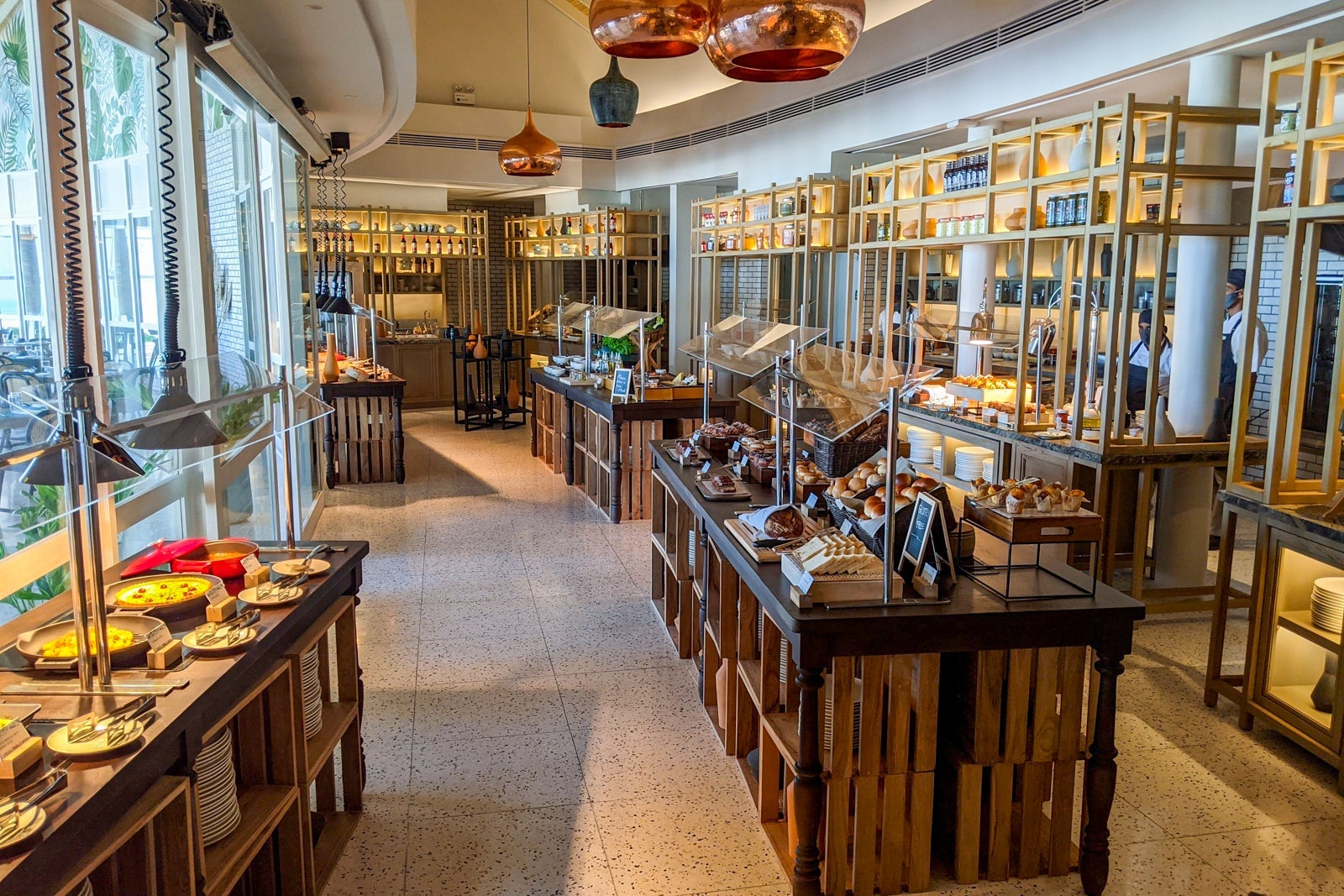
- Complimentary Breakfast: Available at most Marriott brands (with some exceptions like Ritz-Carlton and Edition), this can save a family of four upwards of $100 per day at high-end resorts.
- Suite Upgrades: Platinum members are eligible for space-available upgrades to "select suites" at check-in.
- Lounge Access: Entry to Executive Lounges, which offer complimentary snacks, beverages, and often evening hors d’oeuvres.
- 4 p.m. Late Checkout: A guaranteed benefit at most properties, which is invaluable for those with evening flights.
- Enhanced Point Earning: A 50% bonus on points earned during stays.
For the traveler who stays at Marriott hotels 10 to 15 nights a year but doesn’t hit the 50-night threshold naturally, the value of this status alone can justify the card. If one values a hotel breakfast at $25 and a suite upgrade at $50 per night, a single 10-night stint can yield $750 in theoretical value.
The 85,000-Point Free Night Award
Each year after your card renewal month, you receive a Free Night Award (FNA) worth up to 85,000 points. This is a significant upgrade from the 50,000-point certificates found on mid-tier cards. An 85,000-point certificate is powerful enough to book rooms at "Category 8" level properties (under the old system) or top-tier luxury hotels under the current dynamic pricing model.

Properties like The Ritz-Carlton, Kyoto, or the St. Regis New York often hover around the 85,000 to 100,000-point range. A unique feature of the Marriott program is the ability to "top off" these certificates with up to 15,000 additional points from your account. This means you can effectively use the Brilliant’s FNA for a room costing up to 100,000 points. Given that these rooms often retail for $800 to $1,200 per night, the FNA can, by itself, zero out the annual fee if used strategically.
The limitation, however, is that it is a single-night award. For longer stays, travelers must either pay cash for subsequent nights, use additional points, or move to a different hotel. Despite this, for a luxury "staycation" or a final night of a honeymoon, the value is undeniable.
Elite Night Credits and the Path to Titanium
For those who are chasing even higher status, the Marriott Bonvoy Brilliant provides 25 Elite Night Credits (ENCs) annually. This is the highest number of ENCs offered by any Marriott personal card. These credits don’t just grant you status; they count toward your lifetime status totals and toward the 50-night and 75-night Choice Benefit thresholds.
A popular strategy among "points and miles" experts is to stack this card with the Marriott Bonvoy Business® American Express® Card. The business card provides 15 ENCs. Because Marriott allows you to stack one set of personal ENCs with one set of business ENCs, holding both cards gives you a head start of 40 nights per year. This leaves you only 35 nights away from Titanium Elite status, which offers even better upgrade priority and a 75% point bonus.

Ancillary Benefits and Earning Structure
The card also includes several "quality of life" travel perks:
- Priority Pass Select Membership: Provides access to over 1,200 airport lounges. Note that this version excludes "non-lounge" experiences like airport restaurants, a change implemented by Amex across its premium portfolio.
- Global Entry/TSA PreCheck Credit: A statement credit of up to $120 every four years for Global Entry or $85 every 4.5 years for TSA PreCheck.
- $100 Property Credit: Available on two-night minimum stays at Ritz-Carlton or St. Regis properties when booking a special "Member Global Rate." This credit can be used for spa services, dining, or other on-property activities.
In terms of earning points, the card is specialized. It earns 6 points per dollar spent at hotels participating in Marriott Bonvoy, 3 points per dollar at worldwide restaurants and on flights booked directly with airlines, and 2 points per dollar on all other eligible purchases. While 2 points per dollar on "everything else" sounds decent, at a 0.75-cent valuation, that is only a 1.5% return. Most savvy spenders will prefer a 2% cash-back card or a card that earns 2x transferable points (like the Capital One Venture X) for non-category spending.
Is It Worth It? The Final Analysis
The Marriott Bonvoy Brilliant is not a card for everyone. If you are an infrequent traveler who stays at select-service hotels like Fairfield Inn or Courtyard, the $650 fee is likely too high. The perks of Platinum status—like lounge access and suite upgrades—are often non-existent at these lower-tier brands.
However, for the luxury-oriented traveler who spends at least five to ten nights a year at Marriott’s premium brands (St. Regis, Ritz-Carlton, W Hotels, JW Marriott, Edition), the math is compelling. Between the $300 dining credit and the 85,000-point free night award, the "hard value" can easily exceed $1,000. When you add the "soft value" of Platinum Elite status—breakfast, upgrades, and late checkout—the card often pays for itself several times over.
In the competitive landscape of premium hotel cards, the Brilliant stands tall alongside the Hilton Honors American Express Aspire Card. While the Hilton Aspire offers Diamond status for a lower fee, Marriott’s vastly larger global footprint (over 8,000 properties) gives the Brilliant a significant utility advantage. Ultimately, the Marriott Bonvoy Brilliant is a "lifestyle" card. If you want to guarantee a higher level of service and comfort every time you check into a Marriott property, the $650 annual fee is a calculated investment in a superior travel experience.
