
 By admin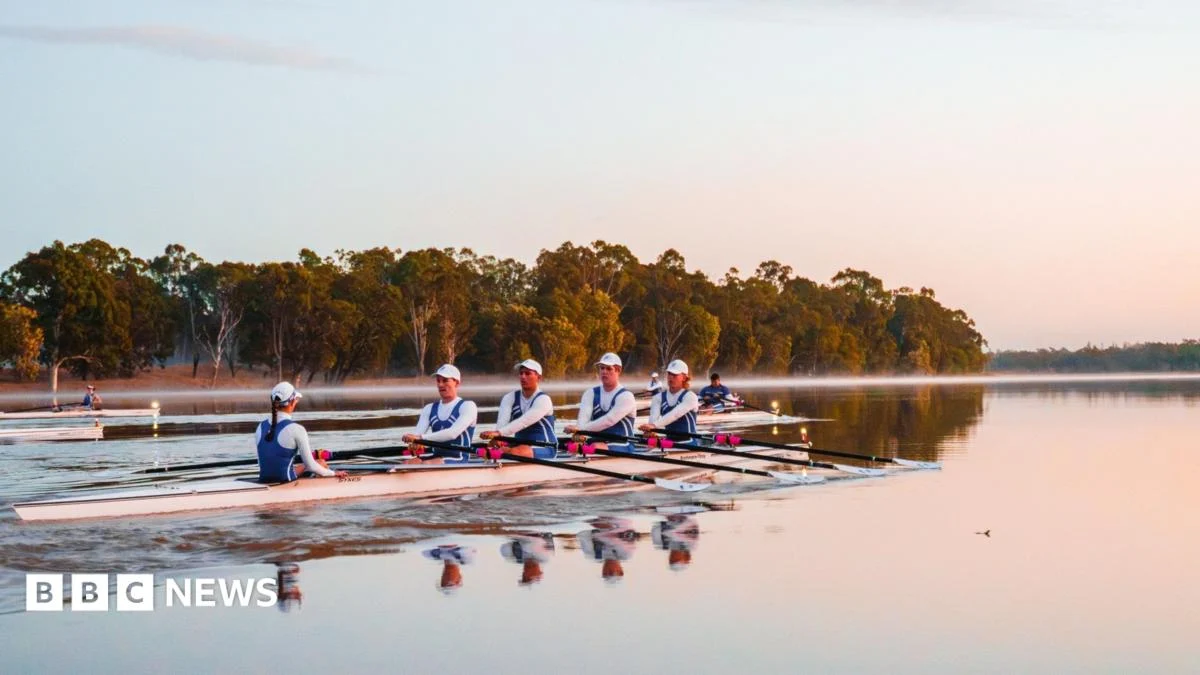
The annual school rowing regatta on Queensland’s Fitzroy River, a typically low-key event, has found itself thrust into the international spotlight as it gears up to host the rowing and canoe sprint events for the 2032 Brisbane Olympic and Paralympic Games. This weekend, over 600 of the state’s most promising teenage rowers are competing on the river, a body of water that is home to a significant population of saltwater crocodiles. While this venue’s Olympic aspirations have been officially confirmed following a technical assessment, the decision has ignited debate among rowing officials and stakeholders regarding the river’s suitability, with concerns ranging from the presence of apex predators to the inherent fairness of the racing conditions.
For Anthea O’Loughlin, head of Rowing Queensland, the increased media attention is a stark contrast to previous years. "We’ve never had any media wanting to attend before," she told the BBC, highlighting the unusual nature of the current scrutiny. This newfound interest stems directly from the 2032 Games, with the Fitzroy River identified as the chosen location for the rowing and canoe sprint disciplines. The recent technical assessment, which has now endorsed the river as safe and fair for athletes, marks a critical milestone in this ambitious plan.
The presence of saltwater crocodiles, numbering around 500 and capable of reaching lengths of up to four meters (13 feet), is an undeniable characteristic of the Fitzroy River. While sightings are not uncommon, official state government records, spanning over four decades, indicate no instances of crocodile attacks on humans within the river. Despite this historical data, the reptilian inhabitants have become a focal point of international discussion, often overshadowing other logistical and technical considerations.
During last month’s World Rowing congress in Amsterdam, influential figures from the international rowing community did raise concerns, though the primary focus was not on the crocodiles. Instead, the concept of "fairness" dominated the discussions. British Rowing’s chief executive, Tom Solesbury, was among those who engaged in these conversations, which centered on the tidal nature of the Fitzroy River and its inherent bends and currents. Many within the rowing fraternity believe these natural characteristics render the river unsuitable for elite-level competition, where consistent and predictable conditions are paramount.
Drew Ginn, a decorated Australian rower with three Olympic gold medals to his name, voiced his apprehensions regarding potential flooding and the "fairness and integrity" of the proposed venue. While Ginn admitted he wasn’t fearful of Australian wildlife, he acknowledged the novelty of the situation, stating, "Personally, I’m not fearful of the Australian animals but I’ve never had a crocodile near me. I’m sure I’d row faster, I’m sure all the athletes would row faster. That’s on the list of concerns, I don’t think it’s the highest priority in concerns but it was certainly cited very early on." His sentiment suggests that while crocodiles are a factor, the integrity of the competition remains a more pressing issue for seasoned athletes.
Adding another layer to the debate, Moritz Petri, president of the German rowing federation, highlighted concerns about the sustainability of hosting an Olympic event approximately 600 kilometers (373 miles) away from Brisbane. This logistical challenge, coupled with the perceived drawbacks of the Fitzroy River itself, has fueled skepticism among some international bodies.
However, these "so-called impediments" have been met with a robust and often less diplomatic response from Queensland’s Premier, David Crisafulli. Days after the Amsterdam meeting, Crisafulli did not mince words, stating, "Let’s be honest, let’s scratch beneath the surface and call it for what it is. It is a group of interstate and overseas elites who are trying to bully their way because they don’t want to go to regional Queensland and that’s not right." His remarks were interpreted as a direct challenge to the validity of the concerns raised by international rowing officials, framing it as an attempt to avoid a regional location rather than a genuine assessment of sporting fairness.
Rowing chiefs contacted by the BBC prior to the official decision declined to comment directly on Premier Crisafulli’s "elites" remarks. However, both Moritz Petri and Simon Wickham, chief executive of Rowing New Zealand, reiterated that their concerns were not rooted in any preference for urban versus regional locations. Instead, they emphasized their commitment to ensuring fair racing for competitors. Petri further elaborated that the focus was on what is best for their athletes, who dedicate years of training with the ultimate goal of Olympic glory. "Dreaming night [after] night of becoming an Olympic champion," he stated. Ginn echoed this sentiment, defining "elite" as possessing expertise gained over decades in the sport, and expressed pride in that distinction.
Ultimately, the decision regarding the Fitzroy River’s suitability rested with the sport’s governing bodies, World Rowing and the International Olympic Committee (IOC). On Thursday, they officially approved the venue after a comprehensive technical assessment. This assessment was conducted by an engineering firm and the Games’ infrastructure authority, meticulously examining the riverbed, competition course, river flows, water levels, and anticipated weather conditions during the Olympic period.
"Based on the extensive analysis undertaken, we now know that the Fitzroy River is capable of providing fair competition conditions during the period of the Games," announced Jean-Christophe Rolland, President of World Rowing. Confidence in the river’s suitability for canoe sprint athletes was also expressed by Thomas Konietzko, president of the sport’s governing body, Paddle Worldwide.
The Premier was understandably delighted with the outcome. "The Fitzroy has passed with flying colours," Crisafulli declared to parliament, exuding an upbeat tone. "It’s official. Signed, sealed and delivered."
This endorsement, however, comes despite the state government itself commissioning a report in 2025 that had deemed the location unsuitable. That report had suggested that a course built in Sydney for the 2000 Olympics would be the optimal choice. The Fitzroy River venue now awaits a final assessment concerning its design, value for money, and long-term community legacy. Given that the decision rests with the state government, it is anticipated that this hurdle will be cleared. Nevertheless, a broader discussion is expected to persist regarding the substantial investment in rowing facilities in Rockhampton and its capacity to accommodate the influx of visitors during the 2032 Games. Rockhampton, a city deeply connected to its agricultural roots, particularly cattle production, typically experiences its peak visitor numbers every three years during the annual Beef Week.
The persistent question of the crocodiles, however, remains a subject of public fascination. Notably, they are not mentioned in the latest update from the IOC and World Rowing, nor were they referenced in the media release concerning the technical assessment, the full report of which has not yet been publicly released. Conversely, the safety management plan for this weekend’s school regatta dedicates significant attention to the reptiles, with the word "crocodile" appearing 28 times. The plan explicitly states, "The Fitzroy River is within recognised crocodile country. Event planning must therefore assume that a crocodile sighting is possible… No natural waterway in crocodile country can be guaranteed to be crocodile-free."
The safety protocols for the current regatta are stringent, including the immediate suspension of racing and the return of competitors to the riverbank upon any crocodile sighting. The official signal for such an event is the repeated call of "crocodile, crocodile, crocodile."
When specifically questioned about the crocodiles, New Zealand’s Simon Wickham reiterated that the primary concern was ensuring the "fairest possible course" for rowers. He added, "We would obviously expect any course chosen to be safe for rowers." Hancock Prospecting, a company owned by Australia’s wealthiest individual, Gina Rinehart, which has significantly supported Rockhampton’s bid and invested heavily in sports including rowing, has dismissed concerns about flood and crocodile risks as "fake media." A spokesperson for Hancock Prospecting stated, "The people of Rocky for many years have sent their own children to train in this river, and for competitions, without a single crocodile incident."
Adding further nuance to the crocodile debate, those who argue the media’s focus is overblown suggest that the largest and most dangerous saltwater crocodiles tend to inhabit the downstream areas of the river. They contend that the less aggressive freshwater crocodiles are more likely to be encountered in the designated rowing arena.
The Queensland government also contests the extent of the flood risk. However, Rowing Queensland’s Anthea O’Loughlin has pointed to a practical example, noting that their schools’ event, originally scheduled for the Fitzroy in August 2024, had to be relocated after the course was washed away by flooding. In response to these potential challenges, Brisbane 2032’s chief executive has assured that organizers are developing contingency plans "as we would for any venue." The 2000 Olympic venue in Sydney remains a ready backup option, though the prospect of hosting the rowing events outside of Queensland would be viewed as a significant disappointment by state officials and residents.
