
 By admin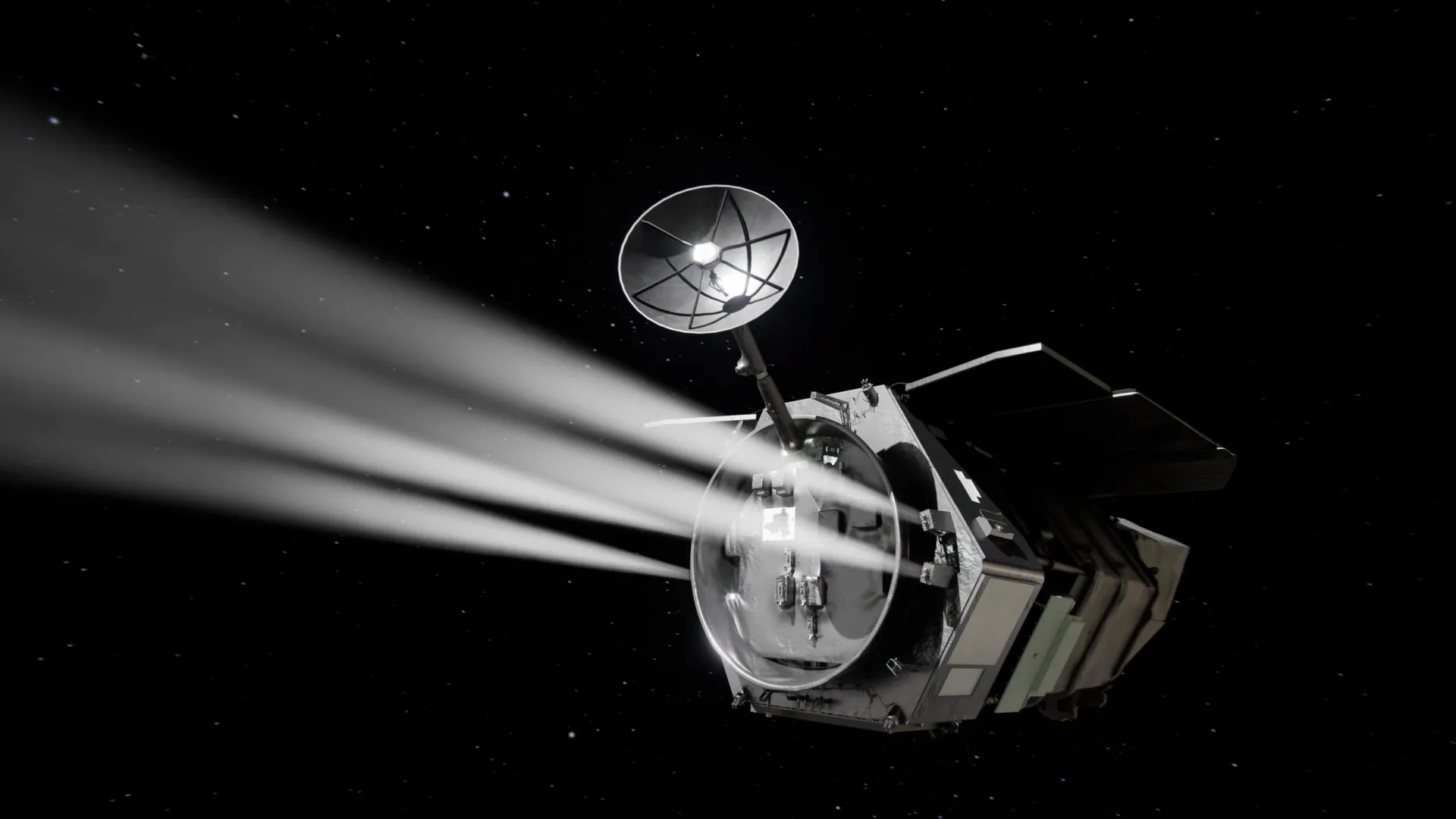
The remarkable news heralds a future filled with extended opportunities for cosmic discovery, promising an unparalleled wealth of data for astronomers worldwide. "As a result of exquisite planning by our orbital dynamics team, brilliant execution by the operations team, and a precise launch from SpaceX, Roman has fuel for at least 22 years of potential science operations," stated Jamie Dunn, center director at NASA’s Goddard Space Flight Center in Greenbelt, Maryland. This statement underscores a rare confluence of meticulous engineering, strategic foresight, and flawless execution that has set the stage for an extraordinary scientific endeavor.
Several critical factors have converged to enable this dramatic extension, painting a picture of efficiency and precision. Roman expended far less fuel than anticipated during its initial course correction maneuver, a testament to the accuracy of both its launch trajectory and the subsequent orbital adjustments. Furthermore, the spacecraft carried additional propellant at launch, a fortunate consequence of its final mass being considerably lower than conservative estimates. These savings are projected to continue, with even more fuel conservation expected during its second mid-course correction and the intricate orbital insertion phase around its ultimate destination, the Sun-Earth L2 Lagrange point.
Roman Was Originally Designed for 10 Years: A Foundation for Extension
The Nancy Grace Roman Space Telescope was initially conceived with a robust operational plan: a five-year primary mission followed by a five-year extended mission, culminating in a total fuel budget intended to support 10 years of scientific observations. This initial decade-long design provided a solid foundation, allowing engineers to meticulously plan for the spacecraft’s longevity. In space, propellant is the primary consumable resource, dictating the operational lifespan of a mission once all other systems remain functional. Every kilogram of fuel saved during its complex journey to L2 can translate directly into additional months or even years of invaluable scientific observations, pushing the boundaries of our understanding of the cosmos.
The concept of mission extensions is not new in space exploration; many of NASA’s most iconic observatories, such as the Hubble Space Telescope and the Spitzer Space Telescope, have far outlived their original design lives, delivering transformative science for decades. Roman’s current trajectory suggests it could join this esteemed group, becoming a long-duration sentinel of the universe.
First Maneuver Could Add Four Years: A Masterclass in Orbital Dynamics
The first critical adjustment to Roman’s flight path occurred on August 31, when the observatory carried out its initial burn. This maneuver, known as a mid-course correction (MCC), is vital for precisely aligning the spacecraft’s trajectory towards its eventual halo orbit around L2. Since this pivotal event, the mission team has been diligently analyzing the maneuver’s impact on Roman’s long-term fuel reserves, and the results have been overwhelmingly positive.
The precision achieved during this first burn was nothing short of remarkable. The maneuver was completed with over 99% accuracy, an extraordinary feat that minimized the need for compensatory adjustments. Critically, it consumed a mere fraction – less than 10% – of the fuel originally reserved for it. Roman utilized approximately 40 pounds (18 kilograms) of propellant, a staggering reduction compared to the planned allocation of 441 pounds (200 kilograms). This 90% reduction in fuel usage for a single, albeit crucial, maneuver immediately translated into substantial gains for the mission’s longevity.
These initial savings alone are projected to provide roughly four additional years of potential science operations. This efficiency is a direct testament to the advanced algorithms, precise navigation techniques, and the skilled operations team that commanded the burn. Such precision in the early stages of a mission is paramount, as even minor deviations can accrue over millions of miles, demanding more significant and fuel-intensive corrections later on. The near-perfect execution of this first burn demonstrates the robustness of Roman’s design and the expertise of its ground teams.
Extra Fuel at Launch Could Add Another Four Years: A Fortuitous Weight Advantage
Beyond the operational efficiency of its first maneuver, Roman also embarked on its journey with an unexpected boon: more propellant available at launch than mission planners had initially anticipated needing. This advantageous situation stemmed from a conservative yet standard engineering practice. Engineers typically calculate a spacecraft’s maximum potential fuel requirements based on a worst-case scenario or a maximum permissible launch weight. For Roman, this conservative maximum weight was estimated at 21,605 pounds (9,800 kilograms).
However, as the spacecraft progressed through its design, integration, and testing phases, its actual mass came in significantly lower than this conservative estimate. Roman ultimately weighed just 17,760 pounds (8,056 kilograms) at launch. This substantial reduction of nearly 4,000 pounds (approximately 1,800 kilograms) had a cascading positive effect.
Firstly, a lighter spacecraft inherently requires less energy, and therefore less fuel, to execute its mid-course corrections and accelerate towards its distant L2 destination. The physics dictates that less mass equals less force needed for a given acceleration. Secondly, and perhaps more importantly, Roman’s lower actual mass allowed the team to fully load its propellant tanks to capacity. Instead of carrying only the precisely calculated amount of fuel required for the original 10-year mission, the additional "wiggle room" provided by the lighter spacecraft meant they could fill the tanks to their maximum volume.
Alison Rao, the Roman propulsion lead at NASA Goddard, explained this critical aspect: "A spacecraft’s mass changes throughout the design and build process, so we base the propellant budget on a set maximum value so we won’t come up short. We track the propellant needed based on actual mass throughout integration and testing as well, to make sure we have wiggle room. Since Roman’s was lower than we budgeted for, we were able to fill the propellant tanks to their capacity rather than only filling them as much as we needed to for the 10-year requirement." This additional, unforeseen propellant capacity could support approximately four more years of operations, adding to the longevity gained from the precise first burn.
More Fuel Savings Expected Ahead: The Road to L2 and Beyond
The benefits of Roman’s successful and highly accurate first mid-course correction are not isolated; they are expected to ripple through the subsequent phases of its journey. Because the first maneuver was executed with such precision, the need for a large correction during the second mid-course adjustment will be significantly diminished, potentially conserving even more propellant.
Mission controllers can now afford to wait longer before initiating this follow-up adjustment, which is currently scheduled for later this month. This second burn will provide the final amount of energy Roman needs to reach its targeted position, allowing it to smoothly transition into its permanent halo orbit around L2. Roman is anticipated to arrive at L2 approximately 100 days after launch, around early December.
Current estimates optimistically indicate that both the second correction and the subsequent orbital insertion burn should require substantially less fuel than originally budgeted. Together, these projected savings could provide approximately another four additional years of potential mission life, further bolstering the observatory’s already extended operational period. This cumulative efficiency means even more propellant will be available for future scientific work, expanding the mission’s scope and duration.
Once Roman successfully settles into its stable halo orbit around L2, maintaining its position will require only periodic station-keeping burns, typically performed about once every 28 days. These routine adjustments are designed to counteract minor gravitational perturbations from the Sun and Earth, ensuring the telescope remains precisely positioned for its observations. The significant fuel reserves accumulated during the transit phase will ensure ample propellant for these critical station-keeping maneuvers for many years to come.
The Nancy Grace Roman Space Telescope: A New Era of Cosmic Exploration
The Nancy Grace Roman Space Telescope, formerly known as WFIRST (Wide Field Infrared Survey Telescope), is NASA’s next-generation observatory designed to tackle some of the most profound questions in astrophysics. Named in honor of Nancy Grace Roman, NASA’s first chief astronomer and the "Mother of Hubble," the telescope features a 2.4-meter primary mirror, identical in size to Hubble’s, but with a revolutionary Wide Field Instrument (WFI) that provides a field of view 100 times larger than Hubble’s infrared instrument. This unique capability allows Roman to capture vast swathes of the cosmos with Hubble-quality resolution, making it an unprecedented tool for wide-field surveys.
Positioned at L2, a gravitationally stable point roughly 1.5 million kilometers (1 million miles) from Earth in the direction opposite the Sun, Roman will enjoy an unobstructed view of the universe, free from the interference of Earth’s atmosphere and thermal radiation. This strategic location is shared by other premier observatories, such as the James Webb Space Telescope (JWST), offering a stable and cold environment ideal for infrared astronomy.
Unlocking Cosmic Secrets: The Scientific Bounty of an Extended Mission
The prospect of an extended mission for Roman is not merely about operational longevity; it’s about maximizing scientific return and pushing the boundaries of discovery. With potentially 22 years or more of operational life, Roman’s scientific impact could be truly transformative across several key areas:
-
Dark Energy and the Expanding Universe: Roman’s primary mission is to investigate dark energy, the mysterious force accelerating the expansion of the universe. Through two main methods – weak gravitational lensing and baryon acoustic oscillations (BAO) – Roman will create detailed maps of the distribution of dark matter and galaxies across cosmic time. An extended mission means larger survey areas, deeper observations, and more precise statistical measurements, leading to a much clearer understanding of dark energy’s nature and evolution. Longer observation periods also allow for more accurate measurements of changes in cosmic expansion over time, providing critical data points for cosmological models.
-
Exoplanet Discovery through Microlensing: Roman will conduct an unprecedented exoplanet survey using the gravitational microlensing technique. This method allows for the detection of planets down to the mass of Mars, including free-floating planets not orbiting any star, and those located at greater distances from their host stars, similar to Jupiter and Saturn in our solar system. An extended mission would significantly increase the number of microlensing events observed, dramatically boosting the statistical sample of exoplanets discovered, especially those in the outer regions of planetary systems, which are difficult to find with other methods. This could revolutionize our understanding of planet formation and the prevalence of planetary systems throughout the Milky Way.
-
General Astrophysics and Time-Domain Astronomy: Beyond its primary objectives, Roman will be a powerful general-purpose observatory. Its wide field of view and high resolution will enable extensive surveys of galaxies, star formation regions, and supernova events. An extended mission would allow for longer-duration time-domain astronomy, observing celestial objects for years to detect subtle changes, transient phenomena, and the evolution of cosmic structures. This includes monitoring active galactic nuclei, studying the dynamics of galaxy clusters, and surveying our own galaxy for variable stars and stellar populations. The sheer volume of data from an extended mission would provide an invaluable archive for generations of astronomers.
A Legacy of Longevity: Parallels with Other Great Observatories
The potential for Roman’s extended mission echoes the success stories of other flagship observatories. The Hubble Space Telescope, launched in 1990 with a planned 15-year lifespan, continues to deliver breathtaking science over three decades later, thanks to servicing missions and robust engineering. The Spitzer Space Telescope, designed for a 2.5-year primary mission, operated for over 16 years, revolutionizing infrared astronomy. Even the James Webb Space Telescope, which also launched with exceptional precision, benefited from highly efficient burns that dramatically increased its projected fuel life, promising decades of observations.
These examples highlight a critical lesson in space exploration: while primary missions are essential for initial scientific goals, the true legacy often comes from the extended phases, where unexpected discoveries are made, and long-term trends can be observed. Roman’s prospective longevity places it firmly within this tradition, ensuring its profound impact on our understanding of the universe will endure for decades to come.
In conclusion, the Nancy Grace Roman Space Telescope’s journey has begun with an auspicious start, marked by engineering excellence and an unexpected bounty of fuel. This dramatic extension of its potential operational life represents not just a technical triumph but a profound expansion of humanity’s capacity for cosmic exploration. With the promise of decades of observation, Roman is poised to deliver an unprecedented trove of data, unlocking secrets about dark energy, unveiling new worlds, and painting a more complete picture of the universe we inhabit, cementing its place as a cornerstone of 21st-century astrophysics.
