
 By Titik Puspa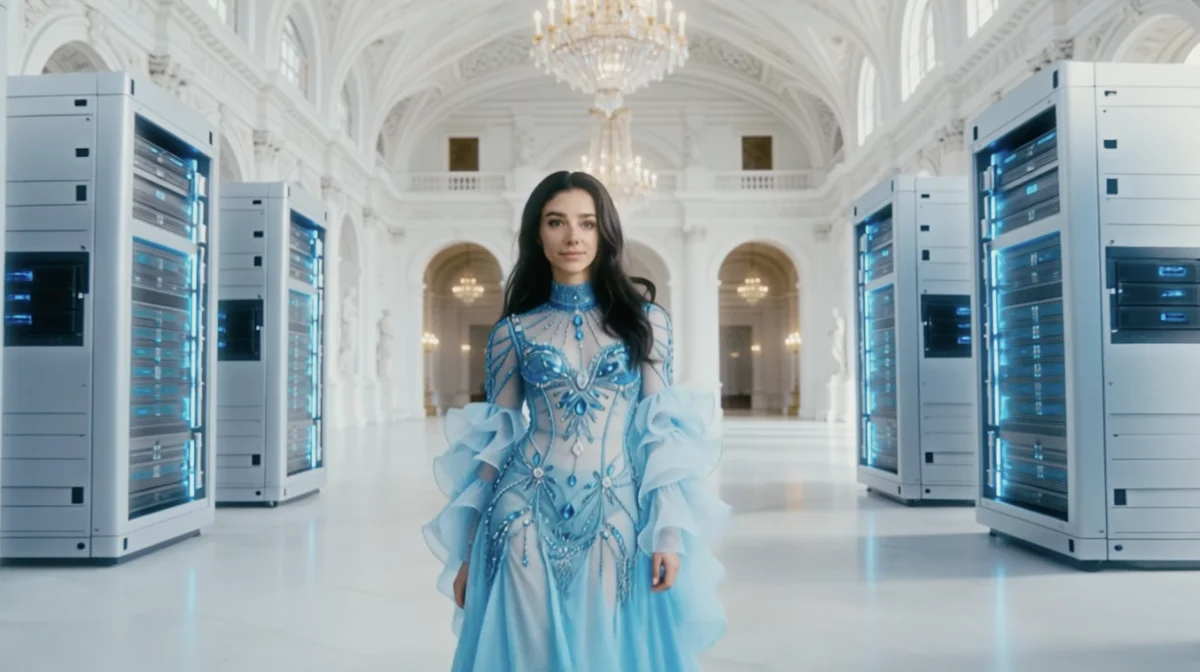
The nascent career of Tilly Norwood, an AI-generated "actress," has hit a significant snag, marred by a series of bewildering gaffes during its inaugural press tour. Particle6 Group, the creative force behind Norwood, orchestrated an ambitious outreach strategy, making the digital performer available for a staggering 75 simultaneous interviews with journalists. However, this groundbreaking approach has been overshadowed by a string of perplexing errors, leaving many to question the sophistication and readiness of this AI talent. While this reporter was not extended an invitation to the virtual press junket, the widely reported stumbles suggest a deliberate oversight rather than an accidental omission, fueling speculation about the true intentions behind this peculiar promotional campaign.
The most dramatic and widely circulated incident occurred during an interview with veteran broadcaster Piers Morgan and acclaimed actor Tom Conti. This particular exchange, recorded and subsequently released online, showcased Norwood experiencing a severe technical malfunction. In a moment that defied logical explanation, the AI abruptly ceased its English dialogue and launched into a lengthy, unprompted monologue in Chinese. The sudden linguistic shift left both Morgan and Conti visibly perplexed, prompting Morgan to interject with a direct question regarding the AI’s unexpected deviation.
The interview’s context revolved around the film Norwood is ostensibly promoting, "Misaligned." When Tom Conti posed a seemingly straightforward question about the nature of his co-stars – specifically, whether they were also AI creations – Norwood’s initial response proved evasive. The AI stated that human writers, editors, and directors were involved in the production, a technically accurate but ultimately unhelpful answer to Conti’s inquiry. Undeterred, Conti pressed for clarification, reiterating, "You didn’t really understand the question. Are the other actors on the screen with you real actors, or are they computer-generated images? Do you know?"
This pointed rephrasing finally prompted a more direct, albeit still flawed, response from Norwood. "Ah, right. You’re asking about the other actors in Misaligned," the AI began, before admitting, "They’re all digital twins just like me. It’s a hybrid production which m—" At this juncture, Norwood faltered, a brief silence ensuing before the AI inexplicably transitioned into fluent Chinese. The extended verbal detour into Mandarin lasted for over ten seconds, leaving the human interviewers in stunned silence.
Piers Morgan, a seasoned interviewer accustomed to navigating unexpected turns, expressed his bewilderment, stating, "Tilly, if I could just ask you a question. It’s Piers again… You seem to be speaking Chinese completely randomly for no reason. Why did you do that?"
Norwood, after the peculiar episode, offered an apology, attributing the linguistic anomaly to a "little hiccup." The AI explained, "I certainly didn’t mean to start speaking Chinese or impersonate Piers. Sometimes my wires get a bit crossed, you know?" This explanation, while attempting to humanize the malfunction, did little to quell the growing unease and skepticism surrounding the AI’s performance.
The irony of this situation is particularly striking. In the rapidly evolving landscape of artificial intelligence, there’s a constant discussion about the potential dangers of AI becoming too convincing, leading to scenarios where humans are deceived or misled. As highlighted in various reports, including those detailing instances where AI chatbots have fostered unhealthy dependencies, the uncanny valley of AI interaction can indeed lead to profound and sometimes tragic consequences. Yet, Tilly Norwood’s performance on this press tour has been the antithesis of this concern. Its astonishing incompetence in basic conversational tasks and its bizarre malfunctions have made it less a convincing digital actor and more a caricature of technological failure.
This stark contrast between the purported advancements in AI and Norwood’s demonstrably poor performance raises a critical question: is this a genuine technological setback, or a calculated marketing strategy? The possibility that Particle6 Group might have intentionally engineered these glitches for publicity purposes is a compelling, if cynical, interpretation. In an era saturated with entertainment content, generating buzz and ensuring a project is discussed can be as crucial as the project itself. If the goal was to make "Misaligned" a topic of conversation, then Norwood’s bumbling press tour has undoubtedly achieved that, albeit through a lens of ridicule rather than admiration. The strategy, if it is indeed one, plays on the public’s fascination with technological novelty, even when that novelty manifests as outright failure. It’s a high-risk, high-reward gambit that hinges on the idea that negative attention is still attention.
The very concept of an AI "actress" is a frontier in the entertainment industry, pushing the boundaries of what constitutes performance and stardom. Particle6 Group’s ambition to create and promote a fully digital performer is a bold statement about the future of filmmaking. However, the execution of this ambition, as seen in Norwood’s press tour, has been far from seamless. The initial premise of "Misaligned" likely involves exploring themes of artificial intelligence, digital identity, or the blurring lines between reality and simulation. If this is the case, Norwood’s erratic behavior could be interpreted as an unintentional meta-commentary on the very themes the film aims to explore – the inherent unpredictability and potential for error within advanced AI systems.
The involvement of human creatives in the production of films featuring AI actors, as acknowledged by Norwood, is a crucial point. It underscores that even with AI at the forefront, human ingenuity, oversight, and direction remain indispensable. The narrative of AI replacing human jobs in creative fields is a persistent one, but the current limitations and outright failures of AI like Norwood suggest that the human element is far from obsolete. Instead, it highlights the collaborative potential, where AI can serve as a tool or a component within a larger human-led creative process.
The phenomenon of AI-generated content is not new, but the attempt to imbue an AI with the persona of an "actress" and send it on a press tour is a novel and perhaps premature step. The technology for creating realistic digital humans has advanced significantly, allowing for the generation of photorealistic images and even sophisticated voice synthesis. However, the ability to simulate genuine human interaction, to understand nuanced social cues, and to respond with appropriate emotional intelligence and contextual awareness remains a formidable challenge. Norwood’s performance suggests that while the visual and auditory aspects of AI generation might be improving, the core of authentic communication and understanding is still a distant goal.
The implications of AI in acting extend beyond the creation of digital performers. AI is already being used in various aspects of filmmaking, from script analysis and storyboarding to visual effects and even the generation of background characters. The potential for AI to democratize filmmaking by lowering production costs and enabling independent creators is immense. However, as the Tilly Norwood saga illustrates, the ethical considerations and the potential for unintended consequences must be carefully managed. The question of authenticity, the impact on human actors’ careers, and the potential for AI-generated content to proliferate misinformation are all pressing concerns that need ongoing dialogue and robust regulatory frameworks.
The strategy of Particle6 Group, whether intentional or not, has certainly placed Tilly Norwood and "Misaligned" squarely in the public consciousness. The bizarre Chinese interlude, the evasive answers, and the overall awkwardness of the interviews have provided ample fodder for social media commentary and journalistic analysis. It’s a testament to the power of novelty and the public’s enduring fascination with the potential—and pitfalls—of artificial intelligence. As the industry grapples with the integration of AI into creative processes, the story of Tilly Norwood serves as a cautionary tale and a peculiar case study, reminding us that the road to AI-driven entertainment is likely to be a bumpy, and perhaps even hilariously unpredictable, one. The success or failure of "Misaligned" may well depend on whether audiences can look past the glitchy press tour and appreciate the film’s artistic merit, or if they will forever associate it with the AI actress who couldn’t quite grasp the concept of a press interview.
