
 By Rifan Muazin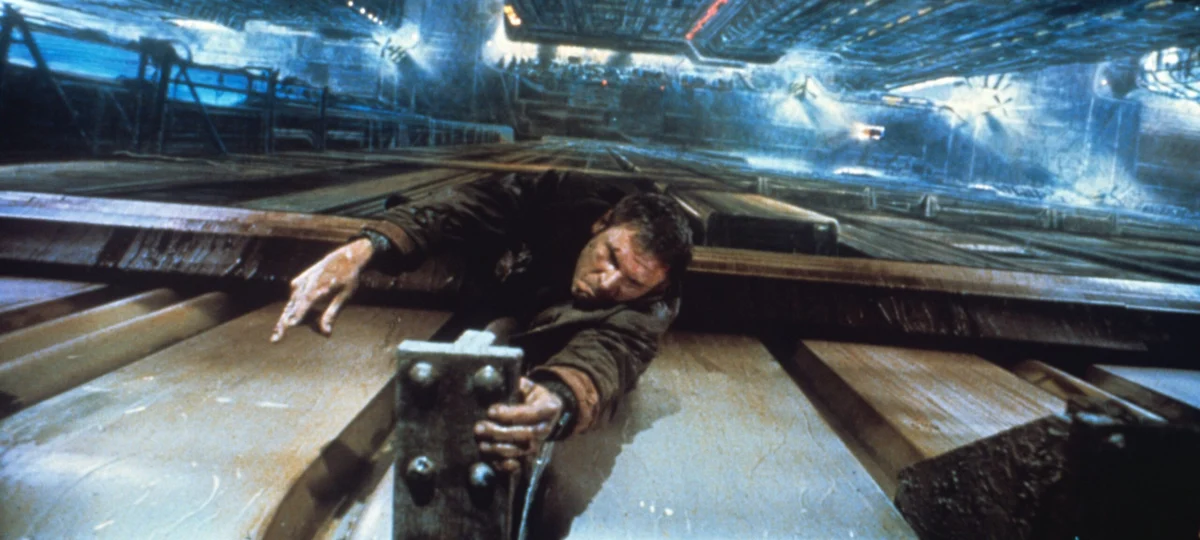
Within the creative psyche of Ridley Scott, two distinct directorial identities coexist in a perpetual tug-of-war. On one side stands the towering auteur, a visionary architect of light and shadow whose aesthetic fingerprints are visible across the landscape of modern science fiction and historical drama. On the other is the consummate studio journeyman, a prolific craftsman who, even into his late eighties, maintains a relentless "one-movie-a-year" pace that would exhaust directors half his age. While critical discourse often favors the kinetic, hyper-stylized energy of his late brother, Tony Scott—director of "Top Gun" and "True Romance"—there is no disputing that Ridley’s body of work contains some of the most influential and indelible images in the history of the moving image. From the rain-slicked neon of a future Los Angeles to the visceral, blood-soaked sands of the Roman Colosseum, Scott’s filmography is a testament to the power of world-building.

Scott’s latest endeavors, including the upcoming post-apocalyptic thriller "The Dog Stars" and the massive historical sequel "Gladiator II," illustrate his continued obsession with the intersection of human psychology and grand-scale environmental storytelling. Unlike his contemporaries David Fincher or Steven Soderbergh, who often center their films on the process of work itself, Scott’s movies frequently feel subservient to their source material, whether it be a sprawling novel or a dense historical record. This allows for a fascinating inconsistency in his output; he is a director who values the "finish" as much as the "product," leading to a career defined by technical perfection and varying levels of emotional resonance. To understand the legacy of Sir Ridley is to examine a career that fluctuates between high-concept auteurism and the pragmatic demands of big-budget studio filmmaking. Below is an enriched analysis and ranking of his feature-length contributions to cinema.

At the bottom of the list sits "1492: Conquest of Paradise" (1992). Released to coincide with the 500th anniversary of Christopher Columbus’s voyage, the film was a massive passion project for Scott. Despite a haunting, electronic score by Vangelis and painterly cinematography by Adrian Biddle, the film is a grueling 156-minute experience that struggles under the weight of its own solemnity. It remains a stark reminder that even the most talented visualists can falter when the narrative lacks a compelling pulse. Similarly, "Legend" (1985) and "Exodus: Gods and Kings" (2014) occupy the lower rungs of his filmography. "Legend" is a lush, unicorn-filled dark fantasy that features a legendary performance by Tim Curry as Darkness but fails to find a narrative anchor in a young Tom Cruise. "Exodus," meanwhile, represents the "Gladiator" effect gone wrong—a Biblical epic that utilized cutting-edge CG but was marred by controversial casting choices and a script that felt oddly inert despite its plagues and parting seas.

Scott’s forays into lighter fare and contemporary noir have yielded mixed results. "A Good Year" (2006) attempted to cast Russell Crowe as a charming investment banker who finds love in Provence, but the film lacked the "Cary Grant" spark necessary for a successful romantic comedy. Scott’s eye for atmosphere often overwhelms the comedic timing required for such a genre. His late-80s and mid-90s thrillers, "Black Rain" (1989) and "White Squall" (1996), showcase his ability to shoot on location with immense technical skill, yet both are hampered by pacing issues that stretch relatively simple stories beyond their natural limits. "Someone to Watch Over Me" (1987) stands as a quintessential example of Scott’s "music-video-noir" phase; while it features some of the most beautiful shadows in 80s cinema, the chemistry between leads Tom Berenger and Mimi Rogers remains largely frozen.

The director’s military and procedural works often spark intense debate. "Black Hawk Down" (2001) is a technical marvel that redefined how modern combat is filmed, yet it has been criticized for its lack of character depth, treating its ensemble of soldiers as interchangeable parts of a chaotic machine. Conversely, "G.I. Jane" (1997), though often dismissed as a product of its time, features a committed performance by Demi Moore that challenged contemporary gender roles in action cinema. "Robin Hood" (2010), Scott’s fifth collaboration with Russell Crowe, attempted to provide a gritty "prequel" to the legendary outlaw’s story. While the craftsmanship is undeniable, the film felt like a "Gladiator" retread that lacked the iconic energy of previous adaptations.

In the middle of the pack, we find films defined by their production history as much as their content. "All the Money in the World" (2017) became a footnote in cinema history when Scott reshot Kevin Spacey’s scenes with Christopher Plummer just weeks before the release. Plummer’s Oscar-nominated performance as J. Paul Getty is the film’s high point, though the movie itself is a somewhat standard true-crime saga. "Body of Lies" (2008) and "The Martian" (2015) show Scott’s range in the 21st century. "The Martian" stands as his most successful "feel-good" film, grossing over $630 million worldwide and proving that Scott could handle optimistic, science-heavy storytelling. While some find its "dad-joke"

screenplay a bit corny, its affability and technical clarity made it a global phenomenon.

Scott’s fascination with history reached its most complex heights in "Kingdom of Heaven" (2005) and "Napoleon" (2023). Both films are best viewed through their extended Director’s Cuts. The theatrical version of "Kingdom of Heaven" was a butchered action movie, but the 194-minute Director’s Cut is a masterpiece of historical nuance and political commentary. "Napoleon," starring Joaquin Phoenix, divided critics with its eccentric lead performance and fast-and-loose approach to historical accuracy, yet it remains a stunning visual achievement that only a director of Scott’s experience could mount. "Hannibal" (2001), the sequel to "The Silence of the Lambs," saw Scott leaning into a rococo, operatic style of horror that was far removed from Jonathan Demme’s grounded original. It is a grotesque, fascinating experiment in high-budget Grand Guignol.

Looking toward the future, "The Dog Stars" (scheduled for 2026) promises a gentler version of the apocalypse. Adapted from Peter Heller’s novel, the film stars Jacob Elordi and Margaret Qualley as survivors in a world ravaged by a flu pandemic. Early reports suggest a "reflective old-man movie" that prioritizes connection over the roving gangs of "Mad Max," showing that Scott is still capable of surprising his audience. This brings us to the "Gladiator" films. The original "Gladiator" (2000) was a cultural juggernaut that revived the sword-and-sandal epic and won five Academy Awards, including Best Picture. Its sequel, "Gladiator II," continues Scott’s exploration of Roman decadence with Denzel Washington and Paul Mescal, blending legacy sequel tropes with his signature mischievous showmanship.

The top tier of Scott’s filmography contains works that changed the medium. "The Counselor" (2013), written by Cormac McCarthy, is a brutal, philosophical anti-thriller that was misunderstood upon release but has since gained a cult following for its uncompromising nihilism. "The Last Duel" and "House of Gucci," both released in 2021, showcased Scott’s ability to hop between a "Rashomon"-style medieval drama and a campy, operatic fashion biopic without losing his step. "American Gangster" (2007) remains one of the best-realized crime procedurals of the 2000s, featuring a powerhouse face-off between Denzel Washington and Russell Crowe.

The final stretch of masterpieces begins with his debut, "The Duellists" (1977). A compact, poetic exploration of honor and obsession during the Napoleonic Wars, it won the Best First Work award at Cannes and established Scott’s painterly aesthetic. Then there are the prequels: "Prometheus" (2012) and "Alien: Covenant" (2017). While divisive, these films represent Scott’s boldest philosophical inquiries into the nature of creation and the dangers of artificial intelligence, anchored by Michael Fassbender’s chilling dual performances. "Thelma & Louise" (1991) remains a landmark of feminist cinema, a road movie that captured the American landscape with a grandeur that felt both mythic and grounded.

Finally, we reach the twin pillars of science fiction: "Blade Runner" (1982) and "Alien" (1979). "Blade Runner" is perhaps the most visually influential film of the last forty years, a neon-noir masterpiece that asks profound questions about what it means to be human. Though its pacing can be deliberate, its world-building is unparalleled. Yet, "Alien" remains Scott’s perfect film. It is a masterclass in suspense, production design, and genre-blending. By taking the "haunted house" trope and placing it on a "used future" spaceship, Scott created a visceral, bone-deep fear of the unknown that still resonates today. It is a film that functions as a political allegory, a body-horror nightmare, and a survival drama. If one ever doubts Ridley Scott’s place in the pantheon of great directors, they need only look at the opening titles of "Alien" to remember the power of a master at work. Through five decades of filmmaking, Sir Ridley has proven that whether he is playing the role of the auteur or the journeyman, his vision of the world—and the worlds beyond—is one that we cannot look away from.
