
 By admin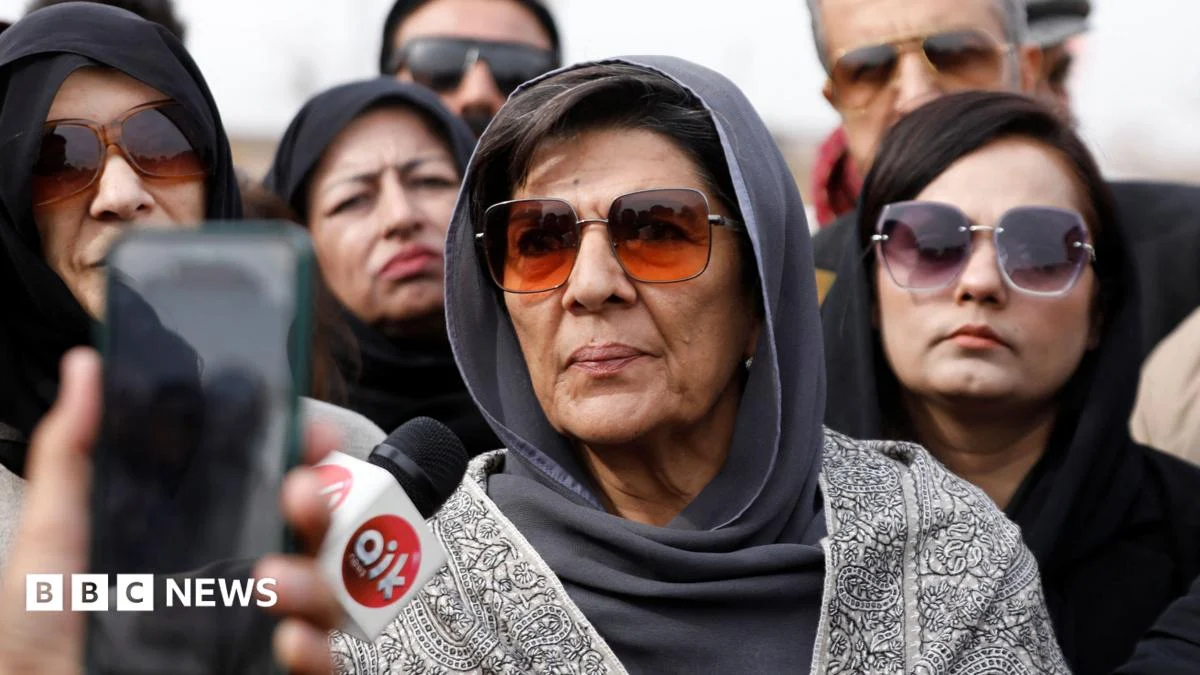
In a move that has intensified political tensions in Pakistan, Aleema Khanum, the sister of the nation’s incarcerated former Prime Minister Imran Khan, was arrested on Sunday afternoon in Lahore. The Pakistan Tehreek-e-Insaf (PTI) party, Khan’s political outfit, decried the detention as "illegal" and a clear attempt to stifle dissent ahead of planned nationwide protests on September 27th. The arrest order, issued by Lahore’s deputy commissioner, explicitly cites Khanum’s alleged role in mobilizing Imran Khan’s supporters through social media and public meetings, leading to her detention for 30 days. This development casts a long shadow over the upcoming demonstrations, which are expected to see supporters march towards the capital city of Islamabad, a move the government has vowed to prevent.
Aleema Khanum has emerged as a prominent and vocal critic of her brother’s ongoing imprisonment. She has consistently engaged with supporters and the media, amplifying the PTI’s narrative and raising concerns about the fairness of the legal proceedings against Imran Khan. Her detention, therefore, is viewed by many as a direct assault on the opposition’s ability to organize and express their grievances. A police official, speaking to the BBC, confirmed Khanum’s arrest, stating she would be transferred to Kot Lakhpat jail in Lahore. Earlier on the day of her arrest, her family had expressed deep concern, reporting a complete lack of contact and uncertainty regarding her whereabouts. Shahrez Khan, Aleema Khanum’s son, took to X (formerly Twitter) to demand the government "immediately disclose her whereabouts and ensure her safe return," underscoring the familial distress and the perceived lack of transparency surrounding the arrest.
The timing of Aleema Khanum’s arrest is undeniably linked to the escalating political climate and the scheduled protests. The arrest order itself provides a glimpse into the government’s rationale, alleging that Khanum has been actively involved in mobilizing individuals to "create law and order situations" and to "raise/chant objectionable slogans amongst the general public against the Government." This suggests a pre-emptive strategy by the authorities to dismantle any perceived threats to stability ahead of the planned demonstration. In anticipation of the protests, security measures in Islamabad have already been visibly heightened. Streets leading to key government buildings have been lined with shipping containers, a stark visual representation of the government’s resolve to maintain order and prevent any disruption.
Pakistan’s interior minister has publicly stated that the upcoming protests are detrimental to the nation’s interests and that the government will employ all available means to thwart them. This strong stance from the government signals a potentially confrontational approach to the planned demonstrations, raising concerns about potential clashes between protesters and law enforcement. The arrest of Aleema Khanum is seen as a significant escalation in this pre-protest crackdown, designed to decapitate the organizational efforts of the PTI and sow fear among its supporters.
Imran Khan, a charismatic former cricket star who transitioned into a powerful political figure, has been in detention since 2023. His imprisonment stems from a conviction for failing to declare assets earned from the sale of gifts received during his tenure as prime minister, for which he was sentenced to three years. However, this is just one of over a hundred cases leveled against him. These charges span a wide spectrum, including allegations of leaking state secrets and corruption related to the sale of state gifts. Khan has consistently maintained his innocence, denouncing all charges as politically motivated attempts to sideline him from the political arena. In a separate significant legal blow last year, he received a 14-year prison sentence in a land corruption case, marking the longest custodial term he has faced.
The prolonged detention and the deteriorating health of Imran Khan have been a growing concern for his supporters and his party. In a recent development, he required a hospital visit for a medical examination last month, highlighting the toll his imprisonment has taken on his well-being. This medical situation further fuels the emotional resonance of the upcoming protests, with supporters expressing solidarity and concern for their leader’s health.
The political landscape in Pakistan has been deeply polarized since Imran Khan’s ouster from power in April 2022 through a vote of no confidence. His subsequent activism, characterized by fiery rallies and strong criticism of the establishment, has galvanized a significant portion of the populace. The PTI, under his leadership, has consistently challenged the narrative of the ruling coalition, accusing them of rigging elections and undermining democratic institutions. The ongoing legal battles and detentions of key PTI figures, including Imran Khan himself, have further entrenched this divide.
The arrest of Aleema Khanum is not an isolated incident but rather part of a broader pattern of alleged political targeting and suppression of opposition voices in Pakistan. Human rights organizations and political analysts have repeatedly raised concerns about the shrinking space for dissent and the use of legal mechanisms to silence political opponents. The current government, led by Prime Minister Shehbaz Sharif, has faced accusations of pursuing a politically motivated agenda against the PTI, particularly in the lead-up to and aftermath of the general elections held earlier this year, which were themselves mired in controversy and allegations of manipulation.
The mobilization of supporters by Aleema Khanum, as cited in the arrest order, reflects the deep-seated loyalty and unwavering support Imran Khan commands. Social media platforms have become crucial battlegrounds for political discourse in Pakistan, and the PTI has effectively utilized these channels to disseminate its message and organize its base. The government’s attempt to curb such mobilization through arrests underscores the perceived threat that a united and vocal opposition poses to its authority.
The specific allegations of "creating law and order situations" and "raising/chanting objectionable slogans" point towards the government’s concern about the potential for unrest and public disorder during the protests. The deployment of shipping containers in Islamabad is a tangible manifestation of this concern, signaling a readiness to impose restrictions on movement and assembly. The interior minister’s statement further reinforces this, indicating a zero-tolerance policy towards any form of protest that could be perceived as a challenge to state authority.
The broader context of Pakistan’s political and economic instability also plays a significant role in understanding these events. The nation has been grappling with a severe economic crisis, high inflation, and a volatile security situation. In such an environment, large-scale protests can exacerbate existing anxieties and potentially lead to unpredictable outcomes. The government, therefore, might view the suppression of dissent as a necessary measure to maintain stability, even at the cost of curtailing civil liberties.
However, such actions also carry significant risks. The arrest of prominent political figures, especially family members of a former prime minister, can further inflame public sentiment and galvanize opposition support. It can be perceived as an act of political victimization, fueling a sense of injustice and driving more people to the streets. The PTI has a history of mobilizing large crowds, and the current crackdown might inadvertently strengthen their resolve and broaden their appeal.
The international community is also closely observing the unfolding political situation in Pakistan. Human rights organizations and international bodies have a track record of advocating for democratic principles and freedom of expression. The events leading up to and during the protests will likely draw international scrutiny, with potential implications for Pakistan’s relations with key global partners and international financial institutions.
In conclusion, the arrest of Aleema Khanum is a significant development in Pakistan’s ongoing political saga. It underscores the deep animosity between the ruling establishment and the PTI, and the government’s apparent determination to prevent any large-scale demonstrations in support of Imran Khan. The move is a clear attempt to preemptively disrupt the planned protests and weaken the opposition’s organizational capacity. However, such actions often have unintended consequences, potentially galvanizing public anger and further polarizing the nation. The coming days will reveal the true impact of this arrest on the political trajectory of Pakistan and the fate of its imprisoned former prime minister. The nation stands at a critical juncture, where the government’s approach to dissent will be tested, and the resilience of its democratic institutions will be under scrutiny.
