
 By admin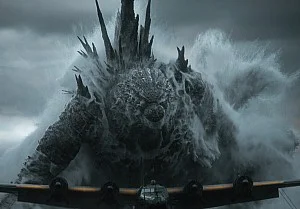
In the pantheon of cinematic critiques, Christopher Nolan’s ambitious reimagining of “The Odyssey” faced a barrage of commentary, but perhaps the most resonant, to this observer, was the perceived oversight of omitting the Greek gods. While Nolan undeniably proved that Homer’s epic could be rendered without divine intervention, the question lingers whether such a removal stripped the narrative of a vital, awe-inspiring dimension. If one seeks the presence of gods on screen, where else might they find them, if not in a story of divine trials and tribulations? The answer, it turns out, lies not in the classical epics, but in the thunderous spectacle of Japanese monster movies, which, by many measures, offer a far more thrilling and cosmically resonant experience than Nolan’s interpretation of Odysseus’s journey. These films, particularly those featuring the iconic kaiju, imbue their colossal creatures with an ominous majesty that transcends earthly concerns, even as they are engaged in the very act of laying waste to the world.
This is precisely the case in “Godzilla Minus Zero,” a film that premiered to considerable anticipation at the New York Film Festival, poised for a wider release on November 6th. The narrative plunges us into a world dominated by two titanic, mystic beasts: Godzilla, the undisputed king of the kaiju, a character whose enduring legacy now spans an impressive 72 years, proving that age only enhances his awesome power, and King Ghidorah, the formidable dragon-hydra, a creature first unleashed upon audiences in the 1964 classic “Ghidorah, the Three-Headed Monster.” Each of these entities is far more than mere physical threats; their power is a manifestation of forces beyond human comprehension. When Godzilla arches his colossal frame, drawing upon an unseen reservoir of energy before unleashing a city-obliterating blast of pure radioactivity, it is an exhibition of transcendent, almost divine, force. Similarly, King Ghidorah’s multiple heads, each resembling an ornate figure from a traditional Golden Dragon Dance when viewed up close, can unleash bolts of orange lightning that stretch for half a mile, a spectacle of destructive power that dwarfs any earthly conflict. These are not simply monsters; they are, in their terrifying grandeur, bona fide movie gods.
Set against the backdrop of post-war Japan in 1949, “Godzilla Minus Zero” opens with a sequence of breathtaking devastation. King Ghidorah, in a terrifying manifestation that initially presents with only one head—a detail that will dramatically evolve—descends upon the city of Matsumoto, reducing it to rubble. The film masterfully juxtaposes sweeping vistas of destruction with intimate, harrowing close-ups, often filtered through the traumatized perspective of Professor Murakami (played by Min Tanaka). Murakami, a survivor of the Hiroshima atomic bombing, is deeply immersed in research concerning biological anomalies and monstrous creatures, a background that imbues his character with a profound understanding of the existential threat these beings represent. The narrative tension escalates with the re-emergence of Godzilla, a creature believed to have been vanquished at the conclusion of the critically acclaimed “Godzilla Minus One.” The film poignantly underscores the difficulty, if not impossibility, of truly destroying a god. To confront this dual menace and safeguard Japan, Kenji Noda (Hidetake Yoshioka), the perpetually anxious and intellectually sharp director of the Large-Scale Disaster Response Bureau, rallies his team. Their audacious plan, conceived with a desperate ingenuity reminiscent of a child’s sandbox strategy, involves luring both Godzilla and King Ghidorah to a single, strategically chosen location. The ultimate aim is to instigate a colossal battle between the two titans, with the hope that the survivor, inevitably weakened and wounded, can then be dealt with by the remaining human forces.
In the realm of modern visual effects spectacles, particularly those emanating from the Marvel Cinematic Universe, the closing credits often unfurl for an extended period, a testament to the myriad visual effects teams, each seemingly commanding their own digital army. It is beyond doubt that a formidable array of talent worked on “Godzilla Minus Zero.” However, the film distinguishes itself with a unique and telling credit: “VFX, written, and directed by Takashi Yamazaki.” This singular attribution speaks volumes about the director’s profound creative control and the extent to which the film’s breathtaking visuals are a direct emanation of his singular imagination. Yamazaki is not merely orchestrating existing effects; he is writing the narrative, directing the action, and meticulously crafting gargantuan, moving canvases of monstrous might. He is, in essence, an artist of larger-than-life pop horror, painting with pixels and primal fear.
The annals of kaiju cinema are replete with countless monster duels, from the vintage charm of older films to the ambitious remakes of recent years, spanning both Japanese and American productions, each with varying degrees of success. Yet, Yamazaki, who has demonstrably revitalized the genre and propelled it to new heights with the revelatory 2023 retro kaiju masterpiece “Godzilla Minus One,” imbues his work with a quality rarely seen in recent decades: a profound, almost fairy-tale innocence. This immersion in the annihilating, heavy-metal poetry of Godzilla is palpable—the way the destruction of an entire city can be transformed into a spectacle that feels both nightmarish and dreamlike, a potent metaphor for national trauma. In “Godzilla Minus Zero,” the titanic clash between Godzilla and King Ghidorah transcends the mere spectacle of a wrestling match between primeval rivals. It is a true clash of titans, an event so awe-inspiring that it is guaranteed to reduce every member of the audience to a state of wide-eyed, jaw-dropped wonder, recalling the unadulterated awe of childhood.
The resounding success of “Godzilla Minus One” was, in no small part, attributed to its deeply resonant human story, a narrative that evoked the poignant character studies found in Akira Kurosawa’s 1950s masterpieces. Yamazaki masterfully carries this emotional core forward in “Godzilla Minus Zero,” continuing the compelling saga of Kōichi Shikishima (Ryunosuke Kamiki), the former World War II kamikaze pilot haunted by his past. His wife, Noriko (Minamo Hamabe), and their adopted daughter, Akiko (Sae Nagatani), now a verbally precocious seven-year-old, form the emotional anchor of the film. The fate of this family is intrinsically woven into the film’s emotional palette, driving the narrative forward. To confront the monstrous onslaught, Kōichi is compelled to return to his role as a fighter pilot, but Noriko’s role is also pivotal. She is one of the few survivors of Godzilla’s devastating 1947 attack, a fact evidenced by the presence of Godzilla DNA embedded within her body, necessitating the distinctive eyepatch she wears.
For a considerable period, kaiju movies were often relegated to the realm of the semi-comic, a peculiar fusion of the colossal and the cheesy. This very inability to separate the two often contributed to the genre’s unique, albeit sometimes schlocky, magic. However, Takashi Yamazaki transcends these limitations with his masterful direction. His staging draws upon a collective, nostalgic memory of kaiju grandeur while simultaneously dignifying the genre by grounding it in a drama imbued with palpable passion and vigor. When, in the history of Godzilla films, have audiences ever found themselves discussing the performances? Yet, in “Godzilla Minus Zero,” one is captivated by the high-strung anxiety conveyed by Yoshioka’s portrayal of Noda, and the magnetic intelligence of Masami Nagasawa as Makoto Aoyama, a meteorologist whose intuitive understanding of atmospheric phenomena borders on the prophetic. Min Tanaka, as Professor Murakami, delivers a performance of profound depth. Born on March 10, 1945, the very day of the firebombing of Tokyo—an event that marked the deadliest air raid in human history—Tanaka’s courtly yet simmering presence powerfully channels the film’s deep-seated awareness of historical trauma and resilience. Yamazaki orchestrates several audacious sequences that, in their own way, feel like his direct cinematic dialogue with Christopher Nolan’s “Oppenheimer.” One such sequence presents a chilling fantasy of Godzilla approaching Manhattan with the same terrifying inexorability he once displayed towards Tokyo, a vision designed to provoke a profound sense of unease in any American viewer.
Initially, as Japanese officials grapple with what they perceive as a singular threat in King Ghidorah, the film’s early battle sequences possess a tactical stateliness. Ghidorah retreats to the mountains, curling into a serpentine slumber, leading to an ill-fated decision to attempt his obliteration using planes and armaments procured from the United States. This futile endeavor, however, only serves to awaken the slumbering giant. The subsequent aerial combat between a squadron of six planes and Ghidorah is a magnificent, eye-popping display of filmmaking prowess. Yet, this is merely an appetizer, as the re-emergence of Godzilla heralds a confrontation of staggering, unparalleled vastness, dwarfing all that has come before.
As the narrative progresses into its final act, a few plot strands become somewhat entangled. The professor’s hidden agenda, while present, remains frustratingly abstract, leaving the audience questioning the practicality of his intended execution. Nevertheless, as key characters find themselves under immense pressure and in grave danger, the audience realizes the depth of their emotional investment in these dedicated creature battlers. Their struggles are rooted in a specific time and place that feels remarkably authentic, lending a profound significance to the monsters’ parade of primitive might. It was a stroke of pure genius on Yamazaki’s part to reset the kaiju genre within the late 1940s, the nascent Atomic Age, a period to which the genre is spiritually tethered—after all, the original “Gojira” was released in 1954. This temporal setting provides a rich foundation for the narrative. Even the creators of the contemporary James Bond franchise could learn a valuable lesson from this approach, potentially revitalizing Bond’s cinematic relevance by similarly grounding him in a specific historical context. “Godzilla Minus Zero” is undeniably poised to captivate a massive international audience, and it is already abundantly clear that this will not be the last of Takashi Yamazaki’s monumental kaiju epics. The film’s resounding success lies in its profound demonstration that when executed with such artistry and vision, that which may have once seemed old can, indeed, become utterly timeless.
