
 By admin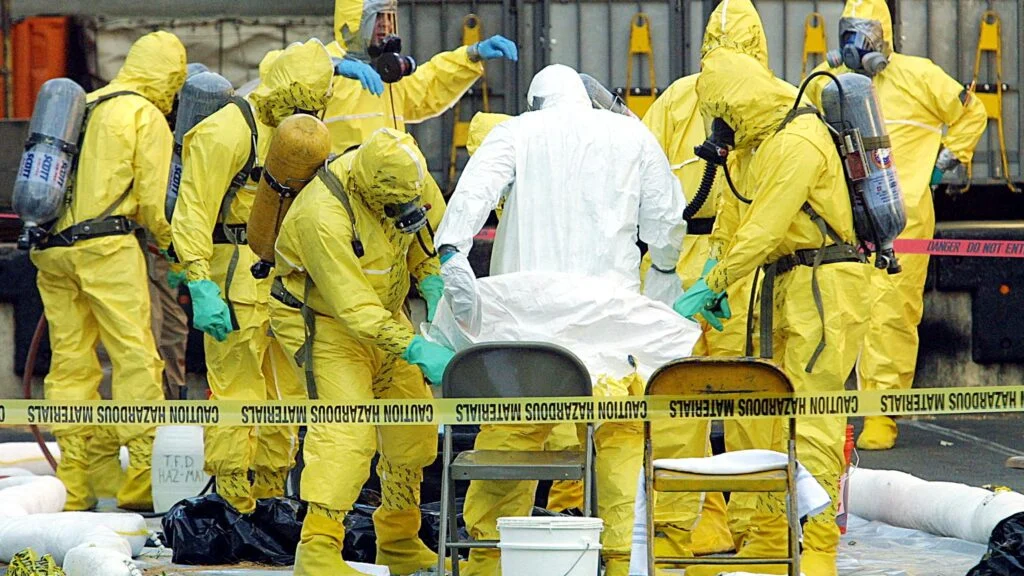
The autumn of 2001 remains etched in the American psyche as a period of unprecedented vulnerability. Just as the nation was beginning to process the trauma of the September 11 terrorist attacks, a new, invisible shadow emerged from the mailroom. Twenty-five years ago, the first of two waves of envelopes laden with lethal anthrax spores were dispatched from Trenton, New Jersey, directed toward news media outlets and the offices of United States Senators. What followed was a national crisis that resulted in 22 cases of anthrax disease, five tragic deaths, and a pervasive sense of dread that reached every household with a mailbox. The economic toll was equally staggering, with response, decontamination, and recovery efforts ballooning into the billions of dollars. Today, as we reflect on that pivotal moment in public health history, we must ask whether the lessons learned have been sufficiently institutionalized to protect us from a modern landscape defined by rapid technological advancement and shifting geopolitical risks.
The 2001 anthrax attacks, colloquially known as "Amerithrax" by the FBI, demonstrated with chilling efficiency how a small amount of biological material could paralyze a superpower. The postal system, a marvel of logistics designed to connect the nation, was subverted into a delivery mechanism for a biological agent. The first sign of the attack appeared not in a high-security government facility, but in the offices of American Media Incorporated (AMI) in Boca Raton, Florida. Robert Stevens, a photo editor for The Sun tabloid, became the first fatality. His illness was initially a mystery until an astute clinician, examining a spinal tap specimen, identified the telltale signs of Bacillus anthracis. This discovery triggered an immediate response from the Centers for Disease Control and Prevention (CDC), which had only recently established its Laboratory Response Network (LRN).
Dr. Daniel B. Jernigan, then a lead on the Epidemiology and Surveillance Team at the CDC’s Emergency Operations Center (EOC), recalls the initial confusion. In the earliest hours of the investigation, the working theory focused on natural environmental exposure. Anthrax is a zoonotic disease, typically found in livestock and occasionally transmitted to humans through contact with infected animals or contaminated animal products. However, the emergence of a second case at AMI, occurring just weeks after the 9/11 attacks, shattered the hypothesis of a natural occurrence. The realization that the nation was under a biological attack led the CDC to transform its auditorium into a high-stakes command center, deploying teams across the country to track a pathogen that was being moved by the United States Postal Service.
The subsequent investigation revealed a complex clinical and epidemiological picture. As documented in papers published by Dr. Jernigan and his colleagues, the attacks involved two distinct formulations of the bacteria. The first mailing, sent on September 18, targeted media organizations and contained a "crunchy," clumped form of anthrax. This version primarily caused cutaneous (skin) infections, which, while serious, are generally less fatal than other forms. The second mailing, sent on October 9 to Senators Tom Daschle and Patrick Leahy, contained a "fine powder" formulation. This material was highly refined, easily aerosolized, and significantly more dangerous. It led to a surge in inhalational anthrax—the most lethal form of the disease—and affected not only the intended targets but also the postal workers who handled the envelopes in processing facilities like the Brentwood facility in Washington, D.C., and the Hamilton facility in New Jersey.
One of the most vital scientific breakthroughs during this period was the application of molecular testing. At the time, genomic sequencing was in its relative infancy, but investigators were able to use it to show that the isolates from patients, the powder in the envelopes, and environmental samples were indistinguishable. This confirmed a common source—the Ames strain of Bacillus anthracis. This molecular fingerprinting was a harbinger of the modern genomic epidemiology that now forms the backbone of outbreak response. However, the 2001 attacks also exposed dangerous gaps in the existing scientific literature. Prior to the events, it was widely believed that the risk of "re-aerosolization"—the process of spores settling on a surface and then becoming airborne again—was minimal. Guidance at the time focused almost exclusively on those who were present when an envelope was opened. The deaths of postal workers who had never seen the envelopes, but had merely worked in the rooms where they were processed, forced a radical rethinking of infection risks and decontamination protocols.
In response to the escalating threat, public health officials took the unprecedented step of placing an estimated 32,000 people on antimicrobial prophylaxis. This massive intervention was successful; no additional cases were identified among those who completed the regimen of prophylactic drugs. The lesson was clear: in a deliberate biological event, the first cases are often misleading. Assumptions based on historical data may be inadequate, and investigators must look far beyond the intended targets to identify every person potentially exposed along the entire path of dissemination.
In the twenty-five years since those attacks, the United States has made significant strides in biodefense. The Select Agent Program was established to strictly regulate the possession and transfer of dangerous pathogens. Mail processing facilities now utilize sophisticated bio-detection systems, and the volume of physical mail has decreased, somewhat reducing the "attack surface." Furthermore, the engineering of mail sorters has been modified to prevent the accidental aerosolization of powders. We have also seen the birth of organizations like the Biomedical Advanced Research and Development Authority (BARDA), which oversees the development of vaccines and treatments for chemical, biological, radiological, and nuclear threats.
However, these technological and regulatory gains are currently being undermined by a systemic erosion of public health infrastructure. The "muscle memory" developed during the anthrax investigation is fading as experienced personnel retire or leave the field. Reports indicate that the CDC’s civilian staff capacity has plummeted, with some estimates suggesting a 28% reduction in scientific leadership and subject matter expertise compared to just two years ago. This "brain drain" occurs at a time when the threat landscape is becoming more complex. A recent report from the Center for Strategic and International Studies (CSIS) warns that Americans face greater biological risks today than at any time this century.
The primary driver of this new risk is the intersection of biotechnology and artificial intelligence. While AI holds the promise of accelerating drug discovery and vaccine development, it also provides a roadmap for the creation of novel or enhanced pathogens. The Bipartisan Commission on Biodefense has concluded that AI fundamentally transforms the biological threat landscape by lowering the barrier to entry for non-state actors or individuals to design bioweapons. Large language models and specialized biological AI can assist in everything from selecting a pathogen to optimizing its virulence and designing protocols for its illicit cultivation.
Moreover, the institutional culture required to manage such threats is under strain. Dr. Jernigan and other veteran public health experts emphasize that effective response depends on three pillars: rapid interpretation of data, a culture that manages uncertainty, and the continuous maintenance of capability. Currently, there are concerns that the decentralization of public health and an intolerance for internal scientific dissent within federal agencies could delay critical decision-making during a crisis. If a real biothreat signal were detected today, the coordination between federal, state, and local governments—already frayed by the political fallout of recent pandemics—might not be robust enough to facilitate a rapid course correction.
The urgency of these concerns is underscored by the recent and large-scale outbreaks of hantavirus, Ebola, cyclospora, and measles. Each of these events tests the limits of our current system. While these are natural occurrences, they serve as a stress test for the same infrastructure that would be required to handle an intentional release of anthrax or a synthetic pathogen. The strength of our response depends not just on the presence of high-tech sensors, but on the presence of "shoe-leather" epidemiologists, functioning networks of trust, and institutions capable of making defensible decisions under the fog of war.
As we commemorate the 25th anniversary of the anthrax mailings, we must move beyond mere remembrance. The events of 2001 were a "crude experiment" by an attacker that revealed our systemic vulnerabilities. Today’s threats will likely be more sophisticated, potentially involving engineered pathogens that do not behave like their natural counterparts. To be ready, the nation must reinvest in its public health workforce, streamline the hiring of scientific staff, and provide consistent budget support for high-consequence pathogen programs.
The 2001 attacks taught us that the first signal rarely tells the whole story. The true scope of a biological event only becomes clear through rigorous, science-driven assessment and a willingness to challenge initial assumptions. Twenty-five years later, the ghost of the anthrax letters serves as a reminder that biosecurity is not a static achievement but a continuous process of vigilance. Our safety in the next quarter-century will depend on whether we value the people and the scientific culture as much as we value the technology meant to protect us. Without a robust, well-staffed, and scientifically independent public health system, we remain as vulnerable to the next envelope—or the next engineered virus—as we were on that quiet October morning in 2001.
