
 By admin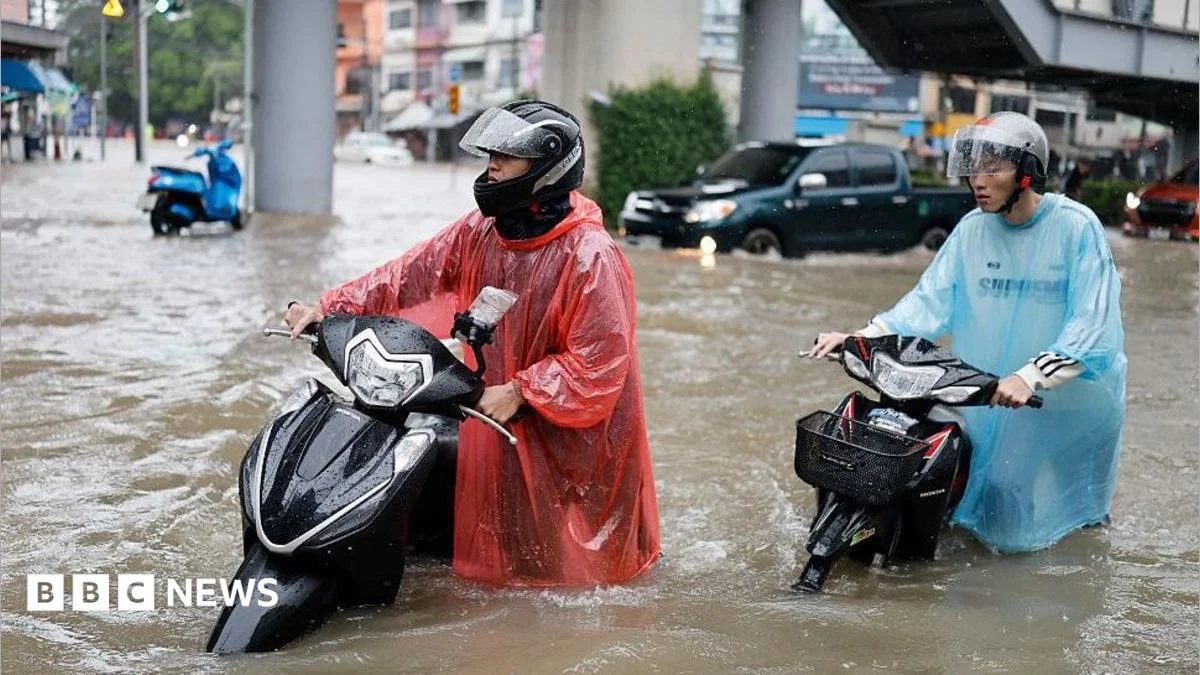
Bangkok, Thailand – A state of disaster emergency has been officially declared across the entirety of Bangkok, a metropolis of over 10 million people, as the Thai capital grapples with unprecedented rainfall and subsequent widespread flooding. Since Thursday, the city has been inundated with over 300 millimeters (approximately 12 inches) of rain, transforming major thoroughfares into sprawling waterways and plunging residential areas into crisis. While the intensity of the downpour has reportedly subsided as of Sunday, the Bangkok Metropolitan Authority (BMA) has issued stark warnings that the deluge is far from over, with canal water levels remaining critically high and threatening further inundation.
The sheer volume of water has overwhelmed Bangkok’s already strained drainage infrastructure, a complex network of canals, pumps, and storm drains that has historically struggled to cope with intense monsoon seasons. This extreme weather event has exacerbated the city’s notorious traffic congestion, bringing much of its daily life to a standstill. Residents have been strongly advised to remain indoors and exercise extreme caution, particularly those living in close proximity to the city’s extensive canal system. Authorities have urged these individuals to relocate their valuable belongings to higher floors, anticipating a potential rise in water levels that could reach waist-high in some areas, as experienced by long-time residents.
One such resident, 67-year-old Somkid Pheuk-ngam, who lives near a canal on the northern outskirts of central Bangkok, described the dire situation to the Agence France-Presse (AFP) news agency. "The water keeps coming in," she lamented, her voice filled with concern. "It’s hard to go out now. It’s like at my waist level now. I cannot go anywhere. I have been closing my shop for two days now." Her observation that current water levels appear worse than those experienced during the devastating nationwide floods of 2011 provides a chilling historical perspective. That catastrophic event, which lasted for three months, resulted in hundreds of fatalities across Thailand, highlighting the potential severity of the current crisis, although thankfully, no casualties have been reported in Bangkok from this latest flooding incident thus far.
The Thai Meteorological Service has forecasted a continuation of heavy rainfall throughout the week, though there is an expectation that the low-pressure system responsible for the recent downpours will gradually shift towards central Thailand. This offers a glimmer of hope but underscores the immediate and pressing nature of the crisis. All 50 of Bangkok’s administrative districts have now been designated as emergency zones, reflecting the pervasive and indiscriminate nature of the flooding.

Governor Chadchart Sittipunt, speaking on Saturday, highlighted the disproportionate impact on the eastern parts of the city. "The rain keeps falling and we are doing our best," he stated, acknowledging the immense challenge faced by relief efforts. "We are trying to pump the water out, but the water in canals are full… The risk areas are those who live near canals. Every canal is now filled." This statement underscores the critical challenge: the sheer volume of water in the natural and man-made waterways of Bangkok is exceeding the capacity of the pumping systems, creating a situation where the city is essentially battling to hold back a rising tide.
Bangkok’s unique urban geography, characterized by its extensive network of canals (khlongs) which historically served as its primary transportation routes, now presents a significant vulnerability. These khlongs, once the lifeblood of the city, have become conduits for the overflowing rainwater, transforming low-lying areas into aquatic landscapes. The city’s rapid urbanization and development, while bringing economic progress, have often encroached upon natural drainage pathways and exacerbated the challenge of managing water runoff.
The current flooding serves as a stark reminder of the ongoing threat posed by climate change and extreme weather events globally. While thunderstorms are a seasonal occurrence in Thailand, the intensity and duration of the recent rainfall are indicative of a broader trend of increasingly volatile weather patterns. Experts in hydrology and urban planning have long warned about the susceptibility of low-lying coastal cities like Bangkok to the impacts of rising sea levels and more frequent, intense rainfall events.
Dr. Somchai Chaisongkram, a professor of Environmental Engineering at Chulalongkorn University, commented on the situation, emphasizing the need for long-term adaptation strategies. "Bangkok’s geography makes it inherently vulnerable to flooding," he explained. "The city is built on soft clay soil, and parts of it are sinking. Combined with increased rainfall intensity due to climate change, our existing infrastructure is simply not designed to cope with these extreme events. We need to invest heavily in green infrastructure, improved drainage systems, and potentially even managed retreat from the most vulnerable areas in the long term."
The immediate aftermath of such widespread flooding presents a myriad of challenges. Beyond the immediate displacement of residents and damage to property, there are concerns about the disruption to essential services, including power supply, telecommunications, and the transportation of food and medical supplies. The economic impact is also significant, with businesses forced to close, supply chains interrupted, and potential long-term damage to infrastructure requiring costly repairs.

The government and BMA are mobilizing resources to address the crisis. Emergency services, including rescue teams and the military, are reportedly on the ground, assisting with evacuations, providing aid, and working to clear blocked drainage systems. Temporary shelters are being set up for displaced residents, and efforts are underway to restore essential services where possible. However, the scale of the disaster means that relief efforts will likely be prolonged and require sustained support.
Historical context of Bangkok’s vulnerability to flooding is crucial to understanding the current crisis. The 2011 floods, often cited as the worst in decades, submerged vast swathes of the country, including industrial estates on the outskirts of Bangkok, causing significant disruption to global supply chains, particularly in the automotive and electronics sectors. The economic cost of that event was estimated to be in the tens of billions of dollars. While the current situation in Bangkok has not reached the same catastrophic scale in terms of casualties, the inundation of the capital city itself presents a unique and pressing set of challenges.
The city’s intricate network of over 1,600 canals, originally dug to facilitate irrigation and transportation, now plays a dual role. While efforts are being made to dredge and deepen these canals to increase their water-carrying capacity, they also act as natural reservoirs that can overflow during periods of intense rainfall, especially when combined with high tide levels in the Chao Phraya River. This complex interplay of factors makes flood management in Bangkok a continuous and evolving challenge.
The current extreme weather event is also prompting renewed discussions about the long-term urban planning and resilience of Bangkok. Strategies such as the development of large-scale water retention areas, the implementation of advanced early warning systems, and the promotion of permeable surfaces in urban development are all being considered as crucial steps towards mitigating future flood risks. The resilience of a city like Bangkok, a major economic and cultural hub in Southeast Asia, is not just a local concern but has regional and global implications.
As the waters slowly recede in some areas, the full extent of the damage will become apparent. However, the immediate priority remains the safety and well-being of Bangkok’s residents and the restoration of essential services. The declaration of a disaster emergency signals the gravity of the situation and the mobilization of all available resources to combat the unprecedented flooding that has brought the vibrant city of Bangkok to its knees. The coming days and weeks will be critical in assessing the long-term impact and in formulating strategies to build a more resilient future for this dynamic metropolis. The experience of Somkid Pheuk-ngam, standing waist-deep in water, is a poignant symbol of the thousands of lives disrupted by this relentless deluge, a stark reminder of nature’s power and the urgent need for adaptation in the face of a changing climate.
