
 By admin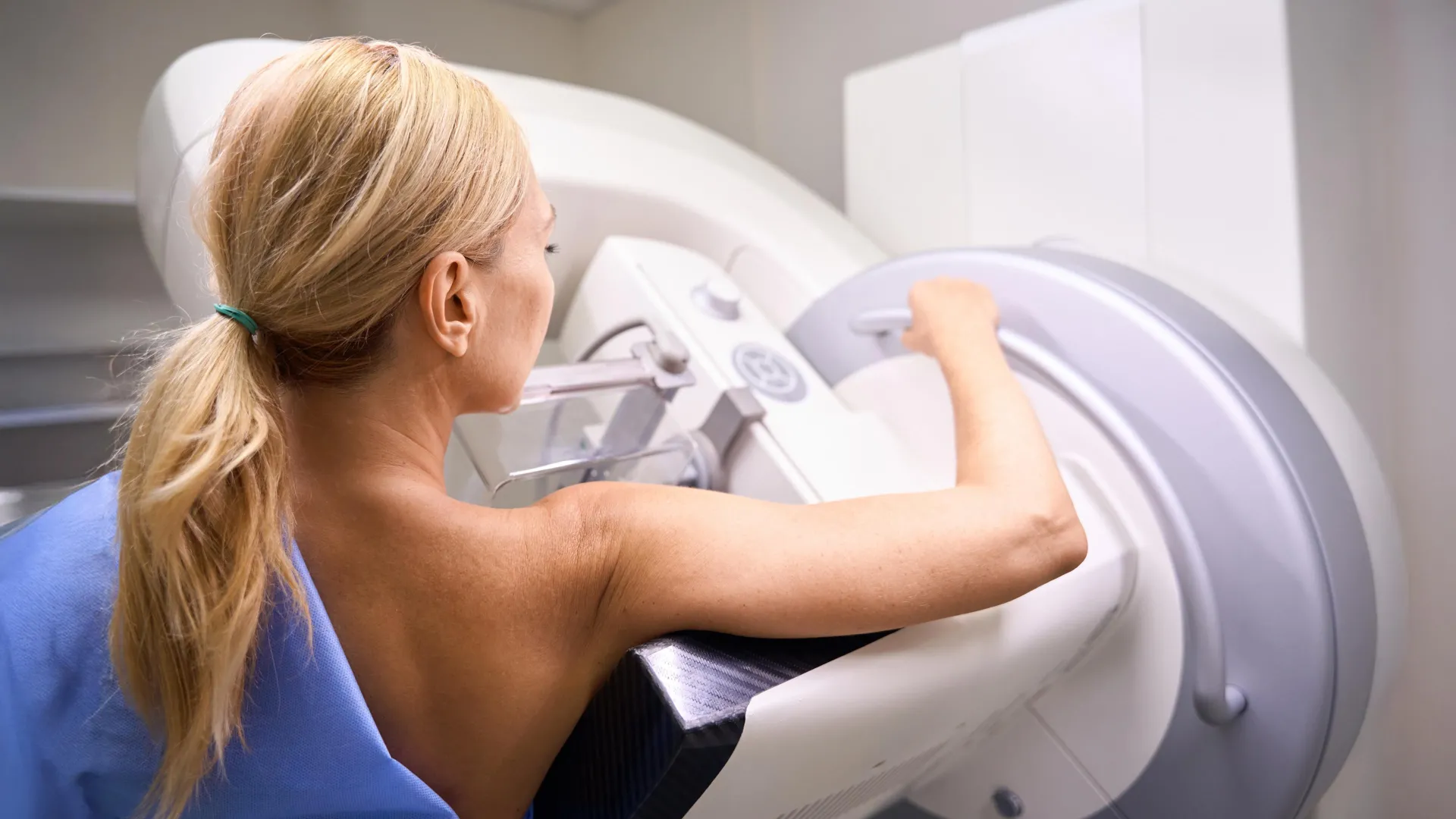
Breast cancer screening, a cornerstone of preventive healthcare for women globally, carries a complex balance of profound benefits and potential drawbacks. Among these drawbacks, the phenomenon of overdiagnosis has long cast a shadow, stirring considerable debate among researchers, clinicians, and public health officials. Overdiagnosis occurs when screening identifies a cancer that, if left undetected, would never have progressed to cause symptoms, threaten a woman’s health, or shorten her life during her natural lifespan. In essence, these are "pseudo-cancers" in a clinical sense, even if pathologically they are malignant. The detection and subsequent treatment of such cancers lead to unnecessary medical interventions, psychological distress, and a drain on healthcare resources without any corresponding health benefit for the individual.
For decades, the actual frequency of overdiagnosis has been a fiercely contested topic. Estimates derived from various randomized controlled trials (RCTs) have varied wildly, with some influential studies suggesting that a significant proportion—ranging from 30% to a startling 50%—of breast cancers identified through screening might fall into this category. These high figures have profoundly impacted international discussions, shaping public perception, influencing screening guidelines in several countries, and fueling skepticism about the net benefit of population-based breast cancer screening programs. The implications of such high overdiagnosis rates are substantial: they suggest that tens of thousands of women could be undergoing invasive treatments like surgery, radiation therapy, and chemotherapy for cancers that posed no real threat, leading to unnecessary suffering and anxiety.
"The aim of our study was to bring together the evidence from all randomized controlled trials to get a clearer picture of the extent of overdiagnosis in breast cancer screening," explains Sisse Helle Njor, a professor at the University of Southern Denmark and Lillebælt Hospital, who spearheaded this comprehensive re-analysis. "Randomized trials have often been cited as evidence that overdiagnosis is a substantial problem. Our study shows that this interpretation is not as straightforward as it may seem, and that much of the previous high estimates were based on an incomplete understanding of the long-term dynamics of screening."
The groundbreaking findings of this new study challenge these long-held assumptions. The researchers discovered that the patterns of additional breast cancer cases detected in randomized trials, when thoroughly re-evaluated and placed in their full temporal context, closely resembled those observed in Denmark’s real-world screening programs. Crucially, in Denmark, the estimated rate of overdiagnosis associated with screening is consistently below 5%. This dramatic recalibration suggests that the true burden of overdiagnosis is significantly lower than previously widely accepted figures, potentially shifting the risk-benefit calculus of mammography screening.
A New Look at Mammography Trials: The Power of Comprehensive Re-analysis
To arrive at this revised understanding, the interdisciplinary research team embarked on an ambitious project: they combined and rigorously reanalyzed results from all eight major randomized trials of mammography screening ever conducted. These landmark trials—including the New York Health Insurance Plan, Malmö, Two-County, Edinburgh, the Canadian National Breast Screening Study, Stockholm, Gothenburg, and UK Age—have formed the bedrock of evidence for breast cancer screening for decades. However, the original analyses of these trials, while pioneering, often faced limitations in their ability to fully capture the complex, long-term effects of screening on cancer incidence.
The researchers also incorporated data from Denmark, which served as a crucial real-world reference point. Denmark’s unique approach to implementing organized breast cancer screening proved invaluable: screening programs were introduced in some regions as much as 17 years earlier than in others. This staggered introduction created a natural experiment, allowing researchers to meticulously track how breast cancer diagnoses changed immediately after screening commenced and, critically, how these patterns evolved over extended periods. This longitudinal perspective, often difficult to achieve within the confines of a time-limited randomized trial, provided a robust framework for understanding the true incidence of cancer over a woman’s lifetime, both with and without screening.
"When screening is introduced, the number of breast cancer diagnoses initially rises because cancers are detected earlier than they would have been without screening," explains Elsebeth Lynge, professor emerita at the Department of Public Health, University of Copenhagen, and a co-author of the study. "Over time, this initial surge should logically be followed by a drop in diagnoses in the screened population, as some of these cancers would otherwise have been diagnosed later anyway. This ‘depletion effect’ is crucial. However, this pattern can be obscured or distorted if women in either the intervention or control group continue to undergo screening after the trials had officially ended, which was a common occurrence known as ‘contamination.’ If researchers do not rigorously account for these factors—the lead time bias, the depletion effect, and contamination—the initial increase can be mistakenly interpreted as a sign of overdiagnosis, when in fact it simply reflects earlier detection."
The study’s methodology involved a meticulous comparison of breast cancer incidence rates at matching points in time, both within the randomized trials and in Denmark’s routine screening programs. This enabled the team to assess the similarity of incidence patterns and to deduce what these similarities might reveal about the true, underlying scale of overdiagnosis. By aligning the temporal dynamics of diagnosis, they could differentiate between cancers that were truly overdiagnosed and those that were merely detected earlier—a distinction that is absolutely critical for accurate estimation.
"Taken together, we believe some previous high estimates of overdiagnosis, which have significantly influenced screening guidelines and communication strategies globally, were based on evidence before trial data had fully matured," states Matejka Rebolj, Senior Epidemiologist at Queen Mary University of London, highlighting the profound implications of their work. "When interpreted in their full temporal context, accounting for lead time, contamination, and sufficient follow-up, randomized trial data are consistent with overdiagnosis of less than five percent, rather than with estimates nearing 50%. This is a monumental shift in understanding."
The study specifically examined both invasive breast cancer and ductal carcinoma in situ (DCIS). DCIS, often referred to as a "pre-cancer," is a non-invasive condition where abnormal cells are found in the milk ducts of the breast. While some DCIS lesions can progress to invasive cancer, many never will, making it a prime candidate for overdiagnosis. Accurate assessment of overdiagnosis must therefore include both invasive and non-invasive forms of the disease.
Why Timing Can Change the Numbers: Deconstructing the Lead Time Bias
A pivotal aspect of this re-analysis lies in understanding the profound impact of timing on cancer diagnosis statistics. This phenomenon, often termed "lead time bias," is a fundamental challenge in cancer screening evaluation. When mammography screening is introduced, it effectively moves forward the point at which a cancer is detected. This results in an immediate, observable rise in the number of breast cancer diagnoses. This initial surge is not necessarily an increase in the total number of cancers that will ever occur, but rather a shift in when they are identified.
The critical insight, often overlooked in earlier analyses, is that this initial spike must be followed by a subsequent decline in diagnosis rates in the screened population. This decline, known as the "depletion effect," occurs because some of the cancers found early by screening would have eventually manifested and been diagnosed later even without screening. By detecting them earlier, the pool of future, naturally occurring cancers is "depleted." If a study’s follow-up period is too short, ending before this decline becomes apparent, researchers might incorrectly attribute the entire initial increase to overdiagnosis. Without a sufficiently long observation period to see the full curve—the initial rise followed by the eventual fall back to or below baseline incidence—the distinction between early detection and overdiagnosis becomes blurred.
Furthermore, estimates can be significantly distorted by "contamination." This occurs when women assigned to the control group in a randomized trial, meant to represent the unscreened population, nonetheless seek out and receive screening outside the trial protocols. Such crossover reduces the true difference in screening exposure between the two groups, making the benefits of screening appear smaller and, consequently, inflating the apparent rate of overdiagnosis. The new analysis rigorously accounts for these complex timing effects and contamination, demonstrating that when these factors are properly modeled, the estimates of overdiagnosis are substantially reduced.
What Overdiagnosis Means for Women: Reassurance and Informed Choice
Understanding both the profound benefits and the potential downsides of screening is paramount for women as they weigh their participation in breast cancer screening programs. The historical debate, often fueled by high overdiagnosis estimates, has created anxiety and uncertainty, sometimes leading women to forgo screening altogether.
"Most women will not develop breast cancer, but with this study we can now be reassured that the benefits of detecting breast cancer early and preventing premature death will outweigh the small risk of unnecessary treatment," emphasizes Professor Sisse Helle Njor. This reassurance is vital, as early detection through mammography remains the most effective tool for reducing breast cancer mortality. The study’s findings reinforce the message that the vast majority of cancers detected by screening are clinically significant and require treatment, saving lives and improving outcomes.
The implications for informed decision-making are profound. Women can now approach screening invitations with a more accurate understanding of the risks involved. While the risk of overdiagnosis is not entirely eliminated, reducing its estimated incidence from potentially 50% to less than 5% dramatically shifts the risk-benefit equation. This clarity allows healthcare providers to offer more balanced and evidence-based counseling, empowering women to make choices that align with their personal values and health goals.
"With this in mind, we hope this study will provide a framework for a more realistic interpretation of the evidence and help us better inform women when they are invited for screening," Njor adds. This updated framework can help mitigate the psychological burden often associated with the fear of overdiagnosis, allowing women to focus on the tangible benefits of early detection.
Facts: About the Study and Its Impact
The researchers performed a sophisticated new analysis of existing mammography screening research, meticulously scrutinizing the methodologies and long-term outcomes. Their analysis was comprehensive, including all eight randomized controlled trials that have been foundational to the field: the New York Health Insurance Plan, Malmö, Two-County, Edinburgh, the Canadian National Breast Screening Study, Stockholm, Gothenburg, and UK Age. These trials collectively represent decades of research and hundreds of thousands of participants.
In addition to these trials, two regional screening programs in Denmark were used as a robust real-world reference. The researchers examined the incidence of both invasive breast cancer and ductal carcinoma in situ (DCIS), providing a holistic view of cancer detection.
When reassessing the earlier trials, the team focused on three critical factors that have been shown to significantly influence estimates of overdiagnosis:
- Differences in screening exposure: Accounting for varying rates of screening in both intervention and control groups, including "contamination" where control group participants received screening.
- Duration of follow-up: Ensuring that the observation periods were sufficiently long to capture the full dynamics of lead time bias and the subsequent "depletion effect."
- Statistical modeling of incidence patterns: Employing advanced statistical methods to accurately differentiate between early detection and true overdiagnosis, particularly focusing on the initial rise and subsequent fall in incidence rates.
After rigorously taking these differences in screening exposure, follow-up duration, and statistical modeling into account, the researchers concluded that overdiagnosis may be substantially less common than earlier, widely disseminated estimates suggested. This comprehensive re-evaluation provides compelling evidence that the benefits of mammography screening in reducing breast cancer mortality are more clearly defined and less overshadowed by the concern of overdiagnosis than previously understood. This study stands to significantly influence future public health messaging, clinical guidelines, and the ongoing global conversation surrounding breast cancer prevention and early detection.
Funding
Casper Urth Pedersen is supported by the Novo Nordisk Foundation (reference: NNF22OC0076184), and Matejka Rebolj is supported by Cancer Research UK (reference: C8162/A29083).
