
 By Lina Irawan
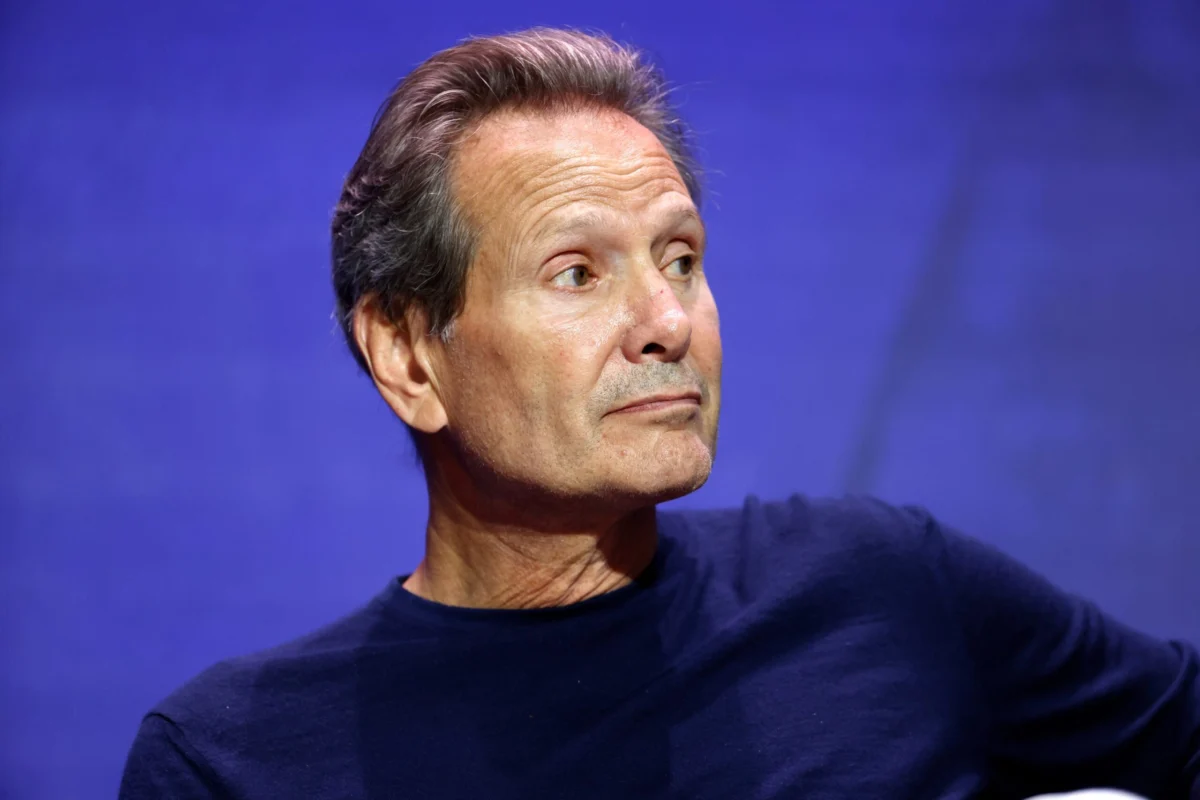
Schulman minced no words regarding the rapid evolution of AI, asserting, “The models that we see today are the worst models we’ll ever use in our lives.” He highlighted the exponential growth in AI capabilities, noting, “Every two months, there’s a step function change in the power of the models.” This relentless progression, he believes, is rapidly propelling humanity towards Artificial General Intelligence (AGI), a concept often debated among experts for its feasibility and timeline. Schulman’s prediction is remarkably bold: “I think we get to some form of AGI in the next six to 18 months. I think it’s right on us.”
To contextualize, AGI refers to hypothetical AI systems possessing human-level cognitive abilities across a wide range of tasks, capable of learning, understanding, and applying knowledge to solve problems in diverse domains, unlike the current narrow AI systems specialized for specific functions (like image recognition or language translation). Achieving AGI within Schulman’s projected timeframe would represent an astonishing acceleration of technological progress, far beyond what many prominent AI researchers currently anticipate, who often place AGI development decades away, if at all. This forecast alone sets a profoundly urgent tone for his subsequent predictions.
Schulman’s vision extends even further into the near future. Just two years after the anticipated arrival of AGI, he foresees the dawn of “the era of quantum,” a transformative period he dramatically described as “everything today times 1,000.” Quantum computing, a nascent field, promises to tackle computational problems currently intractable for even the most powerful supercomputers by leveraging principles of quantum mechanics. Its integration with advanced AI could unlock unimaginable processing power and analytical capabilities, fundamentally reshaping fields from medicine and materials science to finance and cybersecurity. By 2030 or 2035, Schulman also predicted the emergence of “a pretty good form of humanoid robotics,” suggesting that physical manifestations of advanced AI will become commonplace, capable of performing complex tasks in the real world. Summing up this dizzying trajectory, he declared, “we’ve got a decade of intense change ahead of us.”
The implications of such rapid technological advancement, Schulman argued, would extend far beyond mere efficiency gains. He believes AI’s economic and social effects will materialize at a speed that completely overwhelms the traditional mechanisms societies use to absorb technological change. These mechanisms—such as new training systems, evolving labor markets, corporate restructuring, and public policy adjustments—are typically designed for more gradual shifts. “It is about machines that will in many ways be able to do things better than a lot of human tasks are done today,” he explained, signaling a profound challenge to the very nature of work.
This acceleration, in Schulman’s view, will lead to a compression of historical progress. “I think you’ll see the collapse of the 21st century in the next five to 10 years,” he stated, a provocative phrase that prompted Fortune‘s Brady to seek clarification. Schulman elaborated, explaining that this "collapse" signifies that "progress we would have made over 100 years will happen over the next five to 10 years." This hyper-accelerated timeline suggests that societal structures, economic models, and individual lives will undergo transformations that would traditionally span generations, all within a single decade. He concluded with a sense of awe and apprehension: “I don’t think we can really imagine how powerful the technology and how fundamental it will be.”
Verizon’s Disruption: A Case Study in Proactive Adaptation
Schulman emphasized that this impending "earthquake" of change would inevitably impact Verizon itself, a global telecommunications giant employing over 250,000 people and contractors. The traditional organizational model, built around "very defined roles and functions," will become obsolete, he argued. Instead, companies like Verizon will need to transform into "much more fluid organizations" capable of adapting quickly to new technological paradigms and shifting workforce needs. This means rethinking job descriptions, career paths, and the very structure of teams, moving away from rigid hierarchies towards agile, skill-based deployments.
Recognizing the potential for widespread disruption, Schulman stressed the urgent need for robust safeguards and proactive measures. “The technology is coming,” he acknowledged, “There will be safeguards around it. There need to be additional safeguards, but it will continue on.” He passionately urged corporate leaders and government officials to engage in rigorous scenario planning, anticipating difficult outcomes rather than assuming that labor markets would naturally adjust to such rapid technological shifts.
Verizon is not just observing; it’s acting. Schulman proudly announced a significant $70 million initiative dedicated to AI training. Crucially, this program is designed not only for Verizon’s vast workforce but also for "American workers in the community across the country." This expansive scope highlights a recognition that the societal impact of AI transcends individual company boundaries and requires a broader commitment to workforce upskilling. The initiative includes offering free AI training courses, often in partnership with educational institutions and non-profit organizations, and collaborating with local community groups on comprehensive career development programs. These efforts aim to equip individuals with the foundational AI literacy and specialized skills necessary to thrive in an AI-driven economy, whether within Verizon or in other sectors.
Schulman’s message to all leaders and policymakers was unequivocal: “Our responsibility is to think about what might go wrong, what might we need to address, what might the disruption look like, and how do we put guardrails, training, programs in place to minimize that risk.” He underscored the universal impact of AI, stating, “Everybody’s job is going to shift.” He offered a sober assessment, deviating from overly optimistic narratives: “I don’t think everybody will land just magically in a better place per se.” This acknowledgment of potential negative consequences, such as job displacement or the need for significant career transitions, sets a responsible tone for preparing for the future.
Diverse Perspectives on AI’s Practical Integration
While Schulman presented a sweeping vision of rapid, fundamental change, other executives on the panel offered more nuanced, albeit equally impactful, perspectives on AI’s practical integration, particularly concerning the blue-collar workforce and essential infrastructure. Their insights provided a valuable counterpoint, emphasizing augmentation over wholesale replacement and the enduring need for human skills.
PG&E’s Evolving Workforce: Patti Poppe, CEO of PG&E, highlighted the complex interplay between advanced technology and physical labor in the utilities sector. An increasingly digitized grid, leveraging AI, sensors, remote-edge computing, and predictive analytics, is vital for identifying risks like potential outages or wildfires before they escalate. However, this sophisticated infrastructure still demands a skilled human touch. Poppe vividly described PG&E workers performing perilous tasks, like being lowered by rope from helicopters onto transmission towers in mountainous California. She emphasized that "The same guys who hang on the end of the rope are going to have to get smarter about those kinds of technologies." This means workers must combine traditional physical expertise with new technological fluency—interpreting sensor data, operating remote systems, and understanding AI-driven diagnostics. "I’m still going to need those people. Somebody’s still going to have to connect that wire to the pole," she affirmed, illustrating that while tools change, fundamental tasks often remain, requiring human ingenuity and dexterity.
Trane Technologies: Optimizing with AI: Dave Regnery, CEO of Trane Technologies, urged workers and students to embrace AI, drawing parallels to past technological shifts. He suggested that current anxieties mirrored those surrounding the advent of personal computers decades ago. "Go take your favorite AI tool and look up articles from 40 years ago about personal computers," Regnery advised. "They’re identical." His company leverages AI not to reduce headcount but to enhance efficiency, particularly in building management. Trane utilizes data and AI to dynamically manage heating, ventilation, and air-conditioning (HVAC) systems based on real-time building usage patterns, rather than static design specifications. Regnery pointed out a significant opportunity: "Most people don’t realize that 30% of all the energy is for buildings. And you know what? Thirty percent of that is wasted." By optimizing HVAC systems with AI, Trane can make buildings operate approximately 15% more efficiently than their design baseline. This not only offers substantial economic and environmental benefits for customers but also creates a new demand for technicians skilled in installing, servicing, and operating these increasingly sophisticated, AI-driven systems. Regnery’s perspective emphasizes augmentation, where AI improves existing processes and creates new, higher-skilled roles, rather than simply displacing workers. He stressed, "The fastest speed-to-power solution is use the essential equipment that you have."
Stanley Black & Decker: AI as a Construction Companion: Chris Nelson, CEO of Stanley Black & Decker, showcased a similar augmentation model on construction sites. His company has developed AI-enabled autonomous drilling robots. These robots can interpret digital construction plans, map precise routes, and drill holes for racks in data centers and other large projects independently. The innovation is designed to automate highly repetitive, physically demanding tasks that workers dislike. "What do the electricians and other skilled tradespeople not like to do all day?" Nelson asked, answering, "Sit and core drill." By offloading such mundane, high-volume work to robots, skilled electricians and tradespeople are freed to focus on higher-value tasks that require judgment, problem-solving, and intricate technical training, such as pulling wire, terminating connections, and overseeing complex installations. Nelson framed AI as a "companion on the construction site," a tool that enhances human productivity and job satisfaction rather than replacing the human worker entirely. He mused, "The holes will still need to be drilled from now until maybe the end of time, but the way we do it and what it enables people to think about for the future is going to be materially different." This shift, he suggested, could make construction careers more appealing, offering more engaging tasks, greater decision-making authority, and clearer pathways for advancement, even to starting their own businesses or moving into management roles.
Dycom: Addressing the Labor Shortage in Infrastructure: For Dan Peyovich, CEO of Dycom, a company specializing in telecommunications infrastructure, the immediate challenge is not a surplus of workers displaced by AI, but a significant shortage of skilled labor needed to build the foundational physical networks that the entire technology boom, including AI, requires. "There’s so much infrastructure that has to get put in place for all of this to happen," Peyovich explained. His company employs roughly 21,000 people nationwide, connecting homes and businesses through vast fiber and telecommunications networks. In response to a tightening labor market and the massive demand for infrastructure, Dycom has adopted a strategy focused on attracting and retaining workers by improving benefits, including paid time off, holidays, and comprehensive health coverage. Beyond compensation, Dycom has invested heavily in training, establishing a state-of-the-art facility near Atlanta. This facility offers not just technical skills relevant to telecommunications infrastructure but also instruction in management, leadership, the effective use of technology in day-to-day work, and even personal finance.
Peyovich’s approach reflects a crucial understanding of the modern labor market that contrasts with some of the more abstract discussions around AI. Instead of viewing workers as interchangeable units who merely need to learn a new software tool, he emphasizes the need for companies to offer a "credible long-term career proposition"—encompassing robust training, competitive benefits, clear paths for advancement, and financial stability—to recruit and retain individuals in demanding field jobs. "We want to try and create a path for people," he said, "While they’re getting a paycheck, they can learn and find their way." This strategy is not about mitigating AI displacement but about building a sustainable, skilled workforce for the essential physical backbone of the digital age.
Preparing for an Unpredictable Future
Throughout the panel discussion, the tone remained collegial, with Schulman acknowledging the validity of his co-panelists’ more incremental predictions about the future of work. His core message, however, persisted: business leaders and policymakers must not rely on the assumption of a painless or automatic adjustment to the sweeping changes AI promises. While some sectors may experience augmentation and new job creation, the sheer speed and scale of AI’s evolution demand a preparedness for more disruptive scenarios.
“We need to be prepared in case a different scenario emerges,” Schulman stressed, "so that we can make sure that we have skilled workers, whether they be craftsmen or professionals.” This call to action is not just about adapting to current trends but about building resilience and foresight. His final prescription for leaders was unequivocal: engage in rigorous scenario planning. It is imperative to ask the hard questions: What happens if AI’s advancements arrive faster than our educational systems, labor markets, and social institutions can possibly adjust?
“Our responsibility is to think about what might go wrong, what might we need to address, what might the disruption look like, and how do we put guardrails, training, programs in place to minimize that risk,” Schulman concluded. The collective insights from these diverse industry leaders underscore a critical juncture: the future of work in the age of AI is not predetermined. It will be shaped by the proactive decisions, investments, and ethical frameworks established today, balancing the extraordinary potential of AI with a deep understanding of its profound human and societal implications.
