
 By admin
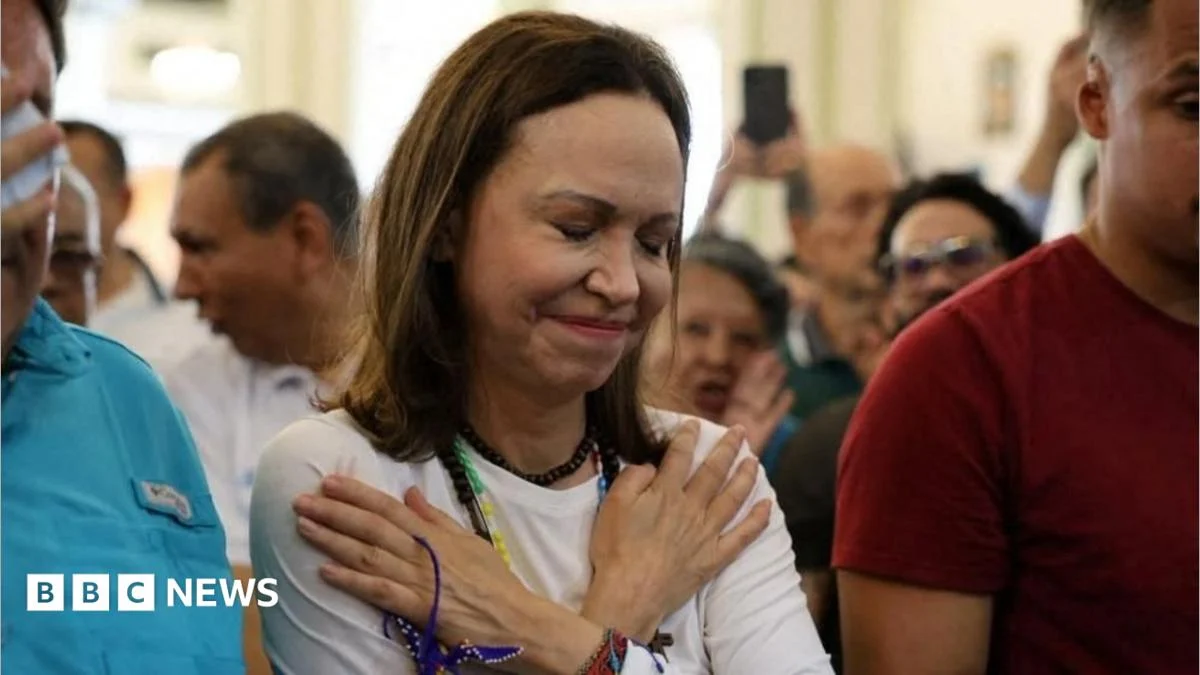
After a prolonged absence of over ten months, Venezuelan opposition leader María Corina Machado has re-entered her homeland, stepping into a political arena fraught with tension and uncertainty. Her return, announced via a post on X stating, "I am here. With you," on Sunday, marks the culmination of multiple, previously unsuccessful attempts to cross back into Venezuela. This homecoming occurs in the shadow of significant geopolitical shifts and domestic political struggles, particularly concerning the upcoming presidential elections and the precarious standing of the current administration.
Machado’s departure from Venezuela in January was a clandestine affair, involving a nighttime escape by speedboat to Norway to receive the Nobel Peace Prize. This event coincided with a pivotal moment in Venezuelan politics: the United States’ seizure of President Nicolás Maduro. The Trump administration, in a decisive move that underscored its commitment to challenging Maduro’s leadership, subsequently endorsed Delcy Rodríguez as the interim president. This endorsement was not merely symbolic; it was followed by the signing of an oil deal that reportedly offered exceptionally favorable terms to the United States, signaling a significant realignment of international economic interests with respect to Venezuela’s vast oil reserves.
Upon her arrival, Machado was photographed attending Mass at a church in the Venezuelan state of Lara, a poignant scene of reunion as supporters, many overcome with emotion, embraced her and clasped her hands. This moment of solidarity was followed by a triumphant procession, as Machado began a journey to the capital, Caracas, leading a caravan of jubilant supporters. The route to the capital became a testament to her enduring support, with countless more citizens lining the roads, eager to express their allegiance and witness her return.
Her close ally and former presidential candidate, Edmundo González, confirmed her arrival with palpable enthusiasm. In a statement, he declared, "I am thrilled to announce to you that our leader, my dear María Corina, is on Venezuelan soil." González further emphasized the significance of this moment for the nation, stating, "Today is a very important day for Venezuelans. Our sovereign voice returns with her to lead and guide this process!" He also revealed his intention to join Machado in Venezuela shortly, to collaboratively steer the country "toward freedom."
The path to this triumphant return was anything but smooth. An advisor to Machado revealed in September that the opposition leader had attempted to re-enter Venezuela seven times in the preceding weeks, each attempt being thwarted. Whispers and reports circulated regarding potential U.S. involvement in these delays, allegations that the United States has consistently denied. Machado’s ability to return to her country was widely understood to be contingent on approval from the Trump administration, a condition that now appears to have been met.
The immediate future of Machado’s plans remains somewhat opaque, yet her long-held ambition to run for president again, should an election be held, is well-documented. Her political trajectory has been defined by a staunch advocacy for democracy and a persistent challenge to the Maduro regime. In 2023, Machado emerged victorious in an independent presidential primary election, an event organized outside the purview of the Maduro government’s official electoral authority. She secured an overwhelming mandate, garnering more than 90% of the vote, a clear demonstration of her popular support.
Despite this decisive victory in the primary, the Maduro government moved swiftly to disqualify her from officially running for the presidency. The regime cited allegations of fraud and tax violations as grounds for her ineligibility, accusations that Machado vehemently denied, dismissing them as politically motivated fabrications designed to suppress her candidacy. In the period leading up to her departure, she was forced to seek refuge in safe houses, a testament to the oppressive political climate and the risks associated with her activism.
The 2024 presidential election saw Machado’s ally, Edmundo González, step in to run in her stead against Nicolás Maduro. However, the electoral authority, which is widely perceived as being closely aligned with the government, declared Maduro the winner without releasing detailed vote tallies. The opposition, however, contested this outcome, presenting evidence in the form of voting tallies that they claimed showed González as the rightful victor.
The narrative of Maduro’s political downfall has also taken a dramatic turn. In January, Maduro was reportedly removed from the country by U.S. forces and is currently detained in New York, facing charges related to drugs, weapons, and torture. He has pleaded not guilty to these accusations.
A spokesperson for Machado hailed her return as "a major step toward a democratic transition and free, fair, and verifiable presidential elections in the near future." The spokesperson, David Smolansky, extended gratitude to key figures and entities for their support, stating, "We thank President Donald Trump, Secretary of State Marco Rubio, the US Government, Congress, and allied governments for their continued leadership and support."
Interestingly, Donald Trump, when questioned by reporters on Sunday about Machado’s return, claimed, "I don’t know anything about" it, while expressing hope for her safety. He also offered a somewhat ambiguous compliment, stating, "I think she’s a very nice woman. She gave me her Nobel Prize, so how can I say anything else? And I hope she’s safe." This reference to the Nobel Prize is particularly noteworthy, as Machado had indeed visited the White House in January and presented her Nobel Prize award to Trump. The committee that awards the prize had previously stated that it "cannot be revoked, shared, or transferred to others," adding a layer of complexity to this symbolic gesture.
U.S. Secretary of State Marco Rubio, on the other hand, was more explicit in crediting his country’s role in facilitating Machado’s return. He praised the "US supported reconciliation talks" that, according to him, have already resulted in the release of hundreds of political prisoners and the return of hundreds of opposition figures from exile. Rubio stated on X, "The conditions allowing for the safe return of Ms. Machado to Venezuela is the direct result of the US supported reconciliation talks which has already seen hundreds of political prisoners freed and hundreds of political opposition figures return from exile." He further articulated expectations for future engagement, adding, "We expect all political actors to support these talks which represent the best chance Venezuela has had in thirty years to peacefully achieve not just a free and fair election but an enduring democracy."
Rubio’s statement positions Machado’s return as a direct outcome of U.S.-brokered negotiations aimed at fostering democratic reform in Venezuela. This narrative suggests a strategic engagement by the U.S. to encourage a peaceful transition of power and the establishment of a stable democratic framework. The emphasis on "reconciliation talks" and the mention of freed political prisoners and returning exiles paint a picture of a multifaceted diplomatic effort. The fact that Machado, a prominent opposition figure, was able to return under these circumstances implies a shift in the political calculus, potentially influenced by international pressure and the perceived weakness of the current Venezuelan regime.
The significance of Machado’s return extends beyond her personal narrative; it represents a potential turning point for the Venezuelan opposition. Her presence on Venezuelan soil, coupled with the outpouring of popular support, could galvanize anti-government sentiment and provide renewed momentum to the movement seeking democratic change. Her ability to organize and mobilize supporters, particularly in the lead-up to future electoral contests, will be a critical factor in shaping the political landscape.
However, the path forward is fraught with challenges. The Maduro government, despite its perceived vulnerabilities, has demonstrated a remarkable capacity for resilience and control. The deep political polarization within Venezuela, coupled with the economic hardships faced by the majority of the population, creates a complex and volatile environment. The efficacy of the "reconciliation talks" and the extent to which they can foster genuine democratic progress remain to be seen. The international community’s sustained engagement and commitment will also play a crucial role in determining the trajectory of Venezuela’s political future.
The renewed presence of María Corina Machado in Venezuela signals a bold assertion of her political will and a direct challenge to the existing power structures. Her homecoming is not just a personal triumph but a symbolic moment for a nation yearning for change. The coming weeks and months will undoubtedly be critical in observing how this development unfolds and what implications it holds for the long-struggling democratic aspirations of the Venezuelan people. The interplay between internal political dynamics, international diplomacy, and the persistent will of the Venezuelan populace will ultimately dictate the success of this new chapter in the nation’s tumultuous political journey.
