
 By Lina Irawan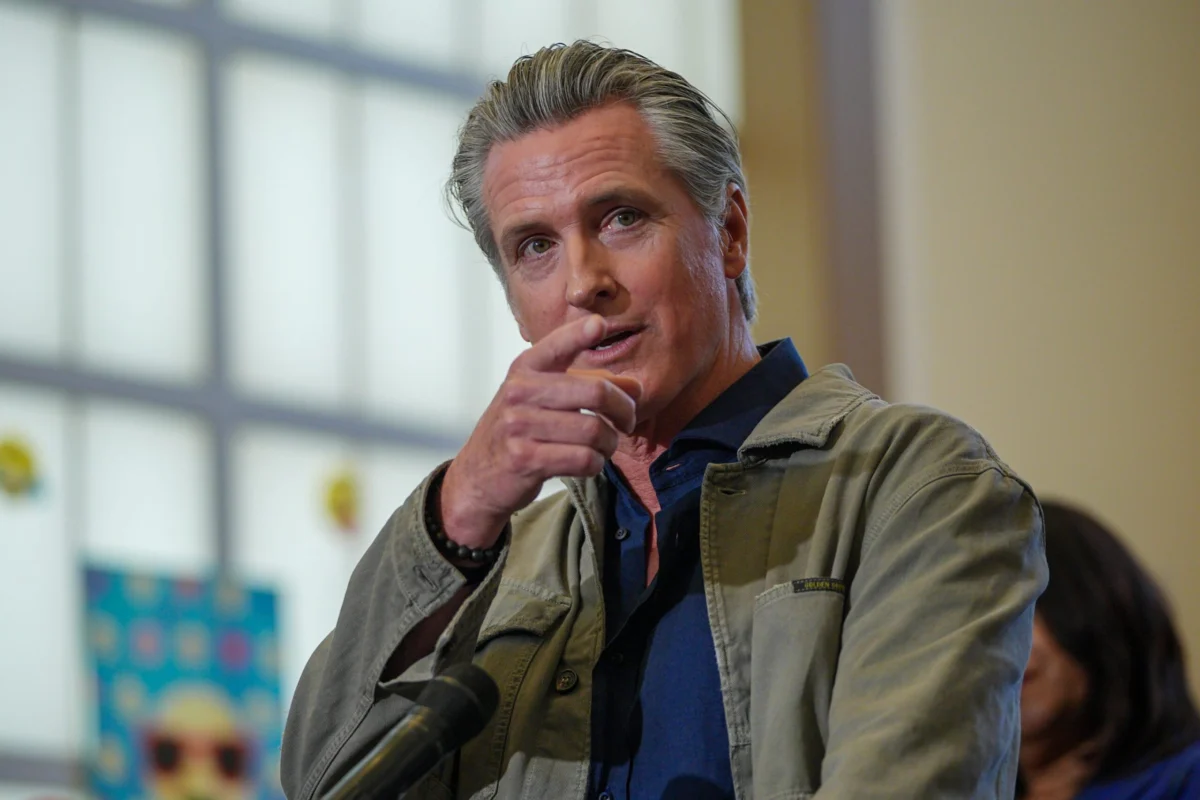
In a dramatic illustration of how political allegiances and professional pragmatism can shift, Ned Wigglesworth, a figure once synonymous with campaign finance reform, has emerged as a central strategist in the high-stakes battle against Proposition 40. Decades ago, Wigglesworth fiercely critiqued what he termed the "billionaire boys’ club of politics," warning against the corrosive influence of immense wealth on the democratic process. Today, he is a key architect behind Building a Better California, the formidable political organization dedicated to defeating Prop 40, a November ballot measure that seeks to impose a one-time 5% tax on Californians with a net worth of at least $1 billion.
Wigglesworth’s journey from vocal critic of wealthy political donors to a "billionaire whisperer," as he has been dubbed by the San Francisco Standard, encapsulates a profound transformation. In the early 2000s, as a prominent advocate for campaign finance transparency, Wigglesworth was unequivocal about the motivations of the super-rich in politics. He famously stated in 2005 that "There’s some very wealthy and powerful special interests who have enough at stake to spend 150 million bucks, to either defend their turf or improve their bottom line." He further elaborated, "These people aren’t spending money out of some benevolent sense of improving societal good, improving the public good. This is about people fighting for their piece of the pie." Two years later, in a Capitol Weekly column, he distilled this philosophy into a pithy axiom: "they give because they get."
This stark ideological U-turn raises questions about the nature of political consulting, the allure of influence, and the evolving landscape of California’s power dynamics. While Wigglesworth has not publicly commented on his changed stance, his career trajectory provides some clues. His LinkedIn profile charts a path through influential communications and public affairs firms, including founding Spectrum Campaigns, where he has served as CEO for over a decade. Prior to that, he held partner and vice president roles at Redwood Pacific Public Affairs, Goddard Claussen/West, and the California Medical Association. It’s plausible that as his career advanced within the intricate world of Sacramento lobbying, his client base naturally gravitated towards those with significant financial interests at stake – interests that increasingly align with the state’s wealthiest individuals and corporations. Anonymous colleagues, cited by the San Francisco Standard, describe him as a "creature of Sacramento lobbying," suggesting a deep integration into the state capital’s political machinery, where pragmatism often trumps ideological purity.
The current fight over Proposition 40 provides a vivid, high-stakes test of Wigglesworth’s own past thesis. The measure proposes a one-time levy equal to 5% of the total wealth of approximately 200 billionaires who resided in California as of January 1st. Supporters of Prop 40 estimate that it could generate a staggering $100 billion, with the vast majority of these funds earmarked for crucial healthcare initiatives, particularly to offset federal Medicaid cuts that have strained the state’s budget. This revenue, they argue, could provide a much-needed injection into public services, addressing critical needs without burdening the average taxpayer.
However, for the billionaires targeted by the measure, the financial implications are monumental. Google co-founder Sergey Brin, for instance, reportedly faces a potential tax bill of $13 billion if Prop 40 passes. This colossal sum underscores the immense personal financial exposure that the state’s ultra-wealthy confront. Unsurprisingly, the opposition campaign, Building a Better California, has attracted unprecedented levels of funding from these affected individuals. Brin alone has contributed over $100 million to the group. He is joined by other titans of industry, including venture capitalist John Doerr and crypto billionaire Chris Larsen, who have also funneled substantial funds into committees dedicated to defeating the tax. The sheer scale of the opposition’s financial firepower is evident in their aggressive strategy: Building a Better California has already reserved an astonishing $87 million worth of advertising slots in the run-up to the November vote, signaling an all-out media blitz to sway public opinion.
This battle is not merely about a single tax proposition; it reflects a deeper, long-standing tension that has permeated California politics. The Golden State, a global engine of innovation and economic prosperity, has simultaneously produced extraordinary concentrations of wealth and a potent political appetite for taxing it. California’s unique economic landscape, fueled by Silicon Valley’s tech boom and a vibrant venture capital ecosystem, has created more billionaires than almost anywhere else in the world. Yet, it also grapples with significant issues of inequality, housing affordability, and public service funding.
Governor Gavin Newsom finds himself navigating this complex bind. While he has publicly opposed Proposition 40 at the state level, citing concerns about potential capital flight and its impact on the state’s tax base, he has simultaneously advocated for higher taxes on the ultra-wealthy at the federal level. Newsom’s rhetoric often leans into progressive themes, emphasizing the need to "democratize our economy" amidst growing concerns about AI-related job displacement and widening wealth gaps. This dual stance highlights the delicate balancing act faced by Democratic leaders in California, who must reconcile their party’s progressive values with the practical realities of managing a state heavily reliant on the economic contributions and tax revenues of its wealthiest residents.
The argument that a wealth tax could drive away the state’s most affluent residents is a central plank of the opposition’s campaign. Critics contend that such a punitive measure would incentivize billionaires to relocate to states with more favorable tax regimes, thereby eroding California’s tax base in the long run. This concern is not entirely theoretical. Sergey Brin and fellow Google co-founder Larry Page, both immensely wealthy individuals, moved out of California before the January 1st cutoff date for Prop 40 eligibility. Since then, they have reportedly amassed approximately $225 million in Miami real estate, signaling a potential trend of high-net-worth individuals seeking greener, or rather, lower-taxed pastures.
This phenomenon, often dubbed the "billionaire exodus," is a significant worry for state policymakers. California’s state budget is unusually dependent on its top earners, with nearly half of its personal income tax revenue coming from the top 1%. Losing even a fraction of these high-income taxpayers could have severe repercussions for public funding. Even venture capitalist Vinod Khosla, who has publicly stated he has no plans to leave California, has warned that the state risks permanently damaging its tax base if wealthy residents flee en masse. The debate is not just about revenue generation but also about the state’s economic competitiveness and its ability to retain the entrepreneurial talent that has historically driven its prosperity.
Historically, wealth taxes have been contentious globally, often facing challenges related to valuation, administrative complexity, and the practical difficulties of preventing capital flight. While some European countries have experimented with wealth taxes, many have either repealed or significantly scaled them back due to these issues. Proponents, however, argue that such taxes are a necessary tool for addressing extreme wealth inequality and funding critical public services, especially in an era of unprecedented wealth concentration. They contend that the economic contributions of the super-rich do not justify their disproportionately low tax burdens compared to their wealth, and that a one-time levy could capture wealth that has largely escaped traditional income or property taxes.
The sums involved in this current political contest dwarf even the significant spending Wigglesworth was cautioning about more than two decades ago. In 2005, he cited $150 million as a staggering amount for special interests to spend. Today, the scale of financial influence has escalated dramatically. California’s 15 richest billionaires alone have poured more than $336 million into state and federal elections this year. Of this colossal figure, a staggering $331 million is attributable to just four individuals: Sergey Brin, Marc Andreessen, Ben Horowitz, and Chris Larsen. This concentrated spending underscores the profound financial power wielded by a select few and highlights the very dynamic Wigglesworth once warned against: wealthy individuals deploying vast sums to protect their economic interests. The irony, of course, is that Wigglesworth is now a central figure in orchestrating such a defense.
The transformation of Ned Wigglesworth serves as a compelling narrative within the broader story of California’s political and economic evolution. It illustrates the often-blurred lines between ideological conviction and professional expediency in the high-stakes world of political consulting. As Californians head to the polls in November, they will not only be deciding on the fate of Proposition 40 and the potential redistribution of billions in wealth but also grappling with the enduring tension between wealth concentration, political influence, and the pursuit of a more equitable society. Wigglesworth’s journey from a crusader against the "billionaire boys’ club" to a strategist within its ranks offers a poignant commentary on how power operates, and how individuals navigate its complex currents, in the Golden State.
