
 By admin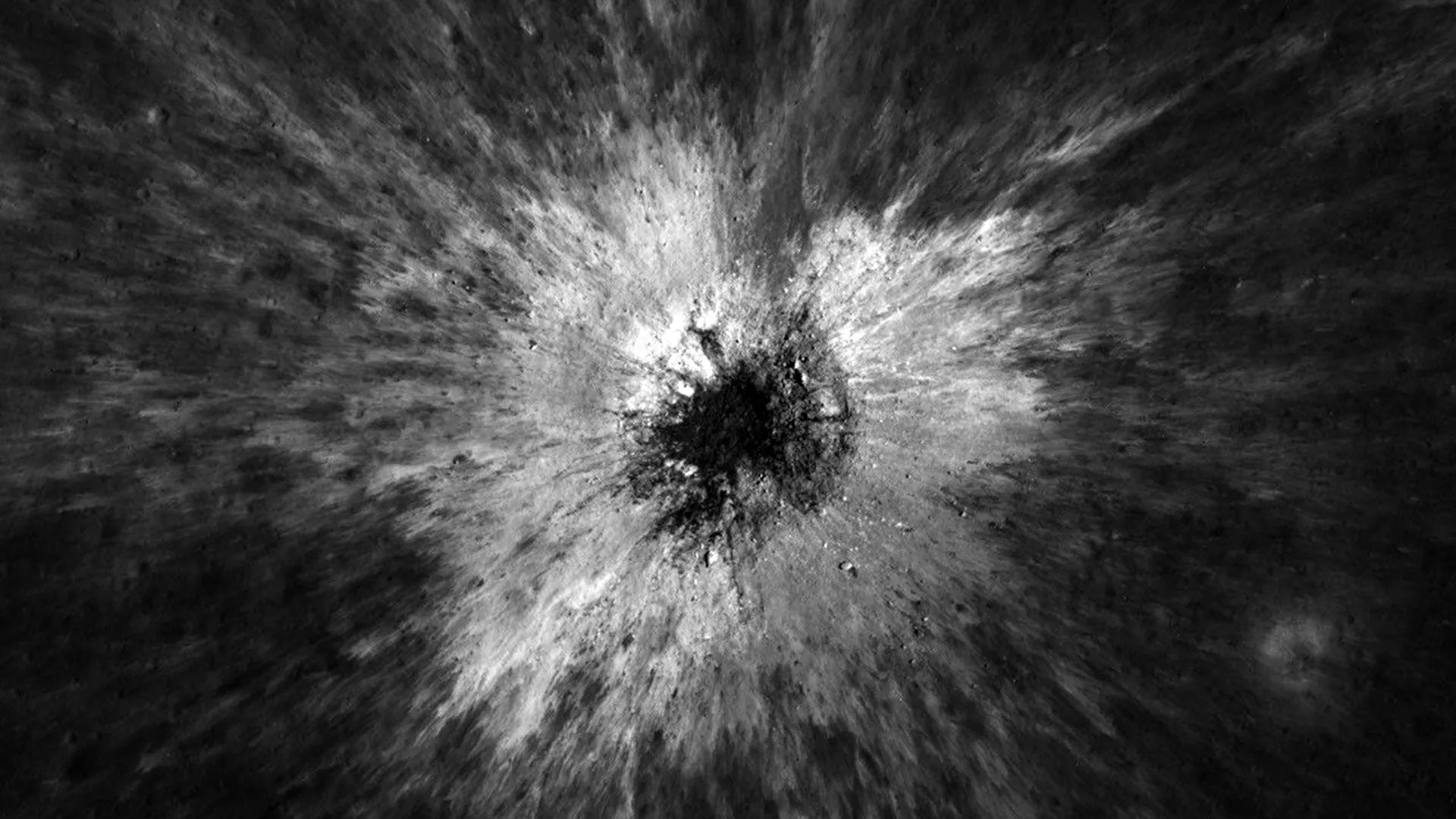
What began as a methodical examination of vast lunar maps by Robert Wagner, an image-processing specialist from Intuitive Machines, working with data from NASA’s venerable Lunar Reconnaissance Orbiter (LRO), culminated in the identification of the largest newly formed impact crater ever documented in the solar system. The discovery underscores the dynamic nature of the Moon’s surface and the critical role of long-term orbital surveillance in understanding our closest celestial neighbor, particularly as humanity plans a sustained return.
Wagner’s routine involved scrutinizing extensive digital maps generated by LRO’s Lunar Reconnaissance Orbiter Camera (LROC) system. On October 24, 2025, while performing a periodic broad search for significant surface alterations, his trained eye caught an anomaly that instantly demanded attention. On his computer screen, a distinct, unusually bright patch emerged, ringed by a dark halo – a tell-tale signature of recently disturbed material on the otherwise ancient, pockmarked lunar terrain. This pattern is characteristic of fresh impact events, where brighter, deeper regolith is excavated and spread, contrasting sharply with the darker, weathered surface.
"I just stopped, dropped everything, and started looking into what that spot was," Wagner recounted, describing the immediate shift from routine task to urgent investigation. His intuition, honed by years of analyzing lunar imagery, signaled something truly exceptional.
Upon comparing the latest LROC images with older observations of the same region, the dramatic change became unequivocally clear: a massive, pristine impact crater had formed. Scientists, reporting their findings on September 16 in the prestigious journal Science Advances, confirmed that this was indeed the largest newly formed crater ever identified across any planetary body in our solar system observed with such detail. The peer-reviewed publication of this discovery in Science Advances, known for its high-impact scientific research, solidifies its significance within the planetary science community.
This landmark finding not only provides invaluable data on current impact rates and processes but also highlights the enduring utility of NASA’s LRO mission. For over 17 years, LRO has been a tireless sentinel, meticulously documenting changes on the Moon’s surface. This continuous observational record is proving indispensable as NASA prepares for the Artemis program, aiming for a sustained human presence and increased scientific and commercial activity on the lunar frontier. Understanding the frequency and effects of such large impacts is crucial for designing durable habitats and ensuring the safety of future astronauts and equipment.
A Rare Impact Creates a Giant Moon Crater
The colossal new crater has been officially named McGetchin, a fitting tribute to pioneering lunar scientist Tom McGetchin. McGetchin was a prominent figure in early lunar geology, instrumental in analyzing Apollo mission samples and contributing to our understanding of lunar volcanism and impact processes. The crater’s formation window was precisely narrowed down to sometime between April 11 and May 22, 2024. This precise dating was made possible by LRO’s consistent imaging schedule, allowing researchers to pinpoint the exact observation pass that captured the pristine impact site.
The impactor responsible was likely an asteroid or a comet, estimated to be roughly the size of a three- to six-story building – a substantial object by any measure. Such an impact event releases an immense amount of kinetic energy, comparable to hundreds of megatons of TNT, instantaneously altering the lunar landscape. The resulting explosion carved out a crater 728 feet (222 meters) wide, a span roughly equivalent to two American football fields laid end-to-end, or nearly the height of the Space Needle in Seattle. Its depth measures a staggering 141 feet (43 meters), deep enough to comfortably stack three standard yellow school buses vertically.
Researchers estimate that an impact of this magnitude may occur on the Moon only about once every century, or even less frequently. This rarity makes the detection of McGetchin a significant event, providing a real-time data point to refine models of impact flux and the evolution of planetary surfaces, which often rely on statistical analyses of older, degraded craters.
The Moon Is Constantly Being Hit
The Moon, lacking the protective atmospheric shield that Earth enjoys, is a silent witness to a ceaseless bombardment from space. For more than 17 years, LRO has diligently circled the Moon from an altitude of approximately 60 miles (96 kilometers), its suite of seven sophisticated instruments continuously studying the lunar landscape, surface composition, temperature profiles, and radiation environment. This persistent observation has yielded an unparalleled dataset for understanding lunar dynamics.
During its extended mission, LRO has allowed researchers to identify at least 1,000 new impact craters, a testament to the ongoing geological activity driven by cosmic collisions. Beyond just craters, LRO has also recorded approximately 100,000 additional changes to the lunar surface. These changes are not always direct impacts; they include secondary craters formed by ejecta from larger impacts, boulder movements, and subtle alterations to the regolith caused by the seismic tremors and widespread debris thrown outward during significant events.
Unlike Earth, where incoming asteroids, meteoroids, and comets typically encounter a dense atmosphere that causes them to slow, fragment, or burn up, the Moon offers no such protection. Objects hurtle towards its surface at cosmic velocities, often tens of kilometers per second, striking directly and leaving their indelible mark. Earth’s atmosphere acts as a formidable defense, ablating away smaller objects and dramatically reducing the impact energy of larger ones, preventing countless surface scars.
Most lunar impacts are, naturally, far smaller than the catastrophic collision that created McGetchin. The smallest craters that scientists can reliably detect and track in LRO’s high-resolution images are around 30 feet (9 meters) across, roughly the length of a three-story building lying on its side. These smaller craters are typically produced by rocks approximately 43 inches (1.1 meters) wide, about the size of a monster-truck tire. Scientists estimate that impacts of this specific size create about 140 new craters across the Moon each year, demonstrating the constant, albeit mostly small-scale, resurfacing of the lunar surface. Even more numerous are impacts caused by microscopic objects, but the tiny holes they produce are far too small to be resolved in images taken from orbital altitudes.
A Four-Mile Cold Spot Around the Crater
The LRO mission’s comprehensive instrumentation allows scientists to detect changes that extend beyond what is visible to cameras alone. After McGetchin was identified through visual imagery, scientists leveraged LRO’s thermal instrument, Diviner, to conduct a specialized examination of the surrounding region. Diviner is a multispectral radiometer designed to measure surface and subsurface temperatures, revealing crucial information about the physical properties of the lunar regolith.
These thermal observations revealed something truly unexpected and profoundly significant. An expansive area, roughly 4 miles (6.4 kilometers) wide, encircling the newly formed McGetchin crater, was found to be approximately 16 degrees Fahrenheit (9 degrees Celsius) colder at night than the adjacent, undisturbed terrain. This "cold spot" was a stark thermal anomaly.
In a second paper, also published on September 16 in Science Advances, researchers presented their analysis of this perplexing temperature difference. They concluded that the thermal anomaly stems from fundamental changes in the lunar regolith – the layer of loose, unconsolidated dust and rocky fragments that covers the Moon’s solid bedrock. The immense energy of the McGetchin impact violently churned and loosened the regolith in the surrounding area, creating a more porous, less dense material. This altered regolith, with increased void space, becomes a less efficient conductor of heat. Consequently, after sunset, it loses heat more rapidly and retains less of it, resulting in the observed colder nighttime temperatures.
The sheer size of this "cold spot" surprised researchers because it powerfully demonstrates that a major impact can profoundly alter the lunar surface well beyond the immediate confines of the crater itself. The physical effects of such an event propagate outward, significantly modifying the properties of the regolith over a broad region.
These subtle yet pervasive changes in regolith properties may have tangible, practical consequences for future lunar exploration. Variations in the texture, density, and thermal conductivity of the regolith, for example, could significantly influence how rover wheels interact with the surface. Areas of unusually loose or cold regolith might pose challenges for traction, require different locomotion strategies, or affect the thermal management of sensitive instruments and habitats. Understanding these widespread alterations is therefore crucial for mission planning, landing site selection, and the design of robust lunar infrastructure as NASA moves towards establishing permanent bases.
How NASA Found the New Crater
The Lunar Reconnaissance Orbiter Camera (LROC) system is the primary tool for detailed surface imaging. Operating from LRO’s pole-to-pole orbit at an altitude of about 60 miles (96 kilometers), LROC captures an extraordinary breadth of lunar detail. The system comprises two Narrow-Angle Cameras (NACs) that capture high-resolution black-and-white images, providing exceptional detail down to about 3 feet (1 meter) per pixel. Complementing these are the Wide-Angle Camera (WAC), which collects moderate-resolution multispectral images covering broad swaths of the surface.
Through thousands of orbital passes and the meticulous stitching together of countless images, LROC has enabled researchers to assemble global maps of the Moon with unprecedented precision. These maps are dynamic archives, allowing scientists to identify not only new craters but also active landslides, pinpoint the exact locations of spacecraft landers, map seismic faults, and even detect possible signs of subsurface lava tubes – potential shelters for future human missions.
Scientists working with LROC routinely inspect close-up images from the Narrow-Angle Camera for subtle changes. These routine observations are typically focused on searching for features smaller than 30 feet (9 meters) across, which are far more common.
However, every few years, the LROC team undertakes a more ambitious, broader search specifically targeting much larger features. This involves creating updated global maps of the Moon and meticulously comparing them with earlier versions, specifically looking for changes wider than 150 feet (45 meters). This computationally intensive process is where Robert Wagner was engaged on October 24, 2025, when McGetchin first caught his attention.
Using images from LROC’s Wide-Angle Camera, which captures vast areas of the lunar surface with pixels roughly the size of football fields, Wagner employed specialized software. He combined hundreds of "before" and "after" images of the same lunar regions. The software was designed to highlight differences: areas that remained unchanged appeared as a uniform gray, while any part of the surface that had altered showed up as a conspicuous bright or dark patch.
A Crater That Was Impossible To Miss
While this image-comparison method is highly effective in flagging potential changes, identifying genuine new craters requires extensive manual review. The software, while powerful, can be fooled by minor variations in solar illumination angles, subtle changes in shadows, or even slight shifts in spacecraft orientation, all of which can trigger hundreds of "false positive" signals.
Wagner’s typical workflow involves carefully sifting through these alerts, often searching for small, fuzzy halos around bright points that are only a pixel or two wide. These subtle halos are characteristic of the fine sprays of regolith – the ejecta – thrown outward by smaller, fresher impacts.
McGetchin, however, looked nothing like a typical small feature. Its debris pattern was monumental, stretching across hundreds of pixels, creating an undeniable visual signature that immediately differentiated it from everything else in the images. The vast, stark contrast of the ejecta blanket and the dark, excavated material made it impossible to overlook.
"It was by far the most obvious impact debris pattern I’ve ever seen in one of these images," Wagner emphasized, underscoring the sheer scale and clarity of the discovery.
Following this initial identification, researchers rapidly tasked LROC’s Narrow-Angle Camera to perform much closer, higher-resolution passes over the site. With its capability to capture details at approximately 3 feet (1 meter) per pixel, the NAC provided incredibly sharp images. These detailed observations, taken during subsequent orbital passes, allowed scientists to precisely measure the crater’s dimensions, meticulously examine its morphology (its shape and structural features), and accurately determine how the surrounding lunar landscape had been altered by the impact.
The close-up observations were also critical in helping researchers estimate the size and kinetic energy of the object that created McGetchin. By analyzing the crater’s size, depth, rim morphology, and the extent and distribution of its ejecta, scientists can apply established scaling laws and impact models to infer the characteristics of the original impactor. More detailed results about the specific properties of the McGetchin impactor and the physics of this extraordinary event are eagerly anticipated and expected to be published in a future scientific paper, further enriching our understanding of lunar dynamics.
