
 By admin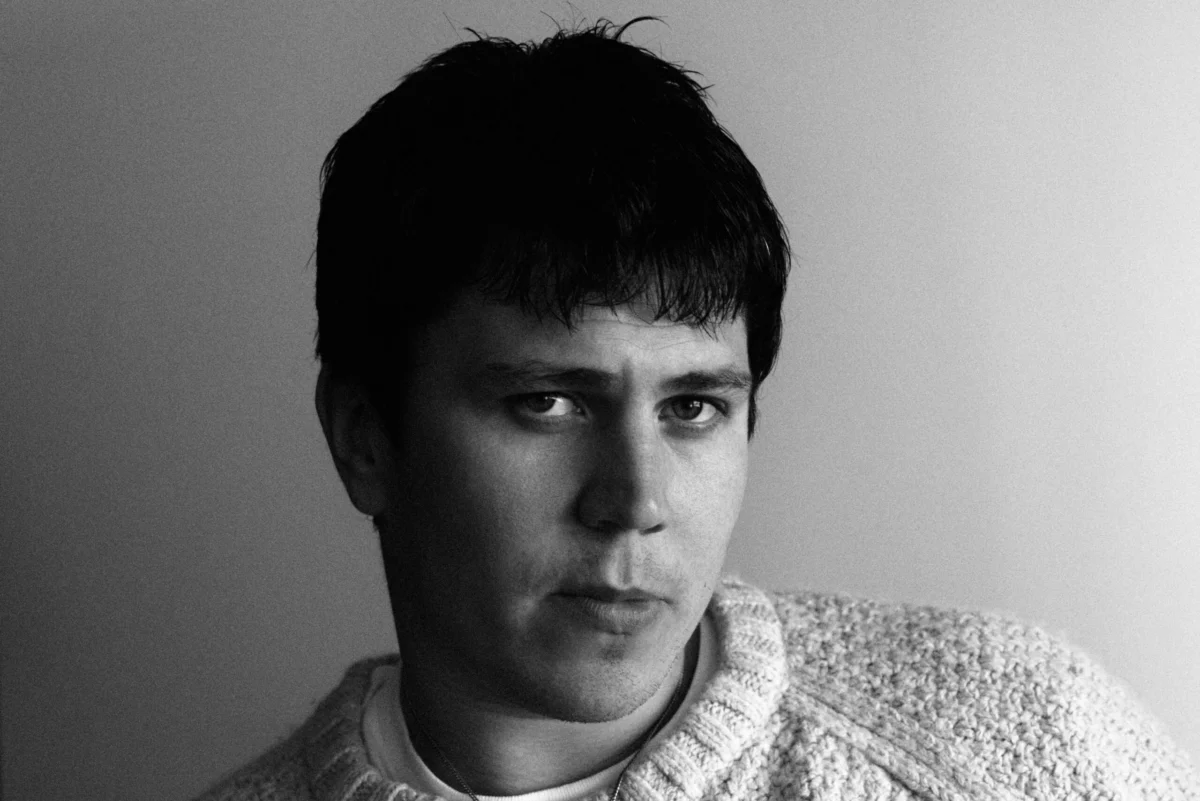
In a passionate video address posted to his Instagram account, Irish singer-songwriter Aaron Rowe has fiercely defended global music phenomenon Ed Sheeran, urging the public to shift their focus away from Sheeran and towards what Rowe describes as "Zionist lobbies" attempting to stifle dissent regarding the ongoing conflict in Palestine. Rowe, who was initially an opening act on Sheeran’s tour, found himself removed from the lineup following Macklemore’s dismissal. Macklemore’s removal stemmed from his vocal support for Palestine, a stance that has ignited a firestorm of debate and criticism within the entertainment industry and beyond.
Rowe’s statement directly challenges the narrative that Ed Sheeran is the primary figure of concern, stating, "I think you are all focusing on the wrong person here. All I keep hearing is Ed Sheeran this, Ed Sheeran that. When you really should be focusing on the likes of Robert Kraft. You really should be focusing on the Zionist lobbies that are trying to silence the voices of people who are shouting about genocide, the genocide that is happening in Palestine right now by Israel." This powerful assertion places the blame squarely on external forces, suggesting a coordinated effort to suppress pro-Palestinian voices and attributing agency to influential groups that allegedly manipulate public discourse.
Elaborating on his perspective, Rowe acknowledged that Sheeran’s official statement regarding the situation could have been more robust. He also unequivocally stated his belief that Macklemore should not have been removed from the tour. Rowe characterized the decision to pull Macklemore as a panicked reaction, a "panic station over there," driven by the immense pressure and conflicting viewpoints being directed at the tour organizers. "They rushed the decision because they didn’t know what to fucking do because they were getting it from all angles. That’s a mistake," Rowe explained, framing the incident as a miscalculation born out of crisis management. He expressed his conviction that Sheeran himself recognizes this as an error, despite limited direct communication. "I haven’t had a chance to fucking talk to Ed too much, but I fully believe he knows that was a mistake," Rowe added.
Rowe further bolstered his defense of Sheeran by highlighting the apparent pro-Palestinian sentiments prevalent among many of the tour’s opening acts. He pointed to the lineup as evidence that Sheeran’s intentions were not aligned with what critics are portraying. "Look who’s on the fucking lineup, yeah? Beoga, the most pro-Palestine group out there… fully pro-Palestine, fucking Macklemore. Need I say more? Me, everyone knows my fucking stance on Palestine," Rowe declared, listing himself and the other acts as proof of Sheeran’s alleged broader alignment. He questioned the logic of Sheeran being labeled a "Zionist" if he were indeed surrounding himself with artists who openly champion the Palestinian cause. "Like, if Ed Sheeran was a fucking Zionist, why would he have all these fucking people on the fucking tour? It was human fucking error," he concluded, reiterating his belief in a mistake rather than a deliberate act of political alignment.
The context of Aaron Rowe’s video is crucial, as it emerges amid ongoing backlash against Ed Sheeran following Macklemore’s abrupt departure from the tour. The situation has reverberated through the music industry, with other artists also expressing their dissent. Notably, Finneas, another artist scheduled to perform as an opener, also withdrew from the tour in solidarity with Macklemore. When Rowe himself was removed, he had previously acknowledged Sheeran’s significant impact on his career, stating that the pop superstar had "changed my life." He revisited this sentiment in his latest video, emphasizing Sheeran’s positive influence and inherent kindness.
"I know Ed Sheeran has done so much for so many fucking people, including artists like me, who he’s literally changed their entire lives. All he has inside of him is kindness. That is who Ed Sheeran is. And yes, like every other human being, he makes fucking mistakes," Rowe asserted, painting a picture of Sheeran as a fundamentally good person capable of error, rather than a political antagonist. This portrayal aims to humanize Sheeran and differentiate between personal character and the pressures of managing a global tour amidst highly charged political events.
Rowe’s message culminated in a renewed call to action, urging his followers and the public at large to redirect their energy towards what he perceives as the true instigators of censorship. "You should be using this opportunity to plaster Robert Kraft’s face everywhere. Someone who tried to shut down free speech. Someone who tried to silence the voices of people who are shouting about genocide. That’s what you should be using your energy on, not fucking Ed Sheeran, for fuck’s sake," he implored. This pointed accusation targets Robert Kraft, an influential figure often associated with pro-Israel advocacy and business interests, suggesting his alleged involvement in suppressing pro-Palestinian discourse. Rowe’s statement implies that Kraft, and by extension the "Zionist lobbies" he represents, are the real targets for scrutiny and opposition, rather than the artists caught in the crossfire.
The controversy surrounding Macklemore’s removal and the subsequent fallout highlights the increasing politicization of the arts and the complex pressures faced by artists and organizers in navigating sensitive geopolitical issues. Macklemore’s initial statement, which included a reference to the "dehumanization of Palestinians" and the "genocide happening in Gaza," resonated with many who feel that mainstream platforms have been insufficiently critical of Israel’s actions. His subsequent removal from the tour, perceived by many as a capitulation to pro-Israel pressure groups, has galvanized a segment of the public and the artist community to speak out more forcefully.
The situation also raises questions about the extent of corporate and political influence within the music industry. Ed Sheeran, as a global superstar with a massive platform, is inevitably positioned at the intersection of artistic expression and commercial interests. The financial implications of a tour of this magnitude, coupled with the potential for boycotts and public relations crises, create a challenging environment for artists attempting to express nuanced or controversial political views. Rowe’s argument suggests that the decision to remove Macklemore was not necessarily a reflection of Sheeran’s personal beliefs, but rather a calculated move to protect the tour from external pressures, potentially orchestrated by powerful lobbying entities.
Furthermore, the inclusion of groups like Beoga, described by Rowe as "the most pro-Palestine group out there," on Sheeran’s tour, is presented as a counter-argument to claims of Sheeran’s political alignment. If Sheeran were truly opposed to the Palestinian cause, Rowe implies, he would not associate with artists who so openly advocate for it. This line of reasoning suggests that Sheeran’s team may have erred in their assessment of the political landscape or underestimated the backlash that would follow Macklemore’s vocal support for Palestine. The concept of "human error" as presented by Rowe, while seemingly dismissive, could also be interpreted as an acknowledgment of the immense complexity and the potential for missteps when dealing with such volatile issues on a global scale.
The ongoing debate surrounding free speech, censorship, and political activism within the entertainment sphere continues to evolve. Aaron Rowe’s intervention serves as a notable voice in this discourse, attempting to reframe the narrative and redirect public attention towards what he views as more significant forces at play. His impassioned defense of Ed Sheeran, coupled with his pointed criticism of alleged Zionist lobbying efforts, underscores the deep divisions and the heightened sensitivities surrounding the Israeli-Palestinian conflict, even within the seemingly apolitical realm of popular music. The long-term implications of this controversy for artists, touring organizations, and the broader conversation about political expression in the arts remain to be seen.
