
 By Rifan Muazin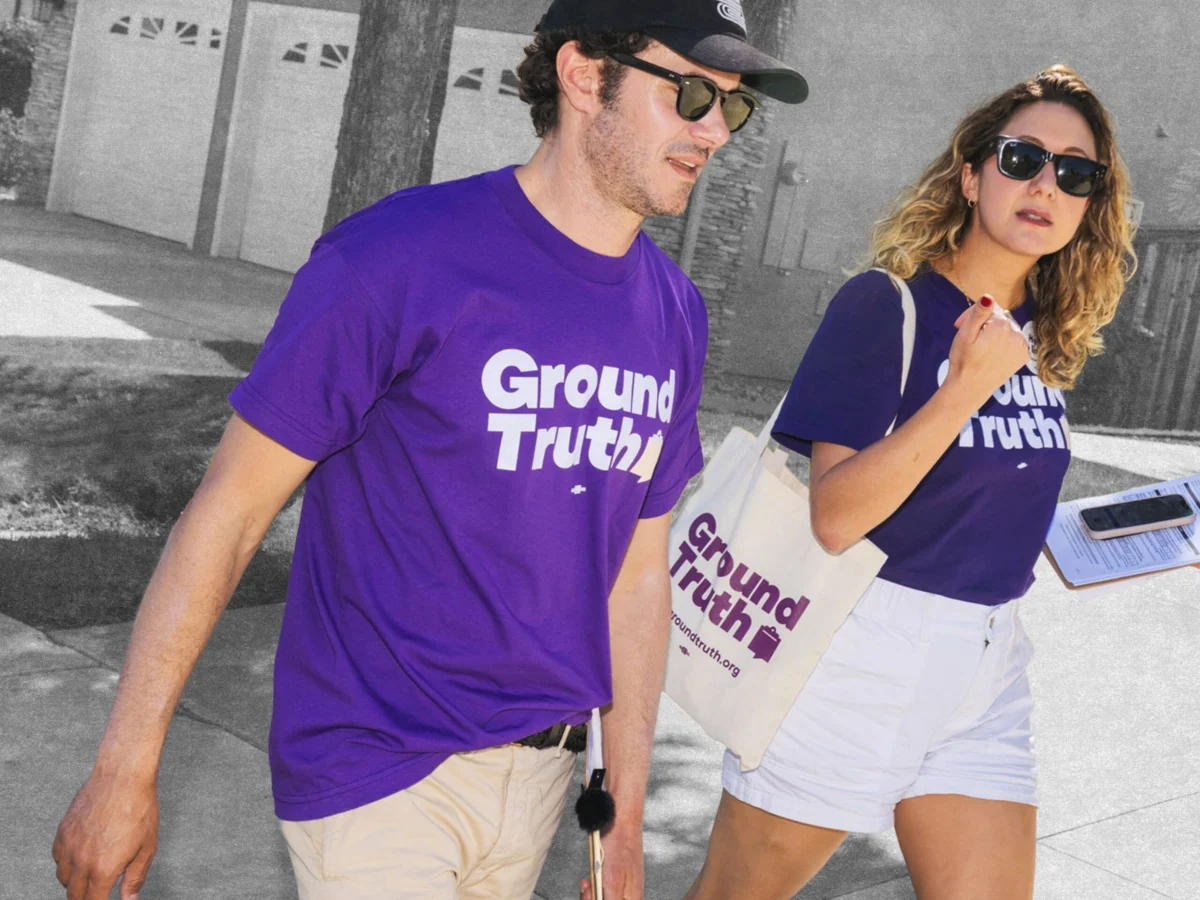
If a curly-haired, vaguely familiar-looking man knocked on your door in Temecula, California, this past weekend to discuss the future of American democracy, you might have been face-to-face with one of television’s most enduring stars. Adam Brody, the actor who rose to fame as the quintessential indie-geek Seth Cohen on The O.C. and recently cemented his status as a leading man in Netflix’s Nobody Wants This, spent his Saturday and Sunday not on a film set or at a red-carpet gala, but on the sun-scorched doorsteps of Riverside County. Volunteering for the progressive organization Swing Left, Brody has become a fixture of the grassroots movement, though his reception by the public remains a toss-up between fan recognition and the standard skepticism reserved for political canvassers.
“I wasn’t recognized this weekend, but I don’t blame them. They’re good people nonetheless,” Brody remarked with the dry, self-deprecating wit that has defined his career. He quickly followed up with a smirk: “That was a joke. I do blame them. I actually think they’re bad for not knowing me.” Beneath the levity, however, lies a serious commitment to a form of political engagement that many of his Hollywood peers have abandoned in the mid-2020s. In an era where celebrity advocacy has largely retreated to the safe confines of curated Instagram stories or disappeared entirely, Brody’s presence in Temecula—a city recently thrust into the political spotlight due to aggressive redistricting—represents a rare bridge between the cultural elite and the American electorate.
The landscape of celebrity political activism has undergone a seismic shift over the last decade. In the mid-2010s, particularly following the 2016 election, Hollywood was a hotbed of visible, often confrontational protest. Icons like Emily Ratajkowski were arrested on the steps of the Supreme Court, and late-night hosts became the de facto leaders of the resistance. Yet, by 2026, a noticeable hush has fallen over the industry. This "slump" in advocacy is not accidental; it is the result of a complex interplay between political fatigue, a shifting corporate landscape, and a fundamental questioning of celebrity efficacy. As the country approaches a pivotal midterm election cycle, many stars are weighing the moral imperative to speak out against the potential professional fallout in an industry increasingly dominated by conservative-leaning mega-corporations and the looming shadow of the highly contested Paramount/Warner Bros. Discovery merger.
Brody, however, remains an outlier. While his portrayal of the “hot rabbi” Noah Roklov in Nobody Wants This earned him a Critics Choice Award and placed him back at the center of the cultural zeitgeist, he has resisted the urge to sanitize his public persona for the sake of brand safety. In a wide-ranging discussion, Brody explored the nuances of his canvassing work, the evolution of his political consciousness, and his refusal to engage with the toxic digital ecosystems of modern social media.
The actor’s weekend in Temecula was part of Swing Left’s "Ground Truth" campaign, a strategic pivot from traditional canvassing. Rather than merely delivering talking points or handing out glossy pamphlets, volunteers are trained to listen. Temecula, located in northern San Diego’s newly redrawn swing district, has become a microcosm of the national divide. “That community, whether they know it or not, is all of a sudden in a swing situation where it’s a really critical race,” Brody explained. The Ground Truth approach focuses on eliciting the raw opinions of voters—Democratic, Republican, and Independent alike—and relaying that data back to campaigns to better refine their messaging.
What Brody discovered on those doorsteps was a nation weary of ideological warfare and deeply preoccupied with the mechanics of survival. “100% prices,” Brody said when asked about the top concerns of voters. While Democratic voters often led with anxieties regarding the Constitution and civil liberties, the common denominator across the board was the crushing weight of inflation. Even among Republicans, Brody noted a sense of constitutional alarm, albeit from a different perspective. “Nobody seems to like the direction the country’s going in,” he observed, highlighting a pervasive sense of malaise that transcends party lines.
Brody’s own political journey began long before the current era of polarization. He traces his awakening back to the 2000 Bush/Gore election and the subsequent tragedy of September 11. Living through the Bush administration as a young man in Hollywood, Brody felt a visceral disconnect between the leadership of the country and the needs of the people. “I remember thinking that morning: ‘It’s not so good to have a moron in charge,’” he recalled. While he acknowledges that George W. Bush maintained a level of civility that has since vanished from the executive branch, he remains critical of the policy decisions that he believes the country is still paying for twenty-five years later.
This historical perspective informs his view of the current "slump" in Hollywood activism. Brody suggests that the initial shock of the 2016 election created a surge of "easy" activism, where standing against the administration felt safe and socially rewarded. However, as the political climate hardened during a second term and corporations began to align more overtly with the prevailing power structures, the stakes for actors became higher. The fear of being "blacklisted" or alienated from a shrinking pool of major studios—now consolidating into massive entities—has led many to choose silence over advocacy. “As one side has more power, it makes sense that it draws people to it for all the human reasons that would be attractive: groupthink, your own well-being, your own money and success,” Brody noted.
One of the most contentious issues currently fracturing the Democratic base is the ongoing crisis in Israel and Gaza. While many celebrities have opted for vague calls for peace, Brody is strikingly direct. When asked about his stance, he did not hesitate: “Put me down as thinking it’s a genocide. Put me down as wanting a free Palestine.” This level of candor is rare for a working actor in 2026, especially one whose most recent hit series centers on Jewish identity. Brody expressed a hope that a new administration could correct the policies that have fueled the misery in the region, acknowledging that the situation has reached a moral breaking point that should have been addressed long ago.
His refusal to participate in the "manosphere" or the performative masculinity currently dominating political discourse is another facet of his advocacy. As a father of both a son and a daughter, Brody is keenly aware of the cultural pressures placed on young men. He critiques the "Trump manosphere" as a regressive force that rewards the worst impulses of society. Drawing inspiration from figures like Texas Representative James Talarico, Brody advocates for a version of masculinity rooted in service and community. “Being a man is helping your neighbor,” he said, citing Talarico’s anecdote about his father mowing a neighbor’s lawn. For Brody, the "macho" posturing of modern politics is not only uncool but dangerous, a distraction from the actual work of governance and social progress.
Brody’s commitment to his principles is perhaps most evident in his total absence from social media. In an industry that often demands "platforming" and "engagement metrics," Brody has opted for total digital withdrawal. He is particularly adamant about avoiding X (formerly Twitter), citing his refusal to support companies led by figures like Elon Musk. “I think being off social media has been the healthiest thing,” he said. While he acknowledges that some people do good work on these platforms, he feels no guilt about his absence. This lack of a digital footprint allows him to engage in the real world—on the doorsteps of Temecula—without the distorting lens of an algorithm.
Ultimately, Adam Brody’s brand of activism is a throwback to a more personal, less performative era of political engagement. He doesn’t wear pins on red carpets or give stump speeches at award shows, but he shows up when it matters. He understands that in a 2026 landscape defined by economic anxiety and corporate consolidation, the most radical act a celebrity can perform is to stop being a celebrity for a weekend and start being a neighbor. As the midterms approach, his efforts with Swing Left serve as a reminder that while the "Hollywood voice" may have dimmed, the individual’s capacity to listen and act remains as powerful as ever. In the quiet streets of a California swing district, the "hot rabbi" is doing the slow, difficult work of rebuilding a democracy, one door at a time.
