
 By admin
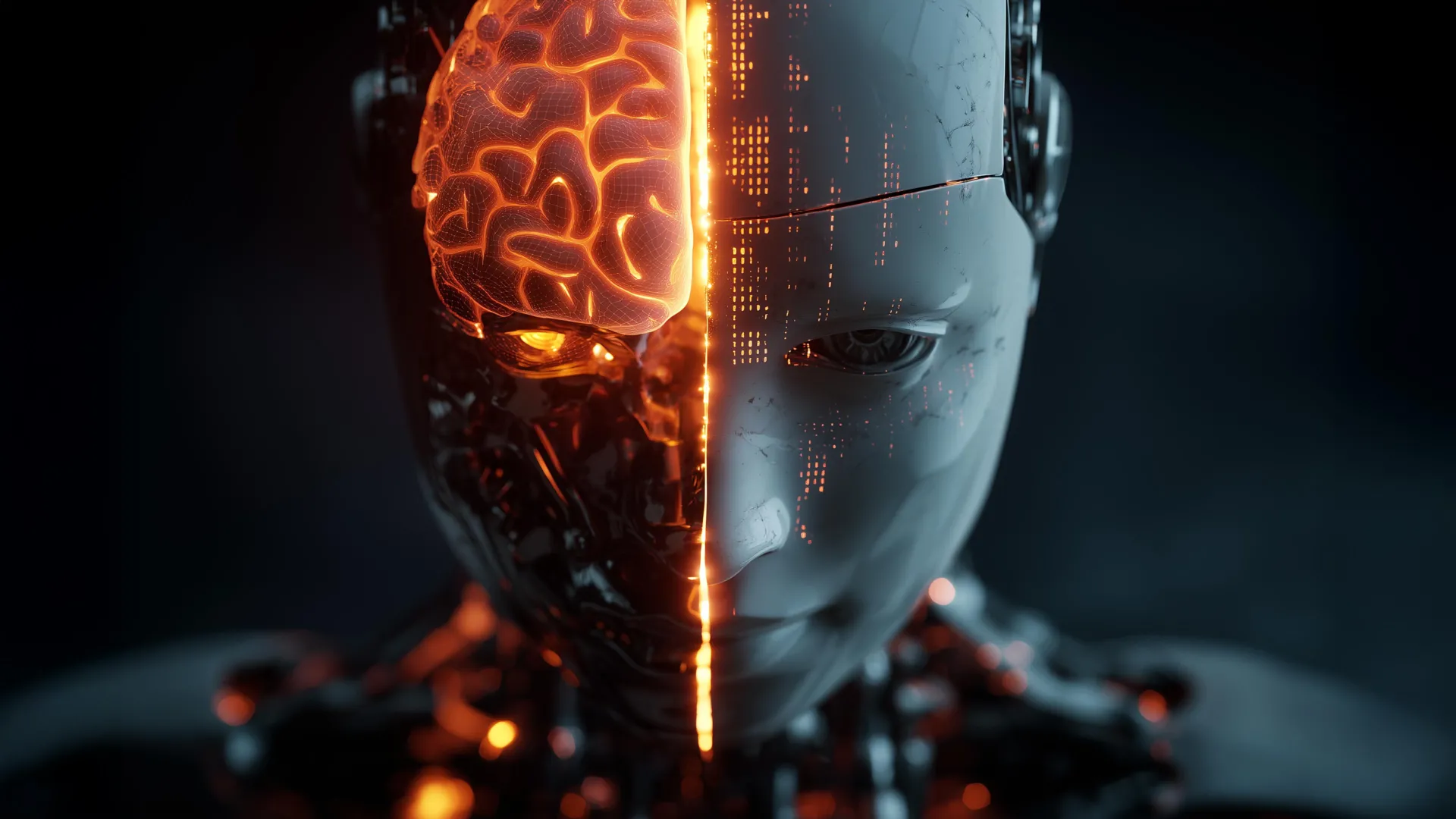
The allure of ANNs for neuroscientists has been undeniable. Their hierarchical structure, inspired by the layered organization of the visual cortex, and their capacity for learning from vast datasets, appeared to offer a compelling computational analogue to the brain. Early successes saw these models accurately predicting the firing rates of neurons in the visual cortex of primates when presented with specific stimuli. This predictive power led to the widespread adoption of ANNs as "brain-like" models, suggesting that insights gained from their internal operations could directly translate to a deeper understanding of biological cognition. The assumption was that if an AI could achieve similar outputs to a brain under specific visual conditions, then its internal computations must, at some fundamental level, mirror those of its biological counterpart. This perspective fueled countless studies, with ANNs becoming integral to hypotheses about how the brain segments objects, perceives motion, and recognizes complex scenes.
However, as York University Assistant Professor Kohitij Kar, the senior author of the new study, points out, "Artificial intelligence systems are often described as ‘brain-like’ because they can predict activity in parts of the brain that help us recognize objects. Until now, scientists mostly tested this in one direction. They asked whether AI models can predict brain activity." This unidirectional testing created a blind spot, potentially obscuring crucial differences between artificial and biological intelligence. The question remained: does successful prediction of brain activity equate to genuinely analogous processing?
A Novel Test Unveils a Hidden Discrepancy in "Brain-Like" AI
The York University team, spearheaded by Professor Kar and Postdoctoral Fellow Sabine Muzellec, a trainee with the university’s Connected Minds program, recognized this critical gap. Instead of merely assessing AI’s ability to forecast brain cell activity, they embarked on a pioneering investigation from the inverse perspective: could recorded brain activity predict what was occurring inside the AI models? Their reasoning was elegantly simple yet profoundly impactful: if these sophisticated systems genuinely operate like the brain, then the relationship between them should be bidirectional, a true two-way street of predictive power.
To explore this, they developed an innovative methodology they termed "reverse predictivity testing." This novel approach allowed them to scrutinize similarities and discrepancies that conventional, unidirectional tests might easily overlook. The essence of their method lies in its ability to probe the internal representations and computational steps within an ANN, rather than just its final output or its correlation with observed neural activity.
The experimental design was meticulous and comprehensive. The research team examined responses to an extensive array of visual images, ensuring a robust test of the models’ capabilities. Their dataset included 1,320 natural photographs and realistic synthetic images featuring 10 highly familiar subjects: a bear, an elephant, a human face, an apple, a car, a dog, a chair, a plane, a bird, and a zebra. These objects were presented against a diverse range of natural scenes, as well as various indoor and outdoor backgrounds, reflecting the complexity and variability of real-world visual input. To further challenge the models and probe their representational robustness, the researchers also incorporated an additional 300 images depicting the same subjects but rendered in vastly different visual styles, including simplified outlines, abstract drawings, minimalist representations, and various artistic interpretations. This allowed them to test whether the AI models captured invariant features of objects, similar to how the human brain achieves robust object recognition despite changes in appearance.
"Ultimately, we need computational models to truly understand the underlying neural mechanisms of how we recognize objects. How do we see objects move? While it’s a very easy task that we do every day, computationally, though, it’s a very challenging problem," explains Kar, who holds the Canada Research Chair in Visual Neuroscience and is a distinguished member of York’s Centre for Vision Research and Centre for Integrative and Applied Neuroscience. His perspective underscores the profound difficulty of visual processing and the high stakes involved in developing accurate computational models.
AI Predicts Brain Activity, But the Reverse Tells a Disconcerting Story
The results of the reverse predictivity testing were striking, revealing a significant and unexpected disconnect between artificial intelligence models and biological vision. While the AI models demonstrated considerable success in predicting the responses of recorded neurons—the specialized cells responsible for transmitting information throughout the brain—the reverse proved far less effective. When the researchers attempted to use those same neuronal responses to predict many of the models’ internal features, the efficacy dropped significantly. This asymmetry challenged the very foundation of the "brain-like" label often attributed to these ANNs.
This discrepancy was particularly illuminating because the research team did not observe the same problem when comparing neuronal activity across different biological brains. In comparisons between one primate brain and another, the relationship was largely bidirectional; activity in one brain could reliably predict activity in a similar region of another. This stark contrast strongly suggests that the observed asymmetry is not an inherent limitation of brain data or neural encoding, but rather a specific characteristic of the current generation of AI models when compared to biological systems.
"The results were striking. While AI models can predict the neurons we recorded in the brain fairly well, the brain cannot equally predict many of the model’s internal features. Interestingly, this is not the case when neurons from one brain are compared against ones from another brain," Kar elaborated, highlighting the critical nature of this finding. This implies that while an AI system might produce outputs that closely resemble those of the brain, it can achieve these results by relying on entirely different internal mechanisms or computational strategies. In essence, matching the brain’s final responses does not necessarily mean that the underlying processes, the "how," are the same. It’s akin to two different engines producing the same car speed; while the performance is identical, the internal mechanics are distinct.
Professor Kar cautions that this distinction could become increasingly vital as artificial intelligence continues its rapid advancement. If researchers persist in refining AI models based solely on the accuracy with which they predict neural activity, without scrutinizing their internal consistency with biological processes, the divergences between these models and actual primate brains could accumulate significantly over time. Such a scenario would ultimately undermine one of the primary rationales for neuroscientists’ initial adoption of these systems: to develop genuinely realistic and explanatory models of how the brain functions.
"The findings suggest that today’s AI systems solve visual tasks partly using internal strategies that the brain may not use. Importantly, the parts of AI models that align with the brain are also better at predicting real human behavior," Kar notes, hinting at a path forward: identifying and enhancing the truly "brain-like" components within ANNs.
Profound Implications for Neuroscience and Understanding Human Behavior
The implications of this discovery resonate far beyond the immediate domain of computer vision. Artificial intelligence is increasingly integrated into various scientific disciplines, assisting researchers in designing complex experiments, studying nuanced human behavior, and investigating a wide spectrum of neurological and psychological conditions. Many of these sophisticated applications fundamentally hinge on the assumption that AI models process information in ways that closely resemble the human brain.
If this foundational assumption proves to be incorrect, the consequences could be severe. Researchers might draw misleading conclusions from models that, while appearing accurate on the surface, operate through fundamentally different mechanisms underneath. For instance, an AI model designed to simulate the visual deficits in a condition like post-traumatic stress disorder (PTSD) or the unique sensory processing patterns in autism might accurately predict behavioral outcomes, yet its internal "explanation" for those outcomes could be entirely divorced from the biological reality of the human brain. This could lead to misdirected research efforts, flawed diagnostic criteria, or even ineffective therapeutic interventions.
Sabine Muzellec underscores this point: "Our findings challenge how similar current AI systems really are with the primate brain. We show that models that were previously thought to be brain-like rely on internal components that the brain does not appear to use. We provide a well-vetted diagnostic metric for the field." This metric is crucial for ensuring scientific rigor in an era where AI’s influence is rapidly expanding.
Developing AI systems that more faithfully reproduce brain function could eventually revolutionize research into a myriad of conditions, from the complex emotional processing challenges in PTSD to the distinct social and sensory perceptions associated with autism spectrum disorder. However, for the present, the newly identified differences highlight an urgent need for caution and critical evaluation when employing existing AI models to investigate human behavior or to guide clinical research. The "black box" problem of AI – where outputs are clear but internal workings opaque – becomes even more problematic when we assume the internal workings are like our own.
The concern extends broadly across other domains of neuroscience. Similar artificial intelligence models are already being deployed to study hearing, language acquisition, motor control, and even decision-making processes. If these systems, too, rely on internal computational strategies that diverge significantly from their biological counterparts, researchers will need to fundamentally reconsider the extent to which these models can truly illuminate the complexities of the nervous system. The potential for misinterpretation in understanding fundamental cognitive processes is vast.
Paving the Way for Truly "Brain-Matched" AI
Crucially, the York University findings do not advocate for the abandonment of artificial neural networks. Rather, they provide a powerful new framework for making these invaluable tools more scientifically reliable and ultimately more useful. By precisely identifying which features of an AI model genuinely correspond to real neural activity and which do not, researchers can now strategically focus their efforts on developing systems that more accurately reflect the biological mechanisms underpinning perception and cognition. This represents a significant shift from merely optimizing for performance to optimizing for biological plausibility.
"Our approach helps identify which parts of an ANN truly match brain activity, allowing us to build more reliable models for understanding how people see and interpret the world," says Kar. He specifically highlights the immediate relevance of this work to his autism research program, which aims to build on models of the neurotypical brain as a critical baseline. A neurotypical brain refers to one exhibiting patterns of neurological development and functioning generally considered typical or standard. Establishing accurate, biologically faithful models of these typical patterns is paramount for researchers investigating how perception, information processing, and social cognition may differ in conditions such as autism, enabling a more precise understanding of neurodiversity.
To facilitate the widespread adoption of their novel methodology and empower other scientists to put their findings into practice, the York University team has commendably released a publicly available "testing toolkit" (accessible at https://pypi.org/project/reverse-pred/). This invaluable resource allows AI developers and neuroscientists alike to rigorously evaluate their own models, identify areas of divergence from biological brains, and pinpoint opportunities for targeted improvement.
Published in the prestigious journal Nature Machine Intelligence, the study marks a pivotal moment in the convergence of AI and neuroscience. It introduces a sophisticated new approach to evaluating artificial intelligence that transcends the traditional metrics of how well a system performs a given task. The researchers powerfully argue that understanding whether AI achieves its results through processes that genuinely resemble those of the brain is not merely an academic curiosity, but an equally, if not more, important scientific imperative.
This seminal discovery has the potential to fundamentally guide the development of a new generation of AI models. These future models will not only recognize the world with impressive accuracy but, more importantly, will offer a significantly more faithful and biologically plausible picture of how the human brain makes sense of what it sees, propelling our understanding of both artificial and natural intelligence to unprecedented depths.
