
 By admin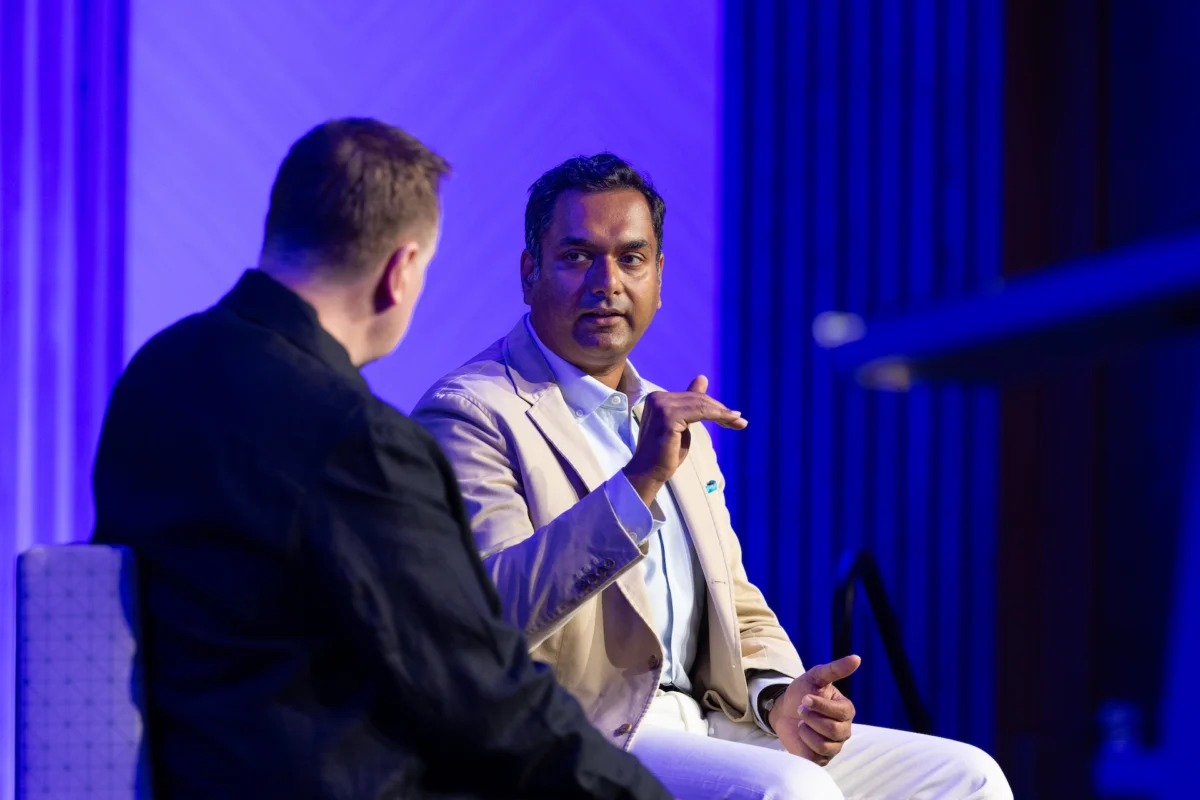
Enterprise teams striving to harness the power of AI agents are consistently encountering a significant hurdle: the creation of chatbots that, while adept at responding to individual prompts, lack the crucial ability to retain conversational history or provide insights into the efficacy of past operations. This fundamental limitation has hampered the development of truly integrated AI colleagues, relegating them to the status of one-off information retrieval tools rather than indispensable team members. However, Asana, a leader in work management, has engineered a groundbreaking solution with its new operating system, Agentic Work Management (AWM). This innovative platform fundamentally reframes the role of AI, treating agents not as mere assistants but as coachable, collaborative teammates that operate seamlessly alongside their human counterparts.
During a candid fireside chat with VentureBeat’s Sam Witteveen at the recent VB Transform 2026 conference, Arnab Bose, Asana’s Chief Product Officer, provided an in-depth exploration of how his team successfully navigated this complex challenge. Bose offered a rare glimpse under the hood of AWM’s architecture, detailing the engineering prowess required to transform basic AI integrations into a scalable, real-world solution for enterprise bottlenecks. This detailed blueprint serves as a valuable guide for product builders and developers eager to move beyond rudimentary AI functionalities and establish truly intelligent, collaborative workflows.
The Work Graph: Leveraging 18 Years of Enterprise Data for Contextual AI
The genesis of Asana’s Agentic Work Management lies in its established "Work Graph," a sophisticated, 18-year-old architecture that serves as the bedrock for AWM’s contextual understanding. This graph-based database, meticulously designed to organize vast amounts of company information, operates on a principle Asana terms the "Pyramid of Clarity." At its most granular level, the Work Graph defines a "task" – an actionable item assigned to a specific individual with a defined due date. These tasks are intrinsically linked to "projects," which in turn roll up into larger "portfolios." Ultimately, these portfolios are connected to overarching, company-wide "goals." This intricate, hierarchical structure allows for unparalleled traceability; for instance, the Work Graph can precisely illustrate how a delayed design task, seemingly minor in isolation, can ripple through the organization and impact a critical corporate revenue goal. In essence, the Work Graph provides a dynamic, real-time ledger, meticulously documenting who is doing what, by when, and crucially, why.
AWM leverages this robust architecture to foster a truly "multiplayer" AI teammate. Unlike conventional AI copilots, which are inherently stateless and tied to the isolated context of a single user’s prompt, AWM’s integration with the Work Graph imbues the AI with a comprehensive understanding of the organizational landscape. This allows the agent to access and interpret overarching company goals, provide real-time updates on project statuses, and, most significantly, share a collective memory with its human colleagues. "Because [the agent] is plugged into the Work Graph, it’s not just looking at a particular prompt that you’re sending it or looking at a particular individual’s markdown file system on their local file," Bose explained. "It’s working off of that shared ledger for the whole company." The tangible impact of this approach is already being felt, with AWM currently in production and successfully deployed by several enterprise clients, including FedEx, which has publicly documented its transformative experience with the platform.
Engineering Guardrails for Confidentiality and Dynamic Intelligence
The deployment of AWM to enterprise clients necessitated the resolution of several formidable technical challenges, paramount among them being data governance. As an AI teammate operates across an entire organization, it constructs a shared memory by continuously learning from diverse workflows and human feedback. Bose emphasized a critical boundary problem: if an executive initiates a confidential project using AWM, the system must rigorously prevent the agent’s updated memory from inadvertently leaking sensitive project context to an unauthorized employee who might later interact with the same agent. " [I] shouldn’t be able to leverage that shared memory when I run the AI teammate if you created that memory using that same teammate on a project that is, let’s say, a secret M&A project that I don’t have access to," Bose stated. To address this, Asana engineered a sophisticated system of access controls designed to meticulously govern what triggers the creation of new memory versus the mere execution of a task, thereby safeguarding sensitive information.
A second significant engineering feat involved AWM’s dynamic model routing capabilities, a feature designed to abstract the complexities of prompt engineering away from the end-user. When a user assigns a task to an AI teammate, such as drafting a job description for a general manager, the AI intelligently cross-references a multitude of data sources. These include public job postings for similar roles, Asana’s internal style guides, and specific product requirement documents. For highly complex tasks, the system automatically routes the prompt to powerful, cutting-edge frontier models – Bose cited Anthropic’s Opus and OpenAI’s models as prime examples. Conversely, lighter, less demanding tasks are down-leveled to more efficient and cost-effective models. "We don’t want the knowledge worker to have to think through what the best possible prompt, context engineering, and attachments are that they should put into the task," Bose remarked. "It should feel as if you were assigning the task to a human being."
This dynamic routing introduced a third critical challenge: billing abstraction. The computational complexity of agentic tasks can vary dramatically, leading to unpredictable credit burn rates. "We don’t want to get into a state where our customers are having to reason about the fact that some of these tasks… are way more complex than others and they’ll be burning credits at different rates," Bose explained, noting that unpredictable pricing could inadvertently lead customers to throttle their employees’ AI usage by imposing strict limits on interaction frequency. To ensure AWM’s commercial viability and user-friendliness, Asana meticulously designed its billing architecture to implement a static cost per task completion. The platform transparently absorbs the inherent complexities of model selection, token counts, and run limits, thereby guaranteeing predictable enterprise pricing for its clients.
Beyond Statelessness: The Transformative Power of Persistent AI Memory
At its core, AWM directly confronts a pervasive issue plaguing current enterprise AI deployments: statelessness. While developers can readily integrate large language models with enterprise tools like Slack, Google Drive, or Databricks through Model Context Protocol (MCP) integrations, the resulting chat-based agents typically lack persistent memory. Bose illustrated this limitation with a scenario where a user requests a chat agent to formulate a marketing campaign based on historical performance data and competitive research. Although the agent successfully retrieves the necessary data from external tools to answer the prompt, the execution occurs in an isolated vacuum. This results in a one-off task that primarily benefits a single individual, failing to establish a reusable workflow that subsequent users could leverage for similar campaigns. "The challenge with that is that those calls are stateless, and they are not leveraging a shared company brain that is this graph-based database or a context graph," Bose observed.
AWM elegantly resolves this by establishing a permanent state for AI interactions. When an AI teammate within AWM successfully completes a task, the system meticulously records the associated metadata. This includes an assessment of whether the completion positively impacted the project’s overall status and how it contributed to the advancement of higher-level company objectives. This persistent record transforms AI interactions from ephemeral exchanges into valuable, cumulative contributions to the organization’s collective knowledge and progress.
CoreWeave’s Strategic Advantage: Streamlining Complex Product Launches
Cloud infrastructure provider CoreWeave stands as a prominent early adopter of AWM, leveraging its capabilities to fundamentally overhaul its complex new product launch processes. "CoreWeave is using both our deterministic AI studio workflow rules as well as multiple AI teammates to do new product launches," Bose shared. Historically, CoreWeave product managers were required to navigate intricate forms, meticulously detailing infrastructure requirements, operational parameters, and associated costs. These extensive documents were then subject to manual review by human stakeholders, who subsequently translated them into discrete tasks for various departments, including finance, marketing, and hardware engineering.
Under the AWM workflow, the process has been dramatically streamlined. A product manager now simply creates a standard Google document, referencing their product requirement documents. A deterministic AI workflow then intelligently parses this document, automatically constructs the necessary project structure, and assigns tasks to the appropriate AI agents. Specialized agents then assume responsibility for execution. One agent monitors the overall project status, proactively flagging potential bottlenecks. Another agent, operating within individual tasks, forecasts infrastructure costs and recommends approvals only when the projected numbers align with established historical budgets. This intelligent system automates the handling of routine busywork, freeing up human resources to concentrate on the critical evaluation of the AI’s outputs and strategic decision-making.
Navigating the "Frenemy" Landscape: Asana’s Differentiating Value
The AI landscape is characterized by a complex interplay where the same frontier model providers powering AWM under the hood – such as Anthropic and OpenAI – are also concurrently developing and releasing their own competing agent products, exemplified by Anthropic’s Claude in Slack (Tag). When pressed on this potential for overlap and competition, Bose acknowledged the inherent tension. "I think that’s the reality that we all have to live in," he stated.
Bose asserts that AWM’s enduring competitive advantage lies in Asana’s 18 years of accumulated user experience and workflow data, coupled with its pre-built standard operating procedures tailored for specific industries. This deep domain expertise, he argues, is a crucial differentiator that raw frontier models currently lack. While products like Tag can offer immediate value within platforms like Slack, Bose points out that they often necessitate highly curated channels and require separate credentials for each downstream application they interact with. "There’s a big difference between the power of the model plus a lightweight way to demonstrate its value, and something that’s pre-built… for true end-to-end use," Bose concluded, emphasizing AWM’s commitment to delivering comprehensive, integrated solutions for enterprise-level operations.
