
 By admin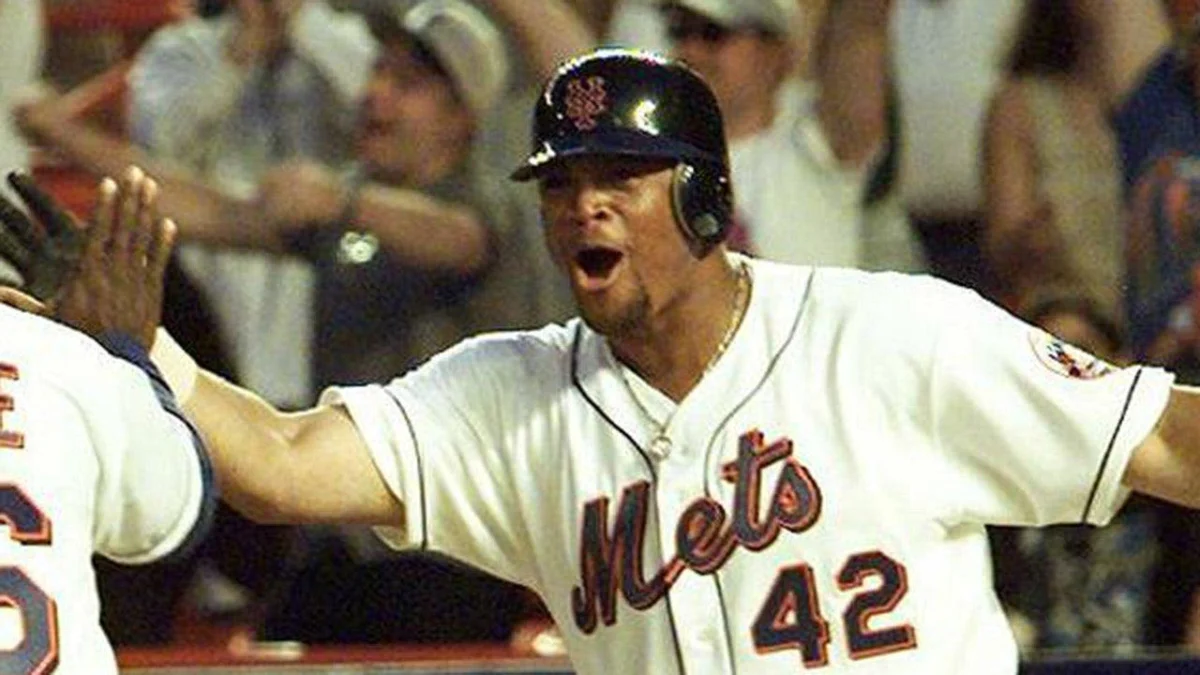
The baseball world is mourning the loss of Butch Huskey, a former Major League Baseball player who became a significant figure in the enduring legacy of Jackie Robinson. Huskey, who passed away at the age of 54, was among the final players to wear the iconic number 42, a jersey number retired across MLB in honor of Robinson’s groundbreaking achievement of breaking the sport’s color barrier in 1947. Robinson’s courageous act paved the way for generations of African American athletes in professional baseball, and his impact continues to resonate deeply within the sport and beyond. His illustrious career saw him earn Rookie of the Year honors in 1947 and culminated in his well-deserved induction into the Baseball Hall of Fame in 1962.
Huskey’s connection to the number 42 was a deeply personal choice that transcended mere statistical allegiance. Initially, he sported the number 10 during his early years with the New York Mets. However, in 1995, two years before MLB made the monumental decision to retire number 42 league-wide, Huskey made the switch to the now-sacred digits. This decision predated the league-wide retirement but placed him in an exclusive group of players who would be permitted to continue wearing it under a grandfather clause. This provision ensured that players already wearing number 42, such as Mo Vaughn and Mariano Rivera, could continue to do so for the remainder of their careers, regardless of team affiliation. This allowance underscored the profound respect the league held for Robinson and for those who, like Huskey, embraced the symbolic weight of his number.
The decision to retire number 42 was a watershed moment in sports history, a tangible acknowledgment of Jackie Robinson’s immeasurable contributions. Robinson, a gifted athlete and a man of extraordinary character, faced immense prejudice and adversity throughout his career. He endured racial slurs, threats, and constant discrimination, yet he persevered with dignity and grace, demonstrating remarkable resilience. His on-field prowess, marked by his speed, power, and exceptional baseball intellect, quickly silenced many of his detractors and earned him the admiration of fans and peers alike. Beyond his athletic achievements, Robinson became a powerful advocate for civil rights, using his platform to challenge segregation and promote equality, leaving an indelible mark on American society.
Butch Huskey’s tenure as one of the final wearers of number 42 was not limited to his time with the New York Mets. Even after he moved on to other teams, the special permission granted by MLB allowed him to continue wearing the number. He donned it with the Seattle Mariners and the Minnesota Twins, carrying the legacy of Jackie Robinson with him. While he played for the Boston Red Sox in 1999, Huskey opted for a different number, 44, perhaps signifying a personal evolution or a conscious decision to allow the mantle of 42 to pass to newer generations of players. His career journey, though not as storied as Robinson’s, was marked by moments of significant impact and a unique connection to a number that represents so much more than just a player’s designation.
The New York Mets, Huskey’s primary team during his most prominent years, announced his passing on social media, a testament to the impact he had on the franchise and its fanbase. Huskey made his MLB debut in 1993, but it wasn’t until 1996, with his jersey now bearing the number 42, that he began to carve out a significant role for himself. Primarily playing first base, he showcased his abilities with a respectable .278 batting average and a .754 OPS in 1996. The following season, 1997, proved to be his most productive. He improved his offensive numbers to a .287 average and an .822 OPS, smashing a career-high 24 home runs and driving in 81 runs. These statistics highlight his potential and his ability to contribute significantly to his team’s success. However, like many players, his career trajectory saw fluctuations, and he experienced a dip in performance the subsequent season, leading to his trade to the Seattle Mariners in the offseason.
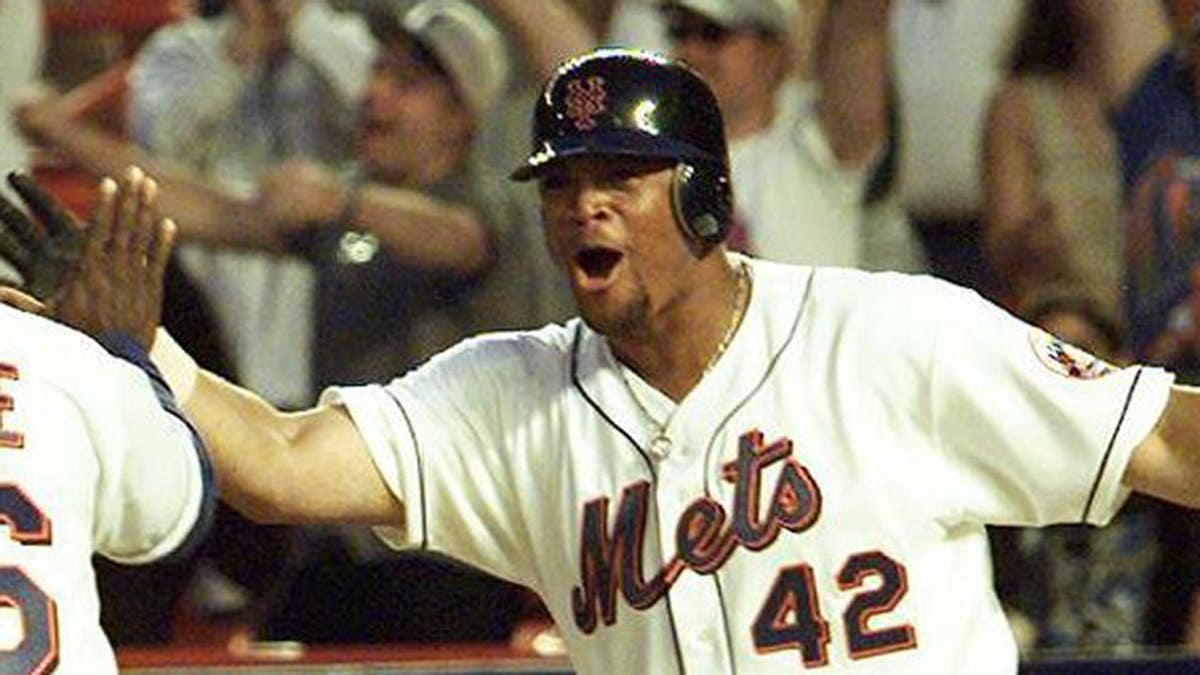
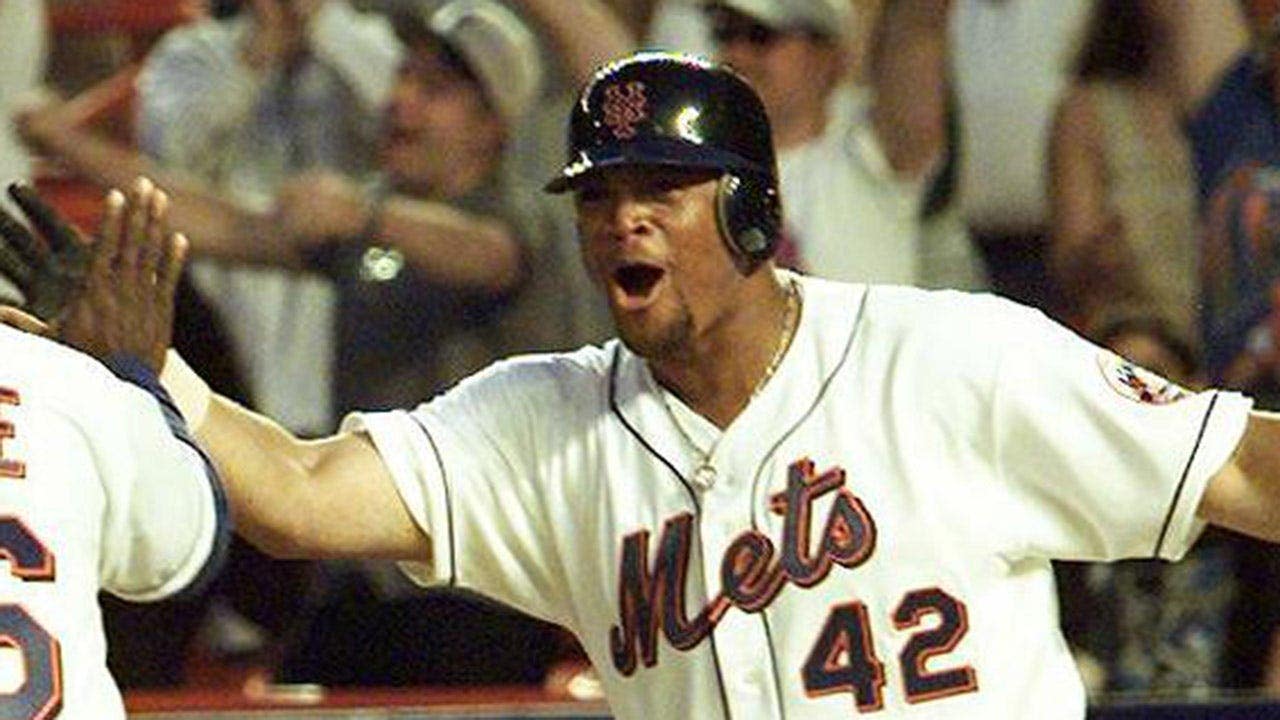
The image of Butch Huskey congratulating teammate Brian McRae at home plate during a New York Mets game at Shea Stadium serves as a poignant visual reminder of his presence on the field. This specific moment, captured on March 31, likely from the late 1990s, showcases the camaraderie and shared experiences of players within the dugout. The context of the game, a hard-fought 1-0 victory over the Philadelphia Phillies after 15 innings in their home opener, underscores the dedication and perseverance required in professional baseball. Such moments, while seemingly small, contribute to the rich tapestry of a team’s history and the individual journeys of its players.
Huskey’s move to the Seattle Mariners in the offseason following his career-best season marked a new chapter in his baseball life. The Mariners, known for their passionate fanbase and their own storied history, provided him with another opportunity to showcase his talents. He continued to wear number 42, a symbol of his unique connection to baseball’s past. His subsequent trade to the Boston Red Sox in 1999 placed him on a team with championship aspirations. The Red Sox, a perennial contender, made the postseason as a wild card that year. However, their journey ended in the American League Championship Series at the hands of the formidable New York Yankees, who were in the midst of their dominant three-year World Series run. Huskey’s final MLB stint was with the Colorado Rockies, where he wore number 35, bringing his playing career to a close.
Butch Huskey holds the distinction of being the last player to wear number 42 in Seattle Mariners history. This fact further solidifies his place in the annals of players who carried the torch of Jackie Robinson’s legacy. Following him in MLB, only a select few players wore the number: Mo Vaughn, Mariano Rivera, Michael Jackson, and Jose Lima. Each of these players, in their own way, contributed to the ongoing narrative of Robinson’s impact, ensuring that his number remained a symbol of inspiration and remembrance. The fact that Huskey was part of this exclusive group underscores the significance of his choice and the respect he commanded within the league.
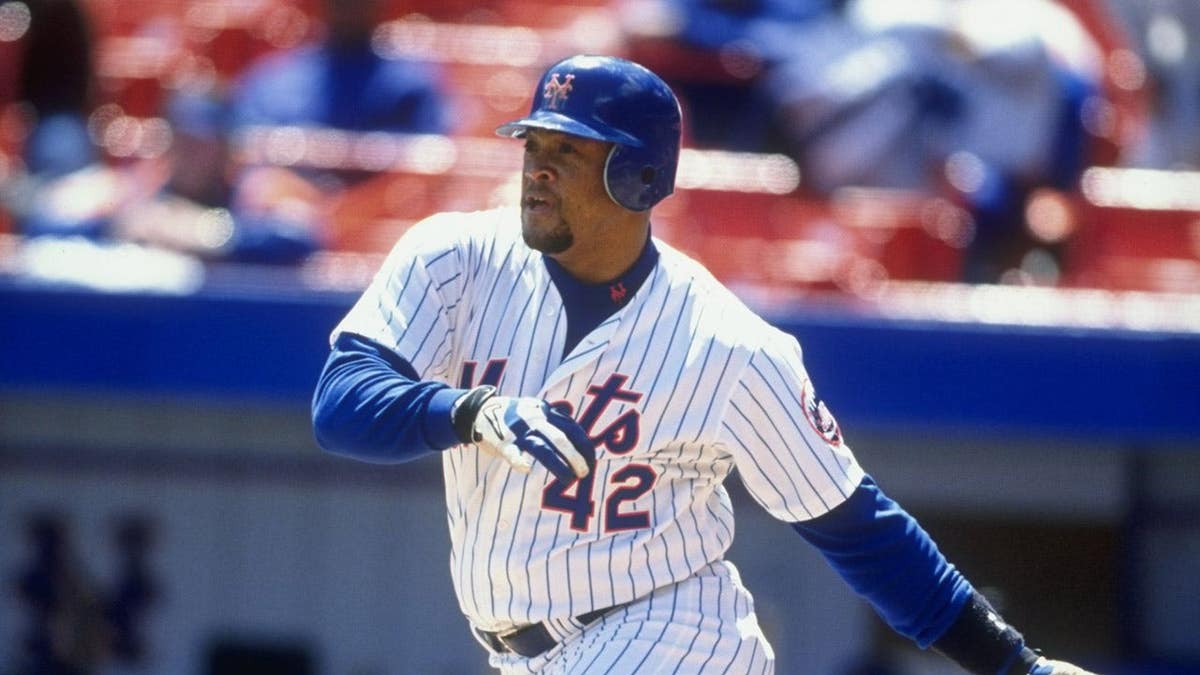
The retirement of number 42 was particularly resonant during games between the Mets and the Los Angeles Dodgers, Robinson’s original team. These matchups often carried an extra layer of historical significance, a reminder of the journey Robinson undertook and the progress made since his pioneering days. The image of Huskey at bat, with Jackie Robinson memorial art visible on the field during a Mets-Dodgers game at Shea Stadium, encapsulates this blend of present-day play and historical reverence. It highlights how the number 42 became more than just a uniform; it became a living tribute, a constant reminder of the sacrifices made and the barriers broken.
Jackie Robinson’s impact extended far beyond the baseball diamond. He became a cultural icon, a symbol of hope and a catalyst for change. His unwavering commitment to justice and equality inspired countless individuals to stand up against discrimination. His life story continues to be taught in schools, celebrated in public forums, and woven into the fabric of American history. The "America 250" initiative, which includes a feature on Jackie Robinson, underscores the ongoing relevance of his legacy as the nation approaches its 250th anniversary. It serves as a reminder of the ideals of freedom and opportunity that Robinson championed and the work that still needs to be done to ensure these ideals are realized for all.
The passing of Butch Huskey serves as a somber reminder of the passage of time and the enduring connections within the sports world. While his career may not have reached the same stratospheric heights as some of baseball’s legends, his role as one of the last players to wear Jackie Robinson’s number 42 cemented his place in baseball lore. He was a player who, by embracing that number, became a custodian of its history and a living link to one of the most important figures in American sports. His memory will undoubtedly be cherished by Mets fans and by those who understand the profound significance of the number he wore. As the baseball community reflects on his life, it also renews its appreciation for Jackie Robinson and the enduring legacy of courage, resilience, and change that he represents. The echoes of his impact continue to resonate, inspiring new generations to break down barriers and strive for a more just and equitable world.
