
 By admin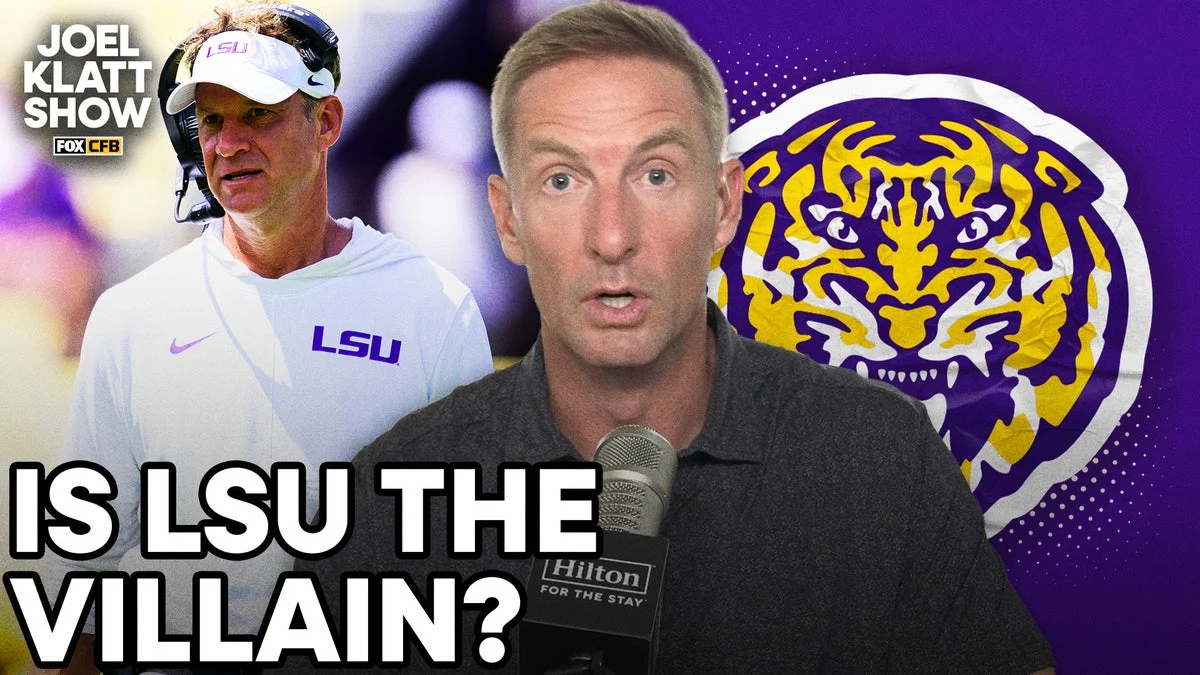
As the 2026 college football season dawns, the sport finds itself at a fascinating crossroads, brimming with compelling narratives and unanswered questions. Who truly commands the landscape of collegiate gridiron? Can the Indiana Hoosiers, a team that defied expectations to claim the national championship last year, replicate their Cinderella story? Which programs are poised to ascend from contenders to legitimate title threats? And has LSU, under Lane Kiffin, officially cemented its role as college football’s new antagonist? These are just a fraction of the pressing inquiries that FOX Sports lead college football analyst Joel Klatt addresses in the latest episode of "The Joel Klatt Show," offering a comprehensive preview of the upcoming season’s 10 most burning questions.
One of the most significant shifts in the college football hierarchy, and perhaps the most captivating narrative of the current era, is the ascendance of the Big Ten Conference over the historically dominant Southeastern Conference (SEC). For years, the SEC was the undisputed king of college football, a juggernaut that consistently produced national champions and flooded the NFL Draft with elite talent. This dominance was not merely anecdotal; it was reflected in every conceivable metric. However, Klatt points to a tangible reversal of fortune over the past three seasons, evidenced by the fact that the Big Ten has claimed the last three national championships, with Michigan, Ohio State, and Indiana all hoisting the coveted trophy.
"I think this is the biggest question in college football," Klatt stated, emphasizing the seismic shift in power. "The last three National Championships have come out of the Big Ten: Michigan, Ohio State and Indiana. But it’s been even more than that because, for so long, the SEC dominated. They were the premier conference in college football by a wide margin. They won everything. It was also that way in the NFL Draft, every single year, it was the SEC with the most players drafted in the first round. Over the last few years, we’ve seen the shift happen, not just at the top winning the championships, but also in the records in these bowl games, and, last year, in the first round of the NFL Draft."
Klatt further bolsters his argument by highlighting the head-to-head matchups in the College Football Playoff. "In the last three seasons, the SEC is 0-4 against the Big Ten in the College Football Playoff," he noted. "Every single metric you used to hear about and, candidly, the ones that matter, these games that matter, the first-round draft picks, the elite talent, the Big Ten has overtaken the SEC. I predict that the Big Ten is going to win another championship this year." This bold prediction suggests that the conference’s competitive advantage, fueled by top-tier coaching, recruiting prowess, and strategic player development, is far from waning.
Amidst this Big Ten surge, the Indiana Hoosiers have emerged as a surprising powerhouse, and the question of whether they can maintain their championship-caliber status is a prominent one. Klatt offers an emphatic "yes," attributing their success to the transformative leadership of head coach Curt Cignetti. Last season, Cignetti orchestrated a remarkable 16-0 national championship run with a roster that, according to Klatt, was not as star-studded or as financially endowed as many of their playoff rivals.

"This is an emphatic ‘Yes,’" Klatt declared regarding Indiana’s prospects. "Indiana is a powerhouse right now. Curt Cignetti, I think, is the best coach in college football. That was proven last year. That roster was not as expensive as all the rosters that they were beating in the College Football Playoff. Cignetti retained all of his staff. This is the one thing that I think is going to be hard to wrap your minds around. They were 16-0 and national champions last year, and the conversations that I’m having with people around the program at Indiana is that they’re quietly ahead of where they were each of the last two years right now with this team. There is a chance this is a better team."
Klatt elaborates on the specific areas of improvement, citing the development of quarterback Josh Hoover, who he believes is further along in his understanding and comfort with the offense than his predecessors, Fernando Mendoza and Kurtis Rourke, were at similar stages. The offensive line is also reported to be further ahead, and the defense, which was already a formidable unit, might even boast a stronger front seven this year. This internal optimism and continued development suggest that Indiana is not resting on its laurels and is indeed positioned for another significant run.
The conversation then shifts to the elusive "face of college football," a mantle that is often bestowed upon a player who captivates the nation with their talent and performance on the grandest stages. Klatt identifies a highly promising quarterback class, featuring names like Dante Moore, Arch Manning, CJ Carr, Julian Sayin, Darian Mensah, Jayden Maiava, Sam Leavitt, and John Mateer, all of whom possess the potential to become household names. However, he singles out Ohio State’s electrifying wide receiver, Jeremiah Smith, as the player with the most boundless potential.

"I think the quarterback class is outstanding. You’ve got Dante Moore, Arch Manning, CJ Carr, Julian Sayin, Darian Mensah, Jayden Maiava, Sam Leavitt and John Mateer. It is littered with guys who could potentially become that guy in college football. Oh, by the way, I haven’t even mentioned the guy who is widely considered the best skill position player we’ve seen in college football, maybe in our lifetimes, but certainly in over a decade in Ohio State wide receiver Jeremiah Smith. The potential is limitless for college football this year," Klatt explained.
Klatt believes that the player who ultimately seizes the spotlight will be the one who consistently delivers in high-pressure situations and on major platforms, culminating in a Heisman Trophy victory. His pick for this prestigious award is none other than Jeremiah Smith. "It could be an unbelievable year, and the guy that grabs the sport and brings it down and becomes the face of the sport is going to be the one that plays the best in high-leverage moments and on big stages. That’s what it becomes, and that guy’s ultimately going to be the Heisman Trophy winner. My pick to win the Heisman Trophy is Jeremiah Smith."
The Texas Longhorns, under the guidance of head coach Steve Sarkisian and with Arch Manning at quarterback, are another team facing intense scrutiny regarding their ceiling. Klatt believes that the key to unlocking their full potential lies with new defensive coordinator Will Muschamp. If Muschamp can significantly improve the Longhorns’ defense, then the team, including Manning and Sarkisian, can indeed elevate their game.
"I think that [new defensive coordinator] Will Muschamp is going to have a huge impact on this season because if he fixes that defense, then, yes, Arch, Sark and Texas can raise their ceiling, but that’s really where it lies. It’s not with Arch and Sark. It’s with Will Muschamp, the offensive line and the defense. Those are the areas for Texas that have got to change," Klatt asserted. He also acknowledges the daunting schedule Texas faces, which includes matchups against Ohio State, Tennessee on the road, a Red River rivalry game against Oklahoma, a trip to Ole Miss, and three challenging November road games against Missouri, LSU, and Texas A&M. Despite the formidable slate, Klatt maintains that Texas possesses the talent to compete for a national championship if they can establish a strong running game and play elite defense.
The landscape of college football is also being reshaped by a wave of new coaching hires, and Klatt identifies several who are poised to make an immediate impact. Eric Morris at Oklahoma State is highlighted for his transition from North Texas, bringing many of his players with him, a strategy reminiscent of Curt Cignetti’s successful move from James Madison to Indiana. Bob Chesney’s move from James Madison to UCLA is also noted, although Klatt anticipates a tougher challenge for UCLA in the more competitive Big Ten compared to Oklahoma State’s Big 12 environment. Nonetheless, he believes Chesney, with quarterback Nico Iamaleava, has the potential to significantly increase UCLA’s win total.
"Eric Morris at Oklahoma State. He goes from North Texas to Oklahoma State and takes a bunch of his guys with him. Does it remind you of anybody? Yeah, this is exactly what Curt Cignetti did when he went from James Madison to Indiana, and they popped right away and went to the College Football Playoff. Bob Chesney, now going from James Madison to UCLA. Now, I think it will be much more difficult for UCLA than it would be for Oklahoma State because I think the Big Ten is more difficult than the Big 12, but this is a guy who has a quarterback in Nico Iamaleava, and they can increase their win total drastically right away. This is a really good coach," Klatt explained.

Furthermore, Klatt expresses high regard for James Franklin’s move to Virginia Tech. He praises Franklin’s coaching acumen, acknowledging his success at Penn State, where he built a strong program, even if he couldn’t reach the ultimate pinnacle. Klatt believes Franklin will immediately elevate the Virginia Tech program.
The question of who can actually win the national championship elicits a list of seven teams that Klatt believes possess the necessary roster and talent: Oregon, Notre Dame, Ohio State, Georgia, Indiana, Texas, and Miami. He emphasizes that the parity and depth within this group make the upcoming season particularly exciting.
"I’ve got seven teams that can absolutely win a national championship this year. They’ve got the roster and everything that you need. Oregon, Notre Dame, Ohio State, Georgia, Indiana, Texas, Miami: I won’t be surprised at all if any of them win the national championship. It’s what makes the sport great this year, by the way. I think that’s a deeper, more eclectic list than we’ve had maybe ever in college football, but easily in multiple decades," Klatt stated.

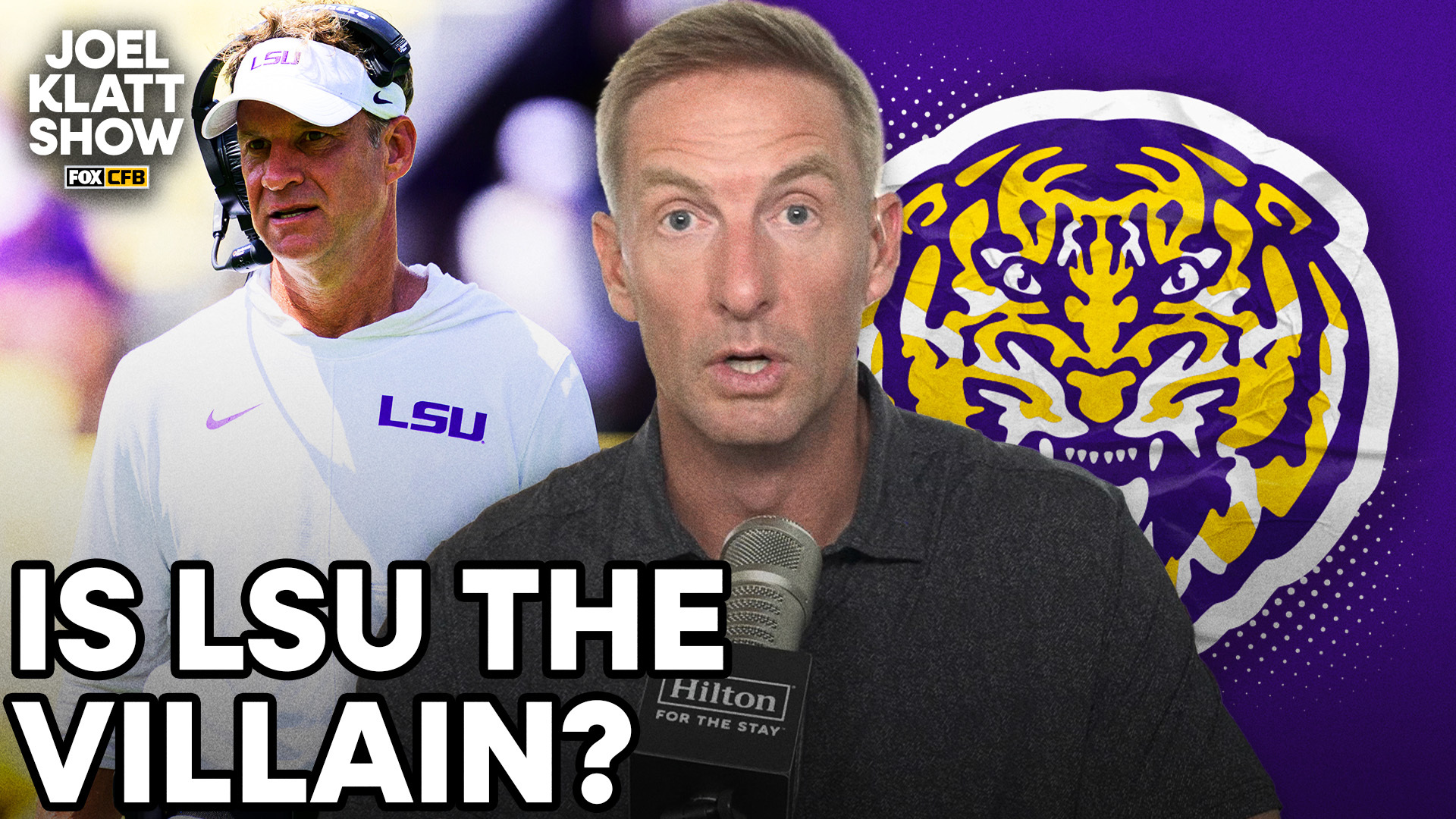
The narrative surrounding Lane Kiffin and the LSU Tigers introduces the notion of them becoming college football’s new "villain." Klatt unequivocally agrees with this assessment, citing the Tigers’ aggressive approach in the transfer portal and their perceived adversarial stance within the SEC.
"They’re absolutely the villain," Klatt asserted. "Now, you have the SEC actively against LSU and Lane Kiffin [the Tigers have been trying to add players who appeared on NFL rosters in training camp to their roster]. There’s no doubt in my mind that he’s the villain in college football." However, Klatt expresses skepticism about LSU’s ability to win a national championship, suggesting that their talent alone may not be enough to overcome the challenges of chemistry, depth, experience, and togetherness. He questions whether they possess the cohesive elements required for a championship run, stating, "It would be the shock of all shocks to me if they came together from a chemistry perspective to run the table, win the SEC and win the national championship. It is a different equation now. I think it takes more than talent and a great offensive mind to go and win a national championship. It takes everything. You’ve got to have chemistry, depth, experience and togetherness. All these things are really hard to build. That’s what it takes. Do they have that? I don’t know."
Klatt also delves into which teams are poised to "level up" within their respective conferences. He points to BYU as a potential riser in the Big 12. In the Big Ten, USC, Michigan, Penn State, and Washington are identified as teams looking to elevate their status against the conference’s top contenders. For the SEC, Alabama, LSU, Texas A&M, and Oklahoma are mentioned, with Klatt leaning towards LSU due to their talent, while again questioning their chemistry. He specifically highlights USC and Michigan in the Big Ten as teams with the potential to challenge for supremacy.

The concept of a "dark horse" team, akin to last year’s Indiana, is also explored. Klatt suggests that Texas Tech and Ole Miss could be candidates to take a significant leap forward. He notes that no one predicted Indiana’s championship run last year, and similar unforeseen success could be in store for these programs. He speculates that Texas Tech, despite their solid performance last season, could build on it, and Ole Miss, under new leadership with Trinidad Chambliss at quarterback and Pete Golding on the defensive side, might rally and surprise the conference.
Finally, Klatt addresses the overarching question of whether college football is in a better place than ever. His answer is a resounding "yes." Despite the ongoing changes and challenges, including Name, Image, and Likeness (NIL) policies, the transfer portal, and governance issues, Klatt believes these transformations have ultimately enhanced the sport.
"It’s absolutely ‘Yes,’" Klatt affirmed. "For all the things that aren’t perfect in this sport, all of these changes, however hard they have been to swallow, to watch and work through, have made the sport better. There’s been more engagement than ever with college football. Whatever you think about NIL and whatever you think about the transfer portal and whatever you think about the mess that is college football right now from a governance standpoint, these changes, however hard to swallow, have made the sport incredible. We’ve got great teams. We’ve got talent all over the country, and we have every single part of this country represented with high expectations and expectations all the way at the top, as high as winning the national championship. That makes it great. We’ve got great quarterbacks and players. This could be an epic season of college football." His perspective underscores a belief that the current era, with its increased parity, diverse storylines, and heightened competition, is shaping up to be one of the most compelling in recent memory.
