
 By Rifan Muazin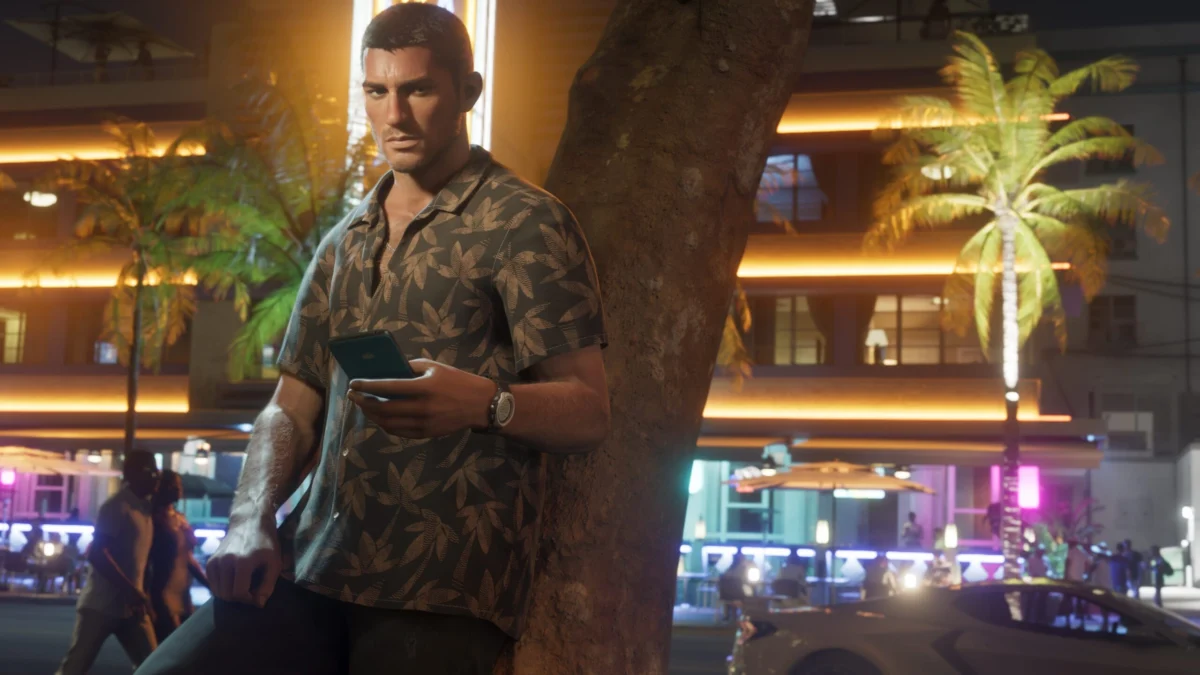
The entertainment landscape is currently bracing for a seismic shift that occurs perhaps once in a generation. We are now merely months away from what is arguably the most anticipated release in the history of interactive media. For the global video game industry, Grand Theft Auto VI (GTA VI) is not merely a product; it is a juggernaut of such gravitational force that it has effectively cleared the release calendar for the entire month of November. As soon as Rockstar Games solidified the release date, the industry witnessed a mass exodus of competing titles, with major publishers moving their flagship projects either significantly forward or back to avoid being crushed in the wake of the Rockstar phenomenon. Despite this being an industry-altering release, the public has been kept in a state of carefully managed starvation regarding official details—until today. A comprehensive and long-awaited trailer, released in an unprecedented partnership, has finally shed light on what is destined to be the defining entertainment event of the mid-2020s.

To understand the magnitude of this moment, one must first understand the pedigree of the Grand Theft Auto franchise. It is, quite simply, the most dominant series in modern gaming. While the franchise’s roots trace back to a top-down PC title in 1997, it was the 2001 release of Grand Theft Auto III on the PlayStation 2 that revolutionized the medium. That game codified the "open-world" genre, giving players a sprawling urban sandbox where they could follow a scripted narrative or simply exist within a living, breathing simulation. The series reached a staggering commercial zenith with 2013’s Grand Theft Auto V, which has sold over 190 million copies—a figure that exceeds the population of most countries and makes it the highest-selling AAA video game of all time by a margin of over 100 million units. Based on current market projections and the sheer velocity of social media engagement, Grand Theft Auto VI is poised to shatter these records. Analysts suggest there is a high probability the game will generate more revenue in its first 24 hours than any single piece of entertainment—be it a film, album, or book—has earned in a day in human history.
The road to this revelation has been defined by a level of secrecy usually reserved for national security. Rockstar Games, the developer under the Take-Two Interactive umbrella, began the official marketing cycle in December 2023 with a brief teaser. That initial glimpse confirmed the long-standing rumors: the game returns to Vice City, a fictionalized, neon-soaked rendition of Miami and the broader state of Leonida (Rockstar’s version of Florida). Since that teaser, the studio has guarded the project with absolute silence, recognizing that a new GTA is a self-selling product that requires no traditional hype machine. This vacuum of information drove the fanbase toward a state of obsessive digital archaeology. Every frame of previous trailers was analyzed with the scrutiny of the Zapruder film, yet actual gameplay remained elusive.

This silence was eventually punctured not by Rockstar, but by a security breach. A hacker or collective operating under the pseudonym "Cyberleek" began circulating internal test footage. In a move that felt ripped from the game’s own satirical script, the leakers used the footage to promote a cryptocurrency "memecoin," which they promptly "rug-pulled"—vanishing with approximately $250,000 of investor funds while Rockstar’s legal and security teams scrambled to contain the fallout. It was a chaotic, criminal, and quintessentially Grand Theft Auto moment that only heightened the public’s hunger for official confirmation.
That official word arrived today in a format as grand as the game itself. In a landmark collaboration with Netflix, Rockstar premiered Grand Theft Auto VI: An Extended Look. This 27-minute deep dive provides a comprehensive overview of the mechanics, world, and narrative structure of the game. Structured around three pivotal missions, the footage offers a window into the lives of the new dual protagonists: Jason and Lucia.

Jason and Lucia represent a narrative evolution for the series, operating as a modern-day Bonnie and Clyde. Their relationship is the emotional and mechanical core of the experience. Lucia, the franchise’s first female lead in the 3D era, is introduced as she is released from prison, a narrative beat that sets the stage for a story about recidivism, ambition, and survival in the American South. The "Extended Look" highlights the dynamic nature of their partnership. Players can swap between the two characters in real-time with a single button press, a refinement of the character-switching mechanic introduced in GTA V. However, the innovation here lies in the "dynamic relationship" system. The way players interact—choosing to bicker over the timing of a heist or opting for small moments of intimacy, such as a prompted "hand-holding" mechanic via the R2 button—can reportedly influence the game’s ending and the ultimate fate of their romance.
The missions showcased in the trailer demonstrate the sheer variety of the Vice City experience. The first sequence depicts a high-intensity police raid on a drug den, showcasing a combat system that feels significantly weightier and more refined than its predecessors. The gunplay draws obvious inspiration from Rockstar’s 2012 cult classic Max Payne 3, moving away from the "floaty" lock-on mechanics of the past toward a system defined by physical impact and tactical positioning. The second mission features a high-speed pursuit through the congested, sun-bleached streets of Vice City. Here, the game’s new physics engine is on full display. When Jason shoots out the tires of a pursuing cruiser, the vehicle doesn’t just slow down; it flips and disintegrates with unscripted, realistic momentum, reflecting a level of environmental interaction previously unseen in the genre. The final mission takes a different tone, following the duo as they provide private security for a wealthy socialite at a high-end gala, only for the event to be violently interrupted by masked assassins.

Beyond the core narrative, the "Extended Look" confirms that Vice City and its surrounding wilderness—reportedly twice the size of the Grand Theft Auto V map—is teeming with emergent activities. A rapid-fire montage late in the trailer reveals side-quests and hobbies ranging from the mundane to the extreme: basketball, deep-sea scuba diving, competitive weightlifting, and kayaking. Players will navigate the swamps in fan boats, race dirt bikes through rural backwaters, and patronize a vast array of interactive businesses, from greasy diners and neon-lit strip clubs to high-end boutiques. The world is also populated by a cast of "weirdos" that serve as a satirical mirror to modern Florida. This includes an elderly woman wielding a hammer in a neighborhood dispute and a social media influencer performing a "Trunk Challenge"—a parody of viral internet stunts—in a car that Lucia has just carjacked.
The tone of Grand Theft Auto VI appears to strike a delicate balance. While it retains the franchise’s signature bite, it leans toward the more grounded, gritty atmosphere of Grand Theft Auto IV. The satire is present but often tucked into the margins of the world. The trailer features pitch-perfect parodies of American consumerism, including an advertisement for a "30,000-calorie" fast-food sandwich and a pharmaceutical commercial for an antidepressant that lists increasingly absurd side effects. This environmental storytelling creates a world that feels both hyper-real and deeply cynical, a hallmark of the Rockstar brand.

Technological leaps are evident in every frame. The world-building extends to a new morality system; in one brief moment, Jason is seen petting a dog, which triggers a minor statistical boost to his "reputation" or "humanity" score. Even the act of vehicle theft has been overhauled. Rather than a simple animation, players now face choices: use a "slim jim" for a quiet entry or smash the window for a quick but loud escape, each carrying different risks regarding police detection.
The auditory experience remains a priority for Rockstar, as evidenced by the trailer’s curated soundtrack. The "Extended Look" features an eclectic mix of tracks that hint at the diversity of the in-game radio stations. From the country-folk of the Bellamy Brothers’ "Let Your Love Flow" and the synth-pop of Depeche Mode’s "People Are People" to the classic rock of Cliff Richard’s "Devil Woman," the music sets a vibrant, nostalgic, yet contemporary mood. Notably, the trailer features Phil Collins’ "Against All Odds," a nod to the artist’s previous involvement in the franchise. Rockstar’s Rupert Humphries has also indicated that the game will heavily feature the "explosive real-life hip-hop scene" of Florida, ensuring the game feels anchored in the specific cultural zeitgeist of the region.

As the industry prepares for the November 19 release, the impact of Grand Theft Auto VI is already being felt. It is more than a game; it is a cultural litmus test and a technological benchmark. It represents a decade of development and the culmination of Rockstar’s efforts to create the ultimate digital simulation of the American Dream—and its subsequent collapse. For players, the wait is nearly over. For the rest of the entertainment world, the arrival of the juggernaut is a signal to clear the way. November 19 will not just be a release date; it will be a global event that redefines what is possible in the realm of interactive storytelling. Strategy, satire, and high-octane action are about to converge in Vice City, and the world will be watching.
