
 By Rifan Muazin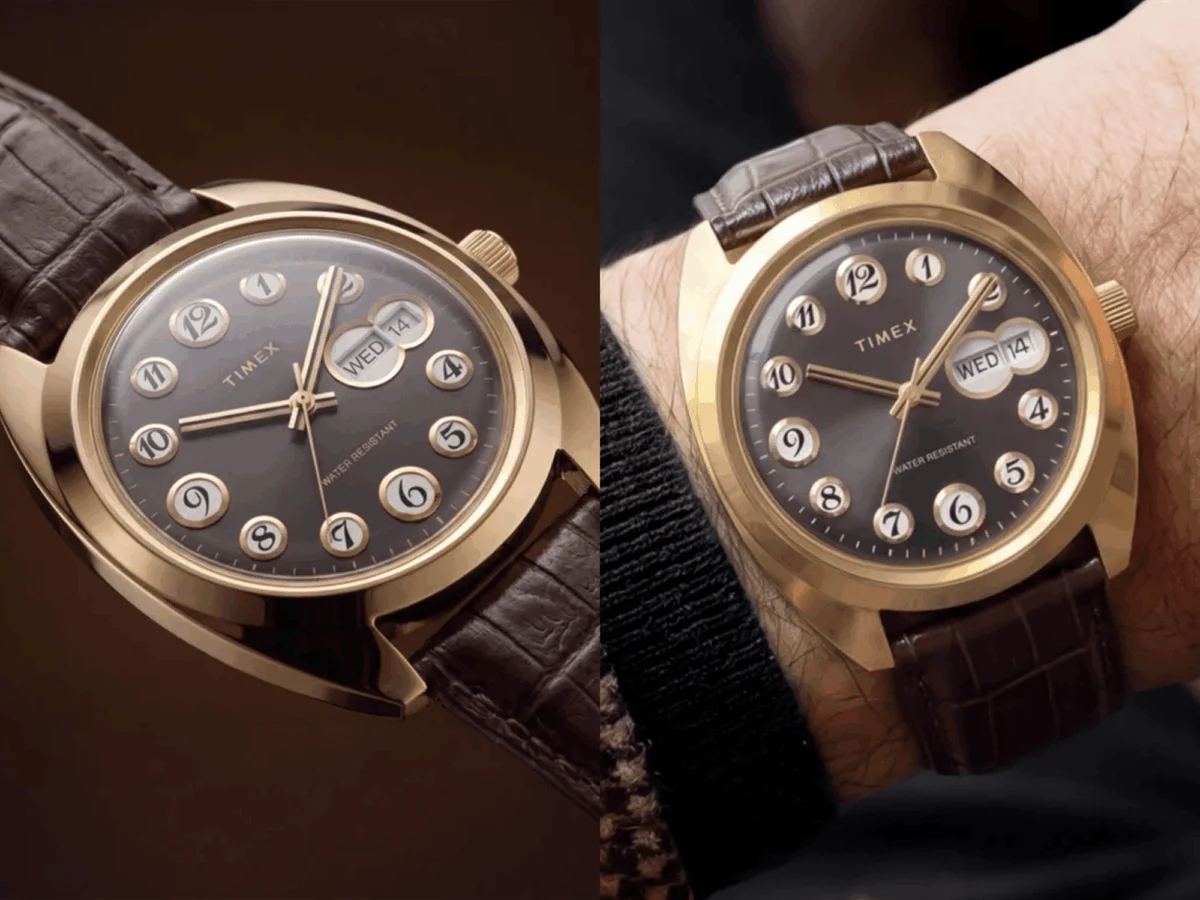
The original watch was born in 1976, a year of profound significance. It was the year of the American Bicentennial, the year Steve Jobs and Steve Wozniak formed Apple Computer, and the year the Concorde began commercial supersonic flights. Amidst this backdrop of high-tech advancement and national reflection, Timex released a watch inspired by a piece of technology that was already on its way to obsolescence: the rotary phone. While the world was looking forward to the push-button future and the eventual rise of the smartphone, this watch looked sideways, capturing the tactile joy of dialing a number. The reissue remains remarkably faithful to that 1976 spirit, avoiding the "modernization trap" where brands often enlarge cases or sanitize quirky details to appeal to mass-market tastes.
Visually, the Rotary Phone Dial Reissue is a masterclass in 1970s design language. The centerpiece is, of course, the black dial, which features a circular arrangement of numerals. Each number is housed within a gold-framed cutout, meticulously designed to mimic the finger holes of a classic rotary telephone. This layout is inherently idiosyncratic; it defies the standard linear or purely circular arrangement of most watch faces, forcing the eye to dance around the dial in a way that feels playful rather than confusing. The color palette is a sophisticated blend of black, gold, white, and chocolate brown—a combination that feels deeply "seventies" without feeling dated. It evokes wood-paneled dens, velvet upholstery, and the warm glow of incandescent lighting.
The dimensions of the watch are a critical component of its charm. At 37mm, the gold-tone case sits in the "sweet spot" of current watch trends. For decades, the industry trended toward larger, more aggressive "tool" watches, with diameters often exceeding 42mm or 44mm. However, recent years have seen a significant correction. Collectors and fashion-forward enthusiasts are rediscovering the elegance of smaller proportions. A 37mm case offers a vintage silhouette that fits comfortably on a wide variety of wrist sizes and slips easily under a shirt cuff. It is a size that suggests the wearer is confident enough to forgo the "wrist presence" of a massive diver’s watch in favor of something more curated and intentional. The brown croc-embossed leather strap further anchors the watch in its era, providing a texture that complements the polished gold-tone finish of the case.
One of the most discussed aspects of this reissue is the movement. The 1976 original was part of the Marlin family and featured the hand-wound M27 mechanical movement. For the 2024 reissue, Timex has opted for the M03B quartz caliber. In the world of horology, this is often a point of contention. Purists frequently argue that a mechanical movement—powered by springs and gears—is the "soul" of a watch, representing a lineage of craftsmanship that quartz simply cannot match. However, the decision to use quartz is a pragmatic and, arguably, superior choice for this specific release. Quartz movements are notoriously accurate, requiring far less maintenance than their mechanical counterparts. For the modern wearer who may rotate through a collection of several watches, the "set it and forget it" nature of quartz is a significant advantage. There is no need to wind the watch every morning or reset the time and date after leaving it on a nightstand for a weekend. At a price point of $219, the inclusion of a reliable quartz movement allows Timex to keep the watch accessible while focusing on the high-quality execution of the dial and case.
To understand the success of this reissue, one must look at the broader strategy of the Timex Group. Under the creative direction of Giorgio Galli, Timex has undergone a renaissance. The brand has successfully leveraged its heritage as "the people’s watchmaker" to create a diverse portfolio that ranges from ultra-affordable basic models to high-concept collaborations with the likes of Todd Snyder, MM6 Maison Margiela, and Jacquie Aiche. They have mastered the "drop" culture of the fashion world, releasing limited-edition reissues that sell out in minutes. The Rotary Phone Dial watch fits perfectly into this strategy. It appeals to the "watch nerd" who appreciates the deep-cut archival pull, the fashion enthusiast who loves the 70s aesthetic, and the casual buyer who simply thinks the dial looks "cool."

The rotary phone itself is a powerful symbol. Invented in the late 19th century and popularized by the Bell System, it represented the first era of personal connectivity. By the mid-1970s, the rotary dial was being phased out by Dual-Tone Multi-Frequency (DTMF) "Touch-Tone" signaling. Using a rotary dial was a slow, deliberate act; it required a physical connection to the machine. In an age where our interactions with technology are frictionless, glass-screened, and instantaneous, the Rotary Phone Dial watch serves as a tactile reminder of a slower pace of life. It is a "lo-fi" tribute in a "hi-fi" world.
Furthermore, the reissue taps into the "Small Watch Movement" that has taken over social media platforms like Instagram and TikTok. Influential collectors and celebrities have been spotted wearing vintage-sized Cartier Tanks, Hamiltons, and Timexes, signaling a shift away from the "look at me" bravado of oversized watches toward a more refined, "quiet luxury" or "indie-sleaze" aesthetic. The 37mm Rotary Phone Dial sits perfectly at the intersection of these trends. It is a watch that doesn’t take itself too seriously, yet it commands respect because of its historical accuracy and unique design language.
From a technical perspective, the watch includes a day and date complication at the three o’clock position, a feature that adds daily utility. The framing of these windows matches the gold-tone accents of the "rotary" holes, creating a cohesive visual flow. The crystal is likely an acrylic or mineral dome, which provides the warm distortions typical of vintage watches, further enhancing the retro feel. While some might wish for a sapphire crystal for scratch resistance, the use of era-appropriate materials is a choice that many collectors actually prefer for reissues of this type.
Market-wise, Timex is positioned in a unique "Goldilocks" zone. They are more affordable than entry-level Swiss brands like Tissot or Hamilton, yet they offer more heritage and design credibility than fashion brands like Fossil or Michael Kors. In the $200 to $500 range, their primary competition comes from Seiko and Citizen. However, while Seiko often focuses on the "prospec" or diver aesthetic, Timex has carved out a niche in "lifestyle vintage." They are selling a feeling as much as they are selling a timepiece. The Rotary Phone Dial watch is a perfect example of this—it’s not a watch you buy because you need to track your heart rate or dive to 200 meters; it’s a watch you buy because it makes you smile every time you check the time.
As we look at the trajectory of Timex, it is clear that they are not finished mining their history. Their archives are a treasure trove of weird, wonderful, and experimental designs from the 20th century. By treating these reissues with the respect they deserve—maintaining original sizes, colorways, and "fun" factors—Timex has ensured its relevance for a new generation. The Rotary Phone Dial Reissue is a testament to the idea that good design is timeless, even when it’s inspired by a piece of technology that time forgot. It is a celebration of the analog, a nod to the 70s, and a firm statement that Timex is currently one of the most exciting names in the affordable watch market. Whether you are a seasoned collector with a box full of Rolexes or a young professional looking for your first "real" watch, the Rotary Phone Dial offers a blend of history and whimsy that is increasingly rare in the modern horological landscape. It reminds us that at its best, watchmaking is about more than just telling time—it’s about telling a story.
