
 By Rifan Muazin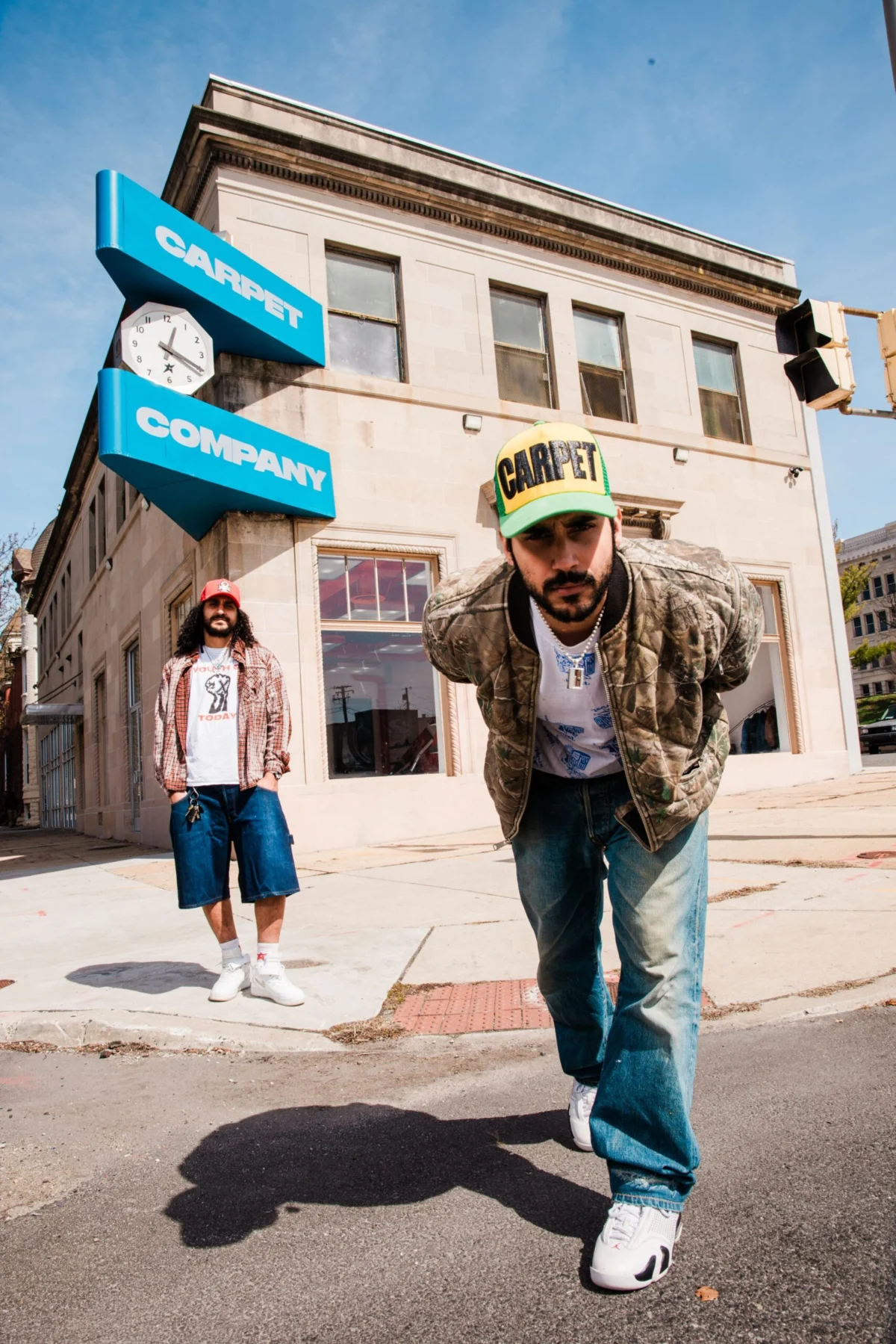
In the late 1990s, the landscape of Southern California fashion was being quietly reshaped within the confines of a modest garage. Paul Frank Sunich, armed with a sewing machine and a surplus of vinyl, began crafting accessories that featured a whimsical, wide-mouthed monkey named Julius. Before the character became a billion-dollar licensing juggernaut, appearing on everything from high-end handbags to elementary school lunchboxes, it was a symbol of pure, unadulterated DIY creativity. Sunich’s homemade experiments eventually birthed Paul Frank Industries, a brand that defined the aesthetic of the early 2000s and became a ubiquitous pop-cultural touchstone. Today, as the fashion world cycles through a fervent Y2K revival, the legacy of that impish monkey is finding a new home through an unlikely partnership with a Baltimore-based skate label that shares its gritty, grassroots origin story: Carpet Company.
The architects behind Carpet Company, brothers Ayman and Osama Abdeldayem, began their journey in a fashion remarkably similar to Sunich’s. Their story does not begin in a corporate boardroom or a fashion design studio, but rather on Craigslist and in a friend’s grandmother’s basement. Seeking a way to print their own T-shirts, the brothers purchased a used screen-printing press and cobbled together a makeshift production line. The setup was primitive, bordering on dysfunctional—a simple lamp served to expose their screens, and a bathtub was repurposed to wash them out. "It was really bad," Osama recalls with a laugh, "but it was fun for us to learn." This commitment to learning through failure would become the bedrock of their brand, which fans now affectionately refer to simply as "Carpet."

While decades and thousands of miles separate the garage where Julius the Monkey was born from the Baltimore basement where Carpet first took shape, the two entities have officially collided in a new collaboration. This partnership is more than a mere marketing exercise; it is a bridge between two eras of DIY culture. For Carpet Company, the collaboration represents the latest milestone in a decade-long experiment to see how far a "simple idea" can be pushed without sacrificing the soul of the project. Their rise has been steady and intentional, fueled by a chaotic yet calculated sensibility that was forged long before the brand officially existed.
The creative spark for Carpet Company can be traced back to a serendipitous discovery in their youth. Ayman and Osama happened upon a VHS tape left behind by their older brother. Suspecting it might be illicit material, they popped it into the player, only to be met with the raw, high-energy footage of Welcome to Hell, the landmark 1996 skate video from Toy Machine. Directed by Jamie Thomas and featuring legendary skaters like Ed Templeton, the video was a masterclass in grit and creative mayhem. "The mayhem that we had inside of us immediately connected to it," Osama explains. Growing up as the sons of Egyptian immigrants in Maryland, the brothers were part of a household of five boys where energy was high and resources were often stretched thin. Skateboarding provided a constructive outlet for their restlessness, teaching them the value of persistence. In skating, success is only achieved after falling a thousand times; it is a sport that demands a high tolerance for failure, a trait that would prove indispensable when they transitioned into the world of apparel and manufacturing.
Initially, the brothers printed graphics they admired just to see if they could master the technical aspects of the medium. When they moved from T-shirts to skateboard decks, the learning curve grew significantly steeper. Months of trial and error followed, but because Carpet was an art project rather than a business with quarterly targets, the lack of immediate success was irrelevant. This lack of pressure allowed their aesthetic to crystallize organically. Ayman notes that their location played a crucial role in this slow-burn development. "If Carpet started in New York or LA, we’d either be really big or dead," he says. "Because we’re in Baltimore, we’re blessed with being able to do what we want at our own pace."

This geographic isolation allowed the brothers to maintain a "double life" for years. Before Carpet became their primary focus, both Ayman and Osama pursued high-level careers in engineering. Ayman worked at NASA, while Osama held a position at Maryland’s largest utility company. They spent their days navigating the rigid, buttoned-up worlds of government and infrastructure, only to spend their nights in the basement, covered in ink and sawdust. Even after their 2021 collaboration with Nike on a high-profile SB Dunk High—a release that catapulted them into the global streetwear spotlight—they continued to juggle their full-time engineering roles. It took three years of pleading with their parents, who valued the stability of their professional careers, before Osama finally committed to the brand full-time.
Carpet Company’s design philosophy sets it apart from the typical streetwear machine. In an industry built on the "drop" model—where brands often repeat successful logos and graphics to maximize profit—Carpet rarely revisits a design. Once a graphic is printed and sold, it is retired forever. This refusal to scale in a traditional manner is a point of pride for the brothers. "Our parents always tell us to go on Shark Tank, but they would kick us out in a millisecond," Ayman jokes. "We’re the kings of wasting money." This "waste" often manifests as passion projects that are notoriously difficult to produce or sell: lacquered leather purses, fiberglass stools modeled after skateboard hardware, and "Habibi" nutcrackers. These items consume vast amounts of time and resources, but for the Abdeldayems, the intrinsic value of the product outweighs its profit margin.
This uncompromising approach has earned them the respect of veterans in the skate and fashion industries. Atiba Jefferson, a legendary skate photographer, observes that Carpet runs like "the most unique board company that’s not a board company." He compares their creative guest board program to iconic 90s brands like Girl and World Industries, noting that their lack of formal fashion training is actually their greatest strength. Their DIY ethos, honed through years of skating, allows them to obsess over details that traditional designers might overlook.

The brand’s influence is perhaps most visible in their new flagship store, located in Baltimore’s Station North neighborhood. The neighborhood, once a bustling commercial hub that had fallen into decades of dormancy, has seen a surge of energy thanks to the store’s opening. Housed in a renovated old bank building, the space is a physical manifestation of the brothers’ eclectic tastes. It features a cafe with custom Egyptian tiles, a soon-to-open art gallery, and a mirrored pyramid at its center that acts as a funhouse reflection of the merchandise. The retail space has become a destination, drawing in long-time fans and curious locals alike. Ayman admits that seeing foot traffic on a Monday afternoon in Baltimore still feels "shocking," a testament to the brand’s ability to turn an old-school bank into a modern cultural hub.
The community that has formed around Carpet Company is a source of constant surprise for the brothers. They have heard stories of customers meeting at pop-up events and forming lasting friendships, some even traveling across state lines to visit the Baltimore flagship. This social aspect of the brand—the idea of "converting" someone into a "Carpet person" through a ten-minute interaction—is what fuels their long-term vision. They have resisted the temptation to sell through major mall retailers, preferring instead to support independent skate shops and boutiques like Supreme and Dover Street Market. By keeping their distribution tight and their production largely in-house, they ensure that every Carpet skateboard is still printed by hand, maintaining the tactile connection to their basement beginnings.
The journey reached a full-circle moment earlier this year when the brothers collaborated with Ed Templeton, the very man whose skating in Welcome to Hell had sparked their obsession decades ago. They asked Templeton to redesign the iconic Toy Machine "Devil Cat" logo as a sphinx, a nod to their Egyptian heritage. Templeton agreed, sending over a rough sketch on a napkin within an hour. For Ayman and Osama, that napkin represented more than just a graphic; it was a validation of their entire trajectory. "To think Carpet might not exist if we never watched that video—it’s kind of a crazy thought," Ayman reflects. As they continue to navigate the intersection of high fashion, skate culture, and their own heritage, the Abdeldayem brothers remain committed to the "long game," proving that in an era of fast fashion and fleeting trends, there is still immense power in a sewing machine, a stack of vinyl, and a garage full of dreams.
