
 By admin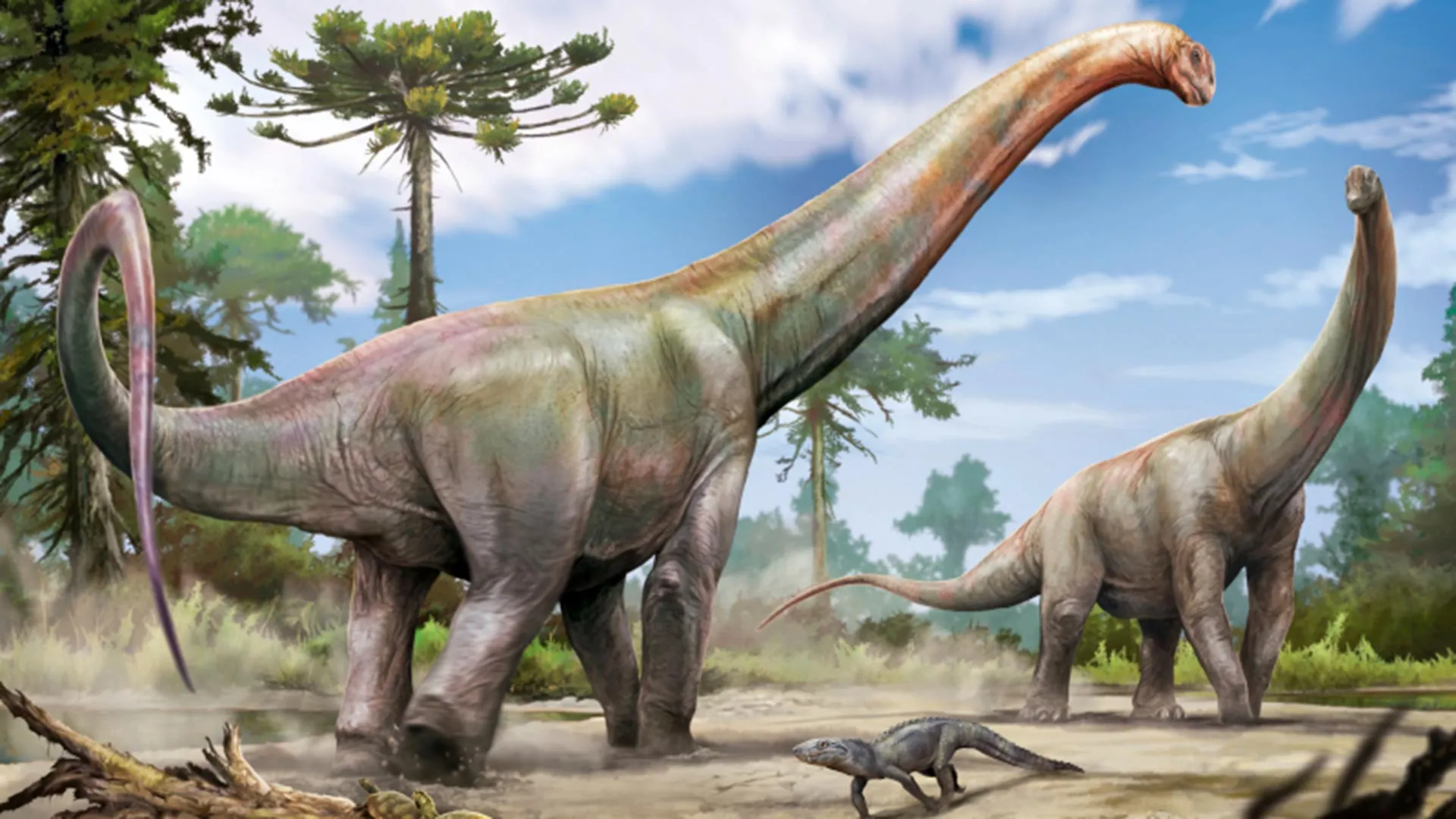
The scientific community is abuzz with the formal description of Dasosaurus tocantinensis, a colossal sauropod whose fossilized remains were unearthed during the development of a road rail terminal in Davinópolis, a city nestled within the verdant landscape of Maranhão state. Published in the prestigious Journal of Systematic Palaeontology, the study introduces a creature estimated to have measured an impressive 20 meters (approximately 65 feet) in length, roaming the Earth roughly 120 million years ago during the Early Cretaceous period. This remarkable discovery not only adds a new formidable member to Brazil’s already rich paleontological record but also provides critical insights into the complex dispersal patterns of mega-dinosaurs across landmasses that were once united but are now separated by vast oceans.
One of the most profound implications of the Dasosaurus tocantinensis find lies in its striking evolutionary ties to Europe. Phylogenetic analyses have revealed that its closest known relative resided in what is now Spain, specifically a group of sauropods known from the Iberian Peninsula. This biogeographical link is far from coincidental; it strongly suggests that Dasosaurus belonged to a widespread lineage that transcended geographical boundaries, occupying regions that are currently distinct continents. Researchers have put forth a compelling hypothesis: the ancestors of Dasosaurus tocantinensis likely undertook a grand migratory journey, reaching South America by traversing North Africa sometime between 140 and 120 million years ago. This period aligns perfectly with the geological epoch when these colossal landmasses were still intimately connected as part of the supercontinent Gondwana, a vast southern continent that would eventually fragment to form modern-day Africa, South America, Antarctica, Australia, and the Indian subcontinent. The presence of such a close European relative in South America underscores the dynamic interplay of continental drift and faunal exchange during the Mesozoic Era, challenging previous assumptions about isolated evolutionary trajectories.
Maranhão’s Largest Known Dinosaur and a Glimpse into its World
The sheer scale of Dasosaurus tocantinensis immediately elevates its status within Brazilian paleontology. "It’s the largest known dinosaur for Maranhão, which has other species, but not sauropods like this one; rather, it has smaller ones, such as the diplodocid Amazonsaurus maranhensis, which was about 10 meters long," explains Elver Luiz Mayer, a professor at the Federal University of the São Francisco Valley (UNIVASF) in the state of Bahia. This comparison highlights Dasosaurus‘s exceptional size, effectively doubling the known maximum length of sauropods previously identified in the region. Sauropods, characterized by their long necks, long tails, small heads, and massive, columnar legs, were the largest animals to ever walk the Earth, and Dasosaurus clearly fits this grandeur. Its existence in Maranhão during the Early Cretaceous paints a vivid picture of an ancient ecosystem teeming with diverse reptilian life, where this colossal herbivore would have dominated the landscape, browsing on the abundant flora.
Mayer, whose primary research typically focuses on mammals from the far more recent Quaternary period, became intricately involved with the Dasosaurus find in 2021. At the time, he was working in São Félix do Xingu in the state of Pará, serving as a professor at the Federal University of Southern and Southeastern Pará (UNIFESSPA). His involvement underscores the collaborative and often serendipitous nature of paleontological discoveries, where experts from different fields converge to decipher ancient mysteries. The initial discovery was made by archaeologists, who were meticulously monitoring the Davinópolis construction project. Such monitoring is a standard, albeit often under-resourced, requirement for environmental licensing in Brazil, aimed at safeguarding cultural and natural heritage that might be disturbed by large-scale infrastructure development. When the fossils were first unearthed, they were mistakenly thought to belong to large prehistoric mammals, perhaps even coexisting with early human populations – a common initial misidentification given the superficial resemblance of large bone fragments and the relative rarity of dinosaur finds in certain areas.
However, Mayer, with his keen eye and extensive knowledge of geological timescales, quickly recognized the true antiquity of the bones. "Given its depth of about eight meters, I realized that it was much older. The age of the geological formation was already known from previous research and indicated that it was material from the transition from the Lower to the Upper Cretaceous, about 120 million years ago," Mayer recounts. This crucial insight, derived from the stratigraphic context of the excavation site, immediately shifted the focus from Cenozoic mammals to Mesozoic dinosaurs. Recognizing the profound significance of the find, Mayer promptly initiated contact with a network of specialized paleontologists, leading to the formation of a multidisciplinary research group. This collaborative effort brought together experts in various fields, including anatomy, systematics, and bone histology, essential for a comprehensive study of the newly discovered specimen.
A Remarkably Complete Fossil: Unlocking Ancient Secrets
Following their careful excavation, the fossils underwent an extensive and meticulous preparation process, initially in Pará, before being subjected to rigorous scientific analysis. Afterward, in a commitment to preserving Brazil’s national heritage, the specimen was repatriated to Maranhão. It is now housed and cared for in São Luís, the state capital, at the State Center for Natural History and Archaeology Research, an institution that also played a vital role in the collaborative research.
What makes this discovery particularly valuable for paleontologists is the unusually complete nature of the preserved skeleton, a rarity for sauropods, whose massive bodies often disintegrate before fossilization can occur. "Because it includes tail vertebrae, a 1.5-meter femur, ribs, foot bones, and arm and leg bones, this is considered a relatively complete specimen. We believe there are more fossils from this same specimen yet to be excavated at the site," states Max Langer, a distinguished professor at the Ribeirão Preto School of Philosophy, Sciences, and Letters at the University of São Paulo (FFCLRP-USP), who was an integral participant in the study. The presence of a 1.5-meter (nearly 5-foot) femur alone is testament to the dinosaur’s immense size, as this bone is a key indicator of overall body mass and length in quadrupeds. Such a diverse collection of bones provides an unprecedented wealth of anatomical information, allowing researchers to accurately reconstruct the animal’s morphology, understand its locomotion, and establish its evolutionary relationships with greater certainty. Langer, a leading figure in South American dinosaur research, coordinates the project "Exploring the Diversity of South American Cretaceous Dinosaurs and Their Associated Faunas," which receives crucial support from FAPESP, Brazil’s leading research funding agency.
Why the Dinosaur Was Named Dasosaurus tocantinensis
The nomenclature of Dasosaurus tocantinensis is a thoughtful tribute to both the unique geographical characteristics of Maranhão and the precise location of the fossil discovery. The generic name, "Daso," is derived from the Greek word for "forest," directly referencing the region’s historically dense, wooded environment. Early Portuguese colonizers, upon encountering these lush, intricate woodlands, famously described them as forming a "dense tangle," or "maranhão," which eventually gave the state its name. This linguistic connection anchors the dinosaur firmly to its ancient homeland. The specific epithet, "tocantinensis," further grounds the species in its immediate surroundings, referring to the majestic Tocantins River, near whose eastern bank the fossil site is situated. This naming convention not only provides a scientific identifier but also weaves a narrative connecting the past with the present landscape, honoring the natural and cultural heritage of Maranhão.
Beyond its external anatomy, the research team delved into the microscopic structure of the dinosaur’s bones, an approach known as bone histology. This intricate analysis, expertly led by Tito Aureliano and Aline Ghilardi of the Federal University of Rio Grande do Norte (UFRN), yielded groundbreaking insights into Dasosaurus‘s growth patterns. The histological examination revealed a fascinating combination of traits: characteristics typically observed in older, more basal sauropods alongside features commonly found in titanosaurs, a highly diverse and successful group of sauropods to which Dasosaurus is closely related. Titanosaurs are renowned for including some of the largest land animals ever, and understanding their growth dynamics is key to unraveling the mystery of their gigantism.
The results of this microscopic analysis have significant implications for our understanding of dinosaur evolution. They indicate that certain patterns of bone growth and remodeling, particularly those associated with rapid growth and the development of immense size, may have emerged much earlier in dinosaur evolution than previously hypothesized. This earlier appearance of advanced growth strategies could provide a crucial piece of the puzzle, helping scientists explain how some sauropods, including the titanosaurs, were able to attain such truly enormous body sizes, dominating their ecosystems for millions of years.
Construction Projects: A Double-Edged Sword for Paleontology
The discovery of Dasosaurus tocantinensis, born from the earth turned over by heavy machinery, starkly illustrates a complex and often paradoxical reality in the field of paleontology. Major construction projects, by their very nature, pose a significant threat to untold fossil deposits, with the potential to damage or even irrevocably destroy invaluable paleontological heritage. However, these same projects can also act as accidental benefactors, exposing deep layers of rock and sediment that would otherwise remain largely inaccessible to scientists using traditional excavation methods. In tropical countries like Brazil, where dense vegetation and thick soil cover often obscure geological formations, such anthropogenic disturbances become surprisingly crucial.
"Brazil is a tropical country with dense vegetation. Geologists and paleontologists rely heavily on human activity to excavate, expose the rocks, and reveal the fossils. If we map Brazil’s fossil sites, we’ll see highways and quarries. These projects are important for understanding our heritage. But it’s obvious that specialized monitoring and artifact recovery are necessary, which doesn’t always happen," emphasizes Max Langer. His observation highlights a critical challenge: while infrastructure development can inadvertently reveal ancient treasures, the proper protocols for identifying, excavating, and preserving these finds are frequently inadequate or poorly enforced. This gap in oversight means countless potential discoveries are lost or damaged without ever being recognized.
Elver Luiz Mayer echoes this concern, advocating for a more harmonious approach. "That’s why it’s urgent to foster closer cooperation between the parties to reconcile construction projects with federal legislation on fossils and promote new discoveries while ensuring the proper preservation of our heritage," Mayer comments. This call for enhanced collaboration underscores the need for proactive engagement between construction companies, government agencies responsible for environmental licensing, and paleontological experts. Implementing robust paleontological impact assessments, ensuring the presence of trained monitors on site, and establishing clear protocols for discovery and recovery are essential steps to transform potential destruction into opportunities for scientific advancement and cultural preservation.
The researchers, driven by the potential for further insights, are now actively negotiating with the construction company for permission to return to the Davinópolis site. They believe that more fossils from the same Dasosaurus tocantinensis individual, or perhaps even other ancient organisms, may still lie buried there. Additional excavations could reveal further anatomical details of Dasosaurus, refine its evolutionary placement, and shed more light on the broader dinosaurian group to which it belonged. This ongoing quest exemplifies the iterative nature of scientific discovery, where each find opens new avenues for research and deeper understanding. The entire endeavor has been significantly bolstered by crucial financial support from FAPESP, which provided a doctoral scholarship, a postdoctoral fellowship, and a grant under its Young Investigator modality, underscoring the importance of sustained funding for groundbreaking paleontological research in Brazil. The discovery of Dasosaurus tocantinensis is not just about a new dinosaur; it’s a testament to Brazil’s rich paleontological heritage and a powerful reminder of the delicate balance between modern development and the preservation of our planet’s ancient past.
