
 By Rifan Muazin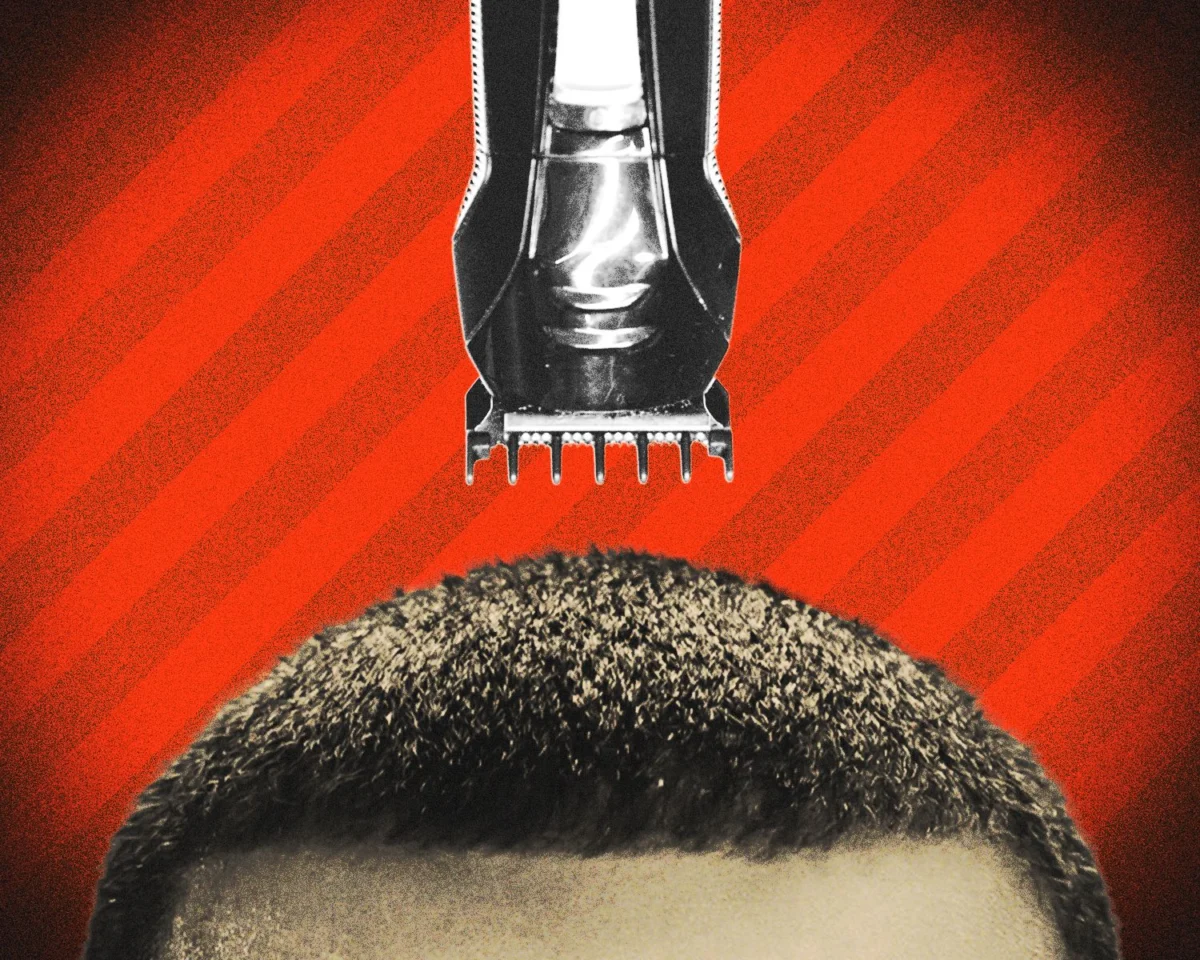
There used to be a couple of absolute certainties a modern sports and culture enthusiast could hang their hat on, providing a sense of stability in an ever-shifting landscape of trends. First, if you tuned into a Manchester City match, you were guaranteed to see Erling Haaland—the Norwegian goal-scoring machine—booting a ball with enough velocity to clean through a defender’s skull, all while his signature looped half-up, half-down ponytail bobbed at the scene of the crime. That golden mane had become more than just a hairstyle; it was a Viking-inspired brand, a symbol of his raw power and eccentric personality. Second, if a photograph of actor Connor Storrie surfaced on social media, it would almost certainly trigger a wave of rabid "gender envy" among fans, fueled primarily by his enviable head of cherubic, bouncy curls that seemed to defy the laws of gravity.
However, the cultural landscape shifted dramatically over a single weekend, leaving fans and fashion critics alike in a state of mild shock. Haaland, true to his reputation for unpredictable social media behavior, took to Instagram to share a series of what can only be described as "unhinged" posts—his specialty—documenting the moment his long blond locks were shorn off. The reaction was immediate and polarized. One commenter, clearly mourning the loss of the striker’s ethereal look, lamented that "an angel lost his wings." On the other side of the spectrum, a supporter of the bold move simply wrote, "Very, very, very nice." The transformation was stark, stripping away the whimsical ponytail to reveal the sharp, angular geometry of one of the world’s most elite athletes.
In a strange twist of fate, because buzzcuts often seem to arrive in pairs within the zeitgeist, a picture was simultaneously circulating on X (formerly Twitter) of Connor Storrie. The bouncy, curly mullet that had become his trademark was gone, replaced by a severe, minimalist crop. Speculation quickly mounted that the change was not merely a personal whim but a professional requirement; Storrie is currently in the midst of filming the highly anticipated second season of Heated Rivalry. In the world of prestige television and cinematic storytelling, a hair change of this magnitude often signals a "buzz-adjacent" plot unfolding—perhaps a character arc involving a loss of innocence, a shift in discipline, or a new level of aggression.
Just like a rare solar eclipse, the newly shorn heads of these two massive stars have overlapped in the cultural sky, and the world is stopping to look. Fortunately, unlike a real eclipse, observing this phenomenon won’t leave you partially blind—though it might leave you reaching for the clippers. The buzzcut has long been the "cool guy’s" weapon of choice for a radical image reset. It is a haircut that functions as a psychological "refresh button," a sentiment echoed by Charlie Calver, the head of content for GQ Australia. Calver has long advocated for the yearly summer buzz, noting that for those with naturally floppy, Hugh Grant-esque hair, the act of shaving it all off as the temperatures rise feels like a seasonal rite of passage.
"When we travel, move houses, or even just switch up our wardrobe, we get addicted to the feeling of newness," Calver notes. "While it’s not as drastic as a career change or a cross-country move, shaving your head creates a certain amount of revolution within yourself." This "revolution" is part of the buzzcut’s enduring appeal. It is an act of reclamation, a way to strip away the vanity of styling and reveal the raw architecture of the face. In an era dominated by complex grooming routines and "clean girl" or "maximalist" hair trends, the buzzcut stands as a defiant monument to simplicity.
Robin Key, the visuals director at British GQ, is another staunch advocate for the look. Having maintained a crew cut for three years, Key highlights the sheer pragmatism of the style. "I like that it’s completely effortless; I can just get out of bed and it’s good to go," he says. The time saved in front of a mirror is not insignificant, and for the modern man juggling a demanding career and an active social life, that efficiency is a luxury in itself. Key admits that while a tiny bit of product might be used as the hair grows out slightly, the maintenance remains remarkably low-stress. "I’d definitely recommend it if you want a sharp, fuss-free look," he concludes.
.jpg)
The buzzcut’s place in the pantheon of iconic celebrity looks is well-established. It has been a fixture for famous men across the spectrum of "vibes" and archetypes. Consider Michael B. Jordan, whose sharp fade and buzzcut emphasized his leading-man jawline; or Timothée Chalamet, who occasionally traded his romantic curls for a shorter crop to signal a transition into more mature roles. Austin Butler, Tom Hardy, and Robert Pattinson have all utilized the buzzcut to pivot away from "pretty boy" associations toward something more rugged and formidable. There is an undeniable edge to a shaved head—a vibe that suggests the wearer is carefree, perhaps a bit dangerous, and utterly unbothered by modern trivialities. It’s a look that says, "I don’t ride a motorcycle, but I could if I wanted to," and "I have no idea what an e-reader is because I’m too busy living in the moment."
However, before you rush to the bathroom with a pair of kitchen scissors, there are several "asterisked" caveats to consider. The success of a buzzcut is heavily dependent on the "skull lottery." No one truly knows what their head shape looks like until the hair is gone—it’s a secret shared only between you, your creator, and perhaps your mother. There’s also the matter of maintenance. While the daily styling is nonexistent, the upkeep of the length requires a commitment to the barber chair every two to four weeks. If you are uncomfortable with handheld clippers or unwilling to make regular appointments, the "sharp" look can quickly devolve into a "fuzzy tennis ball" aesthetic.
To ensure the best possible result, expert guidance is essential. Benny Martin, a lead barber at Supply91, suggests that the key to a successful buzzcut lies in understanding the interplay between hair color, density, and texture. "Ask your barber to look at your hair color and density in order to determine the correct clipper length to use on the top," Martin advises. The physics of light and shadow play a major role here. Lighter-colored, low-density, or very smooth hair often requires a longer guard—typically between a number four and a number eight. This prevents the scalp from being overly visible, which can sometimes result in a "patchy" appearance under bright lights. Conversely, dark, dense, or coarse hair can handle much shorter lengths—number one to number three guards—because the contrast between the dark hair and the scalp creates a naturally defined look.
The cultural timing of the Haaland and Storrie "double buzz" cannot be ignored. We are currently living in a post-maximalist period where many men are seeking a "hard reset" after years of experimental, longer styles popularized during the pandemic lockdowns. The "mullet fatigue" is real, and the buzzcut offers the ultimate antidote. It is also a highly functional choice for athletes. For a player like Haaland, who operates at the highest level of physical intensity, removing the distraction of long hair—and the need for hairbands that can snap or slip—might provide a marginal gain in focus and comfort. In the world of professional sports, where milliseconds and millimeters matter, every bit of streamlined efficiency counts.
For Connor Storrie, the move likely signals a deeper dive into his character for Heated Rivalry. In the context of a hockey-themed drama, the buzzcut carries connotations of the "playoff beard" mentality—a stripping away of vanity in favor of the mission at hand. It transforms his image from the "cherubic" youth into a battle-hardened competitor, proving once again that hair is one of the most powerful tools in an actor’s arsenal for non-verbal storytelling.
Ultimately, whether you choose to document the entire process on your Instagram grid for millions of followers like Haaland, or simply debut the look at a casual Sunday lunch like Storrie, the end goal remains the same: a transformation that prioritizes confidence and clarity. The buzzcut is more than just a haircut; it is a statement of intent. It suggests that the wearer is comfortable in their own skin—and their own skull. It is a win-win scenario that provides a sharp, low-effort aesthetic for the hot summer months and a fuss-free, rugged look for the winter.
As the trend continues to gain momentum, fueled by high-profile endorsements and a growing desire for minimalism, the buzzcut solidifies its status as the ultimate power move. It is the great equalizer of men’s grooming—a style that works as well on the football fields of the Premier League as it does on a fictional hockey rink or a high-fashion runway. So, if you’ve been contemplating a change, let the bold moves of Haaland and Storrie be your inspiration. Go on, get a buzzcut. Your skull deserves the airtime.
