
 By admin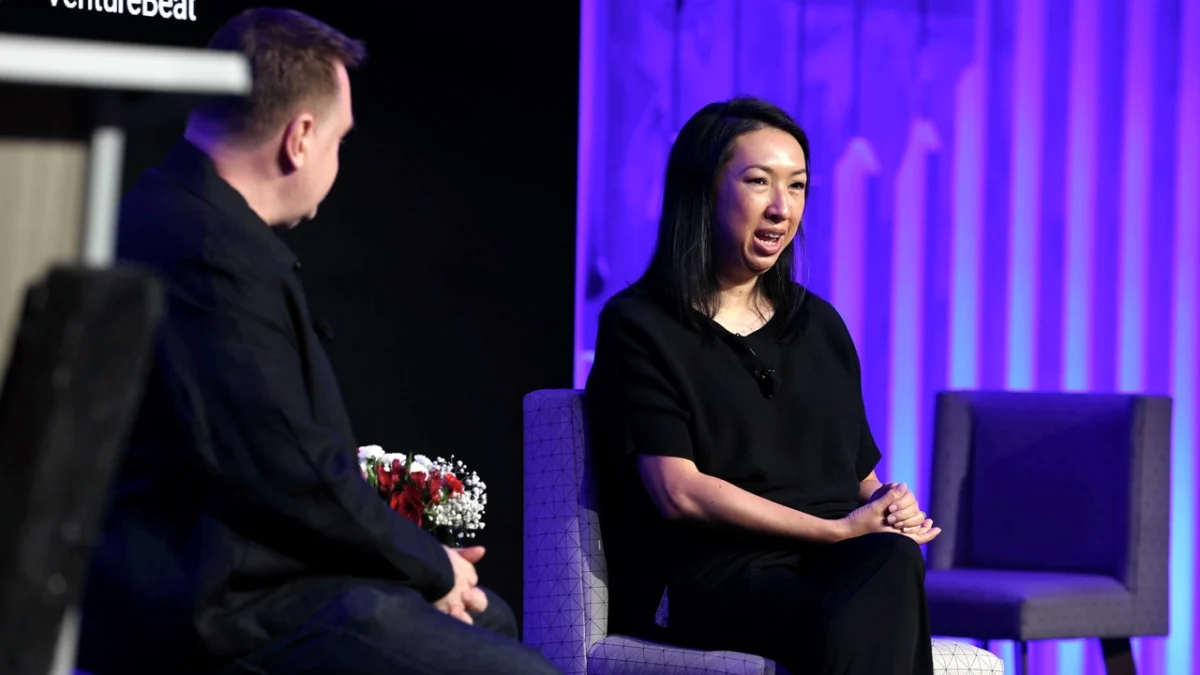
Intuit, a company long recognized for its early adoption and pioneering efforts in agentic artificial intelligence, has recently detailed a journey that, while marked by innovation, has been far from a straightforward path to success. At the prominent VB Transform 2026 conference, Nhung Ho, Intuit’s Vice President of AI, offered a candid look into the significant architectural overhauls the company undertook, demonstrating a commitment to iterative development and a deep understanding of the challenges inherent in deploying sophisticated AI systems. In a remarkably compressed timeframe of approximately four months, Intuit completely rebuilt its agent architecture not once, but twice. This intense period of re-evaluation and reconstruction highlights the dynamic and often unpredictable nature of AI development, especially when aiming to automate complex business tasks.
The initial approach saw Intuit develop a "fleet of specialist agents," a strategy aimed at providing granular AI capabilities for specific functions. However, the inherent complexity of managing and orchestrating these individual agents proved to be a significant hurdle. Customers, Ho explained, would need to discern which agent to deploy for which task, creating an additional layer of user management that detracted from the seamless experience Intuit aimed to provide. To address this, the company transitioned to a "central orchestration layer." This new architecture was designed to act as a smart intermediary, taking a customer’s request and intelligently routing it to the appropriate specialist agent without requiring explicit user selection. This move was intended to simplify the user experience significantly, abstracting away the underlying agent complexity.
However, this centralized orchestration layer, while promising, ultimately faltered under its own weight. The system, which had initially held up for what Ho described as roughly three months – a duration she humorously likened to a year in the accelerated timeline of AI development in 2026 – began to exhibit critical failures. The breakdown wasn’t due to a lack of processing power or capacity, but rather a fundamental structural flaw. The core issue stemmed from how information was passed between agents. In the orchestrated system, agents communicated their results to each other using natural language. This method, while intuitive in principle, introduced a critical weakness: each natural language handoff resulted in a loss of context. The subsequent agent in the chain would have to infer the upstream agent’s reasoning and intermediate steps, a process that inevitably led to compounding errors.
"If you have 10 agents and they all are passing to each other, every time that pass happens, error compounds," Ho articulated, underscoring the inherent fragility of this communication protocol. In a chain of ten agents, the degradation of context and the accumulation of inferred errors meant that the system was not just occasionally failing, but was failing "by design." This diagnostic realization was the catalyst for the second, more drastic architectural rebuild.
The subsequent 60-day rebuild, which saw a working version emerge in under 20 days, marked a decisive shift away from the orchestration layer towards a "skills and tools based system." This new architecture fundamentally altered how agents functioned and interacted. Instead of complex agent-to-agent communication, the focus shifted to agents leveraging a shared repository of distinct skills and tools. This approach aimed to create a more modular and robust system where individual components were more manageable and reusable, thereby reducing the potential for cascading errors.
The success of such a rapid and fundamental architectural shift hinged not only on technical prowess but also on securing crucial engineering buy-in. Convincing leadership and the hundreds of engineers who had invested significant effort in building the original specialist agents to dismantle their work and pivot to a new paradigm was a formidable challenge. Ho’s team approached this with a data-driven strategy. To gain leadership approval, they presented compelling evidence rather than mere argumentation. A demonstration showcasing the new architecture’s superior performance on real customer queries, directly pulled from production, proved to be the most persuasive tool. "The best proof, at least my belief, is what are customers trying to do? And whatever system you build needs to address those problems," Ho emphasized, highlighting the customer-centric approach that guided their decision-making.
Winning over the engineering teams required a different strategy. The pitch to these engineers, who had expertise in building specific agents, was centered on the concept of scale and broader impact. While a standalone agent solved a narrow problem, the new architecture promised that a shared skill or tool, once built and integrated, could benefit every customer interacting with that particular product feature. This not only offered a more impactful contribution but also subtly shifted the focus of partner teams. Their responsibilities evolved from agent creation to rigorous evaluation and testing, as performance metrics and "evals" became the primary method for validating the new architecture’s efficacy. This transition underscored a move towards a more standardized, reusable, and measurable approach to AI development within Intuit.
A tangible and significant customer-facing outcome of this architectural overhaul is the introduction of a feature that allows a live agent conversation to seamlessly integrate a human expert. Currently in early testing and rolled out to approximately 1% of Intuit’s customer base, this capability is slated for wider scaling in the coming weeks. This innovative feature empowers customers to bring in an Intuit product support representative, their personal accountant, or even one of Intuit’s own bookkeepers directly into an ongoing AI-driven conversation. Crucially, the human expert joins with complete context of the AI’s prior interactions, eliminating the need for repetitive explanations and ensuring a fluid, informed resolution.
Ho drew a stark contrast between this approach and the typical experience with many AI chat products. While general-purpose assistants often conclude a query with a disclaimer advising consultation with a professional, Intuit’s system is engineered to directly connect the customer to that professional within the same interactive session. This seamless human-AI collaboration aims to bridge the gap between automated assistance and expert human guidance.
Complementing this human-in-the-loop capability is a robust permissions model specifically designed for the sensitive nature of financial data. Every action an agent undertakes involving a customer’s financial information necessitates explicit prior permission. While this requirement can be relaxed over time as customers develop greater trust in the system, Intuit maintains a comprehensive audit log of all agent activities. This log serves as a critical safeguard, providing transparency and enabling reversal of any actions if necessary, thereby reinforcing security and accountability.
The architectural rebuild also precipitated a profound shift in how Intuit gathers and leverages customer feedback, a transformation Ho described as qualitatively different from prior methodologies. "Feedback in the past used to be very, very sparse, and it was also very bimodal," Ho stated. "Either they loved it or they hated it, and usually it tends towards the negative." This pattern of infrequent and polarized feedback made it challenging to derive actionable insights for incremental improvements.
In contrast, the new chat-based system fundamentally redefines feedback collection. Every customer interaction, every conversation, now functions as a continuous stream of feedback. This paradigm shift has propelled Intuit from a scenario where only approximately 0.3% of customers provided explicit feedback to a situation where nearly 100% of interactions are inherently providing data. This massive increase in feedback volume has necessitated new approaches to analysis. Ho has personally returned to writing code to develop models capable of systematically analyzing this unprecedented volume of feedback, identifying system shortcomings at a scale that would be impossible to manage through manual review alone.
This deluge of feedback, while invaluable, often arrives with a directness and candor that product teams may not be accustomed to. Customers, Ho noted, are unflinchingly honest about where the system has failed. "They straight up tell you, ‘You suck. I hate this. This is not right,’" she admitted. However, she also observed a willingness among customers to provide grace and corrections, which places a significant onus on Intuit to effectively "harvest this new piece of feedback and type of feedback, and actually improve the system." This direct, unfiltered feedback loop, coupled with the architectural resilience and the seamless integration of human expertise, positions Intuit at the forefront of a new era in agentic AI, where continuous learning and customer-centric evolution are paramount.
