
 By admin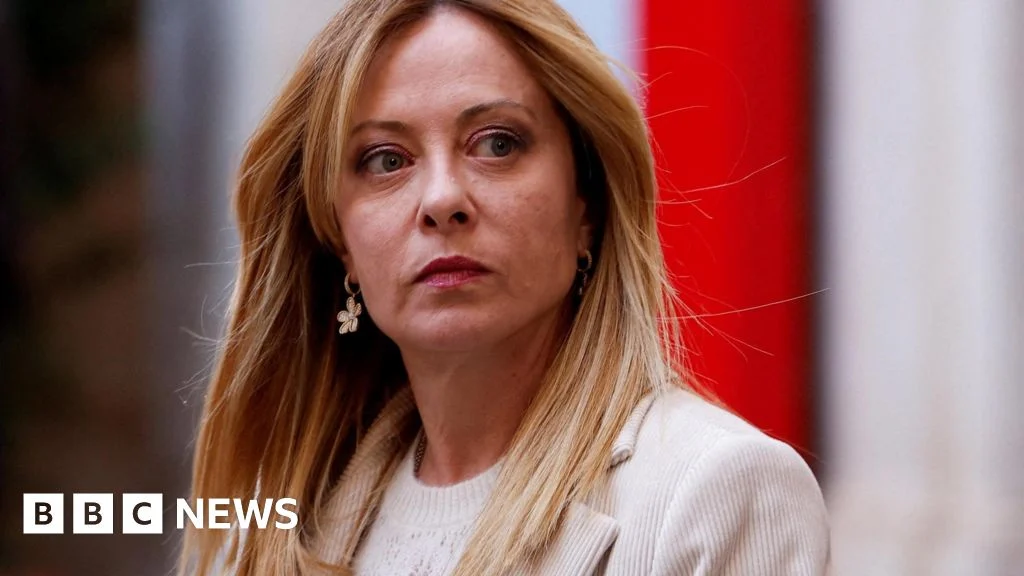
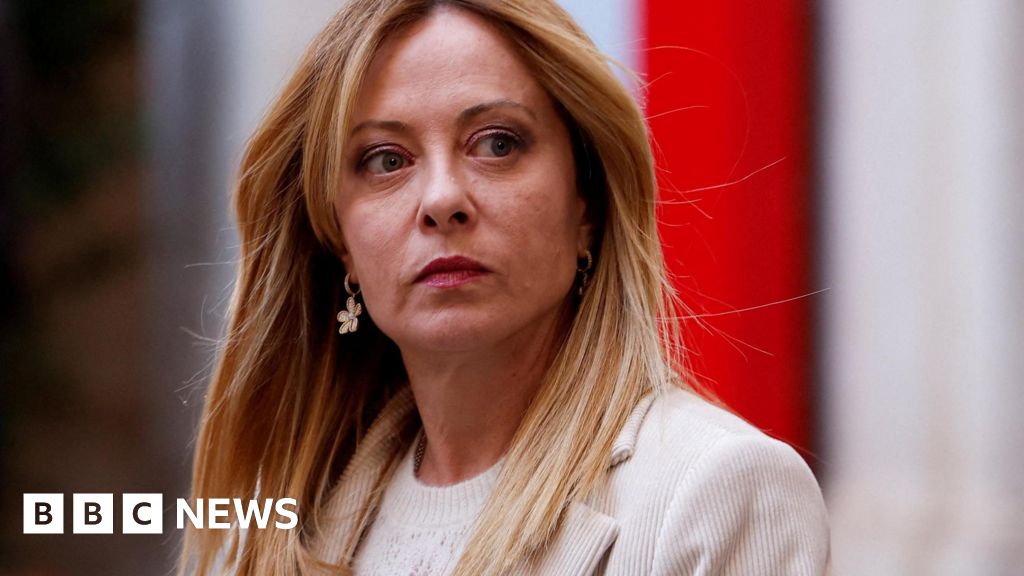
Italian Prime Minister Giorgia Meloni has unequivocally condemned US President Donald Trump’s recent remarks about Pope Leo XIV, labeling them as "unacceptable" and a departure from the expected discourse surrounding the head of the Catholic Church. The strong rebuke from Meloni, a significant ally of Trump and a staunch conservative herself, signals a rare moment of public disagreement between the two leaders, highlighting the gravity of Trump’s unusually harsh criticism directed at the pontiff.
The controversy erupted following a lengthy post by Trump on his Truth Social platform, where he accused Pope Leo XIV of being "WEAK on Crime and terrible for Foreign Policy." This public broadside was later amplified by Trump when he told reporters that he was "not a big fan" of the Pope. Meloni, in a carefully worded statement, emphasized the Pope’s crucial role as the spiritual leader for millions globally. "The Pope is the head of the Catholic Church, and it is right and normal for him to call for peace and to condemn every form of war," she asserted, implicitly contrasting the pontiff’s actions with Trump’s accusatory tone.
Meloni, a devout Catholic and the leader of a right-wing coalition government, has historically maintained a close relationship with Trump. Her initial reluctance to publicly criticize the US president on this matter was noted by Italian opposition parties, who voiced their disappointment at her delayed response. However, the intensity of Trump’s invective, particularly his personal attacks on the Pope’s character and policies, ultimately compelled Meloni to break her silence. Even her coalition partner, Matteo Salvini, the leader of the populist League party, offered a measured critique, stating that "attacking the Pope… doesn’t seem like a useful or intelligent thing to do."
The Pope, currently on an 11-day trip to Algeria, responded to reporters on board his plane, signaling his intention to remain focused on his mission of promoting peace. He indicated that he did not wish to engage in a direct debate with Trump but reiterated his commitment to his pastoral duties. This stance was further solidified by his reported declaration that he has "no fear" of the Trump administration and will continue to speak out against war, especially in the context of the US and Israel’s recent conflict with Iran, a situation where nuclear proliferation concerns have been a significant factor.
Trump, however, showed no signs of backing down. On Monday, he doubled down on his criticism, emphatically stating that he would not apologize to the "very weak" Pope. This repeated assertion further intensified the diplomatic friction and drew widespread attention to the unprecedented nature of a US president publicly attacking the spiritual leader of over 1.3 billion Catholics worldwide.
In a significant development, the Pope, speaking to reporters en route to Algeria, explicitly addressed the geopolitical tensions surrounding the Iran conflict. He stated that he did not see his role as that of a politician but rather as an advocate for spreading the message of peace. "I have no fear of the Trump administration, or speaking out loudly of the message of the gospel, which is what I believe I am here to do, what the Church is here to do," he articulated. "I don’t want to get into a debate with [Trump]," he added, underscoring his commitment to his spiritual mission. He further elaborated on the dire global situation, stating, "Too many people are suffering in the world today. Too many innocent people are being killed. And I think someone has to stand up and say: there’s a better way to do this."
The Pope’s remarks at a subsequent speech in Algeria took a more direct tone, as he criticized "continuous violations of international law and neocolonial tendencies," urging global leaders to embrace principles of justice and solidarity. This indirect critique was widely interpreted as a veiled response to the assertive foreign policy of the Trump administration.
Trump’s public disparagement of Pope Leo XIV has not only strained relations with Italy but has also elicited criticism from various quarters within the global Catholic community. Prominent Italian Catholic commentator Massimo Faggioli drew a stark historical parallel, suggesting that Trump’s attacks were more direct and public than those leveled against the Pope by historical figures like Hitler and Mussolini during World War II. This comparison underscores the perceived severity and unprecedented nature of Trump’s rhetoric.
The Pope has consistently used his public addresses to denounce escalating global conflicts and advocate for de-escalation, particularly in the Middle East. When Trump issued a veiled threat against Iran, suggesting that "a whole civilization will die tonight," Pope Leo XIV publicly condemned the statement as "truly unacceptable." This marked a rare instance of a pontiff directly rebuking the specific rhetoric of a world leader regarding military action.
Furthermore, Pope Leo XIV has previously voiced concerns about Trump’s immigration policies. He questioned the consistency of being "pro-life"—a term typically associated with the anti-abortion movement—while simultaneously supporting what he described as the "inhuman treatment of immigrants." This moral critique touched upon a core tenet of Catholic social teaching, highlighting a significant ideological divergence between the pontiff and the US president.
The current Pope, Leo XIV, is widely seen as continuing the humanitarian and progressive tradition established by his predecessor, Pope Francis. During the 2016 US presidential election campaign, Pope Francis famously stated that Trump was "not Christian" due to his anti-immigrant language. Trump’s response at the time was to describe the late Pope as "disgraceful," further illustrating the strained relationship between the former US president and the Vatican.
The controversy surrounding Trump’s remarks is set against a backdrop of a complex relationship between the US presidency and the Holy See. Historically, US presidents have often engaged with the Pope on matters of global peace, human rights, and social justice. However, Trump’s direct and personal attacks on Pope Leo XIV represent a significant departure from this norm, creating an unusual diplomatic and ideological rift between two prominent global figures. The implications of this public spat are likely to extend beyond diplomatic niceties, potentially influencing the discourse on faith, politics, and international relations for the foreseeable future. The Pope’s unwavering commitment to peace and human dignity, juxtaposed with Trump’s confrontational style, has placed a spotlight on the differing approaches to global challenges, particularly concerning conflict resolution and the ethical considerations of foreign policy.