
 By Lina Irawan
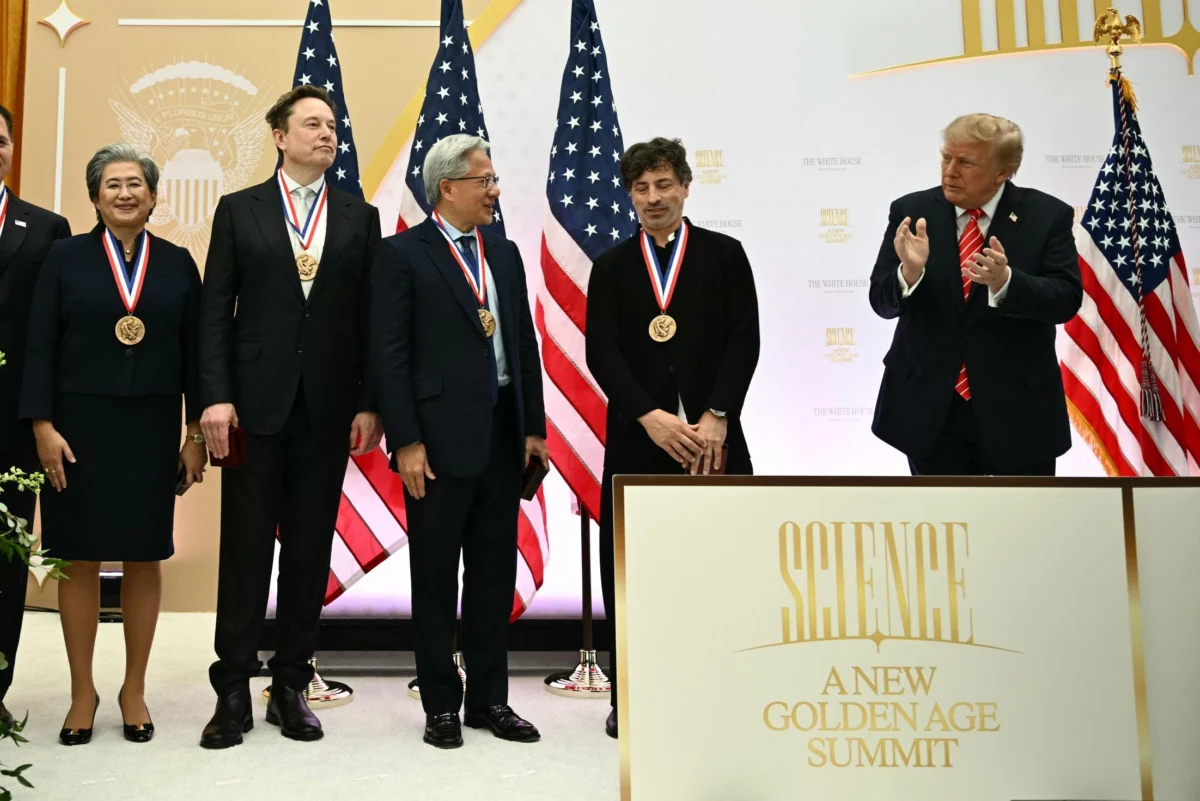
The saga began with Huang’s abrupt and ignominious exit earlier this month, following revelations of an alleged personal indiscretion that swiftly escalated into a matter of grave national security concern. While the full details of the alleged affair and the extent of any potential compromise remain shrouded in secrecy, initial reports suggested that Huang’s relationship with an individual suspected of being a Chinese intelligence operative could have exposed sensitive proprietary information or even state secrets, given Nvidia’s pivotal role in advanced computing and artificial intelligence, technologies central to both economic and military power. The immediate reaction from Nvidia’s board was one of severe caution, leading to Huang’s swift removal to mitigate perceived risks.
However, the tech world’s response was equally swift, but dramatically different. Within hours of the news breaking, a powerful counter-movement coalesced around a "Stand With Jensen" petition, demanding the return of the man who co-founded Nvidia in 1993 and steered it to become a trillion-dollar titan. The petition quickly garnered signatures from an array of Silicon Valley’s most influential figures, underscoring a deep-seated belief in founder indispensability that often transcends conventional corporate ethics. Elon Musk, a frequent disruptor and vocal proponent of entrepreneurial autonomy, threw his weight behind the movement, as did Epic Games CEO Tim Sweeney, known for his fierce independence, and Shopify CEO Tobias Lütke. Atreides Management CIO Gavin Baker and Databricks CEO Ali Ghodsi also signed, with Ghodsi emphatically stating in the comments, “Nvidia runs on Jensen! Bring him back!” This immediate outpouring of support highlighted the unique ecosystem of Silicon Valley, where individual genius is often prioritized above all else.
Among the most vocal proponents was Travis Kalanick, Uber’s pugnacious cofounder and former CEO, whose own tumultuous ouster from Uber in 2017 amid compounding scandals provided a poignant backdrop to his impassioned defense of Huang. Kalanick, a figure intimately familiar with the unforgiving scrutiny and abrupt shifts in corporate power dynamics, articulated a robust argument for Huang’s reinstatement. In a public post on the "Stand With Jensen" site, Kalanick wrote, “Jensen is one of the great builders of our time. Liberty and civilizational progress depend on Jensen.” He continued, acknowledging the human element: “He has erred, yes—to err is to be human—but I do not believe anything he has done rises to the bar of separating him from his company. Jensen deserves fairness in adjudication and we must presume innocence until that adjudication proves otherwise beyond a reasonable doubt.” Kalanick’s words resonated deeply within a culture that often views its most successful entrepreneurs as almost mythical figures, capable of driving progress that outweighs personal failings or even perceived security risks. His own experience likely fueled a sense of empathy and a desire to see a fellow "builder" reinstated, emphasizing the idea that the value a founder creates for society and the economy should be paramount.
Huang’s return, therefore, serves as a profound Rorschach test, revealing starkly different interpretations across various stakeholders. To some, particularly corporate governance experts, it represents nothing short of a nightmare. Nicole Bestard, founder of communications firm Quarter Horse Strategies, expressed dismay via email: “Six days after Nvidia’s board said it had no intention of reinstating Jensen Huang as CEO, he’s back—before the board’s own independent investigation has reported anything, before he answers questions from Congress next week, and with no conditions attached (or at least none that anyone outside the boardroom can see).” Bestard concluded, “From a reputation standpoint, this is a huge mistake. It asks investors, employees, and the public to take the board’s judgment on faith.” This sentiment highlights the perceived abdication of fiduciary duty by a board that initially deemed Huang’s presence a risk, only to reverse course without public explanation or apparent due process. Such a move can erode investor confidence in the board’s independence and its ability to act in the best long-term interests of the company, rather than succumbing to external pressure.
The wider public and national security observers, meanwhile, have reacted with a mix of disbelief, horror, and widespread memetic commentary online regarding the circumstances of Huang’s initial resignation. The very notion of a CEO of a critical technology company having an alleged affair with a foreign spy raises profound questions about corporate espionage, intellectual property protection, and the vulnerability of crucial infrastructure. Nvidia’s graphics processing units (GPUs) are not merely components for gaming; they are the backbone of modern artificial intelligence, driving everything from advanced scientific research to military applications in areas like autonomous weapons systems and sophisticated surveillance. In an era defined by intense geopolitical rivalry, particularly between the U.S. and China over technological supremacy, any suggestion of compromised leadership at a company like Nvidia sends shivers down the spine of national security strategists. The swift reinstatement, without clear transparency regarding the resolution of these concerns, leaves many questioning whether expediency and market demands trumped national interests.
Yet, within the insular world of Silicon Valley, Huang’s ouster was widely perceived as an injustice that overshadowed any other aspect of the story. Tech culture, with its deep-seated worship of "founder mode"—the belief that the original visionary is uniquely capable of steering a company through its most critical phases—views figures like Huang as indispensable, almost godlike. They are seen as the embodiment of innovation, the sole custodians of a company’s soul and strategic direction. The idea that a personal matter, even one with national security implications, could remove such a figure from the helm of their creation was anathema. This sentiment was palpable in the immediate aftermath of his return. Even the usually circumspect Sam Altman, who himself experienced a brief but dramatic ouster and reinstatement at OpenAI, expressed cautious sympathy for Huang, tweeting a simple yet powerful “Jensen!” on Monday. Elon Musk, never one to mince words, declared, “The mistake has been corrected.” Sarah Guo, the influential founder of Conviction VC, also welcomed Huang back. The chorus from tech was, in its way, relatively unanimous about just how positive this news was, underscoring the industry’s collective relief and validation of its unique cultural values.
The financial markets, ever responsive to perceived stability and strong leadership, agreed vigorously. Nvidia’s stock closed today up about 31%, recouping much of its losses from the previous week’s massive tech rout. This surge reflects investor confidence that Huang’s return signals a restoration of stability and continued innovation at the company, which has been a dominant force in the AI boom. However, for Nvidia’s board, the U-turn is undeniably dicey, exposing them to charges of capitulation and a lack of conviction. The long-term reputational damage to the board’s independence and governance integrity remains to be seen.
Looking ahead, industry observers predict a strategic move to "bury this news," as David Tepper, cofounder and CEO of Ascerta, suggests. “It very likely means that Nvidia will be putting out their next GPU cycle (the 6000 series) much sooner than otherwise expected,” Tepper noted via email. “They will be eager to bury the news cycle with Nvidia’s continued dominance in the space versus keeping the attention on his infidelity.” This strategy involves a rapid acceleration of product releases and innovation announcements, shifting the narrative back to Nvidia’s technological prowess and market leadership, thereby overshadowing the controversy with positive news and performance.
Nevertheless, things are not likely to be entirely the same, even with a triumphant return. Umesh Padval, managing partner at Seligman Ventures, acknowledges Huang’s irreplaceable vision but predicts a change in his operational style. “No one can replace the vision he has,” said Padval. “With him back, he may not go back to 100% immediately, he’ll likely be more cautious. It will still be significantly better than a few weeks back.” This caution could manifest in several ways: increased internal scrutiny of personal conduct, enhanced security protocols around sensitive information, a potential temporary reduction in his public-facing roles, or even a more conservative approach to aggressive investments or partnerships that might carry geopolitical risks. The implication is that while Huang is back, the experience may temper his famously bold and aggressive leadership, even if only subtly.
This potential shift also has broader implications for the private markets ecosystem, particularly within the AI sector, which has historically been heavily influenced by Nvidia’s direction and investments. Padval points out that if Huang’s participation or "signal" in the ecosystem becomes less aggressive, the venture community will need to adapt. “The private markets ecosystem has to stand by itself,” he asserted. “This was driven by Nvidia a lot in the past, the whole AI ecosystem. If participation is less, the venture community needs to step it up with conviction. We all need to believe in the companies we’re backing. And if we believe in the companies, [we] don’t have to wait for the signal from Nvidia.” This suggests a potential decentralization of influence within the AI funding landscape, requiring venture capitalists to rely more on their own judgment and less on the implicit endorsement or direct investment from Nvidia.
Jensen Huang’s tumultuous eleven days represent a microcosm of the complex forces shaping the modern tech industry: the cult of the founder, the demands of corporate governance, the intricate web of national security concerns, and the relentless pursuit of innovation. His reinstatement is a victory for Silicon Valley’s unique ethos, but it leaves lingering questions about accountability, transparency, and the long-term implications for Nvidia’s corporate integrity and its standing on the global stage. The immediate future will see Nvidia striving to reassert its technological dominance, while the industry watches closely to see how this high-stakes drama ultimately reshapes the landscape of leadership and corporate responsibility in the world of advanced technology.
