
 By Titik Puspa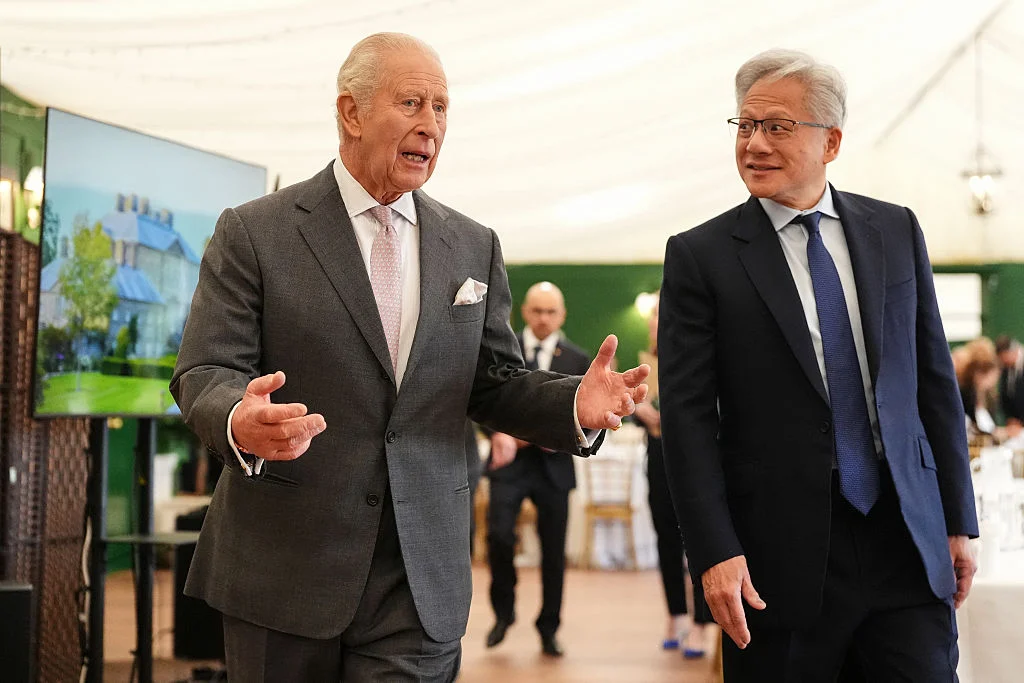
In a rare and significant intervention, King Charles III convened a high-profile private summit at Dumfries House in Scotland on Thursday, bringing together some of the most influential figures in artificial intelligence and key members of the UK government. The gathering, which saw leaders from tech giants like Nvidia, OpenAI, and Anthropic engage in discussions alongside the UK’s new AI Minister, Kanishka Narayan, and even the head of the UK’s foreign intelligence service, underscored the growing global concern over the rapid advancement and potential implications of AI. Notably, Paolo Benanti, a Vatican advisor on AI, was also in attendance, highlighting the interdisciplinary and international nature of the AI discourse.
The King’s address at the summit was particularly noteworthy, given the Royal Family’s traditional adherence to constitutional neutrality on deeply political matters. Artificial intelligence, however, has emerged as one of the most pressing and complex issues of our time, prompting His Majesty to step into the fray. He issued a stark warning, urging the assembled leaders to find immediate and effective ways to control AI, stating, "before it’s too late." The King articulated a profound duality in his assessment of the technology, describing its rapid development and its "substance" as "both intriguing and deeply concerning."
His Majesty elaborated on the dual nature of AI, acknowledging its immense potential for good. "AI is already showing immense capacity to improve and save life," he stated, citing advancements in medicine and science as prime examples. However, he immediately pivoted to the darker potential, noting, "Yet those who have created these technologies are now increasingly warning that AI risks developing darker capacities, perhaps even to take life." This sentiment echoed recent public anxieties, including the resignation of an Anthropic researcher who voiced grave concerns online about companies "racing to build machines that are much smarter than any human," warning that "humanity may not survive this."
The King continued his urgent plea, emphasizing the critical need to proactively consider the "existential dangers" that could arise if AI technology were to fall into the wrong hands or be deployed in "potentially catastrophic ways." He posed a direct rhetorical question to the room of innovators and policymakers: "Surely, we need sufficient means of control before it’s all too late?" As his remarks concluded, King Charles implored the leaders to not only harness the beneficial aspects of AI but also to foster international cooperation and build a global consensus to achieve this crucial objective. This call for collaboration comes at a time when the AI landscape is increasingly fragmented, as evidenced by Anthropic’s recent decision to restrict access to its Fable and Mythos models to U.S. customers only. This move, which reportedly shocked the European tech scene, has intensified discussions around the concept of "AI sovereignty" and the potential for geopolitical divides in AI development and access.

Concluding his speech, His Majesty articulated a vision for responsible AI development, stating, "The task before you is not to merely advance technology, but to ensure that it remains firmly in the service of humanity, community, and the natural world." He offered a poignant reminder for the path forward: "As we embrace what is new, we must not lose what is timeless."
Sources indicate that King Charles remained at the summit for approximately 20 minutes, allowing the distinguished guests to continue their deliberations amongst themselves. The high caliber of attendees signaled the seriousness with which the summit was regarded. OpenAI was represented by its Chief Financial Officer, Sarah Frair, while Anthropic sent Tino Cuéllar, who heads the company’s global affairs. In a statement following the event, Cuéllar expressed gratitude, saying the company was "honored to have taken part in the discussion and that it was grateful to the King for ‘convening industry leaders and voices from across society to discuss the role of AI in serving the public good.’"
This is not the first time King Charles has publicly addressed the complex challenges and profound benefits associated with artificial intelligence; he has spoken on the subject in previous years, including in 2023 and 2024. However, this particular summit is exceptionally timely. AI continues to permeate every industry, dominate global discourse, and reshape the very fabric of society. The urgency of the King’s message is underscored by recent developments in the AI sector. Earlier this month, prominent figures such as OpenAI’s Sam Altman and Anthropic’s Dario Amodei, along with Elon Musk, publicly called for a deceleration in AI development due to safety concerns. This plea, however, was met with swift opposition from figures like Nvidia’s Jensen Huang and former President Donald Trump. Huang, a pivotal figure in AI hardware, has been a vocal proponent of continued innovation, while President Trump articulated a nationalistic perspective, stating, "We’re leading China in AI. We’re the most sophisticated country in the world, and frankly I want to keep it that way because whoever wins AI, wins." This stark contrast in viewpoints highlights the intricate web of competing interests – from Big Tech’s drive for innovation and market dominance to geopolitical ambitions and societal safety – that now defines the AI landscape.
The tension between rapid advancement and safety concerns is also having tangible impacts on the business side of AI. For the past year, both OpenAI and Anthropic have been rumored to be preparing for blockbuster Initial Public Offerings (IPOs). However, OpenAI recently indicated that its IPO plans have been postponed for the current year, citing persistent concerns over AI safety as a significant factor. This decision reflects a growing awareness within the industry that the ethical and safety dimensions of AI are no longer secondary considerations but critical determinants of future growth and public trust.
The gathering at Dumfries House, with its blend of technological pioneers, government representatives, and even religious advisors, signifies a critical juncture in the global AI narrative. It underscores a growing recognition that the development of artificial intelligence is not merely a technical endeavor but a profound societal challenge that demands broad collaboration, ethical foresight, and robust regulatory frameworks. The King’s intervention, rooted in his unique position, serves as a powerful reminder of the imperative to guide this transformative technology towards a future that benefits all of humanity, while diligently mitigating its potential perils. The discussions held within the historic walls of Dumfries House are likely to reverberate through the ongoing global debate about how to responsibly navigate the age of artificial intelligence, ensuring that progress is aligned with human values and long-term well-being. The diverse representation at the summit, from the creators of cutting-edge AI models to the stewards of national security and policymakers, indicates a nascent, yet vital, effort to forge a unified approach to one of the 21st century’s most defining technologies. The weight of these conversations, amplified by the King’s personal engagement, suggests a heightened sense of urgency to move beyond theoretical discussions and towards concrete actions that can shape the trajectory of AI development for generations to come. The challenge ahead is immense, requiring a delicate balance between fostering innovation and implementing safeguards, a task that the attendees at Dumfries House are now tasked with collectively confronting.
