
 By Rifan Muazin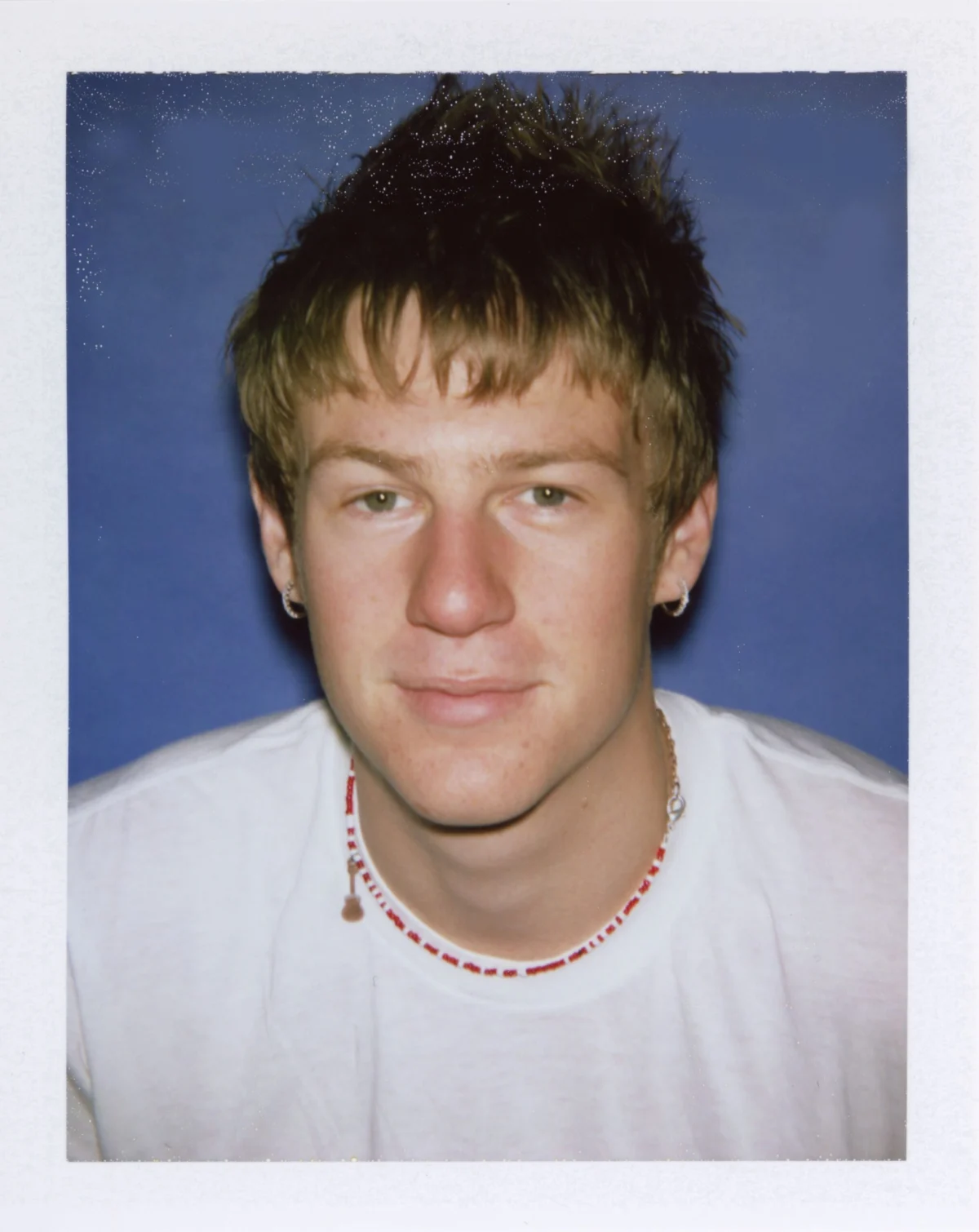
In the contemporary landscape of indie-pop, where the line between high-fashion curation and DIY authenticity is increasingly blurred, Malcolm Todd has emerged as a quintessential figurehead of the "studied nonchalance" movement. At 22 years old, the singer-songwriter has mastered a visual brand that is as much about what is missing—namely, a shirt and a comb—as it is about what is present. To the casual observer, Todd often appears as though he has quite literally just rolled out of bed, a look characterized by a perennial state of undress and hair that seems to have a permanent relationship with a pillowcase. However, this aesthetic is far from accidental. It is a meticulously crafted persona, anchored by a specific "Britpop-style mod cut" that has become a focal point of his identity, from his high-energy performance on The Tonight Show to his starring role in a major Gap campaign.
The architect behind this specific look is Yuhei Nerome, a professional barber and stylist who operates under the moniker Nero. Having worked with Todd for over a year, Nero has witnessed the artist’s evolution through various grooming phases, including the severe minimalism of a buzzcut and the shaggier, retro-inspired "fashion shag." The current iteration, which Todd settled on recently, is a modern interpretation of the classic British mod cut, a style that traces its lineage back to the 1960s London subcultures and the 1990s Britpop explosion. According to Nero, the design brief from Todd was deceptively simple: he wanted a hairstyle that would look effortlessly great the moment he woke up, requiring zero maintenance while maintaining a sharp, stylistic edge.
"It’s a short layer, textured haircut," Nero explains when breaking down the technical aspects of the look. "So basically, when he just wakes up, he looks great. It’s got a nice texture to it because it’s a little bit spikier." This "spikiness" is not the rigid, gel-heavy look of the early 2000s, but rather a soft, directional texture that allows the hair to move naturally while retaining a structured silhouette. The "mod" element comes from the forward-sweeping fringe and the layered volume at the crown, a look famously championed by figures like Paul Weller or the Gallagher brothers, but softened for a Gen Z audience that favors fluidity over rigid masculinity.
Todd’s commitment to this look was on full display during his June performance on The Tonight Show Starring Jimmy Fallon. Eschewing the traditional polished attire usually seen on late-night television, Todd opted for his signature topless look, allowing his textured hair to serve as his primary accessory. This appearance served as a massive catalyst for public interest in his grooming routine. On platforms like Reddit, dedicated threads have emerged with users dissecting the "Malcolm Todd cut," sharing reference photos, and seeking advice on how to communicate the specific layering technique to their own barbers. Recognizing the demand, Todd even took to TikTok earlier this year to host a live stream specifically dedicated to his hair. During the broadcast, he provided a 360-degree view of the cut, ensuring his followers could see exactly how the layers were stacked and how the back was tapered to achieve that specific "messy but intentional" vibe.
The visual branding of Malcolm Todd is intrinsically linked to his musical output. He occupies the "bedroom indie pop" genre—a sound characterized by lo-fi production, dreamy synth textures, and a general sense of intimacy and vulnerability. The "bedhead" look is a literal and figurative representation of this genre. It suggests that the music, like the artist, was created in a private, unpolished space, free from the sanitization of major-label over-processing. By maintaining a hairstyle that looks like he just woke up, Todd signals to his audience that he is "one of them"—a relatable, "cute-boy" figure who prioritizes vibes over vanity.
This relatability, however, is being leveraged by some of the biggest names in global retail. Todd’s inaugural Gap campaign is a testament to the commercial viability of his "unkempt" aesthetic. In the campaign imagery, Todd’s hair is shown in various states of stylish disarray, complementing the brand’s focus on casual, everyday wear. In a recent interview with GQ, Todd reflected on his current hair journey, noting that his embrace of natural growth was heavily influenced by "cute" British guys—a nod to the UK’s long history of blending rock-and-roll grit with boyish charm. "I don’t think my hair’s supposed to be long," Todd told GQ, "and I don’t feel like my hair’s obviously supposed to be completely bald." This middle-ground—the textured mod cut—represents a sweet spot of personal identity.

The relationship between Todd and Nero began when the artist, who is the brother of pop sensation Audrey Hobert, was still sporting a buzzcut. At that stage, Nero’s role was limited to shaping the hairline and maintaining a clean perimeter. However, as Todd’s career began to accelerate, he felt the need for a more expressive look. The transition from a buzzcut to a mod cut is a significant stylistic shift, requiring a "growing out" phase that can often be awkward. Nero guided Todd through this process, eventually landing on the short-layered fringe that now defines him.
To achieve the look, Nero utilizes a specific styling technique that prioritizes "grip" and "matte finish" over "hold" and "shine." He uses a dry texture hair paste, which he is currently developing as part of his own professional haircare brand scheduled for release in December. The product is applied to damp or dry hair and pushed forward to create a messy, textured fringe. The rest of the hair is "zhuzhed"—a term for manual ruffling to add volume and break up uniform clumps—and then allowed to fall naturally. This method ensures that the hair doesn’t look "done," but rather like it has naturally settled into a perfect state of chaos.
From a broader cultural perspective, Todd’s hair represents a shift in men’s grooming trends. For much of the 2010s, the "undercut" and the "fade" dominated, characterized by sharp lines and high-contrast transitions. In the 2020s, influenced by the resurgence of 70s and 90s fashion, there is a move toward longer, more organic shapes. The "modern shag" and the "Britpop mod" are at the forefront of this movement. These styles require more technical skill from a barber than a standard fade because they rely on internal layering and weight removal to create movement.
The "shirtless" aspect of Todd’s branding also deserves analysis. By frequently appearing topless—whether on national television or in fashion campaigns—Todd emphasizes a sense of raw, unfiltered youth. It reinforces the "bedroom" aspect of his music, suggesting a level of comfort and domesticity that resonates with a generation that spent significant formative years in lockdown. His torso and his hair become the canvas for his brand, replacing the need for elaborate costumes or high-fashion garments. It is a minimalist approach to stardom that relies heavily on personal charisma and a very specific haircut.
The digital footprint of this hairstyle cannot be overstated. In the age of the "TikTok hairstyle," where looks like the "broccoli cut" or the "wolf cut" can define entire subcultures, Todd has successfully claimed a niche. His 360-degree TikTok reveal was a savvy piece of fan engagement, recognizing that for his audience, the "how-to" is just as important as the "what." It demystifies the celebrity image, inviting fans to participate in the aesthetic rather than just admire it from afar.
As Nero prepares to launch his own haircare line in December, the "Malcolm Todd effect" will likely serve as a powerful marketing tool. The dry texture paste, designed specifically to replicate the matte, spiky, yet soft look of Todd’s hair, speaks to a growing market of men who want to look like they haven’t tried at all. The success of this collaboration lies in its authenticity; Todd isn’t just a client of Nero, but a living billboard for a specific lifestyle and grooming philosophy.
In conclusion, Malcolm Todd’s Britpop-style mod cut is more than just a haircut; it is a strategic element of a larger cultural brand. It bridges the gap between the rebellious spirit of 60s London and the digital-native intimacy of 2024 bedroom pop. Through the expert hands of Nero, Todd has found a way to weaponize "bedhead," turning a state of disarray into a signature look that is currently influencing fashion campaigns, social media trends, and the grooming habits of young men across the globe. Whether he is performing for millions on The Tonight Show or appearing on a billboard for Gap, Todd’s hair remains a constant—a perfectly textured, intentionally messy reminder that in the world of modern pop, looking like you just woke up is the ultimate power move.
