
 By admin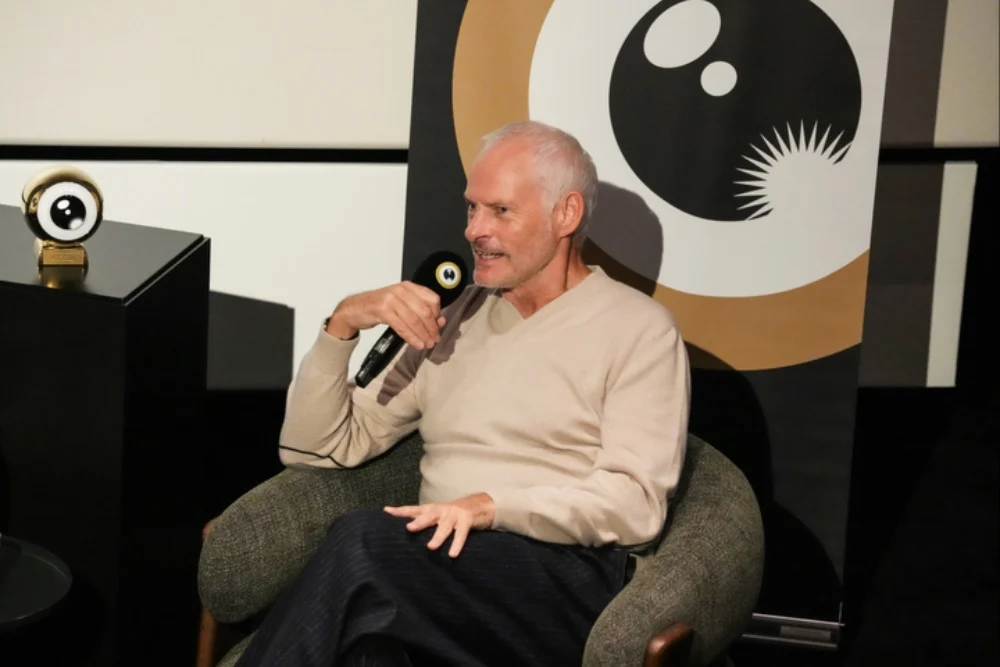
Filmmaker Martin McDonagh, celebrated for his darkly comedic and often morally ambiguous narratives, has announced his latest venture, "Wild Horse Nine," a film he boldly declares to be his most political to date. Speaking at the prestigious Zurich Film Festival, where he was honored with a Tribute to… Award, McDonagh expressed a palpable excitement about releasing this "monster into the world," underscoring his deliberate departure from what he perceives as an excess of artistic neutrality in contemporary cinema. "I feel like, in the modern day, there’s perhaps a little too much artistic neutrality, or too much saying nothing, not having an opinion or being apathetic. I’m excited to be doing the opposite with this one," he stated, articulating a desire to engage audiences with challenging and opinionated storytelling.
"Wild Horse Nine" plunges into a narrative set against the backdrop of Easter Island, just prior to the 1973 Chilean coup. The film features a compelling duo of CIA agents, portrayed by the esteemed John Malkovich and the versatile Sam Rockwell. Despite its historical setting, McDonagh highlighted the film’s surprising and potent contemporary relevance. He elaborated on how the echoes of past interventions resonate powerfully with current global events, noting, "So many things in the present day mirror a lot of those types of interventions in the past. You can actually hear lines that I thought were about 1973 being interpreted by a modern audience as being about Venezuela a few months ago or other places around the world." This uncanny parallel extends to even more specific historical allusions, as McDonagh pointed out, "The Russia jokes in the film are about their interventions in Finland 100 years ago, but we connect them to Ukraine now. I love that it has a resonance I wasn’t necessarily aware of in the writing of it." This layered commentary, where historical narratives inform and illuminate present-day geopolitical complexities, is a hallmark of McDonagh’s increasingly incisive approach to filmmaking.
McDonagh’s reflections on his artistic journey, shared during a masterclass at the festival, provided a rich tapestry of his evolution as a storyteller. His early departure from formal education at the age of sixteen, fueled by a nascent aspiration to be a writer and a distinct aversion to conventional employment, laid the groundwork for a career defined by independent spirit. "I left school very young, at 16, and was unemployed for a long time. But with the hopes of being a writer. Part of that was not wanting to have a real job or a boss. That has remained with me until now," he confessed. This period of unemployment was not one of idleness but of fervent creative pursuit, as he dedicated himself to crafting radio plays. Despite facing numerous rejections, primarily from the BBC, McDonagh maintained a remarkable resilience, stating, "Mostly by the BBC. But I don’t bear a grudge." This early struggle, rather than diminishing his ambition, seemingly forged a stronger resolve, paving the way for his eventual acclaim as a playwright.
His theatrical works are characterized by a kinetic energy and a willingness to push the boundaries of what is typically presented on stage. McDonagh explained this theatrical exuberance by drawing a direct line to his cinematic influences: "As a film fan, I put all that into the energy of the plays. Things would happen that you wouldn’t usually see on stage. Like cats exploding [in ‘The Lieutenant of Inishmore’]." This theatrical daring was profoundly influenced by a formative experience witnessing Al Pacino’s performance in David Mamet’s "American Buffalo." McDonagh vividly recalled the impact of that evening: "I can still remember it to this day. He just came on stage and blew the whole theater away. It was this combination of a play, full of energy and swearing, amazing dialogue and this movie star who, well, you’d realize what acting really was when he was on stage." This potent blend of raw energy, sharp dialogue, and magnetic performance became an aspirational benchmark for his own creative endeavors.
Despite his success in film, McDonagh maintains a writing process that remains fundamentally untethered to the demands of the camera. "I still writes ‘without the camera in mind,’ but he enjoys the freedom of writing scripts," he stated, likening his current creative state to a period of recalibration. "It’s like when you don’t go to the gym for a long time; that’s where my theater brain is at the moment. But the muscle memory is still there." The transition from the stage to the silver screen was not without its challenges, and McDonagh admitted that adversity often served as a catalyst. "The bad rejections that really inspired me. Maybe I thrive not on encouragement, but anger," he confessed. Yet, this period of struggle ultimately bore fruit, culminating in the Academy Award win for Best Live Action Short Film for his 2004 short "Six Shooter."
The creation of "Six Shooter" was an intensely formative experience, marked by significant artistic pressure. McDonagh described it as "probably the scariest situation I’ve been in artistically." He attributed the successful navigation of this daunting project to the unwavering support of actor Brendan Gleeson, who "protected me from any interference. I couldn’t have done it without his help and guidance." This collaborative synergy was rekindled in his critically acclaimed 2008 film, "In Bruges," which reunited him with Gleeson and also starred Colin Farrell. The film, a darkly comic tale of two hitmen hiding out in Bruges after a botched mission, further solidified McDonagh’s reputation for blending brutal subject matter with laugh-out-loud humor. McDonagh playfully alluded to his own past experiences, quipping, "I used to be a hit man. People don’t know that. They thought it just was plays and then films. It was plays, killing and then films." His inspiration for "In Bruges" stemmed from an unexpected personal experience: "I went to Bruges not knowing anything about it. I was supposed to meet a girl on the second night, and she didn’t turn up. It was this combination of thinking it was the most cinematic, undiscovered town I’d ever seen, and being bored as hell and just wanting to get drunk and get out of there."
Again, McDonagh found invaluable protection from the pressures of filmmaking in his lead actors. "Colin and Brendan were great partners in protecting me from any interference from the grown-ups. Who aren’t usually grown up; they’re children with a lot of money. It’s the nature of Hollywood," he remarked with a characteristic blend of wit and candid observation, adding with a mischievous grin, "I’m going to get in so much trouble. It’s good that it’s not being filmed, right?" This sentiment highlights his ongoing commitment to artistic integrity and his resistance to the commercial pressures often associated with the film industry.
A notable evolution in McDonagh’s recent work is the increasing emphasis on deeper emotional landscapes and a willingness to explore more contemplative and tragic themes, moving beyond mere stylistic coolness. He explained this shift: "I’ve tried to make sure that the films aren’t just about being cool. They’re about something deeper, and I guess more tragic. I’m leaving room for more contemplative scenes where the characters are on their own and it’s not funny. They’re left to think about their lives or dwell on their regrets." This approach was evident in Frances McDormand’s portrayal of the grieving mother Mildred Hayes in "Three Billboards Outside Ebbing, Missouri," and is now being applied to John Malkovich’s character in "Wild Horse Nine." McDonagh elaborated on the casting of exceptional actors, stating, "When they’re great actors like Frances or John, you see the sadness in their eyes, and you fill in what they’re thinking about. One of the ideas for John’s character was to give him the entire palette of emotions. You know that John can do comedy, he can do rage and he can do contemplative, quiet stuff. But I’m making sure all those things are together in one package."
He further articulated his distinct brand of filmmaking, distinguishing it from conventional Hollywood fare. "None of my films are sort of what I would call ‘Hollywood movies.’ They’re not simple, feel-good stories. When actors of that magnitude who have maybe done some of those films, and know they’re a little empty get to work on something different, it frees them up to show their brilliance." This philosophy allows actors to tap into a broader range of their abilities, unburdened by the constraints of formulaic storytelling.
McDonagh expressed a contentedness with his current professional trajectory, eschewing any desire for larger-scale productions or even greater commercial success. "Weirdly, I’m really happy with the trajectory or the level of films that I’ve made. I don’t want a bigger budget. I don’t even want more success. I just want to continue making films completely free from any interference from anyone. That’s a perfect position to be in," he concluded, emphasizing his ultimate goal of creative autonomy and the unadulterated pursuit of his artistic vision. "Wild Horse Nine" therefore represents not just a new film, but a bold statement of intent from an artist committed to challenging conventions and engaging with the world through his unique and powerful lens.
