
 By admin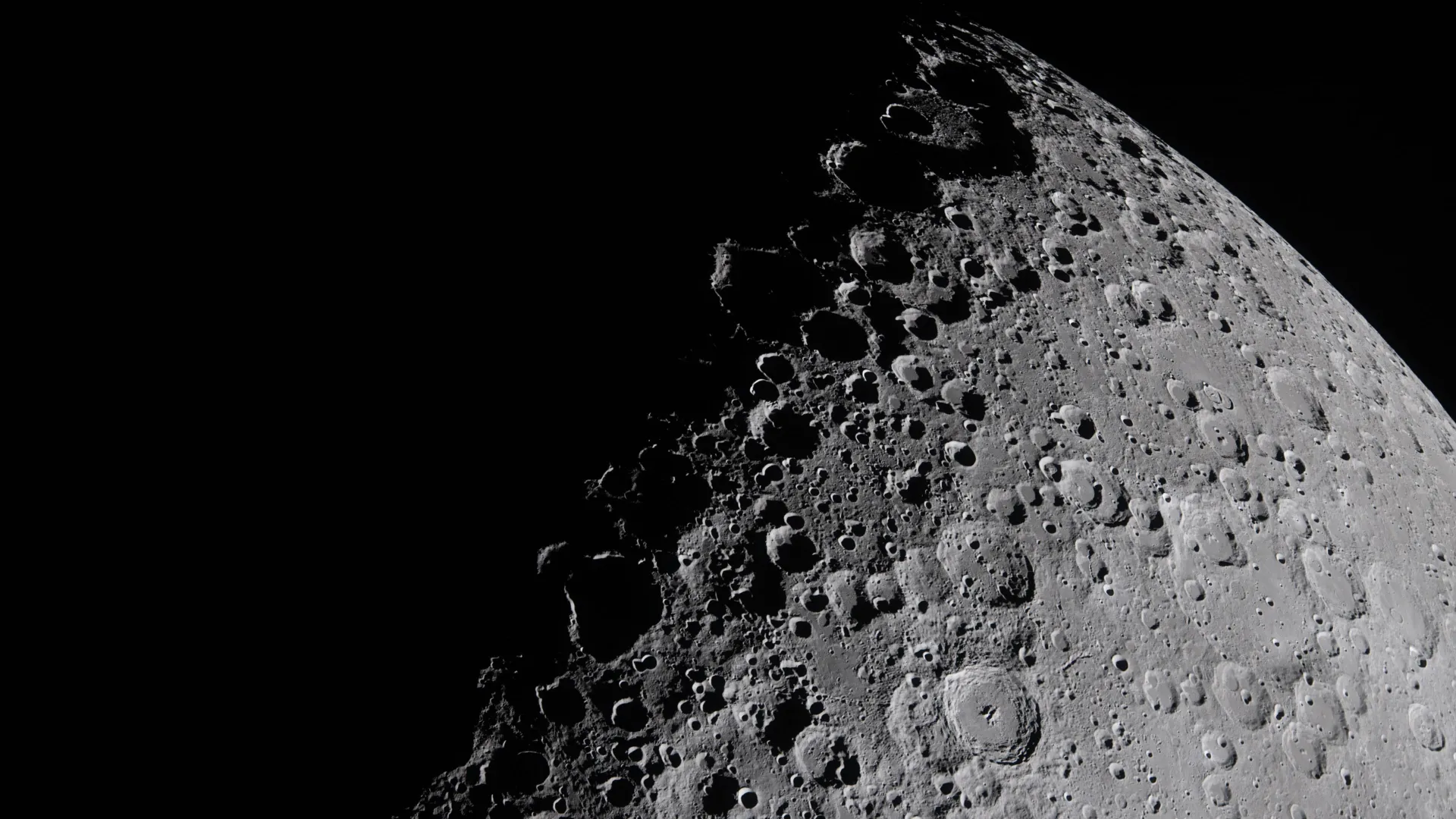
Researchers from the University of Maryland (UMD), Lawrence Berkeley National Laboratory (LBNL), and the University of Hawaii have pioneered a method leveraging seismic waves—the very same type of vibrations scientists meticulously measure during earthquakes on Earth—to pinpoint and map ice deposits concealed beneath the lunar surface. Seismology, the study of the propagation of elastic waves in the Earth’s interior, has been a cornerstone of understanding our own planet’s structure, from its crust to its core. Applying these principles to the Moon represents a significant leap forward in lunar exploration, offering a "subsurface eye" where orbital observations fall short. The Apollo missions famously deployed seismometers on the Moon, revealing details about moonquakes and the lunar interior, but the specific application of seismic analysis for water ice detection is a relatively new and exciting frontier.
These crucial findings, detailed in an article published in the prestigious journal Science Advances on July 31, 2026, arrive at a pivotal moment in space exploration. Global space agencies, most notably NASA with its ambitious Artemis program, are actively preparing for a new era of crewed lunar exploration. The Artemis initiative, with its sights set on returning humans to the Moon, specifically targets the Moon’s south polar region, with crewed missions projected for 2028. This particular area is of immense interest due to the presence of permanently shadowed craters (PSCs), vast, perpetually frigid basins where sunlight never reaches. These extreme cold traps are believed to harbor significant, long-term deposits of water ice, potentially preserved for billions of years.
The strategic importance of lunar ice for astronauts cannot be overstated. If accessible and extractable, this ice could fundamentally transform the logistics and sustainability of lunar outposts. Once melted and purified, it could provide a vital source of drinking water for human crews. Furthermore, through electrolysis—an electrochemical process—the water could be separated into its constituent elements: oxygen for breathing and hydrogen, which, when combined with oxygen, forms a powerful rocket propellant. A reliable, local supply of these essential resources would drastically reduce the massive amount of material that future missions would otherwise need to transport from Earth, a process that is both incredibly complex and prohibitively expensive. Estimates suggest that transporting just one kilogram of payload to the Moon can cost upwards of $1 million, making In-Situ Resource Utilization (ISRU) a cornerstone of sustainable space exploration.
"It’s absolutely crucial to identify any materials on the moon that an astronaut can make use of while they’re up there," emphasized Nicholas Schmerr, an associate professor in UMD’s Department of Geological, Environmental, and Planetary Sciences and a co-author of the study. Schmerr, a seasoned expert in planetary seismology, highlights the shift in philosophy from fleeting visits to establishing a sustained human presence. "Since they will be limited by the few resources they brought from Earth, anything they find on the moon will help them basically live off the land, especially for longer-term missions or outposts." This capability is not just about survival; it’s about enabling a truly self-sufficient lunar economy and potentially serving as a critical stepping stone for even more ambitious deep-space missions, such as human expeditions to Mars.
Despite extensive efforts, scientists still grapple with a significant knowledge gap regarding the exact quantity and precise locations of the Moon’s buried ice. Current methods, primarily relying on orbiting satellites, offer valuable but limited perspectives. Instruments aboard these spacecraft, such as thermal infrared spectrometers and neutron detectors, are highly effective at examining the lunar surface and detecting water-ice signatures in the uppermost layers of soil, or regolith. Missions like Chandrayaan-1’s Moon Mineralogy Mapper (M3) and NASA’s Lunar Reconnaissance Orbiter (LRO) have definitively confirmed the widespread presence of water molecules and ice, particularly in the polar regions. However, these orbital observations typically penetrate only a few centimeters or, at best, a few meters below the surface. Some of the Moon’s most substantial water ice reservoirs are theorized to be buried much deeper, beyond the reach of these remote sensing techniques. The new study posits that seismic measurements offer a critical solution, promising to reveal deposits that orbital observations simply cannot access.
The core principle behind this innovative approach lies in the distinct ways frozen and dry lunar soil respond to seismic waves. Ice, due to its crystalline structure, makes the surrounding material significantly stiffer. This increased rigidity allows seismic vibrations to travel through ice-rich soil two to three times faster than they would through dry, porous regolith. This change in velocity is a primary indicator. Furthermore, ice-rich areas can also reflect seismic energy rather than allowing it to continue propagating through the ground. This phenomenon is akin to how sound waves bounce off a solid wall, producing an echo. According to Schmerr, a strategically placed seismometer on the Moon could detect both these changes: the altered wave speeds and the reflected echoes, providing a comprehensive signature of buried ice.
"We can use seismic waves to not just see whether ice is present but also roughly how much of it there is," Schmerr explained, emphasizing the quantitative potential of the method. By analyzing the precise arrival times of waves, the strength of reflections, and how wave energy dissipates (attenuation), researchers can construct a three-dimensional map of subsurface structures, including the extent and concentration of ice. This capability goes far beyond a simple "yes or no" answer, offering crucial data for mission planners on where to focus resource extraction efforts.
The research team rigorously examined this idea through a powerful combination of three distinct scientific approaches, each contributing a unique piece to the puzzle, thereby bolstering the study’s conclusions.
Lead author Harrison Lisabeth (Ph.D. ’16, geology), a distinguished rock physicist at Lawrence Berkeley National Laboratory and an alumnus of UMD, spearheaded the experimental component. Lisabeth worked with volcanic rock samples from Arizona. This material was chosen because, when crushed, its porous and basaltic composition closely resembles lunar dust, or regolith. He meticulously froze these rock samples and then employed advanced X-ray tomography techniques to observe, in exquisite detail, how ice formed and distributed itself within the tiny pore spaces between individual grains. This micro-scale observation provided fundamental data on how ice physically alters the mechanical properties of a regolith-like material, directly informing the seismic models. The X-rays allowed for non-destructive imaging of the internal structure, revealing how ice effectively "cements" the grains together, increasing stiffness.
In parallel, co-author Matthew Siegler of the University of Hawaii contributed critical contextual data by creating highly detailed temperature models for the Moon’s south polar region. These sophisticated thermal maps, incorporating factors like solar illumination angles, crater topography, and thermal conductivity of the regolith, helped to precisely identify craters and specific areas within them that have remained cold enough—often below -163°C (-261°F)—to preserve water ice in a stable state for billions of years. These models provide the "where" for potential ice deposits, guiding where seismic investigations would be most fruitful.
Finally, at UMD, Schmerr employed cutting-edge computer simulations to model the propagation of seismic waves through underground deposits of lunar ice. These simulations, often utilizing finite-element or finite-difference methods, mimicked various scenarios, from small moonquakes—generated by thermal stresses, meteoroid impacts, or even artificial sources—traveling through different configurations of buried ice (varying depths, thicknesses, and concentrations). Across all three disparate but complementary approaches—laboratory rock physics, thermal modeling, and computational seismology—the presence of ice consistently produced distinct and unequivocally measurable changes in the seismic results. This convergence of evidence from multiple methodologies significantly strengthens the confidence in the proposed detection technique.
Beyond its immediate utility for astronaut sustainment, lunar ice holds profound scientific value, potentially containing important evidence about the early solar system. Deeply shadowed lunar craters, acting as natural "cold traps," can preserve water and other volatile materials for extraordinarily long durations, shielding them from the harsh solar wind and vacuum of space. Given that the surrounding lunar rocks are approximately four billion years old, the ice preserved within these craters could be equally ancient, offering an unprecedented, pristine record of how water and other volatiles were delivered to the inner solar system during its formative period.
"The moon witnessed some of the most critical parts of the early solar system, including how water was delivered," Schmerr noted, underscoring the Moon’s role as a cosmic time capsule. "Studying the ice deposited there could reveal how water spread and ultimately how Earth’s oceans formed." Understanding the isotopic composition of this lunar ice—particularly the deuterium-to-hydrogen (D/H) ratio—could provide crucial clues, helping scientists differentiate between various proposed sources of water, such as comets, asteroids, or even solar wind interactions. This information is vital for piecing together the complex puzzle of planetary habitability and the origins of life-sustaining water on Earth.
The researchers’ theoretical predictions may soon transition from hypothesis to tangible data, as upcoming lunar missions present exciting opportunities to compare their models with real measurements from the Moon.
China’s Chang’e-7 mission, an ambitious lunar south pole exploration endeavor, is expected to land near the Shackleton Crater in late 2026. This sophisticated mission will carry a suite of scientific instruments, including a seismometer. Shackleton Crater is a prime candidate for significant ice deposits, and the proximity of Chang’e-7’s seismometer to suspected ice reservoirs offers a unique chance to test the seismic detection method. Data from this mission could provide the first in-situ seismic confirmation of subsurface ice, validating the team’s research.
Similarly, NASA’s Artemis astronauts are slated to deploy the Lunar Environmental Monitoring Station (LEMS) as early as 2028. LEMS is designed for long-term monitoring of the lunar environment, and critically, it includes instruments for seismic exploration. Schmerr himself played a significant role in the development of this instrument, ensuring its capabilities are well-suited for probing the lunar subsurface. The deployment of LEMS by human astronauts offers a direct and powerful means to conduct targeted seismic surveys in areas of high interest for ice, potentially establishing a network of seismometers for more comprehensive mapping.
"Our findings are laying the groundwork for an observation we’ll get in the next couple of years," Schmerr concluded with palpable anticipation. "No one has physically measured the ice on the moon yet, but we now have a prediction for what to look out for. That’s an important first step." This research provides not just a scientific breakthrough but a practical guide for the next generation of lunar explorers, illuminating a path to unlock the Moon’s frozen secrets for both human benefit and the advancement of fundamental scientific knowledge.
This pioneering research was made possible through vital funding from the U.S. Department of Energy Office of Science, Office of Basic Energy Sciences, Chemical Sciences, Geosciences, and Biosciences Division (Contract No. DEAC02-05CH11231), and the NASA Solar System Exploration Research Virtual Institute CLEVER project (Grant No. GR00024738) and GEODES project (Grant No. 80NSSC19M0216). It is important to note that this article does not necessarily reflect the views or official positions of these organizations.
