
 By Titik Puspa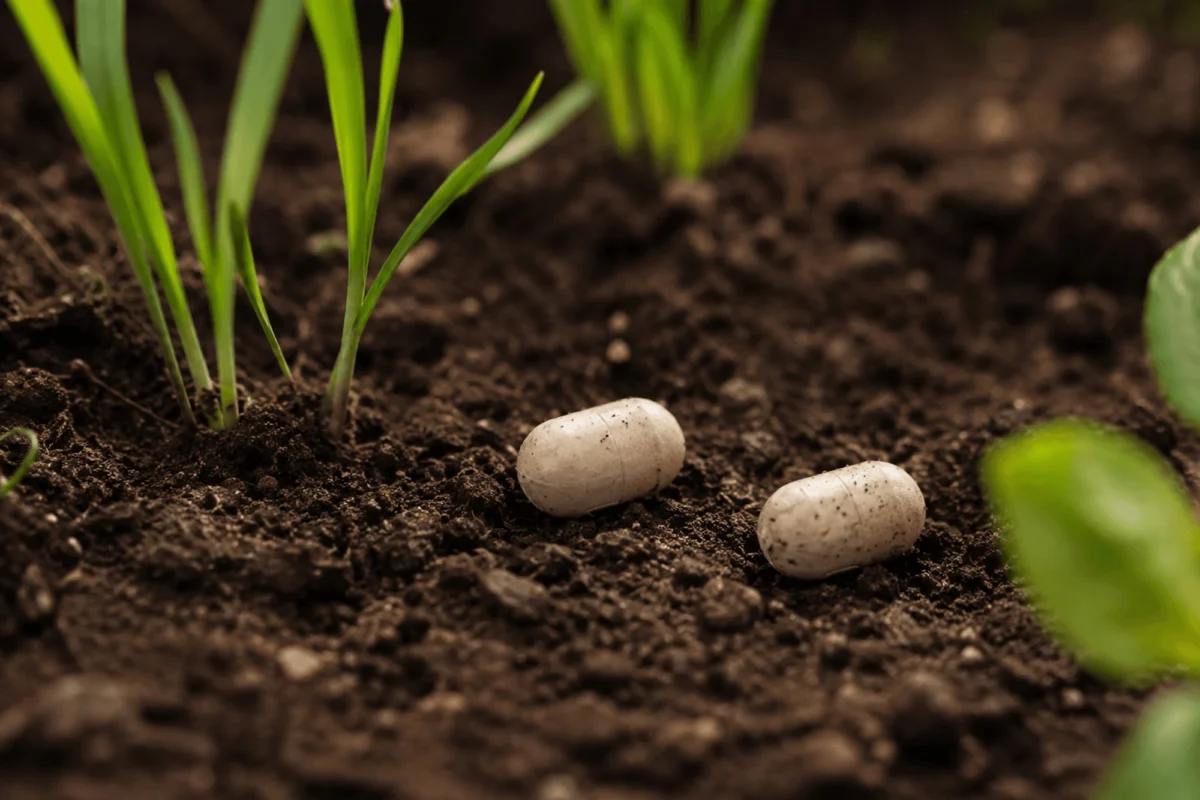
Farmers across the globe are grappling with a significant economic challenge: the very equipment designed to cultivate their land is eroding their profitability. The relentless use of heavy machinery for tilling, planting, and harvesting leads to a pervasive issue known as soil compaction. This squeezing of soil particles not only diminishes the soil’s ability to hold water and nutrients but also impedes root growth, creating a hostile environment for crops. Studies have painted a stark picture of the consequences, with research indicating that soil compaction can slash agricultural yields by a staggering 20% to an alarming 60%. While traditional plowing methods offer a temporary reprieve by loosening the soil, they come at a substantial cost – both financially and environmentally. Plowing is an arduous and expensive undertaking, requiring significant fuel, labor, and maintenance for machinery. Moreover, it disrupts the delicate soil ecosystem, leading to increased erosion, loss of organic matter, and a reduction in beneficial microbial activity, ultimately degrading soil health over time.
Enter Muju Earth, a pioneering agritech startup that is challenging the status quo with its innovative solution: the Aeropod. This novel device offers a revolutionary approach to soil aeration, eliminating the need for heavy machinery and complex robotics. The Aeropod is designed to work in harmony with the natural sowing process, promoting healthier soil while promising to slash farmers’ tilling costs by half, or even more. Ifeoluwa Afolayan, the co-founder and CEO of Muju Earth, describes the Aeropod’s ingenious design with a simple yet profound analogy: "It is built like a seed, it sows like a seed, and it ships like a seed." This elegant simplicity is at the core of its disruptive potential.
The Aeropod itself is remarkably small, about the size of a fingernail, allowing farmers to integrate it seamlessly into their existing operations. It is sown directly into the soil alongside the seeds using the same planting equipment, eliminating the need for any pre-tilling. This means that farmers can proceed with planting without the labor-intensive and costly preparatory steps of plowing. "It just really seems like a no-brainer," Afolayan enthusiastically told TechCrunch, highlighting the intuitive appeal and straightforward benefits of the technology.
The magic of the Aeropod lies in its self-activating mechanism. Once deployed in the soil, it responds to a combination of natural environmental factors: temperature, pressure, and moisture. Upon encountering these specific conditions, the Aeropod undergoes a controlled expansion, bursting open. This process effectively loosens the surrounding soil, creating a network of micro-channels. These channels are crucial for improving the soil’s structure, allowing vital elements like air, water, and plant roots to penetrate more easily and efficiently. This enhanced permeability directly combats the negative effects of soil compaction, fostering a more conducive environment for crop growth.
Muju Earth’s groundbreaking Aeropod technology is set to make its debut on a larger stage as one of the 200 startups selected to participate in this year’s TechCrunch Startup Battlefield at TechCrunch Disrupt in San Francisco this October. While the company has already conducted successful laboratory tests, it is now embarking on its first paid field trials this fall in the United Kingdom. The initial trials involve nine farmers who are actively participating, and the demand is already outstripping supply, with over 30 additional farmers on a waitlist eager to experience the benefits of the Aeropod.
The startup has strategically identified onion growers in the UK as its initial target market. This focus is driven by the specific vulnerability of onions to soil compaction. Onions require a loose, well-aerated soil structure for optimal bulb development and to prevent issues like root rot and misshapen bulbs, making them particularly sensitive to the detrimental effects of compacted soil. By addressing this critical need, Muju Earth aims to provide a tangible and immediate solution for a segment of farmers facing significant yield losses due to soil conditions.
The economic advantages of the Aeropod are compelling. Afolayan shared insights into the current costs of traditional tilling practices, estimating that tilling a field once can cost between £250 to £400 per hectare. This figure accounts for a multitude of expenses, including labor, diesel fuel for tractors, and the wear and tear on expensive farming equipment. In stark contrast, the Aeropod is projected to deliver comparable or superior results at a fraction of the cost, with an estimated expense of just £100 per hectare. This significant cost reduction represents a substantial boost to farmers’ profit margins, freeing up capital that can be reinvested in other aspects of their operations or simply improving their bottom line.
The genesis of the Aeropod can be traced back to the innovative minds of Afolayan and her co-founder, Wangyang Hu, during their time at Imperial College London. Their research was fueled by a dual objective: to enhance farmers’ financial well-being and simultaneously promote the health of the soil. The driving force behind their development process was a singular, guiding question: "How do you make this as simple as sowing a seed?" Afolayan elaborated on the profound implications of this question, stating, "That’s the most equitable practice across every farmer on the planet." This focus on simplicity and universal accessibility underscores Muju Earth’s commitment to creating a solution that can benefit farmers of all scales and in diverse geographical locations. The vision is to democratize soil health improvement, making advanced techniques available to everyone, regardless of their technological infrastructure or resource limitations.
Beyond its direct application for farmers, the Aeropod has also garnered interest from companies developing biologic amendments. These are innovative products, often containing beneficial microbes, that are added to soil to enhance or replace traditional chemical fertilizers. These biological solutions typically perform at their best in well-aerated soils. Consequently, companies in this burgeoning field are keen to explore partnerships with Muju Earth, recognizing the synergistic potential of combining their advanced biological products with the soil-loosening capabilities of the Aeropod. This collaboration could lead to more effective and sustainable agricultural practices, further reducing reliance on chemical inputs and improving overall soil vitality.
Interestingly, Afolayan notes that the adoption of Aeropods has largely been driven by farmers themselves. The marketing efforts to date have been predominantly inbound, with farmers actively seeking out Muju Earth after hearing about the technology. "The best thing about Aeropod is that the farmers intuitively understand the proposition," she commented, emphasizing the clear and immediate value proposition that resonates with the agricultural community. This organic adoption is a testament to the genuine need for such a solution and the clear benefits it offers to those on the front lines of food production.
Muju Earth’s participation in the TechCrunch Startup Battlefield is a significant milestone. This prestigious competition is a platform for 20 promising startups to present their innovations on the main stage at TechCrunch Disrupt, attracting investors, industry leaders, and media attention from around the globe. Being selected as one of the 200 startups signifies a strong validation of Muju Earth’s potential to disrupt the agricultural technology landscape. The competition offers a unique opportunity to showcase the Aeropod’s capabilities, secure crucial funding, and build strategic partnerships that will accelerate its growth and impact.
The implications of Muju Earth’s Aeropod extend far beyond cost savings and yield increases. By reducing the reliance on heavy machinery and promoting healthier soil structures, the Aeropod contributes to a more sustainable and regenerative agricultural model. Improved soil health leads to increased carbon sequestration, reduced greenhouse gas emissions associated with machinery use, and enhanced water retention, which is increasingly critical in an era of climate change and water scarcity. The technology aligns with the growing global movement towards regenerative agriculture, which prioritizes soil health and ecological balance, aiming to create food systems that are not only productive but also environmentally responsible and resilient. The shift from intensive tillage to methods that preserve and enhance soil structure is a fundamental pillar of this movement, and the Aeropod offers a practical and accessible tool to facilitate this transition.
The journey from concept to commercialization is often fraught with challenges, but Muju Earth’s innovative approach and the clear market demand suggest a promising future. The company’s commitment to simplicity, affordability, and effectiveness positions the Aeropod as a potential game-changer in the agricultural sector. As field trials expand and the technology gains wider adoption, Muju Earth could very well be at the forefront of a new era in farming, one that prioritizes both profitability and planetary health, proving that innovation can indeed sow the seeds of a more sustainable and prosperous future for agriculture. The company’s ability to address a fundamental pain point for farmers – the detrimental impact of equipment on soil health and profitability – through a simple, seed-like innovation is a powerful testament to its disruptive potential. The global agricultural community will undoubtedly be watching Muju Earth’s progress with keen interest.
