
 By admin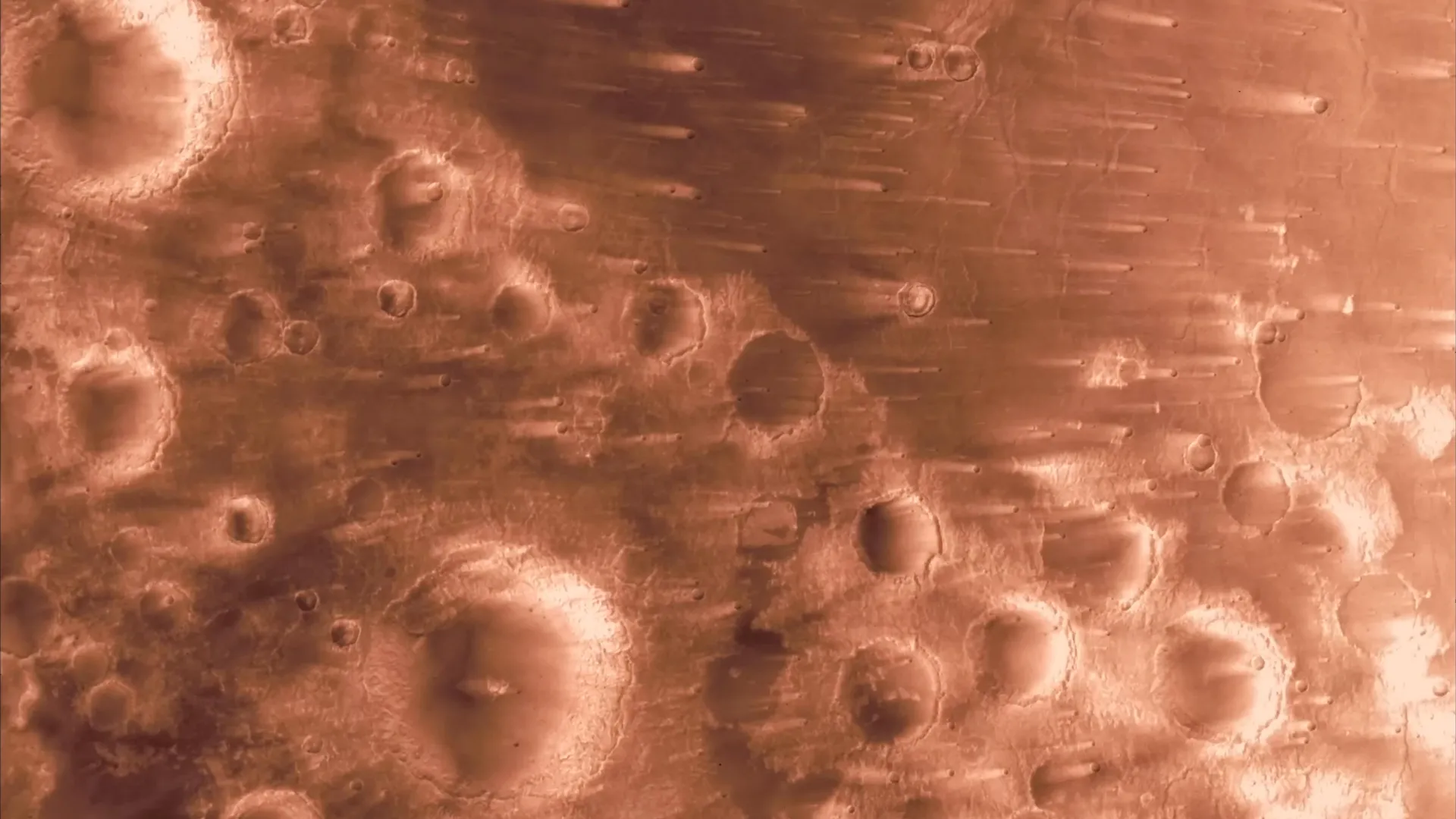
The close encounter occurred on May 15, when the Psyche spacecraft strategically utilized Mars’ powerful gravitational pull to increase its velocity and make a subtle yet critical adjustment to its heliocentric path. This celestial slingshot effect is a fundamental technique in interplanetary travel, allowing missions to conserve precious propellant and achieve higher speeds than would be possible through continuous engine firing alone. The precision of this gravitational assist was paramount, as it placed Psyche squarely on the optimized trajectory required to intercept its unique, metal-rich target situated within the main asteroid belt, nestled between the orbits of Mars and Jupiter. This successful execution underscores the extraordinary capabilities of NASA’s navigation teams, who planned and implemented the maneuver years in advance.
Beyond the critical navigational aspect, the Mars flyby offered mission scientists an unparalleled chance to put the spacecraft’s scientific payload through its paces in a real-world, dynamic space environment. Mars, being one of the most extensively studied planets in our solar system, served as an ideal "practice target" for the advanced instruments that will eventually be tasked with unraveling the mysteries of asteroid Psyche. The data streamed back to Earth immediately after the flyby confirmed that all instruments performed not only as expected but excelled, delivering results that largely matched established knowledge about Mars while simultaneously adding several novel and useful observations from the spacecraft’s unique viewing geometry. This successful validation is a crucial step in ensuring the instruments are fully prepared for the unprecedented scientific investigations awaiting them at asteroid Psyche.
"The mission’s imager, magnetometer, and gamma-ray and neutron spectrometer teams worked overtime to make full use of this planetary encounter, and all instruments delivered great results," affirmed Lindy Elkins-Tanton, principal investigator for Psyche at the University of California, Berkeley, highlighting the dedication of the scientific teams. "We didn’t anticipate big discoveries, given how extensively the planet has been studied, but we did complement Mars science with the data we collected through Psyche’s unique perspective." Her comments underscore the dual benefit of the flyby: a navigational success coupled with a valuable scientific rehearsal that added nuanced data to our understanding of Mars.
Psyche Detects Neutrons From Mars: A Spectrometer’s Triumph
One of the most critical instruments tested during the flyby was the gamma-ray and neutron spectrometer (GRNS). At asteroid Psyche, this instrument is designed to play a pivotal role in identifying the chemical elements present in the object’s surface material. This is fundamental to confirming theories about the asteroid’s composition, particularly whether it is indeed the exposed metallic core of a protoplanet. The scientific principle behind GRNS is elegant: when high-energy cosmic rays, omnipresent in space, strike a planetary body’s surface, they transfer energy to the atomic nuclei of the elements present. These excited elements then release secondary particles, specifically neutrons and gamma rays, each at distinct energy levels characteristic of the parent element. By meticulously measuring these unique energy signatures and comparing them with known elemental spectra, researchers can accurately determine the elemental makeup of a celestial body’s surface.
During its closest approach, Psyche passed Mars at an altitude of approximately 2,864 miles (4,609 kilometers). While this distance was too great for the instrument to reliably detect gamma rays emanating from the planet’s surface – which tend to be absorbed more readily over long distances – scientists had carefully predicted that it might still register neutrons escaping from the Martian surface and its tenuous atmosphere. Neutrons, being uncharged particles, can travel further through space before significant attenuation.
"Around the time of Mars closest approach, the neutron spectrometer detected a count-rate enhancement close to what we anticipated. It was very gratifying to see," remarked David Lawrence, the science lead for Psyche’s spectrometer at the Johns Hopkins Applied Physics Laboratory in Laurel, Maryland. "As expected, we didn’t detect gamma rays from Mars, but we put the instrument through its paces, and it performed excellently." This detection of a clear neutron signature from Mars, even from such a distance, provided crucial validation of the GRNS’s sensitivity and operational readiness. It demonstrated the instrument’s capability to discern subtle elemental signatures, a skill that will be indispensable when it begins its detailed analysis of asteroid Psyche’s mysterious surface. The successful test ensures that the GRNS is calibrated and ready to provide unprecedented insights into the potential metallic composition of its primary target.
Measuring Mars’ Magnetic Environment: A Glimpse into Planetary Dynamics
Psyche’s magnetometer, a sophisticated instrument designed to measure magnetic fields, has been continuously operational since the spacecraft’s launch in October 2023. Its overarching purpose is to meticulously study the magnetic field, or lack thereof, of asteroid Psyche. This is a crucial piece of the puzzle in determining if the asteroid could be the exposed metallic core of an ancient planetesimal – an early building block of a rocky planet. The presence of a remnant magnetic field would strongly suggest that Psyche once had a molten, convecting metallic core, akin to Earth’s, which generated a global dynamo.
Throughout its cruise phase, the magnetometer has diligently monitored the ambient magnetic field carried by the solar wind – a continuous stream of charged particles emanating from the Sun. It has also successfully recorded disturbances caused by occasional coronal mass ejections (CMEs) as these energetic eruptions from the Sun swept past the spacecraft. However, the Mars flyby represented a significant milestone: it marked the very first time the instrument measured the distinct magnetic signature of a celestial body other than the Sun.
"As the spacecraft passed close to Mars, the magnetometer saw an intense uptick in magnetic field corresponding to the bow shock region, where the solar wind slams into the planet’s magnetic field," explained Ben Weiss, Psyche’s deputy principal investigator and the magnetometry investigation lead at Massachusetts Institute of Technology in Cambridge. Mars, unlike Earth, does not possess a global intrinsic magnetic field generated by a molten core. Instead, it has a weaker, induced magnetosphere created by the interaction of the solar wind with its ionosphere and remnant crustal magnetism. The "bow shock" is a dramatic boundary formed upstream of Mars where the supersonic solar wind is abruptly slowed and heated as it encounters this obstacle. The "intense uptick" observed by Psyche’s magnetometer precisely characterized this complex interaction, providing a vital calibration point. "This flyby calibration effort validated the instrument’s performance under dynamic conditions while also revealing the fascinating physics of planetary magnetism," Weiss concluded, emphasizing how the test confirmed the instrument’s ability to operate accurately in a rapidly changing magnetic environment, a condition it will likely encounter at Psyche. The data further contributes to our understanding of how planetary bodies interact with the solar wind, even in the absence of a strong internal dynamo.
Rare Images of the Red Planet: A Visual Rehearsal
Psyche’s multispectral imager, comprising two identical cameras, began capturing views of Mars in early May and continued its observations throughout the flyby. These cameras are specifically designed to photograph asteroid Psyche in multiple wavelengths of light, allowing scientists to discern subtle compositional and textural variations across its surface.
Due to the spacecraft’s unique approach trajectory, which resulted in a high-phase angle – meaning the Sun was nearly behind Mars from Psyche’s perspective – the planet initially appeared as a narrow, brilliant crescent. The ethereal glow observed around the limb was created by sunlight scattering through the Martian atmosphere, producing a striking and visually captivating view that is rarely captured by other Mars missions typically orbiting closer to the planet.
As Psyche steadily closed the distance, the cameras meticulously recorded detailed features on the Martian surface. These included fascinating wind-shaped craters, clear views of the planet’s south polar ice cap, and the prominent, ancient double-ringed Huygens crater, a testament to Mars’ violent geological past. The entire month-long sequence of observations, spanning Psyche’s approach and departure, was compiled into an enthralling time-lapse video, offering a unique perspective of the Red Planet.
"The imager performed brilliantly, delivering some rarely seen views of the Red Planet," enthused Jim Bell, the Psyche imager instrument lead at Arizona State University in Tempe. "Besides the obvious beauty of the photos, we were also able to fully test its calibration and sensitivity to scattered light, including picking out the Martian moons Phobos and Deimos from very far away as a part of a practice for the satellite search that we’ll use at the asteroid Psyche to look for any moonlets there." The ability to detect the small, irregularly shaped Martian moons, Phobos and Deimos, from a considerable distance served as an invaluable rehearsal for the mission’s future task of searching for potential moonlets that might be orbiting asteroid Psyche itself. This practice run confirmed the imager’s capability to resolve small, faint objects against the backdrop of space, a critical function for understanding Psyche’s immediate environment.
Comparing Psyche’s Mars Images With Other Missions: Calibrating for the Unknown
To thoroughly evaluate and precisely calibrate the imager’s performance, researchers are undertaking a comprehensive comparison of Psyche’s flyby observations with the extensive trove of data collected by numerous other spacecraft and rovers that have explored Mars over decades. These invaluable comparative sources include NASA’s Mars Reconnaissance Orbiter (MRO), the 2001 Mars Odyssey orbiter, and the highly successful Curiosity and Perseverance rovers currently exploring the surface. Additionally, data from ESA’s (European Space Agency’s) Mars Express and ExoMars Trace Gas Orbiter, as well as the United Arab Emirates Mars Mission’s Hope Orbiter, are being utilized.
These meticulous comparisons serve several crucial purposes. By cross-referencing Psyche’s images with well-established and highly detailed datasets of Mars, the team can precisely characterize the cameras’ performance across various lighting conditions, atmospheric effects, and spectral ranges. This allows for fine-tuning of image processing algorithms, understanding detector response, and assessing the impact of factors like scattered light – all essential for maximizing the scientific return when Psyche eventually arrives at its much less familiar asteroid target. This rigorous calibration ensures that when the imager begins to map the surface of asteroid Psyche, scientists will be able to interpret its unique features with the highest possible degree of accuracy and confidence, unlocking secrets of a world unlike any other yet visited.
On Course for Asteroid Psyche in 2029: The Journey Continues
Following the highly successful gravity assist maneuver, the Psyche spacecraft is now firmly set on its direct course toward asteroid Psyche, which resides in the expansive main asteroid belt between the orbits of Mars and Jupiter. The precision of the flyby has placed the spacecraft in an optimal trajectory, minimizing future course corrections and ensuring maximum fuel efficiency for the remainder of its journey.
"This gravity assist was years in the making, and the navigation team nailed it – Psyche flew by Mars on exactly the trajectory we needed to set us on a path to rendezvous with the asteroid in the summer of 2029," declared Bob Mase, Psyche’s project manager at NASA’s Jet Propulsion Laboratory in Southern California, reflecting the immense satisfaction and relief within the mission team. "The spacecraft is in great shape, and we’re on schedule to resume sustained thrusting with the solar-electric propulsion system later this fall."
The resumption of sustained thrusting refers to the activation of Psyche’s innovative Hall-effect thrusters, which utilize solar-electric propulsion. Unlike traditional chemical rockets that burn large amounts of fuel for short bursts, these thrusters expel xenon ions at extremely high speeds, providing a continuous, gentle push that efficiently accumulates immense speed over long periods. This highly efficient propulsion system is crucial for the extended cruise phase through the inner solar system and into the asteroid belt. The spacecraft’s excellent health and the successful completion of this critical flyby underscore the meticulous engineering and planning that have gone into this ambitious mission. The journey to asteroid Psyche represents an unprecedented exploration of a potentially primordial metallic body, promising to deliver profound insights into the formation of planetary cores and the earliest chapters of our solar system’s history. As 2029 approaches, the scientific community eagerly awaits the arrival of Psyche at its namesake asteroid, ready to unveil the secrets held within this unique celestial treasure.
