
 By Titik Puspa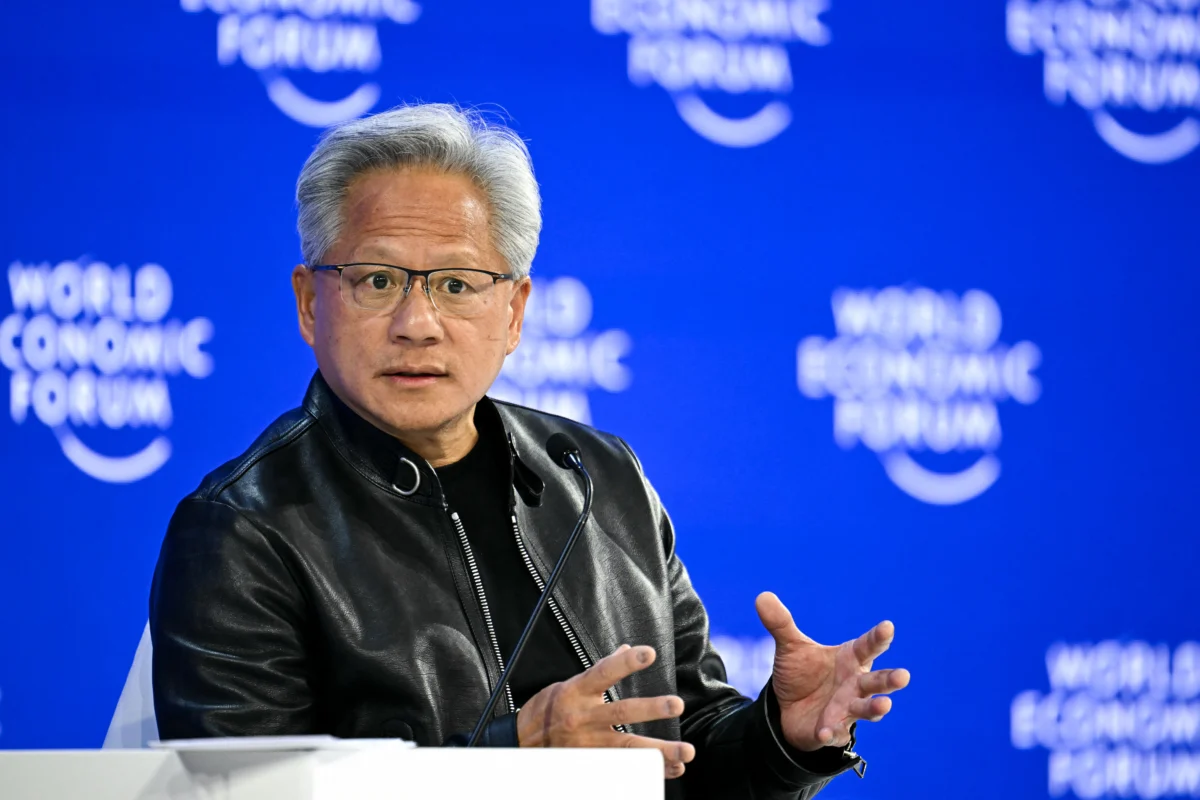
In a moment that sent ripples of astonishment through the tech industry and undoubtedly sent waves of anxiety through public relations departments nationwide, Nvidia CEO Jensen Huang found himself in an unexpected and highly public conversation with former President Donald Trump. The extraordinary event unfolded on Monday morning at the prestigious All-In Summit in Los Angeles, a gathering of prominent venture capitalists and tech luminaries. Huang, a titan of the semiconductor industry and a key figure in the current artificial intelligence boom, was on stage engaging in a discussion when his phone rang with an incoming call he couldn’t, or perhaps wouldn’t, ignore. The caller ID, displayed for all to see and hear, revealed it was none other than President Donald Trump.
Huang, with a characteristic blend of composure and a touch of showmanship, acknowledged the call, famously remarking to Trump, "I’m onstage with the besties." This playful jab was a nod to the hosts of the widely followed "All-In with Chamath, Jason, Sacks & Friedberg" podcast, a group of influential venture capitalists including Chamath Palihapitiya, Jason Calacanis, and David Friedberg and David Sacks, who have also held advisory roles in past administrations. The unexpected nature of the call, coupled with Huang’s seemingly casual demeanor, immediately captivated the audience, transforming the planned panel discussion into an impromptu and historic moment.
What followed was a move that would leave seasoned communications professionals in a cold sweat: Huang, demonstrating an unusual level of comfort and perhaps a calculated strategy, placed President Trump on speakerphone, allowing the entire audience to listen in on their conversation. This public display of accessibility to a former Commander-in-Chief, especially during a sensitive discussion about the future of AI, was unprecedented. It signaled a potential alignment of views between a leading figure in AI development and a prominent political voice, a dynamic that could have significant implications for the burgeoning artificial intelligence landscape.
President Trump, his voice resonating through the venue’s sound system, delivered a characteristically blunt assessment of the situation. "The great thing about life is Jensen can develop the most complex computer chip in the world… but he can’t figure out how to put you on speaker," he quipped, eliciting laughter from the crowd. While the quip was lighthearted, it underscored the unusual circumstances of the call. Huang, in reality, was actively seeking an additional microphone from the stagehands to ensure the call could be projected clearly to the entire audience, suggesting a deliberate choice to share the conversation rather than a genuine technical inability.
The timing of this call was particularly poignant, as Huang and the "All-In" hosts had just been discussing a crucial and increasingly contentious debate within the AI community: the call to "slow the pace" at which artificial intelligence capabilities are being advanced. This sentiment, spearheaded by figures like Anthropic CEO Dario Amodei, has found resonance with other prominent tech leaders, including Elon Musk and OpenAI CEO Sam Altman, who have publicly voiced concerns about the potential risks of unchecked AI development. Huang, however, has consistently diverged from this cautious approach, advocating for continued rapid innovation.
President Trump’s intervention directly addressed this debate, framing the calls for a slowdown as a strategic impediment to progress, particularly from geopolitical rivals. "They’re just playing right in the hands of a lot of people that don’t want to see it happen," Trump declared. "That could be political people. It could also be China. And we’re not going to let that happen. It’s a hoax." This characterization painted a picture of a coordinated effort to undermine American technological leadership, a narrative that aligns with Trump’s broader "America First" agenda.
Huang’s response was immediate and enthusiastic, echoing Trump’s sentiment and drawing a wave of applause from the audience. "You’re right. We’re not going to let that happen, sir," he affirmed, reinforcing his commitment to accelerating AI development. This exchange highlighted a significant political and ideological rift concerning the future of AI. While some in the tech industry and academia advocate for caution and ethical guardrails, others, including figures like Huang and now visibly President Trump, see rapid advancement as a national imperative and a crucial component of global competitiveness.
The broader context of this debate is multifaceted, touching upon national security, economic growth, and public perception. President Trump and his allies, such as Y Combinator CEO Garry Tan, have often articulated a belief that opposition to the expansion of data centers – the physical infrastructure powering AI – is part of a calculated international "psyop" designed to stifle American economic advancement. This perspective suggests that environmental and community concerns, while seemingly legitimate, are being weaponized by foreign adversaries or domestic political opponents to hinder progress.
However, the source of public concern regarding data centers is often more grounded and less conspiratorial. Recent polling from Gallup paints a stark picture: a significant majority of Americans, approximately seven in 10, express opposition to the construction of data centers in their local areas. The primary drivers of this opposition are multifaceted. Over 50% of respondents cite the detrimental impact of data centers on vital environmental resources, including water consumption and energy usage. Furthermore, roughly 20% of those surveyed expressed concerns about the potential for data center development to exacerbate cost-of-living increases and negatively affect their overall quality of life. These concerns often stem from the massive energy demands of these facilities, their significant water footprint, and the potential for increased noise pollution and traffic in surrounding communities.
President Trump, in his conversation with Huang, acknowledged the need for prudence but reiterated his unwavering support for continued industry growth. "We have to be a little bit careful… We have to do things and we have to do them prudently, but that doesn’t mean we’re going to stop an industry," he stated. His message was one of reassurance and partnership: "So I’m with you all the way. I didn’t even know how you felt about it. I just hoped you felt the same way as me. We’re going to lead." This statement positions Trump as a champion of technological progress, aligning himself with industry leaders who prioritize innovation and rapid development.
The implications of this on-stage endorsement are substantial. It signals a potential future administration’s commitment to fostering AI innovation, likely through deregulation and direct support for companies like Nvidia. This stance directly contrasts with calls for stricter oversight and a more measured approach to AI development, which often emphasize the need for robust ethical frameworks, public safety regulations, and a thorough understanding of AI’s societal impact.
The "All-In" Summit, known for its candid discussions and high-profile guests, has once again provided a platform for a pivotal moment in the ongoing dialogue surrounding artificial intelligence. The exchange between Jensen Huang and Donald Trump underscores the deep divisions and competing visions for the future of this transformative technology. While Huang represents the cutting edge of AI hardware development and a belief in the power of relentless innovation, Trump embodies a political ideology that prioritizes national strength and technological dominance, often viewing any perceived slowdown as a strategic vulnerability.
This unusual alliance, forged in the public eye, raises critical questions about the direction of AI policy, the balance between innovation and regulation, and the role of political influence in shaping the technological landscape. As the world grapples with the profound implications of artificial intelligence, the public spectacle at the All-In Summit serves as a stark reminder of the complex interplay between technological advancement, economic interests, and political power. The conversation, initiated by an unexpected phone call, has undoubtedly amplified the debate and set the stage for future policy battles and industry strategies as the race to define the future of AI intensifies. The attendees, accustomed to hearing from venture capitalists and startup founders, were instead treated to a rare glimpse into the potential political landscape surrounding AI, a landscape that now includes a direct endorsement from a former president to one of the industry’s most influential figures.
