
 By admin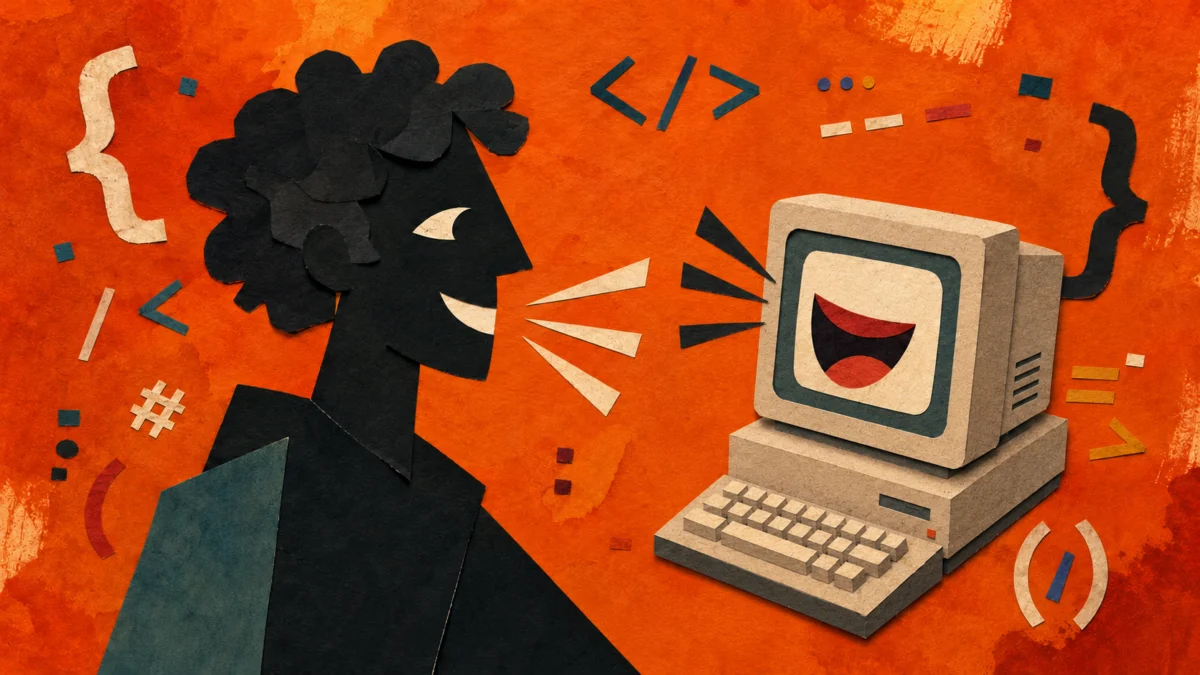
Two weeks after the groundbreaking debut of its GPT-Live audio AI model, OpenAI has seamlessly integrated this revolutionary full-duplex technology into its core developer workflows, marking a significant leap forward in human-computer interaction for technical professionals. The company announced that GPT-Live now powers the ChatGPT desktop application across both macOS and Windows operating systems, offering a more natural and intuitive conversational interface for interacting with sophisticated agentic systems like Codex and ChatGPT Work. This integration, unveiled on July 8, 2026, represents a profound shift from traditional, turn-based interactions to a continuous, real-time dialogue, enabling users to speak and listen simultaneously, much like a natural human conversation.
The initial launch of GPT-Live showcased its potential as a continuous audio model that eliminates the rigid back-and-forth characteristic of previous AI interactions. By delegating complex reasoning tasks to advanced background models, such as the powerful GPT-5.5, GPT-Live can maintain fluid conversational flow while simultaneously processing intricate requests. Today’s release, however, extends this advanced conversational layer beyond general chat and into the demanding realm of technical tasks. Software engineers can now leverage natural voice commands to orchestrate multi-threaded coding jobs, meticulously review pull requests, and efficiently debug applications, fundamentally transforming how they engage with their development environments.
This development has the potential to usher in a new era of "hands-free" software development. Imagine developers collaborating in live, in-person group coding sessions, where ideas are exchanged and code is generated and refined through natural conversation. This vision is now closer to reality for the more than 10 million weekly active users who engage with OpenAI’s powerful tools like Codex and ChatGPT Work. Codex, originally designed as a suite of AI models specifically for coding, has evolved into a comprehensive productivity platform, capable of interacting with and controlling other applications on a user’s computer, generating images, and previewing webpages. The integration of GPT-Live into these desktop applications signifies the first time voice activation has been so deeply embedded into such complex, multi-application workflows.
OpenAI has released a compelling promotional video that vividly demonstrates this newfound capability. The video features employees Jason Liu, a Codex developer experience engineer, and Guinness Chen, a Codex technical staffer, engaging in a collaborative coding session using the same ChatGPT desktop app. In the shared space, they both issue different instructions and converse with the AI simultaneously, showcasing the seamless, full-duplex interaction. This visual testament highlights the intuitive nature of the technology and its potential to foster a more dynamic and efficient development process.
The core innovation behind this integration lies in the decoupling of the real-time voice layer from the underlying execution engines. GPT-Live excels at maintaining a natural conversational rhythm, seamlessly incorporating verbal acknowledgments like "got it" or "understood" without interrupting the user’s train of thought. Crucially, it then offloads computationally intensive tasks to specialized background reasoning models, ensuring that the conversational experience remains smooth and responsive.
On macOS, the ChatGPT desktop application has been enhanced with "Appshots" and screen context features. These additions empower ChatGPT Voice to not only analyze the frontmost window but also to understand local files, the intricate structures of codebases, and the functionalities of active plugins. This sophisticated architecture effectively creates a pair-programming dynamic. Developers can verbally articulate their problems and thought processes, engaging in a natural conversation, while the AI agents asynchronously execute the corresponding tasks. The days of manually pausing coding sessions to type out lengthy instructions or painstakingly switching between different application windows are rapidly fading. Developers can now direct the system hands-free, allowing for greater focus and immersion in their work. The full-duplex engine intelligently determines when to speak, pause, or invoke specific tools, crucially maintaining conversational state even as background agents are diligently processing complex code modifications.
The central operational capability unlocked by this update is the ability to direct coding and complex builds using voice alone, orchestrating multi-task execution across both Codex and ChatGPT Work environments. Software engineers are now empowered to initiate multiple concurrent task threads from a single spoken prompt. For example, a developer preparing to deploy a new feature can simultaneously instruct the system to investigate an open authentication bug, review a pending API migration pull request, and generate missing unit tests. The desktop application is architected to coordinate these disparate actions across various contexts, effectively tracing issues through Slack conversations, navigating GitHub repositories, and delving into local codebases.
Furthermore, developers can verbally convert design mockups into functional code, with the AI intelligently splitting tasks across frontend, backend, and testing layers. The latest build, designated as 26.715, introduces support for multi-folder projects and enables remote execution via iOS. This means engineers can effortlessly check task progress, respond to agent prompts, and redirect active jobs without the need to switch applications or meticulously manage individual processes line by line. This level of granular control, delivered through natural language, significantly reduces cognitive load and streamlines the development lifecycle.
However, this powerful new functionality comes with a proprietary licensing model. OpenAI’s voice-enabled desktop release operates under a commercial enterprise structure, restricting access to paid subscribers across its Plus, Pro, Business, Enterprise, and Education plans. This commercial framework ensures that critical components of the AI, including the model weights, voice processing pipelines, and agent state architectures, remain entirely closed-source. Consequently, organizations cannot modify or self-host the underlying systems, maintaining OpenAI’s control over the technology. Importantly, tasks initiated through ChatGPT Voice are subject to standard usage allocations, drawing directly from existing Codex and ChatGPT Work plan quotas, treating voice-triggered actions identically to traditional agentic workloads.
The developer community has responded with immediate enthusiasm and keen observation regarding the implications of integrating continuous, full-duplex voice capabilities into autonomous coding workflows. Reacting to the announcement of build 26.715, which specifically details voice integration and enhanced multi-folder project support, AI Insider journalist @ChrisGPT shared on X: "Today OpenAI will release voice and remote guidance for codex! One step closer to personal AGI." This sentiment reflects a broader anticipation within the AI community for tools that move beyond simple task execution towards more holistic, intelligent assistants. Early technical feedback underscores widespread excitement for the prospect of orchestrating complex agentic tasks hands-free, particularly for scenarios involving remote work, managing build pipelines from afar, or simply stepping away from the workstation without losing momentum. The ability to have a fluid, natural conversation with powerful development tools promises to democratize complex coding tasks and accelerate innovation across the software development landscape.
