
 By admin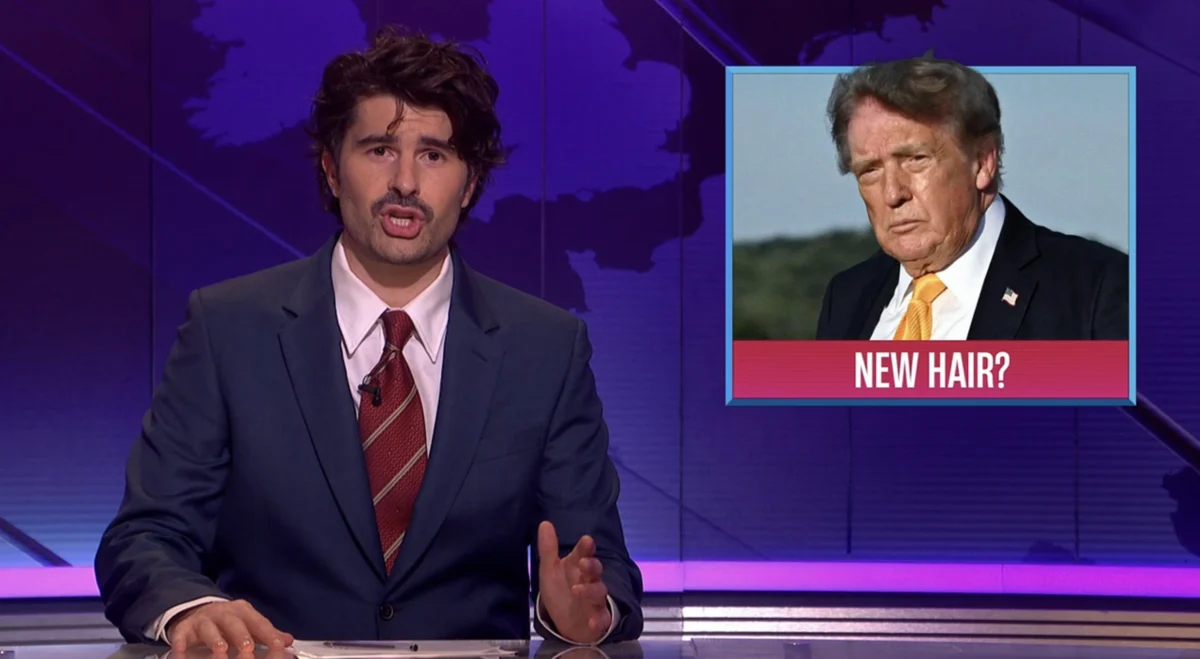
In its latest installment, "Saturday Night Live U.K." delivered a potent dose of satire, skewering prominent figures and contemporary issues with its signature blend of sharp wit and observational humor. The widely-watched sketch show, known for its fearless approach to political and social commentary, dedicated a significant portion of its "Weekend Update" segment to dissecting the public image of U.S. President Donald Trump, the much-discussed enrollment of Prince George at Eton College, and the increasingly volatile anti-migrant protests gripping the United Kingdom. The episode, hosted by the inimitable Jeff Goldblum, proved to be a memorable launchpad for its second season, signaling a continued commitment to challenging the status quo through comedic lens.
The segment opened with a pointed jab at President Donald Trump’s ever-evolving public presentation, specifically focusing on a recent appearance where his hairstyle seemed to have undergone a noticeable alteration. Co-anchor Ania Magliano, with a dry delivery that belied the sharp barb, remarked, "This week, President Trump stepped off Air Force One sporting a different hair color. He appears to be trialling a new shade of brown. Or, he’s shat his head." This unflinching commentary immediately set the tone for the segment, highlighting Trump’s often scrutinized physical appearance as a fertile ground for comedic critique. The insinuation, while crude, tapped into a broader public discourse surrounding Trump’s image and the perceived authenticity of his persona.
Magliano’s co-anchor, Paddy Young, further amplified the mockery with a classic comedic trope, questioning the coherence between Trump’s famed hair and his sartorial choices. "People are questioning, does the carpet still match the drapes?" Young quipped, referencing a well-worn idiom often used to imply a mismatch between outward appearance and underlying reality. He then added a meta-commentary that underscored the often precarious nature of political satire, stating, "I wouldn’t know, that’s between the president and the punchline that just a second ago was taken from me by our legal team. Thank you, legal team, it was almost funny." This playful interjection, with its ambiguity about whether actual legal intervention occurred or if it was merely a comedic device, served to both amuse the audience and subtly acknowledge the potential legal ramifications of satirizing powerful figures, a constant tightrope walk for broadcast comedians. The inclusion of this element adds a layer of self-awareness to the segment, acknowledging the real-world pressures that influence comedic expression, especially when dealing with figures like a former U.S. President.
Beyond the American political landscape, "SNL U.K." turned its satirical gaze towards the British establishment, specifically addressing the public reaction to Prince George’s attendance at the prestigious Eton College. The segment injected a darkly humorous perspective on the esteemed institution, known for its history of producing leaders and its exclusive reputation. Magliano delivered a particularly cutting remark: "How will he survive being stuck in a place famous for producing sexual abusers? By leaving it and going to Eton College." This statement, met with audible gasps and laughter from the studio audience, was a bold and controversial take on the school’s legacy. Eton College, founded in 1440, has indeed faced scrutiny over historical allegations and, more recently, concerns regarding institutional culture. By framing Prince George’s entry into this environment through the lens of potential harm and survival, the sketch highlighted societal anxieties surrounding privilege, elite education, and the potential for inherited power to shield individuals from accountability. The audience’s reaction – the "oooohs" – suggests a collective acknowledgment of the uncomfortable truth being presented, albeit through a comedic exaggeration. This approach forces viewers to confront the darker undercurrents that can exist beneath the veneer of tradition and prestige.
The show’s critique extended to the charged atmosphere of recent anti-migrant protests in the U.K., bringing a far-right activist, Danny Tommo, and his group, Patriot Platform, into the comedic crosshairs. Magliano’s portrayal of the protestors’ actions was laced with sarcasm, painting a vivid, albeit exaggerated, picture: "On Saturday, members of Tommo’s group Patriot Platform yelled obscenities, threw stones, spat and then said goodbye to their families and headed to the protest." This description, while intended to be humorous, also served to highlight the aggressive and often irrational behavior associated with some protest movements, particularly those fueled by xenophobia. The comedic effect is achieved by juxtaposing the supposed familial farewells with the aggressive acts, creating an absurd and damning indictment of their motivations and methods.
Young’s contribution to the segment provided a more character-driven jab at Danny Tommo, questioning his motivations and past endeavors with a series of witty comparisons. "Who is this Danny Tommo?" Young inquired, before delivering a punchline that deconstructed the activist’s alleged career path: "Before launching Patriot Platform he is reported to have tried his luck as both a bricklayer and a web designer. However, neither worked out as he had the physique of a web designer and a mind of a brick." This comedic assessment, while purely speculative and aimed at ridiculing Tommo’s perceived lack of competence, serves a dual purpose. Firstly, it mocks the figure of the activist, reducing him to a figure of ridicule. Secondly, it subtly suggests that the passion driving such activism might stem from personal failures or a lack of constructive outlets. The "physique of a web designer and a mind of a brick" is a classic comedic dichotomy, aiming to paint Tommo as a physically unsuited and intellectually limited individual, thus undermining his authority and the legitimacy of his movement. This type of humor, while potentially alienating to those who sympathize with the protestors’ concerns, aims to discredit the individuals involved by highlighting perceived inadequacies, a common tactic in satirical commentary.
The inclusion of these specific segments within "SNL U.K." reflects a broader trend in contemporary satire, where no public figure or social issue is deemed too sensitive to escape comedic scrutiny. The show’s ability to weave together disparate topics – from international politics and royal family matters to domestic social unrest – showcases its ambition to be a comprehensive cultural commentator. The choice of Jeff Goldblum as host for the season opener further underscored the show’s appeal to a discerning audience that appreciates intellectual humor and a touch of eccentricity. Goldblum, known for his distinctive delivery and penchant for philosophical musings, likely brought his unique brand of charisma to the proceedings, further elevating the episode.
The effectiveness of "SNL U.K." lies not only in its ability to identify targets for satire but also in its skillful execution. The writing often employs a layered approach, with punchlines that can be interpreted on multiple levels, inviting viewers to engage with the humor on a deeper intellectual plane. The co-anchors’ chemistry, their ability to deliver barbed remarks with a straight face, and the carefully crafted pacing of the segment all contribute to its overall impact. The inclusion of the legal team interjection, while potentially a fictional element, serves to highlight the real-world constraints and considerations that comedians must navigate. It adds a meta-narrative to the show, acknowledging the power dynamics at play when humor intersects with authority.
In essence, "Saturday Night Live U.K." used its "Weekend Update" segment to provide a critical and often humorous reflection of the socio-political landscape. By targeting Donald Trump’s appearance, the perceived complexities of Prince George’s education, and the confrontational nature of anti-migrant protests, the show demonstrated its commitment to engaging with controversial topics head-on. The comedic approach, while undoubtedly designed to provoke laughter, also serves as a vehicle for social commentary, prompting audiences to question, to think critically, and to find humor in the absurdities of the world around them. The continued success of such programs underscores the enduring need for satire as a vital tool for social critique and public discourse, even when it treads on sensitive ground. The show’s willingness to tackle these subjects with such directness, and the audience’s enthusiastic response, suggests a public appetite for bold and unflinching comedic commentary that challenges the prevailing narratives and offers a fresh, albeit often irreverent, perspective. The inclusion of the "Popular on Variety" placeholder, while not containing actual content, suggests an integration with a larger media ecosystem, hinting at the show’s significance and reach within the entertainment industry.
