
 By admin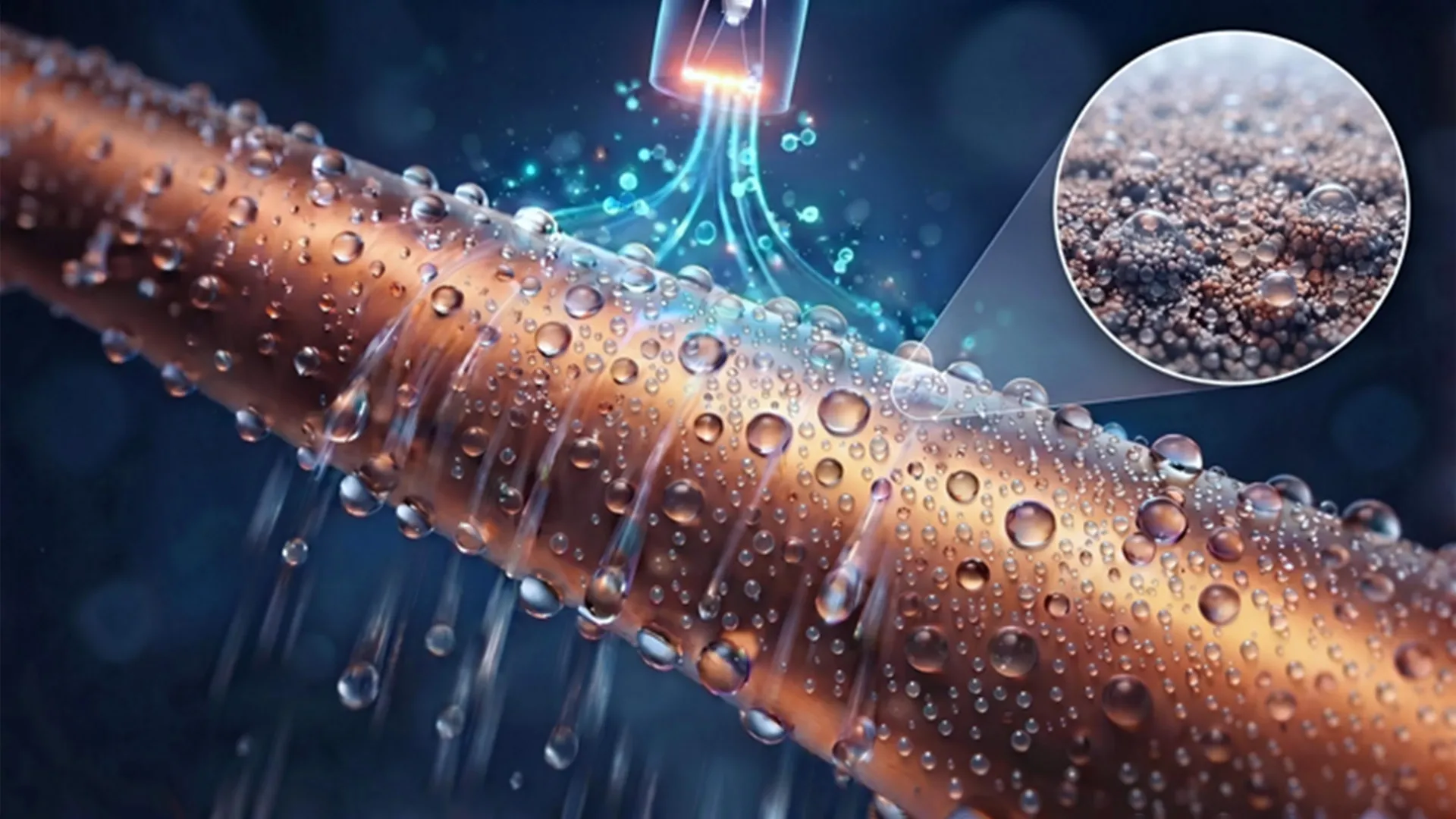
This groundbreaking innovation, spearheaded by a joint research team at KAIST (Korea Advanced Institute of Science and Technology), promises to redefine the efficiency of systems reliant on phase change heat transfer. On August 23, KAIST President Choongsik Bae announced the breakthrough, highlighting the collaborative efforts of Professor Youngsuk Nam from the Department of Mechanical Engineering and Professor Sung Gap Im from the Department of Chemical and Biomolecular Engineering. Their team achieved this remarkable feat by meticulously controlling the thickness and nanoscale structure of an ultrathin polymer coating. This novel approach encourages a significantly higher density of droplets to appear as water vapor condenses, while simultaneously facilitating their rapid departure from the surface.
The Critical Role of Condensation in Global Industries
Condensation is a fundamental physical process where a gas or vapor transforms into a liquid state. Visually, it’s the moisture beading on a cold beverage glass, but industrially, its implications are vast and critical. From power generation to water purification and advanced electronics, condensation plays an indispensable role in heat management and energy conversion.
In thermal power plants, for instance, steam, after driving turbines, must be efficiently condensed back into liquid water to be recycled through the boiler. This closed-loop system is the backbone of energy production, and the efficiency of the condenser directly impacts the plant’s overall thermal efficiency, fuel consumption, and operational costs. Even marginal improvements in condensation efficiency can translate into substantial energy savings and reduced greenhouse gas emissions on a global scale.
Similarly, in desalination facilities, especially those employing multi-stage flash (MSF) or multi-effect distillation (MED), steam condensation is central to separating fresh water from saline solutions. The efficiency of heat transfer during condensation dictates the energy footprint and output volume of these vital installations, which are increasingly crucial in addressing global water scarcity.
Beyond large-scale industrial applications, condensation is also a critical factor in the thermal management of high-performance electronic devices. As microprocessors and other components become more powerful and compact, dissipating the heat they generate efficiently is paramount to preventing overheating, ensuring reliability, and extending device lifespan. Traditional cooling methods often struggle to keep pace with the increasing heat flux densities, making innovations in phase change cooling, like enhanced condensation, highly desirable.
The Inefficiency of Filmwise Condensation and the Promise of Dropwise Condensation
For these diverse systems to operate at peak efficiency, condensed water must be removed from the heat transfer surface as quickly as it forms. The conventional scenario on most untreated metal surfaces, such as copper, involves "filmwise condensation." Here, small water droplets, once formed, quickly merge to create a continuous, thin film of liquid water that blankets the surface. While seemingly innocuous, this water film acts as an additional thermal resistance, an insulating layer that significantly impedes the flow of heat from the vapor to the cooling surface. This phenomenon is analogous to wearing multiple layers of winter clothing, which slows the transfer of body heat to the colder external environment. The thicker the film, the greater the thermal barrier, and the lower the heat transfer efficiency.
In contrast, a far more efficient process occurs under "dropwise condensation." In this ideal scenario, water condenses as discrete, individual droplets that grow and then rapidly detach from the surface, often under the influence of gravity or vapor shear. Crucially, these droplets leave the surface before forming a continuous film, repeatedly exposing fresh areas of the heat transfer surface to the incoming vapor. This continuous renewal of the surface allows for a much higher rate of heat transfer, as the thermal resistance of the thin vapor layer is significantly lower than that of a liquid film. Achieving stable and sustained dropwise condensation has been a long-standing goal in heat transfer engineering due to its potential for dramatic efficiency gains.
The Persistent Trade-Off: Nucleation vs. Droplet Mobility
For decades, researchers have grappled with a fundamental limitation in designing surfaces for enhanced dropwise condensation: the inherent trade-off between droplet nucleation and droplet mobility.
- Nucleation: The initial formation of droplets from vapor typically occurs at specific "nucleation sites" on a surface, often microscopic imperfections, scratches, or areas with varying surface energy. Rougher surfaces, with their abundance of such sites, tend to promote higher droplet nucleation densities, meaning more droplets form per unit area.
- Mobility: However, those same rough surface structures that encourage nucleation can also trap droplets, making them adhere more strongly and hindering their rapid departure. Conversely, smoother, highly hydrophobic (water-repelling) surfaces allow droplets to slide or detach more easily once formed, but they often provide fewer ideal sites for new droplets to initiate, leading to lower nucleation rates.
This dilemma has created a persistent challenge: how to design a surface that simultaneously maximizes the initial formation of droplets and ensures their swift removal. Previous attempts often optimized for one aspect at the expense of the other. For instance, highly hydrophobic coatings might repel water effectively, but if they lack sufficient nucleation sites, the overall heat transfer might still be suboptimal because new droplets don’t form quickly enough to continuously refresh the surface. Overcoming this fundamental conflict was key to unlocking the full potential of dropwise condensation.
KAIST’s Innovative Solution: Leveraging Nanoscale "Defects"
The KAIST research team addressed this long-standing problem by adopting a counter-intuitive approach: they deliberately took advantage of nanoscale polymer aggregates that had previously been considered undesirable "defects" in polymer coatings. This paradigm shift in thinking was central to their breakthrough.
The team produced their ultrathin polymer coating using initiated chemical vapor deposition (iCVD), a sophisticated technique known for its ability to deposit extremely thin, uniform, and conformal polymer layers on various substrates, including those with complex geometries. iCVD involves introducing gaseous precursor molecules into a vacuum chamber, where they react and polymerize on the surface, forming a precisely controlled film. This method offers excellent control over film thickness and composition, which proved crucial for the KAIST team’s innovation.
The critical insight emerged when the researchers experimented with making the polymer film progressively thinner. They observed that as the polymer film thickness decreased, a higher density of small, distinct polymer aggregates naturally appeared across the surface. Rather than viewing these nanoscale structures as imperfections to be eliminated, the team recognized their potential. They hypothesized that these aggregates could serve as highly effective nucleation sites, providing ideal locations for water droplets to begin forming. Their experimental results validated this hypothesis, showing that thin polymer films produced approximately three times as many droplets as thicker films, indicating a significant enhancement in nucleation density.
A Two-Pronged Strategy: Separately Controlling Formation and Removal
The brilliance of the KAIST team’s approach lies in their ability to decouple and optimize the two critical stages of dropwise condensation: droplet formation and droplet removal.
-
Optimizing Droplet Formation: By precisely controlling the polymer film thickness using iCVD, they engineered a surface rich in nanoscale polymer aggregates. These aggregates act as highly efficient nucleation sites, leading to the rapid and dense formation of new droplets, overcoming the limitation of low nucleation rates on many smooth hydrophobic surfaces.
-
Expediting Droplet Removal: To address the challenge of droplet mobility, the team introduced a subsequent heat treatment process. This thermal treatment selectively weakened the adhesion forces holding the droplets to the coated surface. The exact mechanism involves subtle changes in the polymer’s surface energy or local morphology, which reduces the surface tension components responsible for pinning droplets. The result was a dramatic improvement in droplet detachment: the droplets were able to leave the surface much more easily and quickly, often before they had the chance to grow very large and coalesce into larger, slower-moving drops.
By controlling these two effects separately – enhancing nucleation through film thickness and facilitating removal through thermal treatment – the researchers effectively circumvented the long-standing trade-off between droplet formation and mobility. This innovative, independent control mechanism is what differentiates their technology from previous attempts. Once a droplet detaches, a newly exposed, active nucleation site becomes immediately available for the formation of another droplet. This continuous cycle of rapid formation and swift departure ensures that the heat transfer surface is constantly refreshed, maximizing the efficiency of heat removal. This process is analogous to a highly efficient conveyor belt where products are loaded and unloaded at maximum speed, ensuring continuous throughput. The more frequently droplets appear and depart, the more often the surface is refreshed, allowing heat to move through it with unparalleled efficiency.
Unprecedented Heat Transfer Performance: Up to 5.5 Times Improvement
To rigorously test their technology under conditions more representative of real-world industrial applications, the KAIST researchers applied their innovative polymer coating to conventional copper tubes, which are widely used as condenser surfaces in various heat exchangers.
The experimental results were truly remarkable. The maximum condensation heat transfer coefficient, a critical metric that quantifies a surface’s ability to transfer heat from condensing vapor to a coolant, reached approximately 88 kW·m⁻²·K⁻¹. This figure represents an astonishing heat transfer performance up to approximately 5.5 times greater than that of a conventional, untreated copper surface operating under filmwise condensation. Such a significant improvement translates directly into dramatically enhanced energy efficiency and operational throughput in any system where condensation occurs.
Furthermore, the new coating also delivered more than 50% better performance when compared to a conventional hydrophobic coating surface. This comparison underscores the superiority of their dual-control strategy, which effectively addresses both nucleation and removal, over approaches that primarily focus on hydrophobicity alone.
The team’s findings represent a significant paradigm shift in surface design for condensation. Instead of striving for perfectly smooth or uniformly water-repelling surfaces, they deliberately embraced and optimized what were once considered small surface "defects." Their research conclusively demonstrated that nanoscale particles, once viewed as imperfections to be eliminated, could in fact be strategically utilized to provide highly effective sites for droplet formation. This realization has led the team to propose an entirely new strategy for designing high-performance condensation surfaces.
Far-Reaching Potential in Energy, Water, and Electronics
The implications of this breakthrough technology are profound and extend across multiple critical sectors:
- Power Generation: If widely adopted in thermal power plants and other industrial heat exchangers, this coating could lead to substantial improvements in energy efficiency. By allowing heat to move more effectively from steam to cooling water, power plants could generate more electricity with the same amount of fuel, reducing operational costs and significantly lowering carbon emissions. Even a few percentage points of efficiency gain across the global power infrastructure could result in massive energy savings.
- Desalination and Water Harvesting: The enhanced condensation rates could revolutionize water collection in desalination facilities, making the production of fresh water from seawater more energy-efficient and cost-effective. This technology could also dramatically improve the performance of atmospheric water harvesting devices, offering a sustainable solution for communities in arid regions.
- Electronics Cooling: In the realm of electronics, faster and more efficient heat removal is constantly sought after. This coating could provide superior cooling for high-performance computing, data centers, and advanced electronic devices, enabling the development of more powerful and compact systems without the risk of thermal throttling or overheating. It could extend the lifespan of components and improve overall system reliability.
- Industrial Processes: Beyond these primary applications, the technology holds promise for a wide range of industrial processes that rely on heat transfer, including refrigeration, air conditioning (HVAC systems), and chemical processing, where efficient condensation is critical.
Professor Nam articulated the significance of their work, stating, "This research is meaningful because it uses nanostructures previously regarded as defects as features that help droplets form. We have presented a new method for improving heat transfer efficiency by separately controlling droplet formation and removal." He further emphasized the practical advantages, adding, "Because this technology can form extremely thin, uniform coatings even on surfaces with complex shapes, we expect it to be used in various energy and environmental applications, including industrial heat exchangers." The ability of iCVD to coat complex geometries uniformly is a crucial advantage for real-world integration, as many industrial heat exchangers feature intricate designs.
The study, a testament to interdisciplinary collaboration, saw Jun Soo Kim, a researcher in the Department of Mechanical Engineering, and Minjeong Kang, a researcher in the Department of Chemical and Biomolecular Engineering, co-author the paper as first authors. The groundbreaking results were published online in the prestigious international journal Nature Communications on July 16, marking a significant contribution to the field of heat transfer and materials science.
This transformative research was made possible through robust support from several key funding bodies, including the Mid-Career Researcher Program (Ministry of Science and ICT and the National Research Foundation of Korea), the SME Technology Innovation Development Program (Ministry of SMEs and Startups and the Korea Technology and Information Promotion Agency for SMEs), and the Deep-Tech Startup Activation Support Program (Ministry of Science and ICT and Commercialization Promotion Agency for R&D Outcomes, COMPA). The diverse funding sources highlight the broad recognition of the technology’s potential for both fundamental scientific advancement and practical industrial application. While the initial results are highly promising, future research will likely focus on long-term durability, scalability for mass production, and cost-effectiveness to ensure widespread adoption across the envisioned applications.
