
 By admin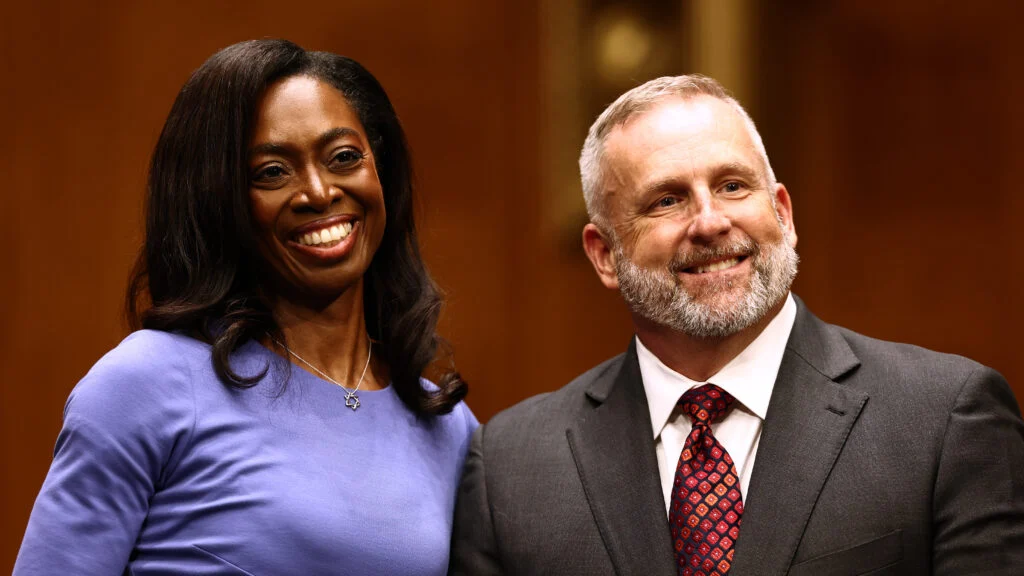
In a pivotal session that underscores the shifting landscape of American public health governance, the Senate Health, Education, Labor, and Pensions (HELP) Committee moved forward on Thursday with the approval of two high-stakes nominees for the Trump administration. The committee voted to advance Erica Schwartz to lead the Centers for Disease Control and Prevention (CDC) and Sean Kaufman to serve as the Assistant Secretary for Preparedness and Response (ASPR). These roles are critical to the nation’s ability to detect, prevent, and respond to both domestic health crises and international biological threats. However, the path to these approvals was fraught with tension, primarily centered on the influence of Robert F. Kennedy Jr. over the Department of Health and Human Services (HHS) and the ideological direction of the nation’s vaccine policy.
The committee’s chair, Senator Bill Cassidy (R-La.), once again found himself at the center of the political storm. A physician by training, Cassidy has spent much of the last year attempting to balance his professional commitment to evidence-based medicine with the political realities of a Republican party increasingly skeptical of traditional public health institutions. His decision to support both Schwartz and Kaufman followed a familiar pattern of expressing deep reservations during public hearings, only to ultimately align with the administration after receiving private assurances from HHS leadership.
The vote for Erica Schwartz as CDC director was largely bipartisan, receiving support from all committee Republicans and Senator Tim Kaine (D-Va.). Schwartz, a former deputy surgeon general and retired Rear Admiral in the U.S. Coast Guard, is viewed by many as a steady, experienced hand. During her confirmation hearing, she highlighted her extensive background in military health and her role in scaling up COVID-19 testing during the first Trump administration. Despite this, Democrats remained largely opposed, citing concerns that any director under the current administration would be unable to resist political interference from Robert F. Kennedy Jr., who has been a vocal critic of the CDC’s long-standing recommendations.
While Schwartz’s confirmation seemed likely from the outset, the nomination of Sean Kaufman for the ASPR role was significantly more contentious. Kaufman, a biosecurity expert who co-founded the healthcare consulting firm Safer Behaviors, has a history of making provocative statements regarding vaccine safety. His past remarks, which included questioning the necessity of the hepatitis B vaccine for newborns and suggesting a link between childhood immunizations and autism, were first brought to light by investigative reporting from STAT. These comments directly contradict decades of peer-reviewed scientific research and the consensus of global health organizations.
During his confirmation hearing, Cassidy clashed sharply with Kaufman, at one point characterizing his past statements as "irresponsible." The medical community has long debunked the purported link between vaccines and autism, a myth that originated from a fraudulent and retracted 1998 study. Since then, massive epidemiological studies involving millions of children across multiple countries have consistently shown no correlation between the two. Cassidy, aware of the potential damage such rhetoric can do to public trust in medicine, pushed Kaufman to reconcile his past views with the duties of a federal preparedness leader.
However, on Thursday, Cassidy signaled a change in heart. He announced his support for Kaufman, citing the urgent need to fill leadership vacancies as the United States faces a mounting array of public health threats. Among these is a significant Ebola outbreak in parts of Africa, which requires a robust and coordinated international response led by the ASPR. Furthermore, the U.S. is currently grappling with domestic challenges, including a resurgence of measles cases and outbreaks of foodborne parasites like Cyclospora. Cassidy argued that leaving the nation’s pandemic preparedness office without a confirmed leader would be a greater risk than confirming a nominee with a checkered rhetorical past.
To justify his vote, Cassidy revealed that he had secured specific concessions from HHS. He stated that the administration had agreed to unspecified personnel changes within the department and, perhaps more significantly, a restriction that would prevent Kaufman from being involved in any vaccine policy decisions. This "firewall" is intended to isolate the ASPR’s logistical and preparedness functions from the more politically sensitive area of immunization schedules. This maneuver mirrors Cassidy’s previous support for Robert F. Kennedy Jr. in early 2025, which was also predicated on promises of moderation that critics say have since been broken.
The broader context of these nominations is the ongoing transformation of HHS under Kennedy’s influence. Since taking his post, Kennedy has moved to aggressively implement the "Make America Healthy Again" (MAHA) agenda. This has included unilateral moves to reduce the number of recommended pediatric vaccines and a controversial decision to delay the hepatitis B birth dose, a move Cassidy has vocally opposed. Medical experts emphasize that the birth dose is a critical safety net, preventing the transmission of the virus from mother to child in cases where the mother’s infection status is unknown.
Furthermore, Kennedy has overseen changes to the CDC’s official website that have alarmed the scientific community. The site was recently updated to remove definitive language stating that vaccines do not cause autism, instead replacing it with text that raises unsupported questions about the disorder’s origins. Cassidy recently criticized these changes as "almost an insult to the American people" during a CNN interview. Despite his frustration, he stated on Thursday that he had received further commitments from the administration to remove misinformation from the site, promising to "pay close attention" to the progress of these revisions.
The political stakes for Cassidy are high. Earlier this year, the Louisiana senator lost his reelection bid in a primary after facing intense opposition from the MAGA and MAHA wings of the party. Trump and Kennedy both campaigned against him, labeling him an obstructionist to their health policy overhaul. With his time in the Senate drawing to a close, Cassidy’s willingness to confirm these nominees suggests a desire to ensure the basic machinery of government remains functional, even as he remains ideologically at odds with the administration’s top health officials.
The nominations now move to the full Senate floor, where both Schwartz and Kaufman are expected to be confirmed. Their arrival comes at a time when the CDC and ASPR are under intense scrutiny. The CDC, in particular, is still attempting to recover from the loss of public trust following the COVID-19 pandemic, while also managing new threats like the H5N1 bird flu virus and the ongoing opioid crisis. Schwartz will be tasked with navigating a department that is being pulled between traditional scientific rigor and the populist health skepticism championed by Kennedy.
Kaufman’s role at ASPR will be equally demanding. The office is responsible for the Strategic National Stockpile and the Biomedical Advanced Research and Development Authority (BARDA), which funds the development of vaccines and treatments for emerging threats. If Kaufman is indeed barred from vaccine policy, his focus will likely shift to biosecurity infrastructure, hospital preparedness, and responding to natural disasters. However, critics argue that in a true pandemic, it is nearly impossible to decouple preparedness from vaccine distribution and policy.
The HELP committee is not finished with its review of health leadership. Upcoming hearings will consider Nicole Saphier for the position of Surgeon General. Saphier, a physician and media personality, has been more consistent in her support for vaccines than other administration picks, which may lead to a smoother confirmation process. Additionally, Chris Klomp, a trusted aide to Kennedy, has been nominated as the Deputy Secretary of HHS. Cassidy has described Klomp’s nomination as "encouraging," suggesting that Klomp may serve as a more traditional bridge between the administration’s unconventional leadership and the institutionalists in Congress.
As the full Senate prepares to vote, the debate over Schwartz and Kaufman serves as a microcosm of the larger struggle for the soul of American public health. On one side are those who believe the system requires a radical disruption to address chronic disease and perceived institutional overreach. On the other are those who fear that undermining the scientific foundations of vaccine policy and public health communication will lead to a preventable resurgence of infectious diseases and a permanent erosion of national security. For now, the Senate’s path is clear: the administration will get its leaders, but they will operate under a cloud of skepticism and a watchful, if dwindling, group of critics in the legislative branch.
