
 By admin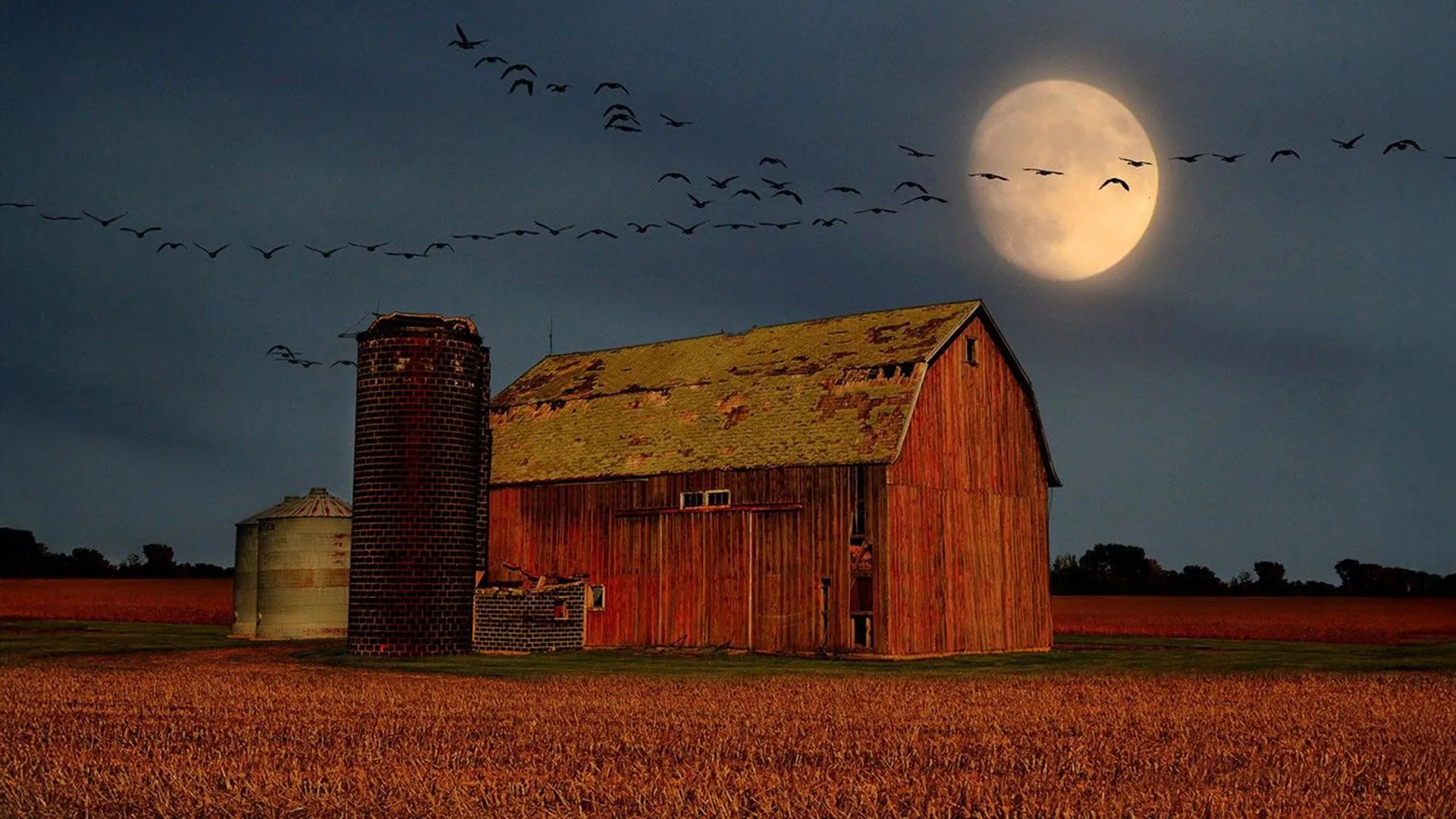
As the northern hemisphere transitions into autumn and the southern hemisphere embraces spring, the changing seasons often usher in clearer, crisper night skies, making September an exceptionally rewarding month for both seasoned astronomers and casual stargazers alike. This period offers a unique blend of planetary spectacles, lunar guidance to deep-sky wonders, and a celestial event that marks a fundamental shift in Earth’s yearly cycle. From the brilliant glow of our planetary neighbor Venus to the ancient allure of the Harvest Moon, punctuated by a global celebration of our closest celestial companion, the September sky promises a rich tapestry of observational opportunities. Whether you’re equipped with a high-powered telescope, a pair of binoculars, or simply the naked eye and a sense of wonder, there’s something for everyone to discover above.
Follow the Moon to Antares and Sagittarius: A Journey to the Galactic Heart (September 14-20)
The Moon, our constant celestial companion, serves as an invaluable guide in the night sky. Its relatively rapid apparent motion against the backdrop of more distant stars makes it an excellent celestial pointer, leading observers from one astronomical landmark to another over successive nights. Between September 14 and 20, approximately an hour after sunset, turn your gaze southward to locate the Moon. As it traverses its orbit around Earth, its position will subtly shift each evening, offering a dynamic celestial show. During this period, the Moon will pass remarkably close to Antares, a star of immense significance.
Antares, a name derived from ancient Greek meaning "rival of Mars" due to its distinctive reddish hue, is the brightest star in the constellation Scorpius and represents the heart of this zodiacal constellation. It is a red supergiant, one of the largest and most luminous stars known, with an estimated radius that could comfortably engulf the orbit of Mars if placed in our solar system’s center. To put its size into perspective, if Antares replaced our Sun, its outer layers would extend beyond Jupiter’s orbit. Its reddish color is a tell-tale sign of its relatively cool surface temperature (around 3,600 Kelvin), contrasting sharply with hotter, bluer stars, yet its sheer size ensures its immense luminosity. For centuries, Antares has been a navigational beacon and an object of fascination, its vibrant color captivating observers across diverse cultures.
Nearby Antares, within the sprawling constellation Sagittarius, lies another easily recognizable stellar pattern known as the Teapot. This distinct asterism, not a constellation in itself but a prominent part of Sagittarius, truly lives up to its name, forming a clear outline of a teapot with a handle, a lid, and a spout. Its principal stars – Kaus Australis, Nunki, Ascella, and Alnasl – outline this cosmic kitchenware, making it a favorite target for new skywatchers.
What makes the Teapot particularly special, however, is not just its charming shape, but its profound astronomical significance. From a location blessed with exceptionally dark skies, far removed from the pervasive glow of urban light pollution, you might notice a faint, cloudy band appearing to rise like steam from the Teapot’s spout. This ethereal glow is not steam, but the collective light of billions of stars, gas, and dust that constitute the central bulge of our home galaxy, the Milky Way.
Tracing this hazy glow towards its densest, brightest region means you are looking directly in the direction of the Galactic Center – the very heart of the Milky Way galaxy. This region, approximately 26,000 light-years away, is a bustling cosmic metropolis, home to an incredibly dense concentration of stars, stellar clusters, nebulae, and, most notably, a supermassive black hole known as Sagittarius A (Sgr A). Sgr A* has a mass equivalent to about 4 million Suns and exerts a dominant gravitational influence over the entire galaxy. While the black hole itself is invisible, its presence is inferred from the frantic orbits of stars incredibly close to it and the emission of radio waves. Observing the Milky Way’s core through the Teapot’s spout offers a profound connection to our cosmic address, a vivid reminder of our place within a vast and magnificent spiral galaxy.
Venus Reaches Peak Brilliance: The Evening Star’s Dazzling Performance (September 18)
On September 18, turn your attention towards the western horizon shortly after sunset to witness Venus at its peak brilliance for this evening apparition. The planet should be effortlessly easy to identify, shining with an intensity that surpasses any other star or planet in the night sky. Its radiant glow, often described as a steady, piercing light rather than the twinkling of stars, makes it an unmistakable beacon in the twilight.
Venus, often referred to as the "Evening Star" or "Morning Star" depending on its position relative to the Sun and Earth, is not a star at all but our closest planetary neighbor. Its spectacular brightness is a combination of several factors: its proximity to Earth, its relatively large size (almost Earth’s twin in diameter), and most importantly, its dense, highly reflective atmosphere. Composed primarily of carbon dioxide with thick clouds of sulfuric acid, Venus’s atmosphere acts like a giant mirror, reflecting about 70% of the sunlight that strikes it. This makes it the most reflective object in the solar system after the Sun and Moon.
The reason for its peak brilliance on this particular date relates to Venus’s orbital mechanics. As an inferior planet (orbiting inside Earth’s orbit), Venus exhibits phases much like our Moon. Its apparent brightness depends on both its distance from Earth and the percentage of its disk illuminated by the Sun as seen from Earth. When Venus is at its brightest, it’s typically not when it’s fully illuminated (full phase) or closest to Earth (new phase), but rather when it’s at its "greatest illuminated extent" – a crescent phase where a significant portion of its sunlit side is visible, and it’s relatively close to Earth. At this point, the product of its illuminated area and its apparent size is maximized, leading to its dazzling display.
To fully appreciate Venus’s splendor, an unobstructed view towards the western horizon is highly recommended, as the planet will be low in the sky before it eventually dips below the horizon. While Venus is bright enough to cut through significant light pollution, observing it from a location with a clear western vista will enhance the experience, allowing its intense glow to dominate the early evening sky. Historically, Venus has held immense cultural and astronomical significance, revered by ancient civilizations as a goddess and a powerful celestial body, its predictable appearances marking time and influencing mythologies.
International Observe the Moon Night: Connecting with Our Nearest Neighbor (September 19)
September 19 marks International Observe the Moon Night, a global public outreach event sponsored by NASA’s Lunar Reconnaissance Orbiter (LRO) mission and numerous other scientific and educational organizations. This annual event encourages people around the globe to spend time observing Earth’s nearest celestial neighbor, fostering a deeper appreciation for lunar science, exploration, and the Moon’s profound influence on cultures throughout history.
The Moon, far more than just a bright orb in the night sky, is a cornerstone of our planet’s stability and a testament to the dynamic processes of the early solar system. It stabilizes Earth’s axial tilt, preventing dramatic shifts that could lead to extreme climate variations. Its gravitational pull is the primary driver of ocean tides, shaping coastlines and ecosystems worldwide. Geologically, the Moon is a treasure trove of information, its surface preserving billions of years of solar system history, scarred by countless impacts that have shaped its familiar face.
Observing the Moon, even with the naked eye, reveals a wealth of features. The distinct light and dark patches are the lunar maria (Latin for "seas"), vast plains of solidified basaltic lava, and the brighter, heavily cratered highlands. With a pair of binoculars or a small telescope, the Moon truly comes alive. Craters, ranging from microscopic dimples to immense basins hundreds of kilometers across, become visible, their central peaks and ejecta blankets telling tales of ancient collisions. Rilles, winding valleys that resemble dried-up riverbeds, and towering mountain ranges cast long shadows, especially along the terminator (the line separating the lunar day and night), where shadows are longest and details are most pronounced.
International Observe the Moon Night provides a perfect opportunity to engage with these features and learn about the ongoing science and exploration. NASA’s Artemis program, for instance, aims to return humans to the Moon, establishing a sustainable presence that will serve as a stepping stone for future missions to Mars and beyond. This initiative underscores the Moon’s continued importance not just as a scientific laboratory, but as humanity’s next frontier.
Participants are encouraged to find an event near them, often hosted by local astronomy clubs, science museums, and educational institutions, or to learn how to participate from wherever they are by visiting go.nasa.gov/ObserveTheMoon. These events frequently offer access to telescopes, expert guidance, and educational materials, making lunar observation accessible and enriching for all ages.
The September Equinox: A Celestial Turning Point (September 22)
On September 22, the astronomical calendar marks a significant global event: the September equinox. For the Northern Hemisphere, this date officially heralds the beginning of autumn, while simultaneously ushering in spring for the Southern Hemisphere. It is a moment of profound cosmic balance, intimately tied to Earth’s orbital mechanics and its axial tilt.
The equinox (from the Latin aequus "equal" and nox "night") refers to the two points in Earth’s orbit when the Sun is positioned directly above the Earth’s equator. During these times – the vernal (spring) equinox around March 20 and the autumnal (fall) equinox around September 22 – the tilt of Earth’s axis (approximately 23.5 degrees relative to its orbital plane around the Sun) is neither tilted towards nor away from the Sun. Instead, the Sun’s rays strike both hemispheres equally, resulting in day and night lengths that are nearly equal across much of the planet. While often stated as "equal day and night," atmospheric refraction causes the Sun to appear above the horizon when it is geometrically below it, making the day slightly longer than the night.
This axial tilt is the fundamental reason for Earth’s seasons. Without it, the Sun would always shine most directly on the equator, and there would be little seasonal variation. As Earth orbits the Sun, the tilt means that different parts of the planet receive more direct sunlight at different times of the year. After the September equinox, the Northern Hemisphere begins to tilt away from the Sun, leading to decreasing daylight hours, lower sun angles, and cooler temperatures – the onset of autumn and winter. Conversely, the Southern Hemisphere begins to tilt towards the Sun, experiencing increasing daylight, higher sun angles, and warmer temperatures – the advent of spring and summer.
The equinox has been a point of profound cultural and astronomical significance for civilizations throughout history. Ancient structures like Stonehenge, Chichen Itza, and Newgrange are meticulously aligned to mark the equinoxes and solstices, demonstrating humanity’s enduring fascination with the Sun’s path and its impact on the terrestrial environment. These celestial markers were vital for agricultural planning, religious ceremonies, and understanding the rhythms of life. While not a "skywatching" event in the sense of observing specific stars or planets, the equinox is a fundamental astronomical phenomenon that shapes our daily lives and connects us to the grand cosmic dance of our solar system.
Harvest Moon Rises Near Saturn and Neptune: A Lunar-Planetary Trio (September 26)
On September 26, the sky’s main attraction will be the Harvest Moon, rising majestically in the eastern sky shortly after sunset. This particular full Moon holds a special place in folklore and agricultural history, earning its name because it is the full Moon closest to the autumnal equinox. In pre-industrial times, its bright light provided farmers with extra hours of illumination after sunset, allowing them to continue harvesting their summer crops well into the evening, a crucial advantage before the advent of artificial lighting.
A unique characteristic of the Harvest Moon, particularly noticeable in the Northern Hemisphere, is that it appears to rise at roughly the same time for several consecutive nights around the full phase. This phenomenon occurs because, around the time of the autumnal equinox, the ecliptic (the Sun’s apparent path and the approximate path of the Moon and planets) makes a shallower angle with the eastern horizon. This results in the Moon’s apparent rise time changing only slightly from one night to the next, giving multiple evenings of prolonged twilight lunar illumination.
Accompanying the Harvest Moon on this night will be two distant planetary companions: Saturn and Neptune. Saturn, often dubbed the "Jewel of the Solar System," will appear noticeably nearby the Moon, visible to the unaided eye as a bright, steady, yellowish-white point of light. While its iconic rings are invisible to the naked eye, even a modest pair of binoculars will begin to hint at Saturn’s elongated shape, and a small telescope will reveal its magnificent ring system, a breathtaking sight that continues to inspire awe. The rings are composed of billions of ice particles, ranging in size from micrometers to meters, reflecting sunlight brilliantly. Galileo Galilei first observed Saturn’s "ears" in 1610, though Christiaan Huygens later correctly identified them as rings in 1655. Saturn’s largest moon, Titan, a world with a dense atmosphere and liquid methane lakes, is also visible in larger amateur telescopes.
Neptune, the much fainter and more distant "Ice Giant," will form a broad triangle with Saturn and the Moon. At around magnitude 8, Neptune presents a considerable challenge for observation. It is far too dim to be spotted without optical assistance, requiring at least a good pair of binoculars or, ideally, a telescope. Finding Neptune will demand patience, dark skies, and favorable observing conditions, along with a detailed star chart or a reliable stargazing app to pinpoint its exact location relative to brighter stars and Saturn. Through a telescope, Neptune typically appears as a tiny, bluish-green disk, devoid of surface features for amateur observers, but its distinct color marks it as a world of exotic ice and gas. Its discovery in 1846 was a triumph of mathematical prediction, as astronomers Urbain Le Verrier and John Couch Adams independently calculated its position based on irregularities in Uranus’s orbit, before it was visually confirmed by Johann Galle.
Observing this lunar-planetary trio offers a fascinating contrast: the familiar, brightly lit Moon, the ringed splendor of Saturn, and the elusive, distant glow of Neptune. For those with binoculars or a telescope, the challenge of locating Neptune alongside the easily visible Moon and Saturn adds an extra layer of excitement to the night.
As September unfolds, these celestial events provide numerous reasons to look skyward. From the guiding hand of the Moon to the brilliant dance of Venus, the turning of the seasons, and the ancient wisdom of the Harvest Moon coupled with the majesty of distant planets, the month offers a profound connection to the cosmos. Each observation is a step into a deeper understanding of our universe and our place within it. So, step outside, let your eyes adjust to the darkness, and immerse yourself in the wonders that September’s skies have to offer.
Here are the phases of the Moon for September.
