
 By Titik Puspa
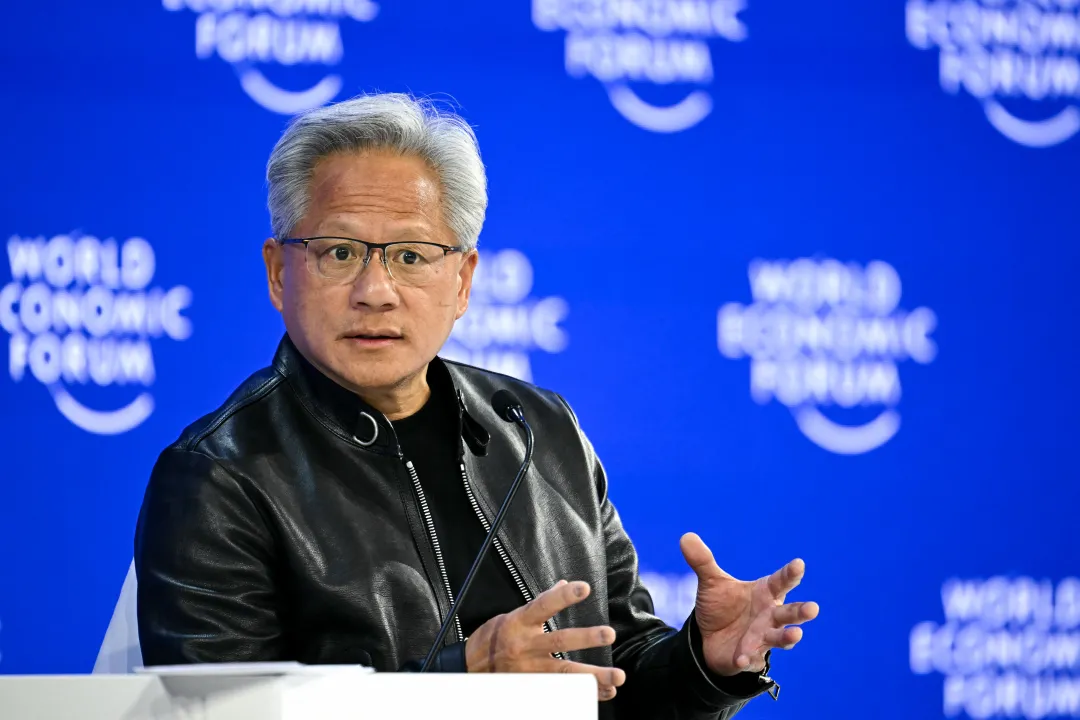
San Francisco, CA – November 25, 2026 – In a significant development that could ripple through the artificial intelligence infrastructure sector, S&P Global Ratings, a titan among credit rating agencies, has signaled its intent to consider a downgrade of Nvidia’s corporate credit rating. The potential downgrade stems from mounting concerns over the company’s management and governance practices, particularly in the wake of the recent, albeit brief, ouster and subsequent reinstatement of its iconic founder and CEO, Jensen Huang. While Nvidia has consistently demonstrated robust financial performance and stands as a linchpin in the burgeoning AI revolution, the internal leadership upheaval has cast a shadow of doubt on its long-term stability and strategic foresight, according to a statement released by S&P.
The credit rating agency has articulated specific concerns, citing what it perceives as “weak executive oversight and lack of succession planning” and the significant “key man risk” associated with Nvidia’s heavy reliance on Jensen Huang for its continued success. This reliance, often termed a “key man risk,” signifies a situation where a company’s fortunes are inextricably linked to the presence and continued leadership of a single, exceptionally influential individual. In Nvidia’s case, Huang’s visionary leadership has been instrumental in steering the company to its current dominant position in the AI chip market, a fact acknowledged even by its critics. However, the recent leadership turbulence has amplified these concerns within the financial community, prompting S&P to initiate a comprehensive review.
S&P Global Ratings has indicated that it expects to conclude its review within a 90-day timeframe. The potential outcome of this review could see Nvidia’s current credit rating, standing at AA, being revised down to AA-. This would place it one notch lower on S&P’s esteemed scale, though it would still represent a strong investment-grade rating, signifying a low risk of default. For context, the AA rating is the second-highest tier in S&P’s long-term issuer credit rating scale, reserved for entities with extremely strong capacity to meet their financial commitments. A downgrade to AA- would indicate a very strong capacity, but with a slightly increased susceptibility to adverse economic conditions compared to the AA rating.
Despite the prospect of a downgrade, it is crucial to emphasize that Nvidia is highly likely to retain its investment-grade status. This means that the company is still considered a safe bet for lenders and investors, with a low probability of failing to meet its financial obligations. However, even a one-notch downgrade can have tangible financial implications. Primarily, it could lead to an increase in Nvidia’s borrowing costs. When a company’s credit rating is lowered, lenders perceive a slightly higher risk and typically demand a higher interest rate on any new loans or debt issuances to compensate for that increased risk. This could translate into higher interest expenses for Nvidia on any future debt it seeks to raise.
The implications of a potential downgrade extend far beyond Nvidia’s direct financial costs. The company plays a pivotal role in the AI ecosystem, often acting as a financial backstop for other companies, particularly those in the nascent “neocloud” and broader infrastructure sectors. These entities, often at the forefront of AI development and deployment, may themselves lack robust credit profiles. Nvidia’s financial backing and guarantees are critical for them to secure the substantial capital required for building out AI data centers and other essential infrastructure. Therefore, a lower credit rating for Nvidia could inadvertently make the debt of these dependent companies more expensive, or even necessitate them posting additional collateral to secure financing. This could create a ripple effect, potentially slowing down the pace of AI infrastructure expansion and innovation across the industry.
This dynamic has become particularly evident in recent months, highlighting the interconnectedness of the AI financial landscape. In August of 2026, Nvidia announced ambitious plans to arrange approximately $500 billion in financing specifically dedicated to AI infrastructure. This monumental funding initiative involved a consortium of six prominent financial institutions, including heavyweights like Goldman Sachs, Apollo, and Blackstone. Under the original terms of this arrangement, Nvidia committed to guaranteeing 25% of the total loan amount. However, even prior to the internal leadership turmoil that saw Jensen Huang briefly removed and then reinstated, reports emerged indicating that the lending institutions had already begun to exert pressure on Nvidia to increase its guarantee. Bloomberg, in a November 12, 2026 report, detailed this pre-existing pressure, suggesting that lenders were seeking a larger share of the risk to be borne by Nvidia.

A downgrade in Nvidia’s credit rating by S&P Global Ratings would almost certainly embolden these lenders to demand even more substantial guarantees from Nvidia. This could translate into Nvidia being asked to backstop a significantly larger portion of the $500 billion AI infrastructure financing, or potentially a larger percentage of future financing rounds. Such a demand would place an increased financial burden on Nvidia, potentially impacting its own liquidity and its ability to invest in research and development, or pursue other strategic initiatives. It could also lead to a reassessment of the terms and feasibility of the $500 billion financing package itself, potentially forcing Nvidia to renegotiate or seek alternative funding structures.
The "key man risk" identified by S&P is not unfounded. Jensen Huang has been the guiding force behind Nvidia’s transformation from a graphics chip company primarily serving the gaming industry to the undisputed leader in the AI hardware market. His strategic vision, technical acumen, and ability to anticipate market shifts have been crucial in Nvidia’s ascent. The company’s success in developing and manufacturing highly specialized AI accelerators, such as its Hopper and Blackwell architectures, has made it an indispensable partner for virtually every major player in the AI field, from hyperscale cloud providers like Amazon Web Services, Microsoft Azure, and Google Cloud, to burgeoning AI startups and research institutions. The rapid pace of innovation in AI, coupled with the immense computational power required, has created an unprecedented demand for Nvidia’s products.
However, the governance implications of such a singular focus on one individual are significant. A robust succession plan is a hallmark of strong corporate governance, ensuring continuity and stability in leadership regardless of unforeseen events. The absence of a clearly defined and well-communicated succession plan can create uncertainty among investors, employees, and partners, as evidenced by S&P’s concerns. Furthermore, the ouster and subsequent reinstatement of Huang, while ultimately resolved internally, exposed a potential vulnerability in the company’s internal checks and balances and decision-making processes. While the specifics of this internal event remain undisclosed to the public, the very fact that such a situation could unfold and be perceived as a governance issue by a major credit rating agency speaks volumes about the scrutiny Nvidia is now under.
The broader implications for the AI industry cannot be overstated. Nvidia’s dominance in the AI chip market is so profound that its financial health and operational stability are intrinsically linked to the progress of AI development worldwide. The company’s products are the foundational hardware upon which much of the current AI revolution is built. If Nvidia faces increased borrowing costs or is forced to divert significant resources towards debt guarantees, it could have a dampening effect on the speed and scale of AI deployment. This could manifest in several ways: cloud providers might face higher costs for the AI infrastructure they offer, potentially leading to higher prices for AI services for end-users; AI startups might find it more challenging to secure the necessary funding to scale their operations; and the overall pace of innovation in AI research and development could be slowed.
In addition to the direct financial implications, a downgrade could also affect Nvidia’s strategic partnerships and its ability to attract and retain top talent. While its technological prowess is undeniable, a perceived weakening of its financial standing or governance practices could make some partners more cautious and potentially influence the decisions of highly sought-after engineers and researchers.
The current situation underscores a broader challenge facing the technology sector as it matures and its economic impact grows. Companies that were once agile startups and are now behemoths, like Nvidia, are increasingly subjected to the same rigorous financial scrutiny as traditional industrial giants. The expectations for corporate governance, transparency, and long-term strategic planning become paramount as their influence on global markets expands.
Nvidia, under Jensen Huang’s leadership, has a history of navigating complex technological shifts and market dynamics. The company’s ability to innovate and adapt has been a key differentiator. The current challenge posed by S&P Global Ratings presents a new kind of test, one that requires not only technical brilliance but also a demonstration of robust corporate governance and a clear vision for leadership continuity. The coming months will be critical for Nvidia as it addresses these concerns and works to maintain its strong financial footing and its central role in shaping the future of artificial intelligence. The outcome of S&P’s review will be closely watched by investors, competitors, and the entire AI ecosystem, as it could set a precedent for how such rapidly growing and influential technology companies are evaluated and managed.
