
 By admin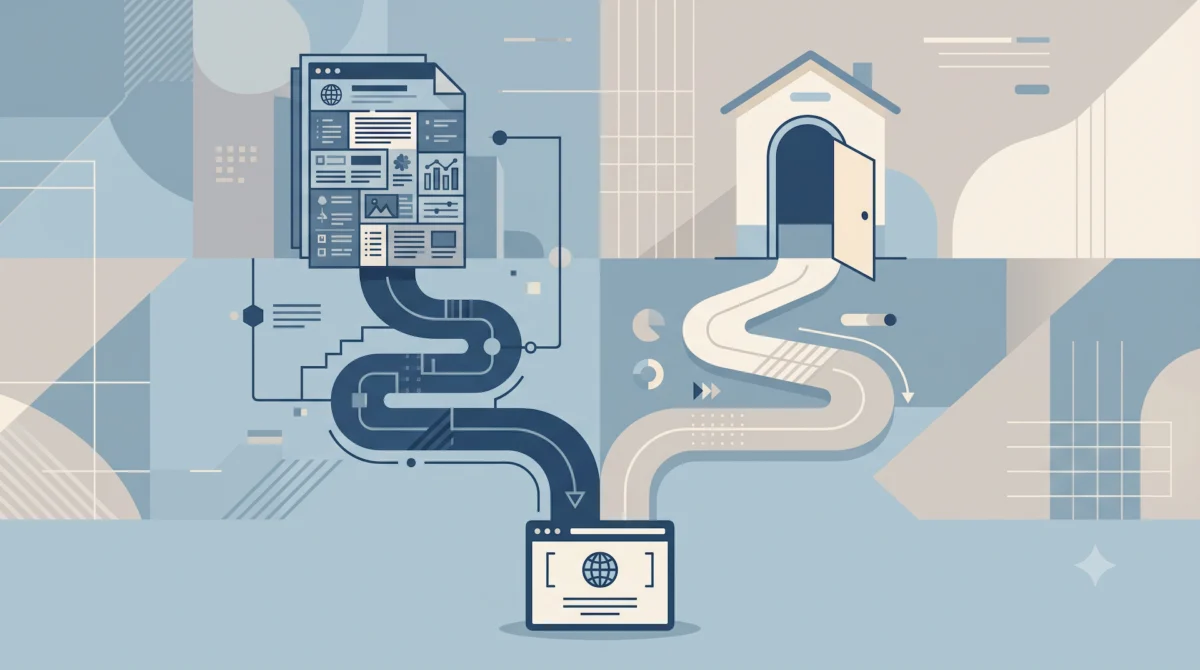
The digital publishing landscape has been irrevocably altered over the past two years, a seismic shift driven by the emergence and rapid integration of Artificial Intelligence into search engines and conversational AI platforms. For businesses reliant on web traffic, the impact has been nothing short of brutal. A comprehensive study by the Pew Research Center, tracking the browsing habits of 900 U.S. adults, revealed a stark reality: when Google presents an AI-generated summary, users opt for a traditional search result only 8% of the time. This figure represents a significant drop from the 15% click-through rate observed when no AI summary is present, effectively halving the already precious organic traffic. The situation is even more dire for links cited within the AI answers themselves, which garner user clicks a mere 1% of the time. This dramatic reduction in click-through rates has had a devastating impact on publishers, the backbone of the open web.
Data compiled by Chartbeat and reported by Axios paints a grim picture: between December 2024 and December 2025, page views originating from Google Search plummeted by 34% across its extensive publisher network. Small publishers have been hit particularly hard, experiencing a staggering loss of approximately 60% of their search referral traffic over a two-year period. Business Insider, a prominent digital publication, has witnessed a substantial 55% decline in its organic search traffic over the same timeframe, a trend echoed by numerous other outlets, with some smaller publishers forced to cease operations entirely. While chatbot referrals have seen an impressive year-over-year growth exceeding 200%, they still represent less than 1% of total publisher page views, highlighting the vast chasm between the potential and the current reality of AI-driven traffic. The prevailing narrative within publisher circles has been one of despair, with AI seemingly positioned as the primary antagonist responsible for the demise of the traditional web. However, a closer examination of recent developments suggests a more complex and nuanced reality is unfolding.
While AI platforms may be directing fewer human users to individual web pages in relation to the vast amount of content they generate, the AI systems themselves are consuming the web at an unprecedented and accelerating rate. The 2026 Generative AI Landscape report from Similarweb underscores this phenomenon, revealing that AI platforms are actively searching the web on behalf of users to synthesize answers to their queries. This deep dive into web content is crucial for the development and refinement of AI models. The share of ChatGPT answers that include live web citations has grown more than fivefold in under a year, reaching 6.8% of all generated answers by May 2026. In specific verticals like travel, this figure is even more striking, soaring to 22.6%.
The operational mechanism of every major AI search product involves fetching live pages from search indexes and synthesizing the information contained within them. Consequently, the quality and accuracy of AI-generated answers are intrinsically linked to the health and accessibility of the underlying content layer. Lily Ray, VP of SEO and AI Search at Amsive, aptly summarizes this dependency in the Similarweb report: "If your organic visibility dips, your AI search visibility follows, because the models are less likely to find your content." This creates a precarious feedback loop: AI answers are constructed from an information supply chain whose primary funding model – ad-supported clicks – is now collapsing, largely due to the very AI answers that rely on it. This raises a critical question for the continued viability of the open web: will an alternative business model emerge, and what form will it take?
Evidence of a nascent "replacement economy" is beginning to form within the conversational interfaces of AI. Following ChatGPT’s significant search update on May 7th, which began surfacing prominent, clickable brand links directly within its answers, referral traffic from ChatGPT experienced a remarkable surge of 157% within a single week. However, the nature of this traffic has also transformed. The proportion of referrals landing on homepages more than doubled, climbing from approximately 25% to nearly 60%. This represents a significant departure from traditional search, which typically directed users to specific articles and deep-linked pages tailored to precise queries.
In the new paradigm, AI referrals increasingly deliver a pre-informed visitor directly to a brand’s digital doorstep. The chatbot effectively shoulders the burden of research and comparison, allowing the human user to arrive at the brand’s site ready to engage or convert. Similarweb’s data further supports this trend, indicating that brands recommended by AI receive two to four times more subsequent visits compared to competitors that were not highlighted. This behavioral shift is directly influencing advertising revenue streams. In June 2026, sponsored results appeared in 26% of U.S. desktop ChatGPT conversations, a significant increase from 14% just a month prior, according to Similarweb’s ad intelligence data. Notably, two-thirds of these advertisements are presented after the second prompt, indicating a targeting strategy based on the accumulated context of the conversation rather than a simple keyword match. The click-through rate for these conversational ads hovers around 0.50%. This evolution signifies a fundamental shift away from the traditional search engine keyword auction, a model that Google has dominated for two decades, towards a new landscape of paid placement within dynamic conversations, contextualized by evolving dialogue.
Google, a behemoth in the digital search space, is not merely an observer of this transformation; it is simultaneously the incumbent facing disruption and a major architect of that disruption. AI Overviews are now appearing in an increasing percentage of Google searches, exceeding 40% by May 2026, according to Similarweb. Furthermore, visits to Google’s conversational AI Mode have steadily climbed since its introduction. This strategy suggests that Google is actively cannibalizing its own established click-based revenue model rather than allowing competitors to capture this burgeoning territory. However, the foundational pillars of Google’s core business were already showing signs of erosion. eMarketer projects that Google’s share of the U.S. search advertising market will dip below 50% in 2026, a historical first since approximately 2004. The primary beneficiary of this erosion is Amazon, whose sponsored product searches are classified as search advertising and are growing at a rate three times faster than Google’s. While conversational ads currently represent a negligible portion of this market share, they represent a significant new front in a competitive battle that Google has long been accustomed to winning with relative ease.
Adding to these challenges, more profound structural shifts are on the horizon for Google. In December 2025, a federal court entered a final judgment in the Department of Justice’s antitrust case concerning search, mandating remedies that prohibit exclusive default agreements and require Google to share search data with qualified competitors. Google filed an appeal in January 2026, while the DOJ cross-appealed, seeking more stringent remedies. Regardless of the eventual outcome of these appeals, the de facto arrangement that established Google as the internet’s primary tollbooth, with its ubiquitous default settings and a largely closed index, is reaching its conclusion just as conversational advertising is fundamentally reshaping the digital landscape. The resulting competitive arena is entirely novel. OpenAI, Google, Perplexity, and Microsoft are now vying not only for user attention but also for the advertising demand that historically fueled the open web. Crucially, none of these players, including Google itself, commands the new digital surface with the same level of dominance that Google once wielded over the previous iteration of the web.
The ultimate impact of this emerging conversational advertising model on the open web remains uncertain. The web as a primary destination for direct human attention is demonstrably shrinking, placing established, ad-supported publishers in a precarious position. Simultaneously, the web’s importance as a machine-readable substrate is escalating, giving rise to a new referral and advertising economy that directs value towards brands rather than directly to content pages. A significant challenge for publishers lies in their limited ability to influence this outcome. Ahrefs, after analyzing over a billion data points across its extensive research, found that 67% of the sources most frequently cited by ChatGPT are beyond the direct influence of marketers. Wikipedia alone accounts for nearly 30% of these citations. Furthermore, 28.3% of ChatGPT’s most cited pages exhibit zero Google organic visibility, suggesting that the AI’s retrieval layer is only partially tethered to traditional search, a complex reality for those who assume traditional SEO success will translate seamlessly into the AI-driven era.
In this rapidly evolving digital ecosystem, websites must undergo a fundamental rebuilding process to align with the new ways in which users are discovering information. Three independent datasets converge on a critical insight: the pages that AI systems cite and the pages to which AI systems direct human users are distinct, serving different functions. This represents a profound departure from the past, and many digital teams are still optimizing for an outdated model. Similarweb’s data reveals a striking disparity: 65% of URLs cited by ChatGPT reside two or three folders deep within a website, while 58.8% of referral traffic lands directly on homepages. Ahrefs corroborates this trend with its own analytics, reporting that over 80% of its AI referral traffic is directed to its homepage, product pages, and free tools, bypassing its extensive editorial content. A Previsible analysis of 6.77 million AI-referred sessions further highlights a third significant destination: 28.8% of ChatGPT referrals land on internal site search pages. This is a navigation surface that most publishers have long neglected, precisely because traditional Google searches were effectively performing this function for their users.
The most prudent course of action for businesses is to conduct a thorough audit of their search traffic patterns. This involves meticulously examining AI referral logs and any available citation data to map which pages are being quoted as evidence versus where actual visitors are entering a site. If the data indicates a clear transition into this new digital paradigm, three key actions emerge as essential: first, re-evaluate and potentially restructure website navigation and internal linking to prioritize high-level entry points and frequently used tools, recognizing that users are arriving pre-informed and seeking direct engagement. Second, develop strategies for content that is easily digestible and quotable by AI systems, focusing on factual accuracy, clarity, and structured data that facilitates AI comprehension. Third, explore new advertising and monetization models that align with the conversational nature of AI interactions, moving beyond traditional keyword auctions to contextual and conversationally driven placements.
While many aspects of this new digital frontier remain unknown and in a state of flux, the fundamental shift is unequivocally confirmed by every independent source that has undertaken an analysis. The click economy, as it was traditionally understood, is not returning. The entities that successfully learn to be quoted by machines and effectively convert the humans those machines direct will undoubtedly shape the future of the web, whatever form it ultimately takes. The challenge for publishers and businesses alike is to adapt proactively, understanding that the path to relevance and revenue has been fundamentally rerouted.
