
 By Rifan Muazin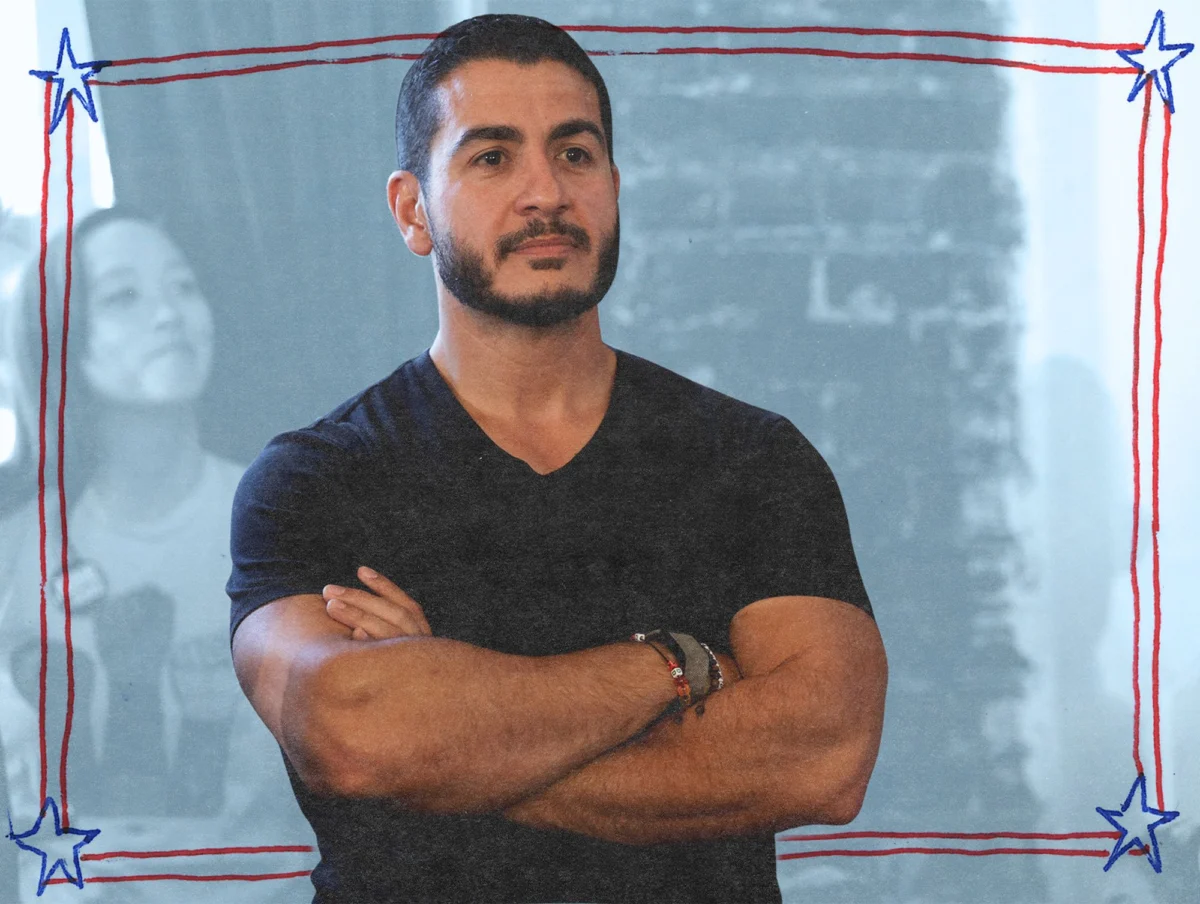
In another cosmic timeline, one where the boundaries between digital subcultures and high-stakes electoral politics were even more porous than they are today, Abdul El-Sayed would be a titan of the manosphere. He possesses the physical presence of a fitness influencer and the rhetorical dexterity of a veteran combatant in the attention economy. He is, by any objective measure, comically buff—a physical reality that has not escaped the notice of his detractors. Fox News commentator Laura Ingraham has attempted to weaponize his athleticism, disparagingly labeling him "gym boy" in an effort to paint him as a superficial creature of vanity. Yet, for El-Sayed, the muscles and the "trash-talk" are not merely for show; they are the armor and weaponry of a new kind of progressive populism that seeks to reclaim the concept of strength from the American right.
When El-Sayed speaks, particularly in the wake of his hard-fought victory for Michigan’s Democratic nomination for the U.S. Senate, he does so with a bluntness that borders on the pugilistic. When asked to articulate his platform for the general election, he does not lead with white papers or bureaucratic jargon. Instead, within the first two minutes of conversation, he pivots to a blistering assessment of his Republican opponent, Mike Rogers. El-Sayed characterizes Rogers as "generationally corrupt and incapable," dismissing the former Congressman and FBI agent as "nothing more than a beta character and a sock puppet for the insertion of whatever hand is going to make him talk." It is a jarring departure from the "when they go low, we go high" ethos of the Obama era, signaling a strategic shift toward a more aggressive, confrontational style of Democratic campaigning.
Currently, El-Sayed is locked in a high-profile ideological skirmish with Vice President JD Vance. The two have traded accusations of being "evil," a reflection of the deepening moral polarization of the 2024 and 2026 political cycles. Simultaneously, El-Sayed finds himself fending off a barrage of criticism regarding his association with the controversial political streamer Hasan Piker. Piker, a titan of the Twitch world known for his leftist views and often incendiary soundbites, has become a lightning rod for El-Sayed’s opponents. Critics have mined Piker’s extensive digital archive to find comments that they hope will dog El-Sayed throughout the campaign trail, attempting to link the candidate to Piker’s most polarizing rhetoric.

Despite the "gym boy" aesthetics and the digital-age controversies, El-Sayed’s actual policy platform is rooted in traditional, albeit aggressive, progressive economics. He utilizes a catchy, call-and-response slogan at his rallies that echoes the populist style of New York Assemblyman Zohran Mamdani. "Money out of?" he shouts. "Politics!" the crowd roars back. "Money in your?" "Pockets!" "And Medicare for?" "All!" It is a simplified, high-energy distillation of a platform that focuses on the material conditions of the working class. Unlike many of his peers in the Democratic establishment, such as the fashion-conscious Mayor of New York, El-Sayed avoids the polished look of high-end tailoring. Instead, he is frequently seen in a fitted black V-neck T-shirt that emphasizes his physique, exuding what his friend and former New York Congressman Jamaal Bowman describes as "righteous indignation for justice."
This indignation is particularly sharp when the subject turns to foreign policy and the influence of special interest groups. El-Sayed has been a vocal critic of the Israeli government’s military actions and has been relentless in his scrutiny of the American Israel Public Affairs Committee (AIPAC). During the primary, AIPAC and its affiliated groups funneled record-breaking sums of money into backing his opponent, Haley Stevens. This is a dynamic that Bowman knows all too well; in 2024, Bowman lost his own House seat in a primary where an AIPAC-affiliated super PAC spent millions to unseat him. Bowman argues that the political landscape has shifted significantly since his own defeat, noting that we are currently navigating a "perfect, inescapable, geopolitical shitstorm." He points to a combination of daily atrocities viewed through smartphone screens, a domestic affordability crisis, and a long history of perpetual American warfare as the catalysts for a new wave of political unrest.
The stakes for El-Sayed’s campaign could not be higher. Although he secured the Democratic nomination, his margin of victory was thinner than many analysts expected—less than one percentage point, a stark contrast to the double-digit lead his campaign internal polls had suggested. This narrow victory has heightened anxieties within the Democratic Party, as Michigan remains a critical "blue wall" state. If Democrats hope to maintain or flip control of the Senate, Michigan is a must-win territory. The narrowness of El-Sayed’s primary win suggests that while his "gym boy" populism resonates with a core base, he still faces a significant challenge in building a broad enough coalition to defeat a Republican opponent in a general election.
His detractors remain focused on two primary vulnerabilities. The first is his relationship with Hasan Piker, who endorsed El-Sayed and appeared alongside him at multiple campaign events. While El-Sayed has sought to distance himself from some of Piker’s more controversial remarks, he has refused to fully disavow the streamer, arguing that the scrutiny over their friendship is a tactical distraction designed to "confuse and distract us from the actual issue." The second line of attack is more visceral and rooted in identity politics: the emphasis on his full name, Abdulrahman Mohamed El-Sayed. Jamaal Bowman has warned that these attacks are a precursor to a broader effort to frame El-Sayed as "un-American." "He’s going to be attacked because he’s a brown Muslim with an Arab Egyptian name," Bowman asserts, noting that the rhetoric often carries a distinct "whiff of Obama-era Islamophobia."
.jpg)
El-Sayed meets these attacks with his signature brand of defiance. "If you don’t know how to say the name," he has warned his opponents, "keep the name out your damn mouth." This confrontational stance was recently tested when CBS News faced backlash for a headline that appeared to link El-Sayed to controversial remarks regarding the September 11 attacks, based on two deleted tweets from the pandemic era. The incident underscored the degree to which El-Sayed’s identity and past statements are being scrutinized through a lens of suspicion that many of his supporters view as inherently biased.
"I love America," El-Sayed says with a matter-of-fact conviction. "I just love America enough to want what America gave me for all of her kids." When one examines his résumé, the "un-American" label appears increasingly absurd. El-Sayed was a high school football captain, the valedictorian of the University of Michigan, a Rhodes Scholar, and a former public health official. He even describes himself as a capitalist, albeit one who believes in heavy regulation and a robust social safety net. The fact that Republican senators have labeled such a figure a "terrorist" or a "jihadist sympathizer" speaks volumes about the current state of political discourse.
His campaign strategy is a unique blend of "American jock" culture and progressive activism. His social media feed is a mix of videos showing him bench-pressing in the gym and clips of him dancing to Taylor Swift while wearing an American-flag cowboy hat. In a move that perfectly encapsulates his persona, he even challenged Mike Rogers to a game of tackle football in lieu of a traditional debate. While he occasionally leans into "dickish" rhetoric—such as his 2025 campaign rally comment: "If they go low, we don’t go high, we take them to the mud and choke them out"—it is a persona that feels authentic to his background as a competitive athlete.
Born to working-class Egyptian immigrants, El-Sayed describes his life as an "accident of history." He spent his childhood summers visiting relatives in Alexandria, Egypt, which he says gave him a "front-row seat" to the vast disparity between the opportunities available in the United States versus the Global South. However, as a public health expert, he is quick to point out that the American Dream is failing many at home. He frequently notes that the life expectancy in Pontiac, Michigan, is roughly the same as it is in Egypt, a damning indictment of the American healthcare system.

On the campaign trail, El-Sayed translates his medical and public health expertise into language that appeals to "bros" and "bros-turned-dads." He speaks of wanting the 10 million residents of Michigan to have "the good things in life"—clean air, clean water, and the ability to afford a "steak for a Friday-night grill." He grounds these policy goals in personal anecdotes, such as a recent trip to the zoo with his wife and two daughters that cost him $132. "That’s insane," he says, connecting the high cost of family life to the broader economic "fragility" of the working class.
Crucially, El-Sayed is attempting to address a demographic that Democrats have historically struggled to reach: men. He agrees that the Democratic Party has often been dismissive of issues pertaining to men’s health and identity. He takes aim at figures like Pete Hegseth or RFK Jr., who he argues promote a "fragile kind of masculinity" focused on aesthetics and "medicines" rather than character. "You can bench-press 350 and also joke around with your friends and dance and laugh and cry," El-Sayed says, advocating for a more holistic, emotionally intelligent version of manhood. He is also uniquely critical of industries that he believes "game men’s dopamine," specifically targeting the aggressive marketing of sports betting, pornography, and cannabis.
Ultimately, El-Sayed’s vision for the country is inextricably linked to his philosophy of the gym. He views national progress through the lens of "getting swole"—a process of discipline, hard work, and the refusal to take the easy way out. "You look at your current state and say, ‘I can be better and I’m going to do the work of getting better,’" he explains. "That’s America. And Donald Trump’s version of America is as flabby as he is." In the coming months, Michigan voters will decide if they are ready for El-Sayed’s high-intensity workout for the body politic, or if they prefer the more traditional, if "flabby," alternatives.
