
 By Rifan Muazin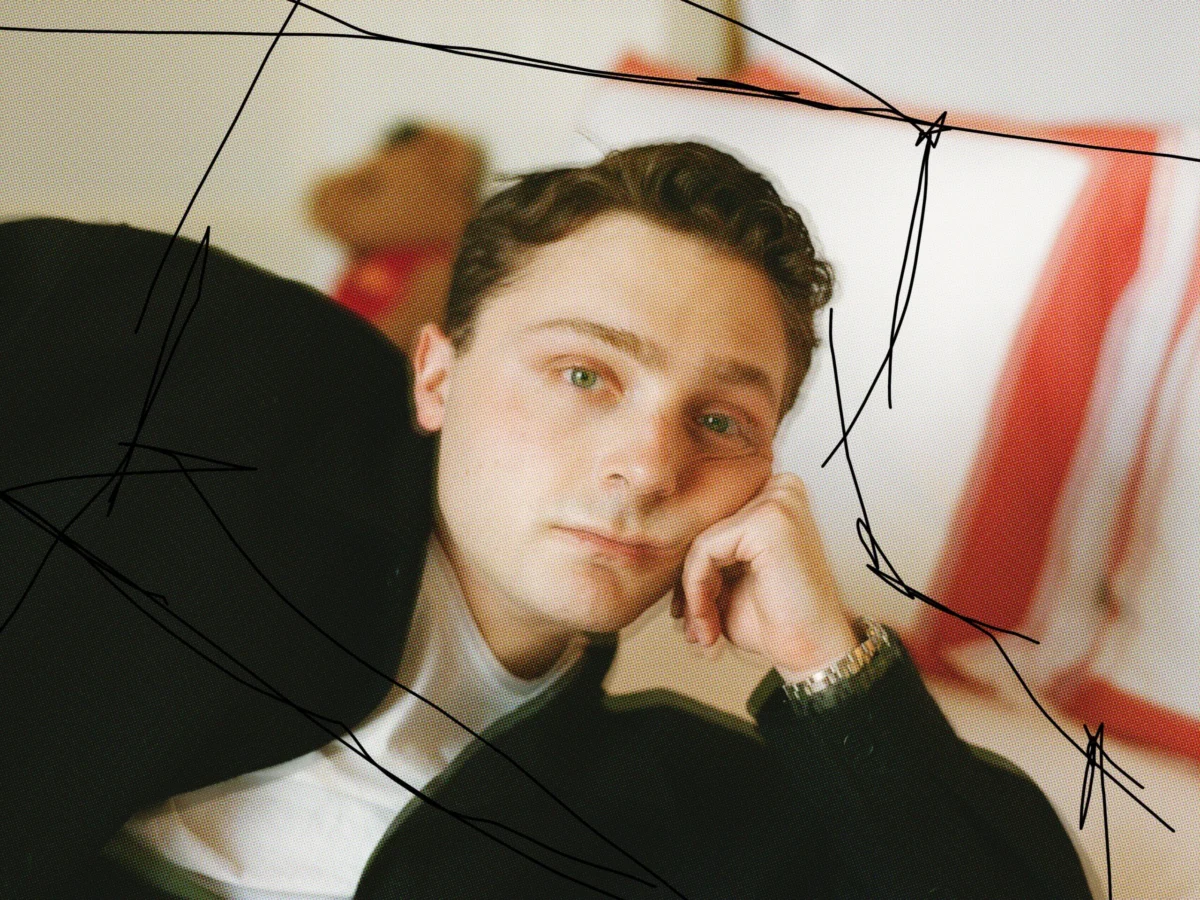
If you have spent any significant amount of time on the internet over the last three years, you have undoubtedly encountered Jake Shane. He is the quintessential product of the post-pandemic digital gold rush—a creator who seemingly materialized out of the ether to become an unavoidable fixture on every social media feed. For some, the introduction came during the depths of the COVID-19 lockdowns, when Shane’s improvised historical reenactments—often featuring him as a disgruntled octopus or a frantic founding father—went viral on TikTok. For others, the awareness came later, through his podcast Therapuss, or through the ubiquitous paparazzi shots of him navigating the streets of New York and Los Angeles alongside high-profile friends like Kaia Gerber and Tate McRae. Whether he is appearing shirtless in Men’s Health wearing Alo shorts or sparking heated industry debates on an Emmy red carpet, Shane has become a polarizing yet undeniable force in modern culture.
The trajectory of Jake Shane’s career offers a fascinating case study in the evolution of celebrity. In a previous era, a personality like Shane might have been relegated to the periphery of the entertainment industry, perhaps finding a niche as a character actor or a talk-show sidekick. However, in the current media landscape, where the line between "influencer" and "artist" has blurred into obsolescence, Shane has leveraged his digital following into a legitimate multi-hyphenate career. This transition has not been without its detractors. Earlier this year, Shane became the center of a discourse regarding the "death of journalism" after his unconventional, high-energy coverage of the Emmy red carpet went viral. Critics argued that the presence of creators like Shane signaled a decline in the rigor of entertainment reporting, while supporters countered that Shane was simply providing the casual, personality-driven content that younger audiences actually crave.
Chris Black, a seasoned cultural commentator and co-host of the How Long Gone podcast, recently sat down with Shane to unpack the reality behind the digital persona. Black admits that he was initially a "Shane hater," a sentiment born partly from the professional jealousy that often arises when a newcomer achieves massive financial success and viewership by doing something that feels deceptively simple. Yet, upon closer inspection, Shane’s appeal becomes clearer. His approach is intentionally casual, bordering on lazy, but it serves as a mirror for how Gen Z and younger Millennials interact with their own social circles. Shane isn’t trying to be the next Jon Stewart or Barbara Walters; he is the "plugged-in" friend who happens to have a direct line to Young Hollywood.
One of the most significant milestones in Shane’s recent career is the migration of his podcast, Therapuss, to Netflix. This move signals a broader trend in the streaming industry, where platforms are increasingly looking to creators with established, loyal audiences to provide "lifestyle" content that bridges the gap between traditional television and social media. Shane notes that while the core of the show remains the same, the Netflix partnership has "elevated" the production and expanded his reach to an older demographic that may not frequent YouTube or TikTok but is happy to binge-collect content on a major streaming platform. The transition to video-first podcasting was a deliberate choice for Shane, whose comedy is deeply rooted in physicality—facial expressions, body language, and the kind of high-energy "annoying" charm that he has leaned into as a brand.
The criticism of Shane being "annoying" is something he addresses with a surprising level of self-awareness. In the world of digital content, being "everyone’s flavor" is often a recipe for mediocrity. By dialing up his personality by "30 percent" for the camera, Shane creates a polarized reaction that keeps him relevant. He acknowledges that if someone finds his podcast unbearable, they likely wouldn’t enjoy his company in real life either. This commitment to an authentic, albeit exaggerated, version of himself is what has allowed him to transition into the world of scripted acting. Following a guest-starring role on HBO’s critically acclaimed Hacks—a show that itself explores the generational divide in comedy—Shane has secured a role in the second season of Hulu’s Adults.
However, Shane’s ultimate ambition lies in creation rather than just performance. He is currently developing a television series that he describes as a "Gay Dave." This comparison to the FX series Dave (starring Lil Dicky) is telling. Like Dave, Shane’s project aims to blend cringe-comedy with a semi-autobiographical look at the absurdities of modern fame and identity. He cites Girls and Bridesmaids as primary influences, aiming for a dry, quick, and self-deprecating comedic tone. By focusing on the "alt-comedy" scene and looking for fresh talent rather than relying solely on established influencers, Shane is attempting to build a "long-lasting piece of work" that transcends the ephemeral nature of a viral clip.
The physicality that Shane brings to his comedy also translates to his public image, specifically regarding fitness and body image. His recent feature in Men’s Health was a significant moment, marking his entry into the tier of celebrities whose physical form is as much a part of their brand as their talent. Shane is candid about the effort required for such a shoot, admitting to a regimen of five-day-a-week training, spray tans, lymphatic drainage, and temporary fasting to achieve the "look" required for the magazine. In an era where many celebrities are cagey about their use of weight-loss drugs or performance enhancers, Shane is notably transparent. He admits to having "Reta" (Retatrutide, a next-generation weight loss peptide) in his fridge but claims he chose not to take it for the Men’s Health shoot, wanting to prove he could achieve the results through traditional means. This transparency is a hallmark of Shane’s relationship with his audience; he understands that his followers value the "behind-the-scenes" truth over a polished, unattainable facade.
Shane’s lifestyle is a blend of New York energy and Los Angeles industry. He finds himself more active in New York, where the culture of walking and "copping" (shopping) fits his impulsive personality. He frequents vintage institutions like Mothfood, a bicoastal favorite known for its curated selection and high-end clientele. This connection to fashion and "cool-guy" culture is part of what makes Shane a bridge between different worlds. He can talk about true-crime podcasts and SoulCycle in one breath and discuss the nuances of physical comedy and script development in the next.
The "Jake Shane phenomenon" is ultimately about the democratization of entertainment. He represents a generation of performers who do not wait for permission from gatekeepers to build an audience. By the time Shane arrived on the sets of Hacks or Adults, he already possessed a larger platform than many of the industry veterans he was working alongside. This shift in power dynamics is what fuels much of the resentment directed toward creators like him, but it also provides a roadmap for the future of the industry. As traditional television continues to struggle with declining viewership, the "simple formula" of Shane—intimacy, humor, and a direct connection to the audience—is becoming the new standard.
Whether he is being "annoying" on a red carpet or "popping his top" for a fitness magazine, Jake Shane is navigating the complexities of modern fame with a level of strategic intentionality that belies his casual exterior. He is a creator who understands that in the attention economy, the only thing worse than being hated is being ignored. As he moves from the smartphone screen to the television screen, Shane is proving that he isn’t just a flash in the pan of the TikTok era, but a savvy entertainer who is reshaping the boundaries of what it means to be a public figure in the 2020s. His journey from improvised historical reenactments to developing his own scripted series is a testament to the power of the "personality brand"—a brand that, for Jake Shane, is only just beginning to reach its full potential. Through his work, he invites his audience to laugh at the absurdity of it all, reminding us that sometimes, the best way to deal with the chaos of the world is to make a funny face and keep moving.
