
 By Rifan Muazin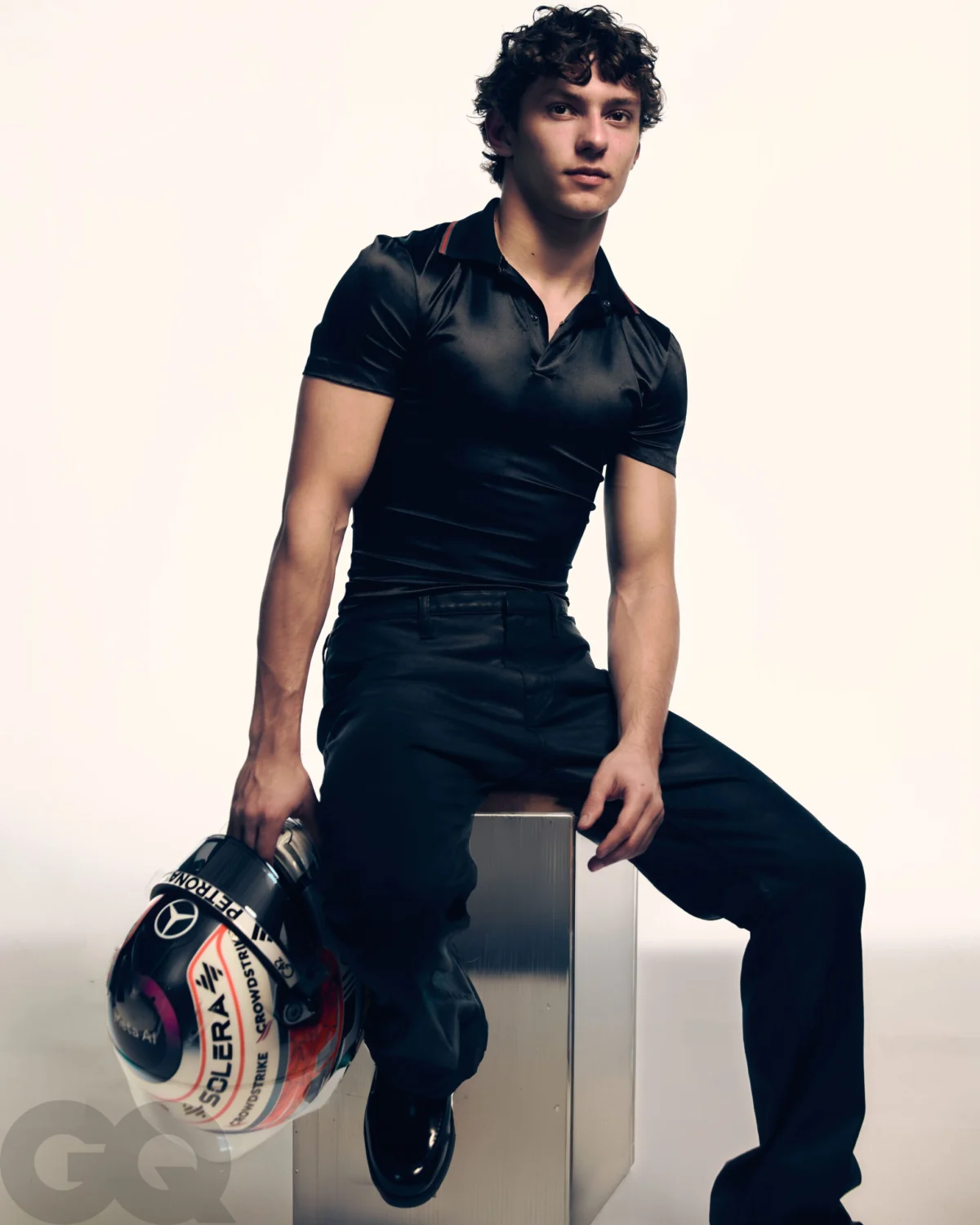
It was just a few seconds of hard-nosed, wheel-to-wheel battle on an overcast but pleasant Saturday in May at the Circuit Gilles-Villeneuve in Montreal, yet those fleeting moments felt like a tectonic shift in the landscape of modern motorsport. From the outside looking in, it certainly seemed as if Kimi Antonelli had declared war, not just on his rivals, but on the established hierarchy of the most prestigious racing team in the world. Early on in Saturday’s sprint race at the Canadian Grand Prix, Antonelli, vibrating with a restless, almost kinetic energy, chased his teammate George Russell for the lead. The Circuit Gilles-Villeneuve, a high-speed, low-drag facility nestled on the man-made Notre Dame Island, is a track that rewards bravery and punishes the slightest hesitation. As the boy wonder stalked Russell down the long back straight, the grandstand leapt to its feet, sensing the potential for on-track chaos.
Coming into Turn 1—the complex Senna ‘S’ that requires a driver to dance on the edge of adhesion—Antonelli did that thing only the truly great Formula 1 racers can do: he spotted a glimmer of an opportunity that didn’t technically exist yet. Charging in with a late-braking maneuver that defied the physics of his Pirelli tires, he pulled his wheels side by side with Russell. “This is the most ambitious move, I think, for a race lead in Montreal,” one on-track TV announcer declared, his voice rising over the high-pitched whine of the 2026-specification power units.
But George Russell, Mercedes’ elder statesman and a man who spent years in the wilderness of the back-markers before earning his silver arrows, wasn’t going to surrender his spot—not in this race, and certainly not in the team’s internal pecking order—without a ferocious fight. As they rounded the corner, Antonelli on the outside trying to sweep through the long arc, Russell did the thing any veteran driver in his position would do: he ran a little wide, closed the clinical "door" of the apex, and took up every inch of the asphalt Antonelli desperately wanted to occupy. Their cars touched—a carbon-fiber-on-carbon-fiber kiss at 150 miles per hour. Accounts would differ in the post-race debrief: Russell would stoically maintain he held his line, while Antonelli would claim he was unfairly forced off the track. Regardless of who you’d believe, the skirmish ended with Antonelli having to take a jarring detour through a patch of grass, his car bucking as the floorboard scraped the turf.
“That was very naughty,” Antonelli announced from the car, his voice exasperated and his breathing heavy over the team radio. He was clearly agitated by Russell’s unyielding defense, a reaction that signaled a departure from his previously deferential rookie persona. For most drivers, let alone a teenager in only his second season at Mercedes—the most elite and scrutinized operation in modern F1 history—this brush with catastrophe would be viewed as a shot across the bow from a higher power. It would be a signal to ease off, to play the long game, and to protect the car.

This was especially true given that, in the grand scheme of a 24-race calendar, this particular sprint was somewhat trivial. Sprint races, introduced to provide extra entertainment on Saturdays, are shorter than Sunday’s full Grand Prix and offer significantly fewer championship points. Finishing ahead of Russell would have netted Antonelli exactly one additional point in a season where the eventual champion will likely rack up over four hundred. But crashing would have cost both drivers—and, most importantly, the Mercedes-Benz brand—dearly in terms of repair costs and public relations.
And yet, just a few corners later, the young Italian took another aggressive shot at passing Russell, lunging down the inside as they entered another back-and-forth chicane. Again, the move resulted in Antonelli’s car veering onto the grass, this time bucking violently as the suspension hit its limits. McLaren’s Lando Norris, a keen opportunist watching the messiness unfold from the best seat in the house, swept by for second place. For all his gutsiness and raw determination, Antonelli now sat in third.
In a span of just a few seconds, the energy seemed to shift irrevocably at Mercedes. Last year, when Antonelli was a rookie, the team dynamic was perfectly straightforward and devoid of friction. He and Russell had appeared cordial and sometimes even chummy, their roles fitting into an easily solvable math equation: Veteran driver plus talented rookie plus a not-quite-fast-enough car equals internal harmony. This year, however, the variables have changed. Mercedes has produced a car capable of winning a world championship, and Antonelli has shaken his first-year jitters. Now, his competitive mask was off, revealing the relentless predator underneath.
“We’ve just witnessed it,” said Martin Brundle, the veteran Sky Sports commentator, memorializing the shift on live television. “We’ve all witnessed the beginning of a whole new phase at Mercedes.” In that moment, Antonelli let the world—and more importantly, his own team—know that he was no longer the happy-to-be-here prodigy wowing everyone with raw talent and a cheerful smile. He would pull no punches in his quest to become the youngest Formula 1 world champion in history, a record currently held by Sebastian Vettel, who achieved the feat at age 23. Antonelli, at 19, is on pace to shatter that milestone by nearly four years. First, though, he’d have to endure a stern talking-to from his boss.
In life and in racing, many people will swear that it’s easier to chase than to be chased—easier to be the hunter than the hunted. Having a competitor on the horizon fuels adrenaline and clarifies one’s purpose; leading the pack, conversely, comes with the crushing pressure of having everything to lose. Andrea Kimi Antonelli is currently in the midst of transforming from the hunter to the hunted, and he is learning to understand the psychological distinction in real-time. Lovingly called "Andy" by his family and simply "Kimi" by everyone else—including a global legion of adoring Mercedes fans and an Italian homeland smitten by the sight of a countryman dominating the sport—the driver has ascended the pecking order in a breakneck, almost divinely appointed fashion.

When he joined Formula 1 last year, he did so by leapfrogging the traditional Formula 3 stepping stone, becoming the third-youngest driver in the sport’s history. He didn’t just take any seat; he was hand-picked by Toto Wolff to fill the massive void left by Lewis Hamilton, the seven-time world champion who shocked the world by announcing a move to Ferrari. Now, in Antonelli’s second year, he finds himself in the fastest car on the grid, burdened with the expectation to fulfill the immense hype lavished on him since his karting days.
The 2026 season has been a whirlwind of success. In March, he won his first Formula 1 race at the Chinese Grand Prix—the season’s second round—and then proceeded to win the next four consecutively: Japan, Miami, Canada, and Monaco. By July, Antonelli was leading the drivers’ championship, having become the only driver in the history of the sport to take his first five career wins in a single unbroken streak. Suddenly, he was no longer the wunderkind learning the ropes; he was the benchmark. Lewis Hamilton and George Russell were left trailing him in the standings. When asked about racing against Hamilton, Antonelli laughs with the confidence of youth. “Just another driver,” he says. “Just the driver who made the history of the sport. Easy.”
“I have to be honest,” he says, mulling the real-time transformation of his career. “Hunting, at times, feels very nice and exciting. But if you’re always chasing, it can be more stressful, especially if the chase is tough.” He acknowledges that while the hunt is fun, winning is objectively better. “I feel like leading is actually a very good position. You can just focus on what you have to do and execute in the best way possible.”
Talking to Antonelli outside of the cockpit, it is almost impossible to perceive him as anything but a typical teenager. He is a compact five feet eight inches and 155 pounds, a build that underlines his youth. No amount of high-level media training or globe-trotting can smooth out the boyishness—the slightly unruly flop of hair, the toothy grin, or the sweet, unspoiled gleam of someone barely old enough to vote. His most visible signature is a corded choker with a whale-tail charm, a souvenir purchased by his mother in Sardinia on a family vacation when he was 12. It is an Italian symbol of good luck, worn by a kid who passed his high school graduation exams only last year.
Of course, he’s also a kid who won the Monaco Grand Prix, a race where it is customary to engage in legendary, champagne-soaked celebrations. When Antonelli triumphed in the Principality in June, he attended the mandatory celebratory gala and then simply went to his hotel to sleep. No drinking, no clubbing. Mercedes Team Principal Toto Wolff called him around noon the next day to ask what he was doing. Wolff remembers Antonelli saying, “I don’t know yet. What are you doing?” Wolff, taken aback by the simplicity of the request, invited him to join his family on a boat. Antonelli spent the afternoon after his greatest career victory fishing with Wolff’s nine-year-old son. “He’s an Italian son,” Wolff says. “A 19-year-old that is almost like a 16-year-old because he just wanted to be in a family environment. It was, for me, almost surreal.”

This everyday boyishness makes Antonelli’s on-track "attack mode" even more jarring to those in the paddock. Wolff has noted Antonelli’s uncanny ability to inhabit two different worlds. “He goes into race mode, and he goes into a zone. Sometimes you talk to him on the radio, and he doesn’t even hear you because he’s so in his zone.” When he exits the car, he often seems spaced out, requiring a moment to recalibrate. “It’s like Kimi’s back on planet Earth,” Wolff adds.
However, that on-track joust with Russell in Montreal changed the internal weather at Mercedes. After calling Russell’s move “naughty” and demanding a penalty over the radio, Antonelli continued to fume long after the checkered flag dropped. His complaints were broadcast globally, complete with the television edit’s rhythmic beeps. He offered a chilling reappraisal of the team dynamics: “If we need to race like this, then good to know.”
Until then, Wolff had been Antonelli’s primary cheerleader, cultivating his confidence for the high-pressure world of 200 mph combat. Suddenly, Wolff had to become the disciplinarian. “Kimi, concentrate on the driving, please, and not on the radio, moaning,” he responded during the race. Later, he shut down the conversation entirely: “We talk about this internally and not on the radio, okay?”
Following the Montreal sprint, Wolff gave both drivers a lecture on the nature of the Mercedes brand. As a part-owner of the team, Wolff’s perspective is both that of a coach and a CEO. He warned them that the reputation of one of the world’s most valuable brands was on the line, along with the livelihoods of thousands of employees. “The rules are, you can’t expect the other car to give you gifts,” Wolff recalled explaining. “Expect the car to race you like any other team. You two have to figure out how to race each other. But you’re not colliding.”
By June, Antonelli seemed to have absorbed the message. Speaking from a testing session in Austria, he was quick to point out that he has no interest in making things personal, even as he acknowledges that further clashes are inevitable. “We both have a great car and we’re both in a position to fight,” he says. “So we know we’ll clash.”

The path to this moment was paved by his father, Marco Antonelli, who drove touring cars in the 1990s. Marco launched Antonelli Motorsport in San Marino to help other drivers, having seen how cruel and money-warped the sport could be. “My dad didn’t want me to race,” Kimi reveals. “He was afraid I would suffer from disappointment.” Despite this, Kimi was in a go-kart by age five, possessing a style that adults described as purely instinctive.
The scouting of talent in F1 has become increasingly aggressive, with teams looking for the "next Max Verstappen" earlier than ever. Mercedes signed Antonelli to their academy at age 12. His rise coincides with a massive technical regulation shift in 2026, featuring smaller, more nimble cars and a revolutionary hybrid power system. Mercedes’ mastery of these new rules has placed Antonelli in the catbird seat.
His impact on Italian culture cannot be overstated. Italy hasn’t had a world champion since Alberto Ascari in 1953. In Maranello, the home of Ferrari, photos of Antonelli now hang alongside Ferrari’s own drivers. As his father Marco notes, the boy with the whale-tail necklace must maintain his edge to survive the pressure of the title hunt. “It’s good that you have friends outside of the track,” Marco says, “but when you are in competition, it’s not possible to have friends. You have to transform, like a killer.” As the 2026 season enters its final stretch, the world is watching to see if the "Italian son" can complete that transformation and claim his place in history.
