
 By admin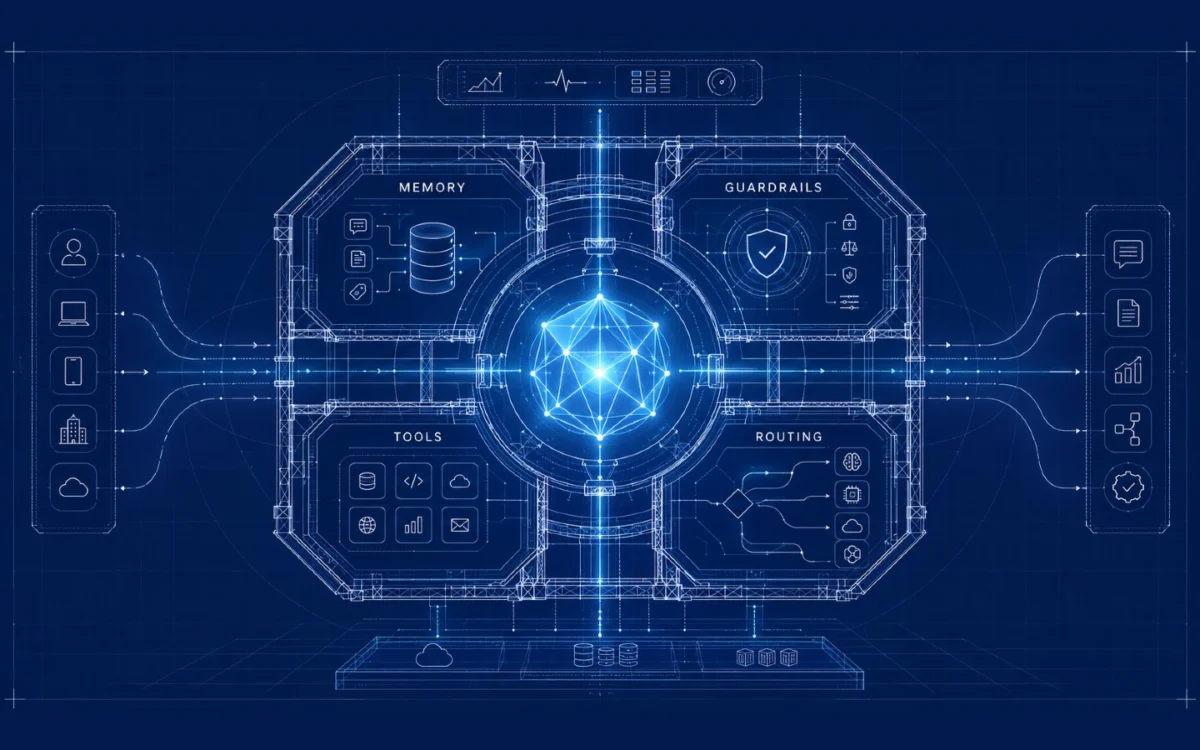
Enterprise Artificial Intelligence is grappling with a significant Return on Investment (ROI) paradox. While the initial allure of deploying increasingly powerful foundation models (FMs) with vast compute resources proves highly effective in product experimentation and rapid prototyping, the economic realities become starkly prohibitive when these AI-powered products transition into production environments. The sheer cost of running sophisticated FMs at scale, driven by token consumption, presents a formidable barrier to widespread, cost-effective adoption. However, a groundbreaking new paper from researchers at Writer offers a tangible and accessible solution, particularly for engineering teams, by focusing on the often-overlooked orchestration layer surrounding FMs – the "AI harness."
This comprehensive study systematically dissects the various components of this AI harness, revealing how optimizing its functions can lead to dramatic reductions in token usage per task. The research demonstrates a potential drop in cost-per-successful-task by as much as 61%, all while maintaining or even improving output quality and without requiring any changes to the underlying foundation model itself. Crucially, because the harness operates entirely under the developer’s control and bypasses the need for resource-intensive model fine-tuning, engineering teams can leverage these findings to construct highly cost-efficient and scalable AI applications.
The Crisis of "Tokenmaxxing": An Unsustainable AI Reflex
The current landscape of AI engineering is increasingly characterized by a trend dubbed "tokenmaxxing." This pervasive industry practice involves developers relying on massive context windows and a brute-force approach to token consumption as a substitute for robust system design and efficient workflow engineering. Rather than meticulously crafting elegant and optimized computational pathways, many engineers have adopted a familiar reflex from traditional software development: a cycle of generate, run, encounter failure, inject the error message and additional context back into the model’s window, and then retry.
Waseem AlShikh, CTO and co-founder of Writer, articulates this phenomenon, stating, "Teams tokenmaxx because it’s the cheapest fix in the moment, and because it’s literally how most engineers work today." This approach, which often yields satisfactory results for coding tasks, has unfortunately become the default reflex for a wide spectrum of agentic workloads. The underlying danger lies in the deceptive nature of per-token price drops. While the cost per token may decrease, this masks a fundamental inefficiency in how tasks are being processed.
AlShikh elaborates on this critical point: "Your invoice is tokens-per-task times price-per-token, and most teams only watch the second number." In agentic workloads, the "tokens-per-task" metric compounds exponentially. With each iteration of a loop, the growing context is re-transmitted, leading to a rapid escalation in token usage that can outpace the rate at which prices are falling. The perceived price cut acts as an anesthetic, masking the critical fact that the execution loop itself is fundamentally flawed and inefficiently bleeding resources.
This "tokenmaxxing" approach breeds several enterprise failure modes. Frequently, simple tasks are routed to premium, cutting-edge frontier models by default, incurring unnecessary expense. LLMs are often employed as rudimentary search indices, with entire raw documents stuffed into the context window instead of employing more targeted retrieval mechanisms to extract precise answers. The most destructive consequence, however, is the development of unconstrained agentic loops that can spiral out of control when the model encounters an error. Given that output tokens are consistently priced significantly higher than input tokens across all major model providers, inefficient task execution silently but surely erodes the AI budget.
While the industry has seen the introduction of various efficiency techniques aimed at curbing these escalating costs, they have largely fallen short. These methods often fail because they treat the foundation model in isolation, neglecting the broader system architecture. Techniques like quantization (reducing the precision of model weights), distillation (training smaller models to mimic larger ones), and prompt engineering (crafting more effective prompts) are valuable, but they primarily optimize the "engine" of the AI. They fail to address the critical inefficiencies in the "transmission" – the orchestration layer that governs how the model interacts with data and performs tasks.
Deconstructing the "Harness": Unlocking the Levers of Efficiency
The "harness" is defined as the orchestration layer that meticulously routes, formats, and transforms the underlying LLM into a functional, working system. The core levers for optimizing this harness include a sophisticated interplay of system prompt caching, interaction history compaction, intelligent tool management, precise retrieval strategies, and robust error management. These are identified as the most accessible and impactful intervention points for engineering teams seeking to significantly enhance AI performance and reduce operational costs.
As the Writer researchers aptly note in their study, "If the harness is the layer that composes model calls into work, it is also the layer that sets the price of work." Historically, developers have often relegated the harness to the status of disposable glue code, primarily designed to connect an API to a user interface. However, this new study signals a critical paradigm shift: the harness must now be elevated to the status of a first-class software artifact, demanding its own rigorous testing, versioning, and meticulous design principles.
For enterprises, this reframes the fundamental "own-versus-rent" decision-making process. AlShikh points out, "Enterprises spend months on model evaluations and then rent their orchestration off the shelf – which means they’re optimizing the smaller lever and outsourcing the bigger one." The entity that owns and controls the harness effectively owns the unit economics of the AI application. An off-the-shelf framework, often optimized for demonstrations and initial exploration, is inherently not tailored to the specific cost constraints and operational demands of a production environment.
Inside the Experiments: Quantifiable Gains in Efficiency
To precisely isolate and quantify the impact of the orchestration layer, the researchers conducted a series of rigorous experiments. These experiments involved six distinct foundation models, spanning various vendors and architectural complexities, including Claude Sonnet 4.6, Gemini 3.1, Gemini Flash 3.5, Qwen 3.6, GLM 5.1, and Writer’s proprietary model, Palmyra X6.
The core of their methodology involved a direct comparison between a frozen, conventional production agent loop and the fully optimized Writer Agent Harness. This comparison was performed on a standardized set of 22 locked enterprise tasks, designed to cover a wide range of critical AI capabilities such as grounding and retrieval, multi-step workflows, effective tool utilization, and sophisticated content generation. By meticulously holding both the foundation models and the execution tasks constant, the researchers could accurately attribute any observed performance differences solely to the orchestration layer itself.
The results were striking. The optimized harness demonstrated a substantial reduction in operational costs, slashing the blended cost per task by an average of 41%. This significant saving was achieved by reducing the average token consumption per task by a considerable 38%, dropping from 14.2k tokens to just 8.8k tokens. This translates directly into a more efficient and economically viable deployment of AI solutions.
A key innovation within the optimized harness is its sophisticated approach to task delegation. For instance, tasks like complex search queries are delegated to specialized sub-agents. These sub-agents receive only the specific tool and the precise query required, ensuring that they retrieve only the most relevant data. They then return a concise, capped summary to the main agent. This strategy effectively prevents the primary context window from becoming bloated with raw, unformatted search results, a common source of inefficiency in traditional approaches.
Remarkably, the task success rates remained robust, even as token usage plummeted. The success rate saw a slight but positive increase, moving from 78% to 81%. While the researchers describe this as a directional gain rather than a statistically significant one given their sample size, it unequivocally demonstrates that quality did not suffer as costs decreased.
Furthermore, the end-to-end task latency experienced a significant reduction, with the median wall-clock time dropping by 44%, from 48 seconds to 27 seconds. This acceleration in performance is attributed to the implementation of prompt caching and the effective elimination of unproductive reasoning loops, leading to faster and more efficient task completion.
However, the study also highlighted important limitations and trade-offs associated with multi-agent orchestration. The researchers found that smaller, less capable models, such as Gemini Flash 3.5 and Qwen 3.6, scored significantly below a usable reliability threshold when tasked with sub-agent delegation. Their scores of 0.45 and 0.42, respectively, indicate that this advanced capability is not yet dependable on lighter-weight models. Sub-agent orchestration only crossed a usable reliability threshold on the two most powerful models tested: Writer’s Palmyra X6 (0.86) and Claude Sonnet 4.6 (0.85). This suggests that the choice of foundation model remains a critical factor in the successful implementation of complex orchestration strategies.
The Developer’s Playbook: Actionable Takeaways and Strategic Trade-offs
The insights gleaned from this pivotal study provide a clear and actionable playbook for enterprise developers aiming to build and scale agentic workflows efficiently. The foundational steps involve implementing what AlShikh terms the "Two-Zone Prompt" and "Context Offloading."
1. Structure for System Prompt Caching (The Two-Zone Prompt): Modern LLM APIs offer the capability of prompt caching, a powerful feature for reducing redundant processing. However, to effectively leverage this, developers must meticulously structure their API payloads. This involves separating the prompt into a "stable zone" and a "volatile zone." The stable zone, located at the beginning of the prompt, should contain static, unchanging elements such as core operational rules, extensive tool schemas, and standard operating procedures. Conversely, dynamic elements, like the specific user query or the immediate conversational task state, should be appended at the bottom, forming the volatile zone. This deliberate ordering allows the harness to efficiently reuse the cached prefix across hundreds, if not thousands, of subsequent calls. As AlShikh emphasizes, "That single separation makes prompt caching actually work and stops you from re-paying for the same instructions on every one of an agent’s thirty steps." This simple yet profound structural change can yield substantial cost and latency improvements.
2. Manage Context with Context Offloading: A critical pitfall to avoid is "context stuffing," where every turn of an agent’s loop is appended to a monolithic prompt until the context window reaches its maximum capacity. Instead, the recommended practice is to move conversation history and intermediate processing artifacts out of the context window and into a retrievable storage system. Only the essential information required for the current step should be pulled back. Where feasible, delegating tasks to single-purpose sub-agents can further prevent context bloat. AlShikh aptly summarizes this principle: "The biggest line item in agent spend isn’t reasoning – it’s re-sending things the model has already seen." By intelligently managing what the model needs to process at any given moment, significant token savings can be realized.
3. Build Resilient Loops and Redefine KPIs: Unmanaged agent loops can rapidly deplete API budgets, leading to unpredictable and escalating costs. To counteract this, engineering teams must adopt new key performance indicators (KPIs) and implement robust control mechanisms. Tracking "Completions Per Million tokens" (CPM) is essential for understanding the true cost of each task. More importantly, the harness itself must incorporate physical guardrails to prevent runaway costs. AlShikh’s core principle is clear: "The core principle is that you never ask the model to police its own spending. The fence has to live below the model, in code, on your side of the API." This necessitates the implementation of three critical hard checks:
*   **Token Budget Limits:** Establish hard limits on the number of input and output tokens that can be consumed per task or per agent iteration.
*   **Action/Tool Limits:** Implement constraints on the number of times an agent can invoke a specific tool or perform a particular action within a given timeframe.
*   **Timeouts:** Set strict time limits for task completion to prevent agents from getting stuck in infinite or excessively long loops.
4. Avoid Unnecessary Complexity and Understand Harness Leverage: While optimizing the orchestration layer offers significant benefits, it does come with an inherent engineering overhead. For teams operating in the initial prototyping and exploration stages, this overhead may not be justified. In such scenarios, prioritizing rapid iteration with a powerful foundation model and a lightweight harness is the most pragmatic approach. However, as applications scale to millions of requests per day, the cost savings derived from sophisticated harness optimization become substantial and undeniable.
It is crucial for teams to understand the concept of "harness leverage." Adding structural scaffolding, such as complex prompt templates or multi-agent coordination logic, requires the foundation model to allocate some of its processing capacity to understanding and obeying this context. If a model is too small or not sufficiently capable, it may spend its limited capacity parsing this scaffolding rather than performing the core task, leading to a drop in accuracy and an increase in token consumption. The guiding rule for incorporating complex orchestration features is strictly mathematical: "If a feature adds more coordination tokens than it removes task tokens for that specific model, cut it," AlShikh advises. "Nothing in the harness is free." Every added layer of complexity must demonstrably contribute to overall efficiency.
The Future of the Enterprise Harness: From Compensation to Governance
The era of indiscriminate "tokenmaxxing" and treating context windows as boundless repositories is rapidly drawing to a close. For enterprises focused on demonstrating a tangible return on their substantial AI investments, the strategy of simply throwing more compute power at poorly designed systems is no longer sustainable.
As foundation models continue to evolve, incorporating capabilities like native planning, sophisticated tool selection, and multi-step reasoning directly into their core architecture, the role of the harness will undergo a significant transformation. It will shift from primarily compensating for model weaknesses to increasingly enforcing enterprise-level policy and governance.
AlShikh envisions this future: "What never moves into the model is the ‘allowed’: budgets, permissions, data boundaries, audit trails, deterministic kill-switches." These are the critical constraints that define the safe and responsible operation of AI within an enterprise context. Five years from now, the harness is expected to become leaner in terms of its scaffolding but significantly more important in its governance functions. While models may become more capable, an external layer will always be required to define what the AI can spend, see, and interact with. This crucial layer of control and oversight rightfully belongs to the enterprise and should never be outsourced or rented. The optimized AI harness, therefore, represents not just a path to cost efficiency but a fundamental redefinition of how enterprises can securely and effectively leverage the power of artificial intelligence at scale.
