
 By admin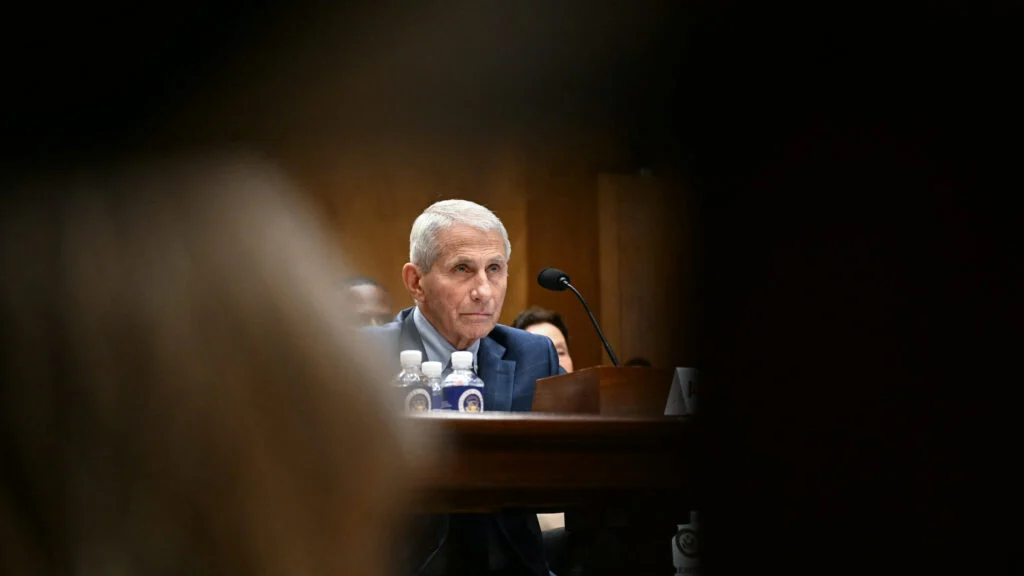
The Senate committee hearings held during the first week of August 2026 regarding the origins of the Covid-19 pandemic have served as a master class in political theater, effectively distracting the American public from the substantive issues that govern national and global public health. On Thursday, August 6, 2026, the committee took the unprecedented step of holding Dr. Anthony Fauci in contempt of Congress. This escalation followed Fauci’s decision to invoke his Fifth Amendment rights before a committee led by lawmakers who have publicly and repeatedly called for his imprisonment, including Senator Rand Paul, who has accused the former director of the National Institute of Allergy and Infectious Diseases (NIAID) of "dishonesty" and "criminal" negligence. This legal and political standoff represents more than just a personal vendetta; it signifies a breakdown in the relationship between scientific expertise and legislative oversight, occurring at a time when the world remains dangerously unprepared for the next inevitable pathogen.
To understand the current friction, one must look back at the actual geography and chronology of the pandemic’s start. The Covid-19 pandemic originated in Wuhan, China, in late 2019. In the crucial first weeks and months of the outbreak, the Chinese government engaged in a vigorous and systematic suppression of information. Rather than alerting the international community to a novel respiratory threat, Beijing dragged its feet, allowing the virus to establish a foothold before the World Health Organization (WHO) was even notified. This period of silence denied the rest of the world the vital weeks needed to stockpile personal protective equipment, develop testing protocols, and implement travel screenings. Even after the virus had crossed borders into Europe and North America, the Chinese state continued to obfuscate. They silenced whistleblowers like Dr. Li Wenliang, who was reprimanded for "spreading rumors" before ultimately succumbing to the virus himself. They prevented independent investigations, famously locking WHO representatives in their hotel rooms under the pretense of quarantine while promoting the specious theory that the virus had been imported to China via frozen food packaging from abroad.
The obstruction did not stop at travel restrictions. International access to the scientists at the Wuhan Institute of Virology (WIV) was denied, laboratory records were withheld, and local public health data from the Hubei province was effectively erased from public access. When countries like Australia demanded an independent and transparent investigation into the virus’s origins, China responded not with data, but with economic retaliation, placing heavy tariffs on Australian exports such as barley, wine, and beef. This "wolf warrior" diplomacy was designed to send a clear message: the origins of the virus were a matter of state security, not scientific inquiry.
Against this backdrop of international obstruction, the U.S. Senate’s focus on Dr. Anthony Fauci appears increasingly disconnected from reality. Fauci, a public servant who has advised seven U.S. presidents across both political parties and navigated the nation through the HIV/AIDS crisis, Ebola, and Zika, has become the primary antagonist in a domestic political narrative. While the question of the virus’s origin remains salient—because understanding the source of an epidemic is the first step in preventing the next one—Fauci is not the keeper of these secrets. The answers lie within the borders of China, a nation that has a documented history of obfuscating respiratory disease outbreaks.
History provides a grim blueprint for this behavior. During the 2002-2004 outbreak of SARS (SARS-CoV), a predecessor to the current coronavirus, 66% of the global deaths occurred in China or Hong Kong, yet the virus eventually spread to 29 countries. The first cases emerged in Guangdong province in late 2002, but the Chinese government waited until 2003 to report the situation to the WHO. During that interval, state-run media was forbidden from reporting on the burgeoning epidemic, and hospital records were classified. This secrecy allowed the virus to be exported to Canada and Singapore, where dozens of people died as a direct result of the delayed warning. While China later claimed it had learned its lesson and pledged greater transparency, the events of 2019 and 2020 proved that the institutional instinct for self-preservation and the suppression of "bad news" remained the default setting of the Chinese Communist Party.
In the information vacuum created by Beijing’s silence, pandemic experts were forced to rely on speculation and historical precedents. The first SARS outbreak was eventually traced to "spillover" from animals, specifically the sale of palm civets in live animal markets. These civets had likely been infected by horseshoe bats in southern China. Similarly, the Middle East Respiratory Syndrome (MERS), another coronavirus, was traced back to camels. Given this history, the scientific community’s initial working hypothesis in early 2020 was that Covid-19 was another zoonotic event. The early clustering of cases around the Huanan Seafood Wholesale Market—a "wet market" where live wild animals were sold despite government promises to regulate the trade—offered a logical, evidence-based starting point.
However, the presence of the Wuhan Institute of Virology just eight miles from the market introduced a complicating factor. The WIV was known to be conducting research on SARS-like viruses harvested from bat caves in Yunnan province, nearly 800 miles away. This proximity gave rise to the "lab leak" theory, which suggests that a laboratory accident or an infected researcher may have inadvertently released the virus into the community. Furthermore, reports indicated that WIV researchers had traveled extensively to these remote caves, raising the possibility that the virus was brought back to the city through human transport rather than a natural animal-to-human bridge at a market.
The tragedy of the current American political climate is that these two possibilities—zoonotic spillover and laboratory accident—have been polarized into partisan talking points. If a cover-up occurred, the culprits are the officials in Beijing who destroyed samples, scrubbed databases, and silenced the very scientists who might have provided the truth. To blame Dr. Fauci for not having the answers is logically equivalent to blaming a detective in Washington, D.C., for failing to solve a crime committed in a locked room in Wuhan, when the detective has been denied access to the crime scene, the witnesses, and the evidence.
Furthermore, the Senate committee has frequently conflated the search for the virus’s origin with the domestic public health response. Debates over mask mandates, school closures, and vaccine requirements are being used to litigate Fauci’s character, as if a disagreement over social distancing policy proves a conspiracy regarding the virus’s birth. This mixing of "apples and oranges" serves only to erode public trust in scientific institutions. If the committee were truly serious about safeguarding the health of the American people, its focus would shift toward the systemic risks that remain.
The probability of a future pandemic emerging from China remains high, not necessarily because of laboratory practices, but because of the country’s vast and under-regulated animal husbandry industry. The interface between wild animals, livestock, and dense human populations remains a tinderbox for viral mutation. Instead of persecuting a retired public health official for his inability to compel a foreign superpower to be honest, the U.S. government should be strengthening international surveillance networks and investing in "pan-coronavirus" vaccines that could protect against future variants regardless of their origin.
The contempt of Congress charge against Fauci is a symptom of a larger malaise in the American legislative process, where the goal is often the creation of a "villain" rather than the development of a solution. While the Senate spends its time on subpoenas and criminal referrals for American scientists, the actual source of the threat remains unaddressed. The Chinese government continues to resist transparency, and the global mechanisms for pandemic reporting remain fragile.
In 2020, the world was misled by a government more concerned with its image than with global safety. In 2026, the United States is being misled by a political process more concerned with retribution than with prevention. As David J. Hunter, the Richard Doll professor of epidemiology and medicine at the University of Oxford, has noted, the "Washington Band Plays On" while the threat of the next pandemic looms. The search for the origins of Covid-19 may never reach a definitive conclusion without the cooperation of the Chinese state, a reality that no amount of Senate hearings can change. The true measure of national security lies not in the prosecution of the past, but in the preparation for the future—a task that is currently being sacrificed on the altar of political theater.
